title: Japanese Sea Salt Scrub Setouchi Mineral Care Guide slug: japanese-sea-salt-scrub-setouchi-mineral-care category: ingredients published_at: '2026-11-27' updated_at: '2026-11-27' meta_description: Discover Japanese sea salt body scrubs from the Setouchi Inland Sea. Learn how magnesium-rich nigari, fine crystals, and botanical oils polish skin gently. keywords:
- japanese sea salt scrub setouchi mineral care
- seto inland sea natural salt body exfoliation
- magnesium nigari mineral skin barrier polish
- j beauty smoothing salt scrub elbows heels
- traditional japanese salt panning body ritual author: Seibun Lab Editorial Team
Japanese Sea Salt Scrub Setouchi Mineral Care Guide
Surrounded by the main islands of Honshu, Shikoku, and Kyushu, the Seto Inland Sea (Setouchi) enjoys a mild Mediterranean-like climate characterized by low annual rainfall and abundant sunshine. For over a millennium, these calm, mineral-rich coastal waters served as the historic center of Japanese salt-making (enden). Generations of coastal artisans developed meticulous techniques—evaporating seawater across tidal sand fields and boiling brine in cast iron pans—to harvest crystalline sea salt retaining natural trace mineral components.
In modern J-Beauty wellness, Setouchi sea salt has transitioned from culinary tables to luxury spa and bathhouse formulations. Because microvascular nutrient delivery and dermal moisture capacity naturally decline across biological aging transitions, abundant botanical extracts provide essential barrier hydration support.[1]
The Geography and Chemistry of Setouchi Sea Salt
Unlike aggressively refined table salts that strip away everything except sodium chloride, traditional Japanese sea salt preserves a comprehensive mineral matrix:
- Magnesium Chloride (Nigari): Naturally concentrated in seawater mother liquor, magnesium ions play an indispensable role in lipid barrier synthesis, accelerating epidermal recovery and counteracting dryness.
- Potassium and Calcium Ions: Essential cellular electrolytes that assist in maintaining osmotic balance within cutaneous tissues, helping the skin retain water after mechanical exfoliation.
- Fine-Grain Rounded Geometry: Setouchi cosmetic-grade salts undergo controlled recrystallization, yielding microscopic, smooth-edged crystals that dissolve steadily in warm bathwater rather than scratching delicate surface barriers.
This distinct mineral profile sets domestic Japanese sea salt apart from coarse rock salts, transforming physical exfoliation into a skin-conditioning mineral compress.
Osmotic Conditioning vs Harsh Mechanical Abrasion
Conventional Western body scrubs frequently rely on jagged nutshell powders or dense crushed minerals that create micro-fissures in fragile epidermal layers. Japanese salt scrub formulations employ a gentler, multi-phase mechanism:
1. Thermal Osmotic Softening
When fine magnesium salt pastes are smoothed onto warm, damp skin in a steaming bathroom, osmotic gradients gently draw out surface impactions while allowing mineral ions to condition hardened keratin.
2. Natural Self-Dissolving Buffing
As you massage with warm water, the salt crystals naturally dissolve into a silky, brine-infused lotion. This built-in dissolution prevents over-scrubbing; by the time the massage is complete, the physical granules have completely melted away.
3. Emollient Botanical Cushioning
Premium Japanese salt scrubs suspend their crystals in indigenous plant lipids, such as rice bran oil (kome nuka abura) or camellia seed oil (tsubaki abura). These protective botanical oils cushion friction during application, sealing moisture into polished epidermal layers before you even rinse.
Japanese Bathhouse Salt Scrub Rituals
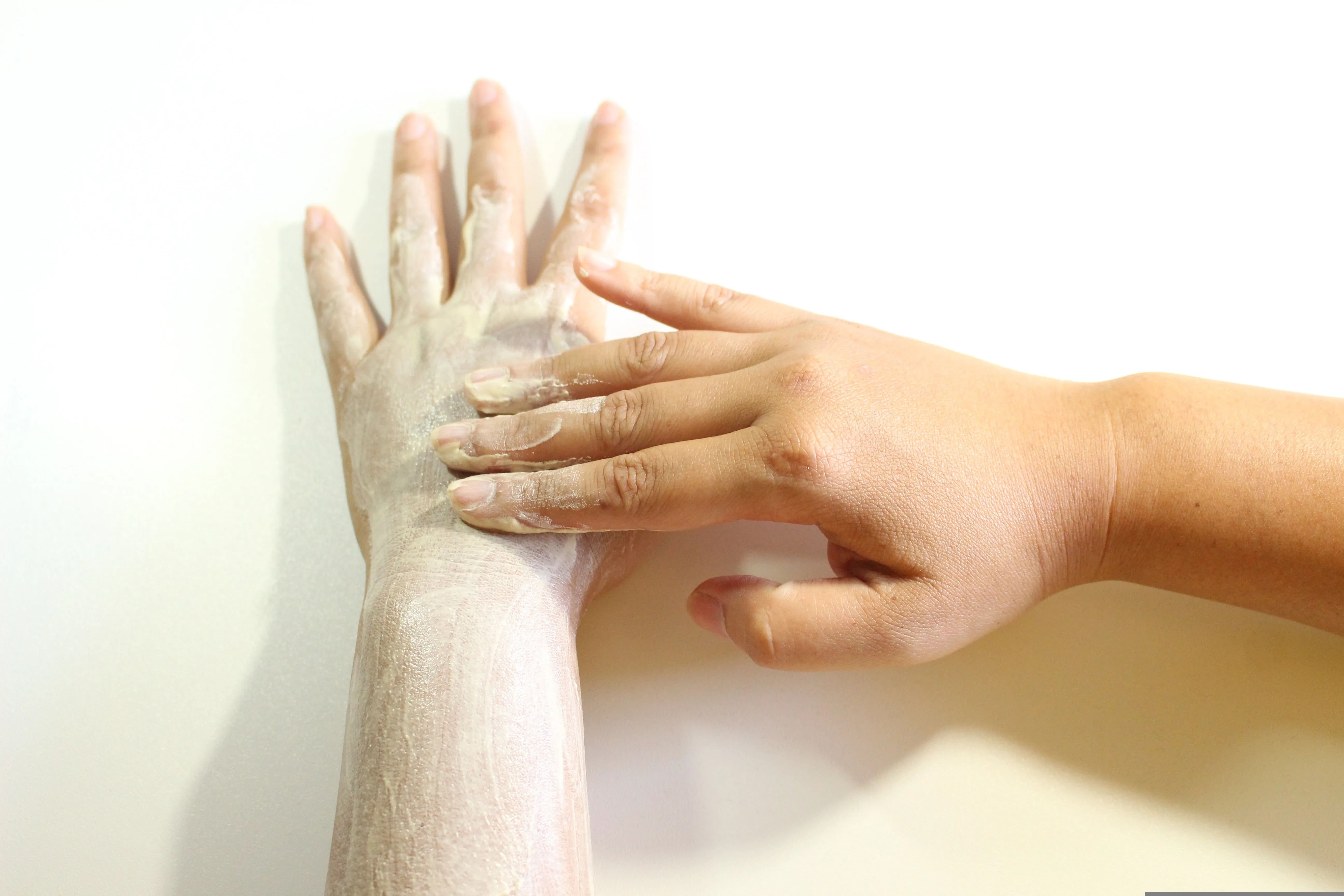
In traditional Japanese sento (public bathhouses) and modern geothermal spas, salt scrubs are integrated into structured bathing rituals:
- Pre-Soak Warming: Soak in a deep hot bath or steam room for five to ten minutes to thoroughly soften thickened stratum corneum layers on the heels, knees, and elbows.
- Gentle Circular Gliding: Take a generous dollop of salt paste and massage in light, circular strokes across stubborn rough zones. Avoid heavy downward pressure.
- Steam Infusion: Allow the dissolved mineral brine to rest on the skin for two to three minutes like a mineral compress before rinsing.
- Warm Water Rinse: Rinse cleanly with tepid water without using additional foaming cleansers, preserving the thin veil of nourishing botanical oils.
Comparison: Setouchi Sea Salt vs Sugar Scrubs vs Coarse Mineral Salt
Understanding how different exfoliating mediums interact with your skin barrier ensures you choose the ideal body polish:
Scroll horizontally to see full comparison
| Exfoliating Medium | Setouchi Japanese Sea Salt | Cane Sugar Scrub | Coarse Dead Sea Rock Salt |
|---|---|---|---|
| Mineral Concentration | High magnesium (*nigari*), balanced electrolytes | Minimal minerals, primarily sucrose humectant | Extremely high bromide, sodium, potassium |
| Crystal Texture | Fine, rounded, fast-dissolving grain | Soft, quickly melting sugary paste | Coarse, sharp, slow-melting granules |
| Best Body Zones | Elbows, knees, heels, back, shoulders | Decollete, chest, sensitive body zones | Feet, rough calluses, dense body skin |
| Stinging Potential | Mild if applied to fresh razor cuts | Virtually zero stinging sensation | High stinging potential on sensitive skin |
| Optimal Routine Step | Weekly post-bath mineral polish | Bi-weekly conditioning for delicate skin | Occasional intensive foot or callus care |