title: How Long to Wait Between Skincare Steps in Japan
slug: how-long-to-wait-between-skincare-steps-japan
category: routines
published_at: '2026-11-27'
updated_at: '2026-11-27'
meta_description: Learn how long to wait between skincare steps according to Japanese beauty experts. Discover the tactile cue for applying emulsion after watery lotion.
keywords:
how long to wait between skincare steps japan
wait time between toner and moisturizer
motchiri skin tactile cue
japanese skincare layering timing
prevent sunscreen pilling skincare
author: Seibun Lab Editorial Team
How Long to Wait Between Skincare Steps in Japan
Among global beauty communities, timing between routine layers remains a subject of endless debate. Many skincare lovers follow rigid stopwatch rules: waiting five minutes after vitamin C, three minutes after toner, and ten minutes before sunscreen to prevent dilution.
In Japanese cosmetic methodology, however, timing is dictated by biophysics and tactile sensation rather than clock watching. Japanese aesthetician philosophy teaches that waiting until your face feels dry between steps is a fundamental error.
Allowing aqueous layers to evaporate leaves skin vulnerable to flash drying, pulling moisture out of the stratum corneum. Supporting natural barrier resilience and moisture retention requires locking in liquid humectants at the precise physiological threshold.[1] Here is the Japanese scientific guide to layering intervals, the three critical tactile cues (motchiri, pittari, and sarari), and how to prevent daytime pilling.
The Fallacy of "Waiting Until Dry": Evaporative Loss vs Moisture Trapping
Why do Japanese dermatologists strongly discourage waiting for conditioning lotion (keshosui) to dry down completely before applying emulsion (nyueki)?
1. The Threat of Flash Evaporation
Watery conditioning lotions consist primarily of water, glycols, and humectants (such as glycerin and hyaluronic acid). When spread over skin in ambient room air:
The water molecules begin evaporating within 60 to 90 seconds.
As surface water evaporates, it creates osmotic suction that draws intrinsic moisture from superficial corneocytes into the air.
If you wait until your skin feels dry to the touch, you are applying emulsion to a surface that has already begun dehydrating.
2. The Danger of Applying Over Dripping Skin
Conversely, slapping thick milky emulsion or cream over soaking-wet skin is equally flawed:
Surplus surface water forms a slippery barrier that repels oil droplets in the emulsion.
The emulsion slides across the face without distributing its lipid phase evenly between corneocytes.
3. The Harmonious Interlock: The "Wet-on-Damp" Balance
The ideal moment to apply milky emulsion is when the watery lotion has moved into the stratum corneum, but the upper cell layer remains thoroughly saturated, plump, and cool. When emulsion lipids are pressed onto damp cells, the oil and water phases interlock naturally, forming an integrated lamellar moisture shield.
Scroll horizontally to view full comparison
Step Transition
Average Wait Time
Tactile Cue (*Hada no Aizu*)
Key Action
Cleanser to Lotion
0 to 10 seconds
Skin is towel-pressed dry but receptive
Apply first hydrator immediately (*no delay*)
Lotion to Emulsion
30 to 60 seconds
Motchiri (plump, cool, tacky suction)
Seal with milky emulsion (*nyueki*)
Emulsion to Cream
30 to 60 seconds
Pittari (smooth, fully melded lipid veil)
Layer heavier balm or cream on dry zones
Moisturizer to Sunscreen
2 to 3 minutes
Sarari (silky, set, non-slippery base)
Apply daily UV protection smoothly
The Three Japanese Tactile Signals: Motchiri, Pittari, and Sarari
Rather than watching a digital timer, Japanese beauty consultants train users to listen to their skin's tactile language:
1. Motchiri (The Sponge Cue: Lotion to Emulsion)
After pouring a 500-yen coin amount of lotion into your palms and pressing it gently across your cheeks:
For the first 15 seconds, your palms slide easily across watery fluid.
Between 30 and 45 seconds, the liquid moves into the superficial stratum corneum.
When you gently press the flats of your palms to your cheeks and pull away slowly, the skin should cling lightly to your palms with a soft, bouncy suction. In Japanese, this is called motchiri.
The Action: The moment you feel motchiri, dispense your milky emulsion and smooth it over the face immediately.
2. Pittari (The Melded Cue: Emulsion to Cream)
After spreading your milky emulsion:
The emulsion initially feels fluid and slippery.
As you press your hands over your face, body heat melts the cosmetic esters, allowing lipids to settle into cellular crevices.
Within 45 to 60 seconds, the surface shifts from slippery to pittari—meaning the formula has melded snugly to facial contours without surface pooling.
The Action: If you have very dry skin or live in a cold winter climate, this is your signal to tap a heavier barrier cream or balm over cheeks and orbital zones.
3. Sarari (The Setting Cue: Skincare to Sunscreen)
The only transition where you should pause deliberately is before applying morning sunscreen and makeup:
Liquid and cream moisturizers require approximately two to three minutes for their volatile carriers to settle and their lipid films to align.
Touch your cheek lightly with the back of a clean knuckle: if the skin feels greasy or wet, wait another minute.
Once the surface feels sarari (smooth, velvety, and dry to the touch without stickiness), your sunscreen will adhere uniformly without pilling or streaking.
Step-by-Step Timing Protocol: The Japanese Master Ritual
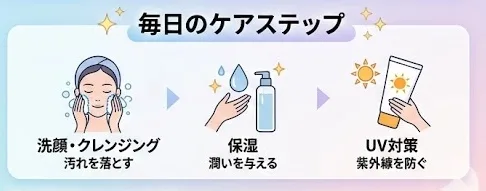
Follow this streamlined daily timeline to harmonize hydration absorption without wasting minutes:
1. The Post-Wash 10-Second Sprint
Pat your face dry by pressing a soft towel against your face—never rub. Within 10 seconds, dispense your preparatory booster (dōnyū eki) or first layer of conditioning lotion. Fast action prevents room air from triggering immediate trans-epidermal moisture loss.
2. Warm Palms and Press (Not Slap)
Rub lotion between your palms for two seconds and press gently against your forehead, cheeks, and jawline. Count three slow breaths per zone (approx. 20 to 30 seconds). Slapping the skin creates micro-friction and does not accelerate absorption; calm, warm hand pressure facilitates uniform fluid distribution.
3. Immediate Emulsion Sealing
As soon as the motchiri bounce is confirmed, apply your milky emulsion. The lipid droplets integrate with the water layer, creating a protective moisture shield that locks in hydrators for hours.
4. The Morning Two-Minute Coffee Pause
Before applying your morning sunscreen, take a brief two-minute pause to brush your hair, prepare tea, or choose your clothing. This allows the emulsion's emollient lipids to set into a stable film, providing a resilient canvas for sun filters.
Signs to Stop and When to See a Doctor
While disciplined layering optimizes barrier hydration, over-manipulating the skin or layering incompatible actives can induce irritation.
Be vigilant for these signs:
Flushed redness or stinging that escalates as you press layers into the skin.
Small clusters of friction bumps along the jawline or cheekbones from repetitive rubbing.
Severe pilling (rubbery rolls forming) accompanied by burning sensations.
Discontinue use immediately and consult a medical professional if adverse contact dermatitis or friction-induced irritation develops.[2] If your skin feels sensitive, collapse your routine to a single gentle splash and a plain ceramide moisturizer until normal barrier comfort returns.
FAQ
Q1. Will layering emulsion immediately dilute my active vitamin C or retinol?
A. No, quality formulated actives absorb within seconds and do not wash away with moisturizer.(Details)
Modern cosmetic serums utilize fast-absorbing glycols and delivery agents that deposit actives into superficial layers almost instantly. Sealing with an emulsion 30 to 60 seconds later actually protects fragile actives like vitamin C from oxidizing in room air, enhancing their efficacy.
Q2. Why does my sunscreen pill if I apply it too fast after moisturizer?
A. Pilling happens when water-based and silicone-based films clash before drying down.(Details)
If you apply sunscreen while facial cream is still wet, the polymer thickeners (like carbomer or xanthan gum) in your moisturizer precipitate and roll into balls. Waiting two to three minutes for the surface to reach the velvety sarari state allows the emulsion film to stabilize completely.
Q3. Should I wait longer between steps if I use multiple layers of lotion?
A. No, apply consecutive lotion layers consecutively while the skin remains damp.(Details)
When practicing the multi-layer lotion method (patting two or three thin layers of lotion), apply each round immediately after the previous one absorbs (about 15 to 20 seconds apart). Stacking hydrators while skin cells are expanded maximizes total water retention before sealing with emulsion.
Q4. Does patting my face aggressively help lotion absorb faster?
A. No, aggressive slapping creates mechanical trauma without improving absorption.(Details)
Slapping or vigorous tapping was an outdated beauty myth that can rupture delicate facial capillaries and trigger redness. Modern Japanese dermatological practice advocates for slow, gentle palm pressing (tenohira press), which uses gentle warmth and light pressure to settle fluids safely.
Q5. What should I do if my skin stays wet and sticky for several minutes?
A. You are likely applying too much product, or your lotion contains heavy film-formers.(Details)
If lotion pools on the surface for over two minutes, reduce the portion size by half, or check the ingredient label for high concentrations of high-molecular-weight hyaluronic acid or thick gums. In Japanese routines, a nickel-sized puddle warmed in hands is sufficient for the entire face.
Summary and Key Takeaways
Mastering Japanese skincare timing is an intuitive, sensory art rooted in biological logic:
Abandon Arbitrary Timers: Do not wait minutes between aqueous steps; listen to your skin's tactile feedback.
Never Wait Until Dry: Allowing lotion to dry down completely invites evaporative moisture loss.
Capture the Motchiri Cue: The moment skin feels plump, bouncy, and slightly tacky (30 to 60 seconds), seal with emulsion.
Pause Before Sunscreen: Give moisturizers two to three minutes to reach the sarari state before applying broad-spectrum daily sunscreen defense.[3]
By tuning your routine to the rhythm of motchiri and sarari, you streamline your daily ritual while securing dewy, deeply hydrated, and resilient skin.
Disclaimer: This article is for general information and education about Japanese cosmetics and their labels. It is not a substitute for professional medical advice, diagnosis, or treatment. Skincare results vary from person to person. Product formulas, availability, prices, and regulations change, and products sold in Japan can differ from versions sold elsewhere, so always check the current label. Do a patch test before introducing a new product, and consult a doctor or dermatologist if you have a skin condition or specific concerns.