Japanese CC Cream: Redness-Neutralizing Green Base Guide
RoutinesBy Seibun Lab Editorial Team
title: Japanese CC Cream: Redness-Neutralizing Green Base Guide
slug: japanese-cc-cream-redness-neutralizing-green-base
category: routines
category_label: Routines
published_at: '2026-11-27'
updated_at: '2026-11-27'
meta_description: Neutralize facial redness and acne marks with Japanese green CC creams. Learn targeted color-correcting steps, cica formulas, and sheer base layering.
description: Neutralize facial redness and acne marks with Japanese green CC creams. Learn targeted color-correcting steps, cica formulas, and sheer base layering.
lead_image: /images/stock/applying-tinted-sunscreen-skin-like-texture.jpg
lead_image_alt: Sheer Japanese green color-correcting base blending smoothly into skin
thumbnail: /images/stock/applying-tinted-sunscreen-skin-like-texture.jpg
thumbnail_alt: Sheer Japanese green color-correcting base blending smoothly into skin
author: Editorial Team
publish: false
Japanese CC Cream: Redness-Neutralizing Green Base Guide
Persistent facial redness—whether triggered by post-blemish discoloration, visible capillary flushing around the nose, or temperature-induced sensitivity—often presents a frustrating base makeup challenge. In many conventional routines, the standard solution is piling on heavy opaque concealers, which can settle into pores, cake over dry patches, and suffocate irritated skin.
In Japanese cosmetic design, color correction operates under the principle of optical balance rather than physical masking. Known locally as control color bases (control color) or green-tinted CC creams (Complexion/Color Correcting), these multi-functional bases harness complementary color optics. By suspending micro-fine mint or pistachio green pigments in a fluid, skin-caring emulsion, Japanese green bases diffuse red tones effortlessly while maintaining natural skin translucence (toumeikan). As skin aging naturally diminishes physiological barrier function over time[1], adopting gentle color-correcting emulsions reduces the need for heavy, pore-clogging concealers.
Opaque Green Concealer vs Japanese Green CC Cream
To choose the optimal redness-correcting product, examine how traditional Western spot correctors differ from Japanese green CC formulations:
Scroll horizontally to view full comparison
Feature
Traditional Western Green Concealer
Japanese Green CC Cream / Base
Texture & Viscosity
Dense, wax-heavy paste or thick liquid cream
Lightweight serum-gel or breathable watery milk
Optical Finish
Opaque coverage requiring full-coverage foundation
Translucent, semi-matte veil worn alone or under tint
Ashiness Risk
High risk of ghostly gray or chalky cast
Low risk; self-adjusting translucent mint pigments
Skin-Caring Actives
Primarily synthetic binding agents and fillers
Formulated with cica (centella), squalane, and ceramides
Application Zone
Spot application on discrete red blemishes only
Targeted zone blending across cheeks, nose, and chin
Sun Protection
Rarely contains broad-spectrum UV filters
Commonly integrated with SPF 30 to SPF 50+ PA++++
Key Formulation Technologies in Japanese Green Bases
Japanese beauty laboratories emphasize formulas that comfort irritated complexions while providing balanced optical correction:
Micro-Fine Color-Balancing Pigments: Instead of flat green titanium dioxide blends that leave a distinct painted tint, Japanese products employ micronized pearlescent green iron oxides. These micro-platelets scatter green light specifically where red wavelengths are strongest, neutralizing discoloration without muting natural undertones.
Botanical Calming Complexes: Recognizing that red areas are often sensitive or reactive, Japanese green CC creams frequently incorporate soothing plant extracts. Centella asiatica (CICA), Japanese mugwort (yomogi), and dipotassium glycyrrhizate provide conditioning hydration that softens dry, reactive patches throughout wear.
Porous Sebum-Controlling Spheres: Flushing around the central T-zone and nose is frequently accompanied by excess shine. Embedded porous silica beads absorb sebum without disturbing the moisture barrier, preventing makeup from sliding off redness-prone zones.
The 4-Step Japanese Redness-Correcting Routine
To achieve a flawless, natural complexion without looking washed out or pale, apply Japanese green CC cream using this targeted zone method:
Step 1: Let Skincare Fully Absorb
Apply your morning hydrating lotion and lightweight moisturizer, allowing 2 to 3 minutes for complete absorption. Applying color-correcting base over wet, slick skin can cause pigments to streak or separate unevenly.
Step 2: Dot Sparingly on Redness Hotspots
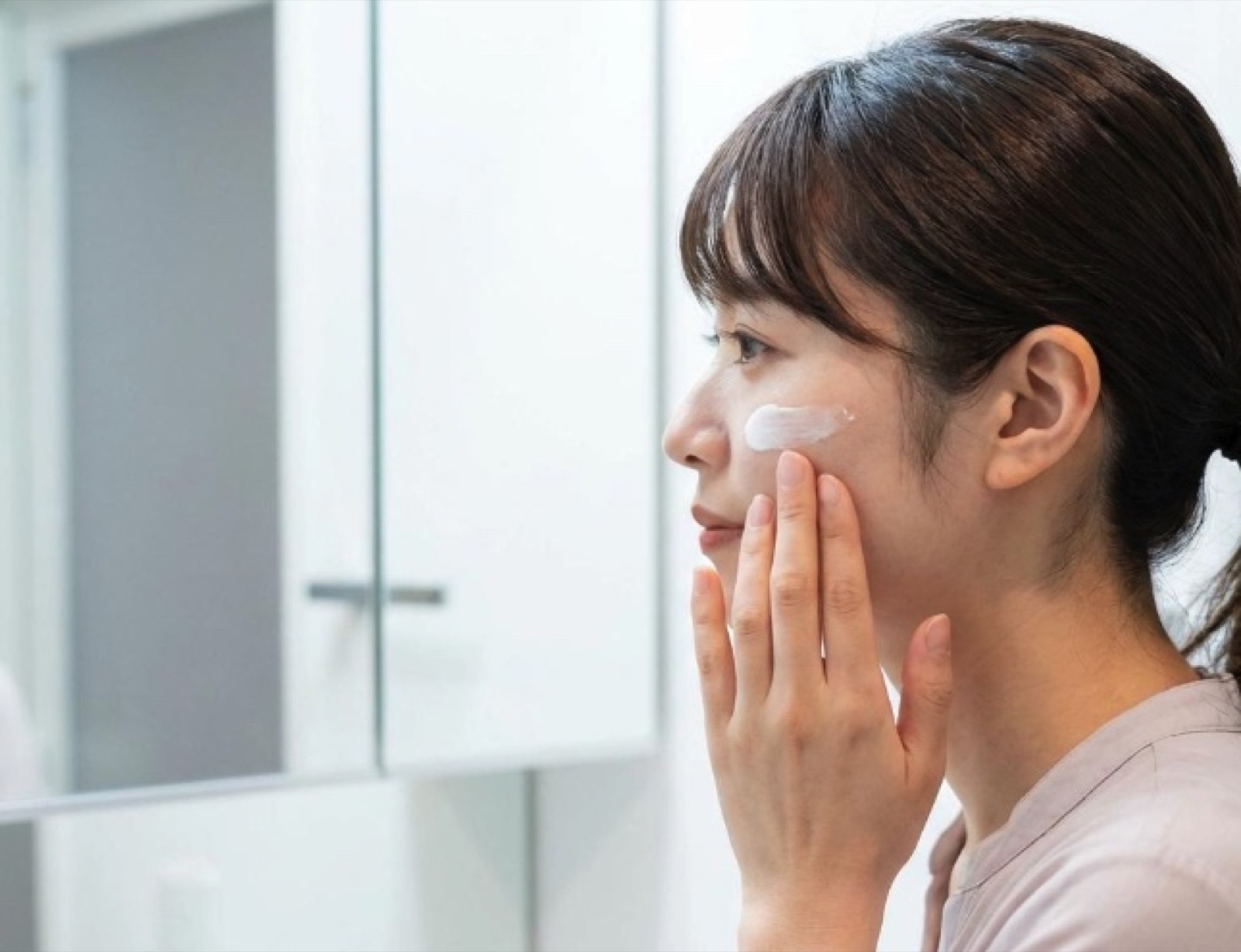
Dispense half a pea-sized amount onto the back of your hand. Never apply green base across the entire face, which causes a pale, lifeless cast. Instead, use your ring finger to dot the cream exclusively onto flushed zones: the apples of the cheeks, the creases of the nostrils, and the center of the chin.
Step 3: Tap Outward with a Damp Sponge
Take a soft, damp makeup sponge or a clean fingertip and tap gently from the center of each red zone outward. Feather the edges so the green pigment naturally transitions into your natural skin tone. Avoid aggressive rubbing, which can re-trigger micro-circulation and increase facial flushing.
Step 4: Veil with a Sheer Skin-Tone Base or Powder
Once the green base settles into a smooth, even film, apply your regular skin-tone foundation, tinted moisturizer, or translucent loose powder. The green undertone will quietly cancel the red beneath, requiring far less foundation than usual to achieve an even complexion. Because sun exposure and ultraviolet radiation demand diligent daily defense measures[3], selecting a green CC cream with integrated daily SPF offers reliable defense while correcting tone.
Signs to Stop and When to See a Doctor
Because contact dermatitis represents a common clinical diagnosis in outpatient dermatology[2], introducing new tinted cosmetic bases onto flushed skin requires careful monitoring:
Intense Burning or Contact Stinging: If applying the green base causes sudden stinging, heat, or worsening redness, wash off immediately with cool or lukewarm water.
Active Inflamed Acne: Avoid massaging cosmetic bases vigorously over open, inflamed pustules or cystic lesions. Use gentle tapping motions and maintain strict sponge hygiene.
Persistent Facial Erythema: If your facial flushing is accompanied by burning, ocular discomfort, or persistent swelling that does not improve after discontinuing cosmetics, consult a certified dermatologist for professional diagnosis.
FAQ
Q1. Should I apply Japanese green CC cream all over my face?
A. No, apply green base only where facial redness is visible.(Details)
Applying green color corrector across naturally neutral or yellow-toned areas like the forehead and jawline can create a pale, ghostly cast. Restrict application to flushed zones like the cheeks, nose contours, and chin.
Q2. Can I wear Japanese green CC cream without foundation?
A. Yes, many Japanese green CC creams double as standalone day bases.(Details)
Because Japanese formulas blend sheer mint tones with built-in SPF 30+ to 50+, you can wear them alone with a light dusting of translucent powder for a fresh, no-foundation weekend routine.
Q3. Does green CC cream work on brown post-acne marks?
A. Green neutralizes fresh red marks, while yellow or beige corrects brown spots.(Details)
Green optical pigments specifically cancel red hues. For older post-inflammatory hyperpigmentation that has turned brown or grayish, warm yellow or peachy beige bases provide more effective color balancing.
Q4. Will green color-correcting base settle into enlarged pores?
A. Japanese formulations use smoothing silica beads to glide over pores.(Details)
Unlike thick, chalky concealers that pool inside pore openings, Japanese CC creams feature fluid, pore-blurring polymers. Pressing lightly with a damp sponge ensures an even, pore-refining veil.
Q5. How should I remove green CC cream at the end of the day?
A. Use a gentle cleansing oil or water-rinseable milk cleanser.(Details)
Because green CC bases contain UV filters and color pigments, an emulsifying cleansing oil or gentle foaming milk removes all residue thoroughly without harsh rubbing or barrier disruption.
Summary and Key Takeaways
Japanese green CC creams and color-correcting bases provide an elegant, skin-first solution for unwanted redness. By utilizing optical complementary color science and gentle, cica-infused hydration, they neutralize discoloration, minimize foundation usage, and restore a calm, radiant complexion with zero heaviness.
Disclaimer: This article is for general information and education about Japanese cosmetics and their labels. It is not a substitute for professional medical advice, diagnosis, or treatment. Skincare results vary from person to person. Product formulas, availability, prices, and regulations change, and products sold in Japan can differ from versions sold elsewhere, so always check the current label. Do a patch test before introducing a new product, and consult a doctor or dermatologist if you have a skin condition or specific concerns.