title: Japanese Makeup Base: Oily T-Zone & Dry Cheeks Guide slug: japanese-makeup-base-for-oily-t-zone-dry-cheeks category: routines category_label: Routines published_at: '2026-11-27' updated_at: '2026-11-27' meta_description: Master Japanese zone-priming for combination skin with an oily T-zone and dry cheeks. Learn sebum-absorbing bases, moisture veils, and balance makeup tips. description: Master Japanese zone-priming for combination skin with an oily T-zone and dry cheeks. Learn sebum-absorbing bases, moisture veils, and balance makeup tips. lead_image: /images/stock/woman-checking-cheek-acne-mark-hand-mirror.webp lead_image_alt: Woman evaluating combination skin zones with hand mirror before applying targeted Japanese makeup primer thumbnail: /images/stock/woman-checking-cheek-acne-mark-hand-mirror.webp thumbnail_alt: Woman evaluating combination skin zones with hand mirror before applying targeted Japanese makeup primer author: Editorial Team publish: false
Japanese Makeup Base: Oily T-Zone & Dry Cheeks Guide
Few skin types present as complex a cosmetic challenge as combination skin. By midday, individuals with an oily forehead and nose (T-zone) paired with dry, tight cheeks (U-zone) face a double frustration: foundation dissolves into shiny, pore-clogged patches around the nose, while clinging to dry, flaky lines across the cheekbones.
The conventional western response is to choose a single extreme: an all-over ultra-matte primer or an all-over dewy oil primer. Applying a matte oil-control primer across the entire face strips the cheeks of essential hydration, worsening tight dry patches. Conversely, slathering a dewy primer all over turns the T-zone into an oily slick within hours.
In Japanese beauty (J-Beauty), makeup artists and dermatological cosmetic formulators approach this puzzle through zone-specific application (nuriwake). Acknowledging that facial skin is not a uniform canvas, Japanese routines map targeted primer chemistries to specific physiological zones.
In this clinical guide, we explore the biology of inner skin dehydration (innaa dorai), explain the formulation differences between oil-control and hydrating primers, provide a step-by-step zone-mapping routine, and review essential skin barrier defense protocols.

The Dual-Zone Dilemma: Why All-Over Primers Fail Combination Skin
Applying a single makeup base across conflicting facial zones creates an inevitable cosmetic imbalance:
[The Failure of Single-Formula Priming]

All-Over Matte Primer:
Silica + Volatile Silicones across entire face
  --> Controls T-zone oil BUT parches cheek stratum corneum
  --> Causes cakey flaking, tightness, and premature expression lines on cheeks

All-Over Dewy Primer:
Plant Oils + Heavy Emollients across entire face
  --> Hydrates cheeks BUT overwhelms T-zone sebaceous glands
  --> Causes midday foundation sliding, oxidized shine, and pore pooling
As natural skin aging naturally diminishes physiological barrier function over time[1], skin often becomes combination-dry: sebaceous glands in the center of the face remain active, while peripheral cheek tissue loses intercellular lipids rapidly. Managing these two zones as distinct micro-climates is essential to maintaining an even, lasting makeup finish.
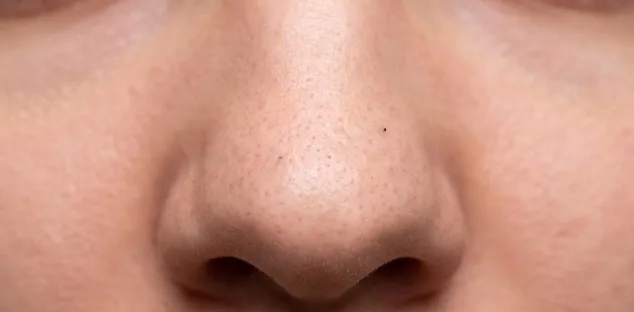
Anatomy of Inner Dehydration (Innaa Dorai): Why Oily Zones Overproduce Sebum
In Japanese dermatological cosmetics, an oily T-zone combined with dry cheeks is frequently identified as inner dehydration (innaa dorai):
Scroll horizontally to view full comparison
| Facial Region | Sebaceous Gland Density | Barrier Lipid Content | Primary Cosmetic Risk |
|---|---|---|---|
| T-Zone (Forehead, Nose, Chin) | High (~400-900 glands/cm²) | Excess liquid squalene and free fatty acids | Pore pooling, foundation dissolution, shiny sebum oxidation |
| U-Zone (Cheeks, Jawline, Temples) | Low (~100-200 glands/cm²) | Deficient intercellular ceramides and sterols | Flaking, chalky caking, micro-creasing, surface tightness |