title: Japanese Poreless Putty Primer: Nose Smoothing Guide slug: japanese-poreless-putty-primer-nose-smoothing category: routines category_label: Routines published_at: '2026-11-27' updated_at: '2026-11-27' meta_description: Master Japanese poreless putty primers for nose smoothing. Learn elastomer balm physics, circular buffing, and cake-free subtraction base makeup tips. description: Master Japanese poreless putty primers for nose smoothing. Learn elastomer balm physics, circular buffing, and cake-free subtraction base makeup tips. lead_image: /images/stock/nose-pores-front-closeup.webp lead_image_alt: Close-up of nose bridge and nostril wing skin texture before applying Japanese poreless putty primer thumbnail: /images/stock/nose-pores-front-closeup.webp thumbnail_alt: Close-up of nose bridge and nostril wing skin texture before applying Japanese poreless putty primer author: Editorial Team publish: false
Japanese Poreless Putty Primer: Nose Smoothing Guide
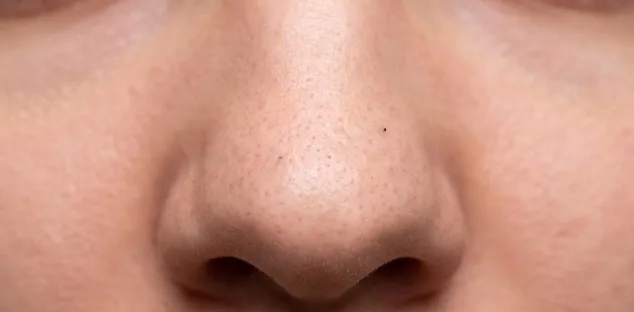
Enlarged pores around the nose wings and cheek center (strawberry nose or keana no hiraki) represent one of the most stubborn makeup obstacles. When liquid foundations or tinted sunscreens are swept across uneven nasal texture, pigments sink into pore cavities, creating tiny white dots (keana-ochi) or accentuating textural roughness. Layering heavy matte liquid primers often results in makeup rolling, balling into pill clumps, or oxidizing into cakey crusts by afternoon.
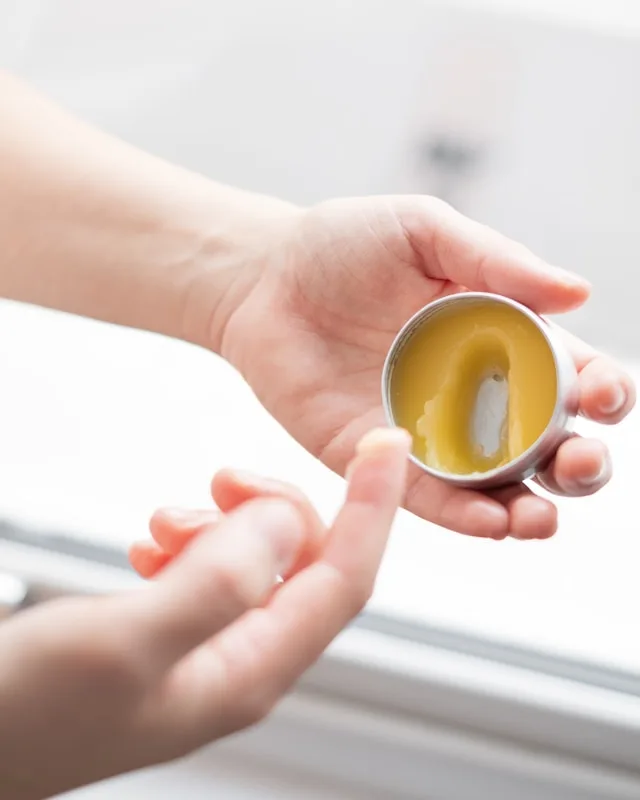
Japanese beauty (J-Beauty) formulators pioneered targeted putty primers (pate-jou shitaji) grounded in cosmetic subtraction (hikizan meiku). Rather than spreading a thick liquid film across the entire face, Japanese putty primers are dense, semi-solid balms designed strictly for pinpoint application. Upon contacting warm skin, the solid wax-elastomer network softens, pressing into microscopic skin depressions without creating surface weight.
In this clinical and technical guide, we analyze the polymer physics behind Japanese pore putties, outline the reverse-buffing application technique, compare putty balms to liquid pore primers, and review essential pore hygiene safeguards.
The Putty Mechanics: How Japanese Elastomer Balms Fill Skin Indentations
The mechanical distinction between liquid primers and Japanese putty balms lies in polymer cross-linking and rheology:
[Pore Filling Mechanics Comparison]

Liquid Pore Primers:
Low-Viscosity Dimethicone Fluid + Evaporating Solvents
  --> Liquid pools inside pores but shrinks as solvents evaporate
  --> Leaves an uneven crater that traps foundation pigments

Japanese Putty Balms:
Cross-Linked Silicone Elastomer Network + Porous Spherical Silica
  --> Semi-solid balm physically levels the dermal surface
  --> Maintains volumetric structure; does not shrink upon drying
  --> Creates a resilient optical bridge that allows foundation to glide smoothly across
As natural skin aging naturally diminishes physiological barrier function over time[1], the dermal collagen framework surrounding follicular openings weakens, causing round pores to stretch into teardrop shapes (tarumi keana). Japanese pore putty balms incorporate flexible micro-resins that stretch synchronously with facial movement, preventing the filled pore from cracking when smiling or speaking.
Why Sweeping Fails: The Circular Reverse-Buffing Principle
The primary reason users struggle with pore primers is improper directional application:
- The Downward Sweep Mistake: Facial pores do not open horizontally; they angle slightly downward. Dragging primer downward across the nose merely glides over the pore entrance, leaving an unfilled cavity beneath.
- The Reverse-Buffing Solution: Massaging a putty primer in tiny, upward circular motions pushes the elastic balm up into the follicular hollow from beneath, leveling the surface plane completely.
- Micro-Dose Restraint: Excess putty creates an unstable, slippery silicone slip. Using only a single rice-grain-sized portion for the entire nose ensures the balm anchors securely to the stratum corneum.
Scroll horizontally to view full comparison
| Anatomical Target | Application Motion | Japanese Technique Objective |
|---|---|---|
| Nose Wing Creases (*Komobana*) | Circular upward buffing with fingertip warmth | Fills deep angular folds where oil pools; prevents cakey buildup |
| Nose Bridge Center | Gentle vertical pressing with ring finger pad | Smooths central pore texture without creating white cast |
| Inner Cheek Apex | Light outward circular spiraling | Blurs teardrop pores softly into smooth cheek contours |
| Chin Indentation | Horizontal micro-buffing | Prevents lower lip oil from breaking down foundation |