Japanese Pressed Powder Compact vs Loose Powder Guide
RoutinesBy Seibun Lab Editorial Team
title: Japanese Pressed Powder Compact vs Loose Powder Guide
slug: japanese-pressed-powder-compact-vs-loose-powder
category: routines
category_label: Routines
published_at: '2026-11-27'
updated_at: '2026-11-27'
meta_description: Compare Japanese pressed powder compacts vs loose powders. Learn morning setting techniques, portable touch-up tips, and cake-free shine control formulas.
description: Compare Japanese pressed powder compacts vs loose powders. Learn morning setting techniques, portable touch-up tips, and cake-free shine control formulas.
lead_image: /images/stock/makeup-cosmetics-palette-brush-flatlay.png
lead_image_alt: Japanese pressed powder compact and makeup brush arranged on marble
thumbnail: /images/stock/makeup-cosmetics-palette-brush-flatlay.png
thumbnail_alt: Japanese pressed powder compact and makeup brush arranged on marble
author: Editorial Team
publish: false
Japanese Pressed Powder Compact vs Loose Powder Guide
Achieving an all-day, refined complexion that neither melts under humidity nor parches into dry fine lines is a hallmark of Japanese beauty (J-Beauty). However, cosmetics consumers often debate whether to invest in a jar of finely sifted loose powder or a sleek pressed powder compact.
In Japan, makeup artists and beauty experts view these two powder formats not as rivals, but as specialized tools designed for different phases of your day. Loose setting powder excels at morning setting, depositing an ultra-fine, uncompressed veil that allows skin radiance to breathe through. Conversely, pressed powder compacts are formulated for travel convenience and midday maintenance, offering dense pigment control and oil-absorbing precision inside a handbag. As skin aging naturally diminishes physiological barrier function over time[1], understanding how to balance these two powder types preserves essential skin hydration while maintaining an even, shine-free finish.
Loose Powder vs Pressed Powder: Core Feature Comparison
Examining the mechanical and formulation differences between these two powder formats clarifies how each format functions across routines:
Mechanically compacted with plant-derived binder oils
Finish on Skin
Airy, soft-focus satin (*toumeikan* translucency)
Uniform, velvety semi-matte with slightly higher coverage
Portability
Bulky jar; prone to spilling in purses or travel bags
Sleek, spill-proof compact with integrated mirror and puff
Sun Protection (SPF)
Usually low to moderate (SPF 10–25) or unrated
Frequently high protection (SPF 30 to SPF 50+ PA++++)
Application Tool
Plush deep-pile velour puff or large dome brush
Thin, dense velvet puff or compact kabuki brush
Formulation Science Behind Japanese Powders
Japanese cosmetic manufacturers tailor powder chemistry according to how each format interacts with facial sebum and ambient temperature:
Loose Powder Micro-Mesh Dispersions: Loose formulations emphasize maximum lightness. Spherical porous silica and silk proteins float freely, allowing you to knead them deep into a plush puff. Because they contain zero compacting binders, loose powders deposit the sheerest possible layer over wet foundation without disturbing liquid makeup.
Pressed Powder Binder Matrices: To compress delicate minerals into a solid cake without cracking during transit, Japanese laboratories blend pigments with skin-caring botanical squalane, jojoba esters, and pseudo-ceramides. This hydrating binder matrix prevents pressed powders from turning powdery or ashy when tapped over midday facial oils.
Prismatic Light Scattering: Both formats incorporate spherical silicone resin powders that bend and diffuse ambient light across uneven skin textures, diminishing the visibility of enlarged pores and fine surface crinkling without opaque color buildup.
The Ideal Dual-Powder Routine: Morning Set & Midday Touch-Up
To achieve optimal base longevity without cakey buildup, integrate both formats into a cohesive daily routine:
Morning Step 1: Set with Loose Powder Using "Fuwanose"
After liquid foundation or tinted cream has settled, dispense a coin-sized amount of loose powder into the jar lid. Press a plush velour puff into the powder, fold it in half, and knead thoroughly. Tap off any surface excess on the back of your hand.
Morning Step 2: Press and Roll Across the T-Zone
Gently press and roll the puff across areas prone to midday shine: the forehead, the nose bridge, and the chin. Lightly dust remaining powder over cheeks with a fluffy dome brush to preserve skin's natural dewy luster.
Midday Step 3: Blot Excess Sebum Before Touching Up
When shine surfaces in the afternoon, never press powder directly over liquid sebum. First, gently press a clean oil-blotting sheet or folded facial tissue against the T-zone to lift excess oil.
Midday Step 4: Tap Pressed Powder Vertically onto Shiny Spots
Open your pressed compact and sweep the included thin puff across the pan. Gently press—never rub or drag—the puff vertically onto shiny spots. The binder-infused formula instantly bonds with the underlying base, restoring a fresh, shine-free finish. Because sun exposure and ultraviolet radiation demand diligent daily defense measures[3], keeping a high-SPF pressed compact in your bag ensures midday sun defense without disturbing your base.
Signs to Stop and When to See a Doctor
Because contact dermatitis represents a common clinical diagnosis in outpatient dermatology[2], proper tool hygiene and mindful product observation are essential:
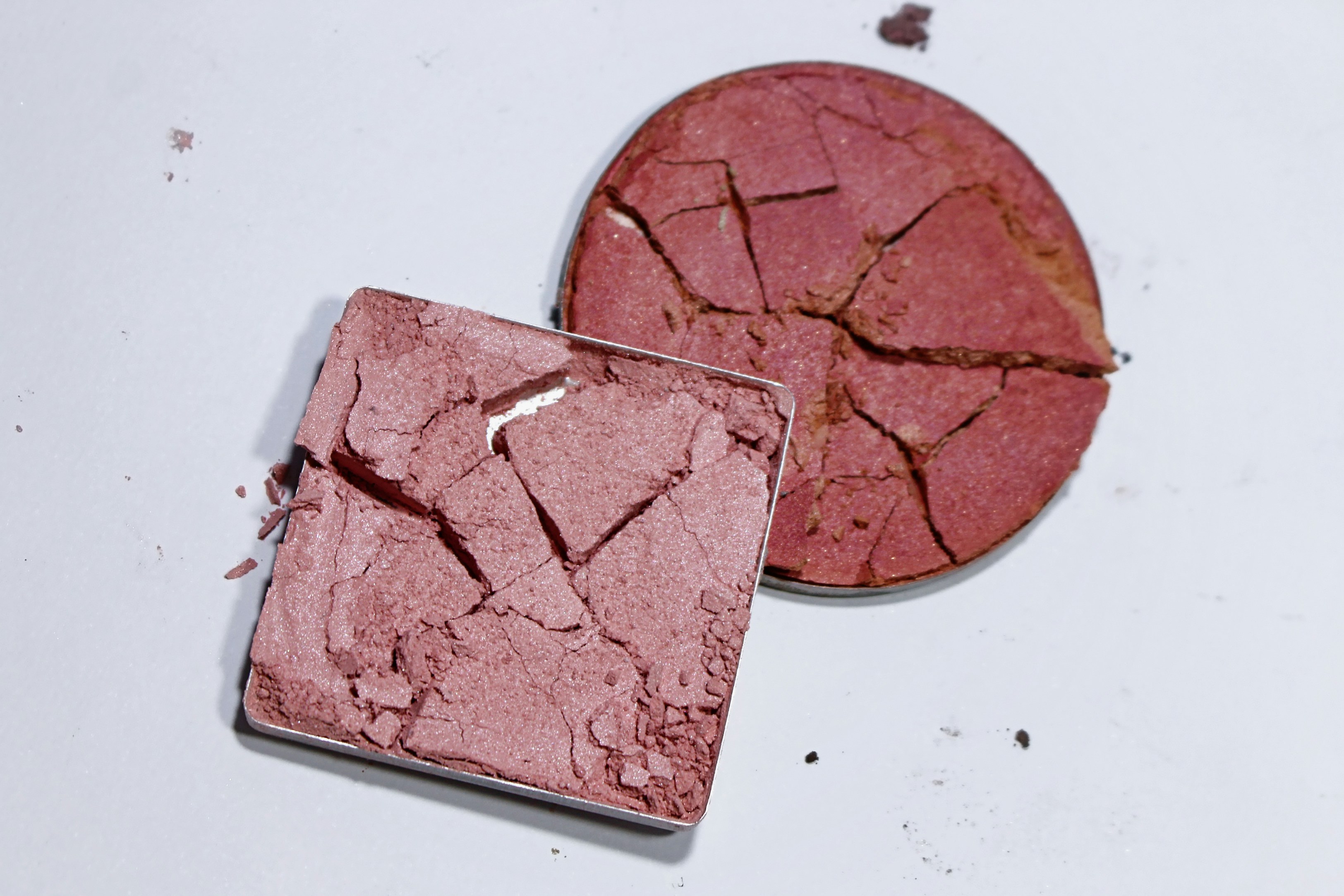
Surface Hardening (Hard Pan) on Pressed Powders: If the surface of your pressed powder becomes hard, shiny, and refuses to pick up onto the puff, facial sebum has transferred to the pan. Gently press a strip of clean cellophane tape over the hardened zone to peel away the oil layer and restore the powder.
Puff Sanitation: A dirty puff transfers facial bacteria back into powder compacts. Wash velour and sponge puffs weekly with mild soap and warm water, allowing them to dry completely in shaded airflow.
Skin Irritation: If you experience persistent contact redness, stinging, or rough micro-peeling after powder application, stop use and consult a certified dermatologist.
FAQ
Q1. Can I use a pressed powder compact for my morning makeup?
A. Yes, using a large fluffy brush delivers a sheer, morning-friendly finish.(Details)
While the compact's included puff applies a denser layer meant for touch-ups, swirling a large powder brush across the pressed pan allows you to achieve an airy, natural veil similar to loose powder.
Q2. Which powder format is better for dry skin types?
A. Hydrating pressed compacts or coated loose powders suit dry skin.(Details)
Dry skin benefits from Japanese pressed powders formulated with squalane and ceramides, or moisture-coated loose powders applied solely to the T-zone while leaving cheeks sheer.
Q3. Why does loose powder provide better pore-blurring results?
A. Free-floating spherical particles fill microscopic skin indentations easily.(Details)
Uncompressed loose powders roll across skin texture freely. When pressed into skin with a plush puff, the micro-spheres diffuse light evenly across pores without packing down into heavy pigment lines.
Q4. Does pressed powder offer better coverage than loose powder?
A. Yes, pressed powders generally contain higher pigment concentrations.(Details)
Because pressed compacts are formulated to touch up faded makeup throughout the day, they feature slightly higher color coverage than translucent setting powders, evening out redness and minor imperfections.
Q5. Can pressed powder replace liquid foundation on casual days?
A. Yes, tinted pressed powder over sunscreen creates a clean minimalist base.(Details)
Applying a tinted Japanese pressed compact directly over set daily sunscreen provides light evening coverage, oil control, and additional UV defense for effortless no-foundation days.
Summary and Key Takeaways
Japanese loose powder and pressed powder compacts excel at different moments in your beauty routine. By pairing the airy, pore-blurring lightness of morning loose powder with the targeted convenience of a midday pressed compact, you can enjoy all-day shine control, smooth comfort, and an effortless, natural finish.
Disclaimer: This article is for general information and education about Japanese cosmetics and their labels. It is not a substitute for professional medical advice, diagnosis, or treatment. Skincare results vary from person to person. Product formulas, availability, prices, and regulations change, and products sold in Japan can differ from versions sold elsewhere, so always check the current label. Do a patch test before introducing a new product, and consult a doctor or dermatologist if you have a skin condition or specific concerns.