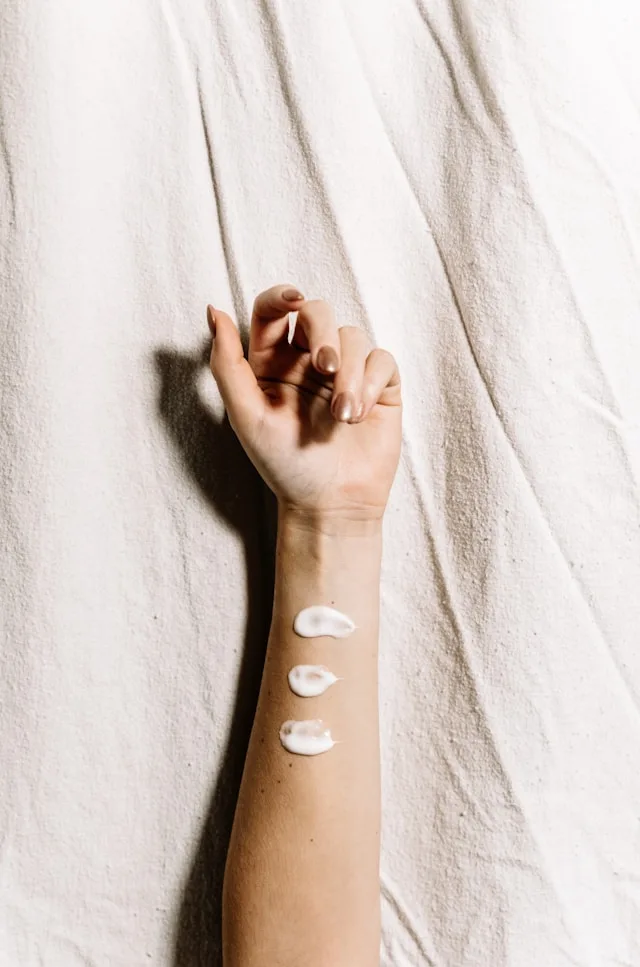
title: Japanese UV Primer Tone Up: Lavender vs Pink Guide slug: japanese-uv-primer-tone-up-lavender-vs-pink category: routines category_label: Routines published_at: '2026-11-27' updated_at: '2026-11-27' meta_description: Compare Japanese tone-up UV primers: lavender vs pink bases. Learn color correction science, yellow-dullness neutralizing, and sunscreen layering tips. description: Compare Japanese tone-up UV primers: lavender vs pink bases. Learn color correction science, yellow-dullness neutralizing, and sunscreen layering tips. lead_image: /images/stock/forearm-three-cream-swatches-patch-test.webp lead_image_alt: Three tone-up cream swatches comparing lavender, pink, and neutral Japanese UV primer bases thumbnail: /images/stock/forearm-three-cream-swatches-patch-test.webp thumbnail_alt: Three tone-up cream swatches comparing lavender, pink, and neutral Japanese UV primer bases author: Editorial Team publish: false
Japanese UV Primer Tone Up: Lavender vs Pink Guide
Achieving an illuminated, clear complexion without piling on heavy foundation layers is the hallmark of modern Japanese beauty (J-Beauty). Traditional western primers often focus strictly on pore-filling silicone textures or heavy matte oil control. In Japan, however, the foundational step of daytime makeup is almost universally a color-correcting tone-up UV primer (toun-appu UV shitaji).
These multi-functional hybrid emulsions deliver robust broad-spectrum sun defense (typically SPF 50+ / PA++++) while utilizing optical color filters to adjust underlying skin tone irregularities. Among the wide spectrum of Japanese tint options, lavender (rabendaa) and pink (pinku) are the two undisputed market champions. Yet choosing between them often creates confusion: one creates icy, porcelain transparency, while the other imparts a vibrant, lit-from-within blush.
In this clinical guide, we explore the chromatic science behind Japanese lavender and pink tone-up bases, examine how to match undertones to daytime lighting, outline a five-point zone application method, and review essential photoprotective skin health protocols.
The Tone-Up Evolution: Color Correction Meets Broad-Spectrum UV Defense
In Japanese cosmetic history, daytime sunscreen and makeup primers were once separate formulations. Today, Japanese chemical formulators merge micronized physical UV filters (zinc oxide and titanium dioxide) with organic chemical filters and color-correcting lake pigments:
[Japanese Tone-Up Mechanism]

Incident Daylight
    |
    V
Tone-Up Emulsion Layer (Micro-Milled Pigments + Mineral UV Veil)
    |
    +---> Blue Pigment: Optically cancels yellow light wavelengths (~570-590 nm)
    +---> Pink Pigment: Reflects warm red wavelengths to simulate capillary blood flow
    |
    V
Diffused Skin Surface: Even, illuminated complexion requiring minimal foundation
As natural skin aging naturally diminishes physiological barrier function over time[1], the epidermis loses natural micro-circulation and dermal hydration, frequently leading to dullness, uneven yellowing (ki-gusumi), or an ashen cast. Rather than masking these concerns beneath heavy opaque foundation layers, Japanese tone-up UV bases provide a sheer optical correction that allows natural skin texture to shine through.
Chromatic Science: Lavender Neutralization vs Pink Vitality
Understanding how lavender and pink bases interact with your baseline skin tone ensures you select the correct optical filter:
Scroll horizontally to view full comparison
| Chromatic Tone | Pigment Architecture | Primary Optical Correction Target | Resulting Complexion Aesthetic |
|---|---|---|---|
| Lavender Base | Blue (Ultramarine) + Red/Pink Pigments | Yellow sallow undertones, dullness, olive darkness | Translucent, fair porcelain clarity (*toumeikan*) |
| Pink Base | Pure Red/Warm Carmine / Iron Oxide Red | Ashen grayness, pale fatigue, lack of natural flush | Healthy, youthful vitality and soft warmth (*kesshoku-kan*) |