title: Japanese UV Umbrella Parasol Guide: Physical Sun Defense slug: japanese-uv-umbrella-parasol-sun-protection category: routines published_at: 2026-11-28 updated_at: 2026-11-28 meta_description: Discover Japanese UV umbrella (higasa) habits for physical sun defense. Learn 100% blackout coatings, ground reflection tips, and dual sunscreen pairing. keywords: japanese uv umbrella, higasa sun parasol, 100 percent blackout umbrella, physical sun protection, japanese summer sun defense author: Editorial Team
Japanese UV Umbrella Parasol Guide: Physical Sun Defense
Anyone visiting Tokyo, Kyoto, or Osaka during summer immediately notices a striking sight: streets filled with pedestrians carrying specialized sun umbrellas known as higasa. In Japan, shielding skin from intense solar radiation is not viewed as vanity; it is an established personal health habit. Japanese UV umbrellas combine advanced multi-layer fabric engineering with thermal heat shielding to create mobile shade that lowers perceived temperature while blocking destructive ultraviolet rays.
Quick answer: Japanese UV umbrellas (higasa) provide continuous, physical broad-spectrum shielding that never wears off through sweat or friction. High-performance models feature a multi-layer polyurethane blackout coating that achieves a verified 100 percent UV cut rate and near-total heat shielding (reducing canopy temperature by up to several degrees). However, because upward-reflected UV radiation bounces from asphalt and sidewalks, Japanese dermatologists advise pairing a dark-lined parasol with broad-spectrum facial sunscreen.
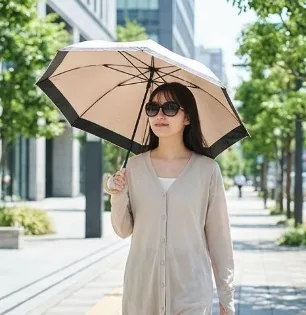
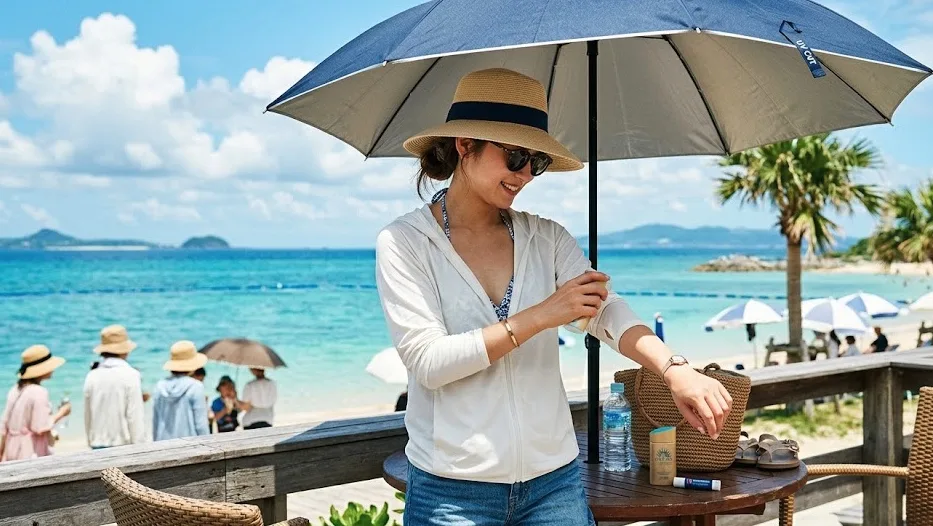
While topical sunscreens remain a baseline necessity, physical barriers offer unique photoprotective advantages. Creams and gels require regular reapplication, degrade under sweat, and sometimes cause irritation on reactive skin. Integrating a Japanese UV parasol into your daily warm-weather commute provides dependable ambient shade that preserves delicate barrier moisture.
Why Japanese UV Parasols (Higasa) Outperform Standard Umbrellas
Carrying a standard rain umbrella under bright sunlight provides minimal UV defense. Typical clear or light polyester weaves permit over 20 to 30 percent of ultraviolet rays to pass directly onto your face, scalp, and shoulders. Japanese UV parasols are engineered differently from the ground up:
- Certified UV Cut Rates: Japanese industrial testing measures UV transmission across both UVA (aging) and UVB (burning) wavelengths. High-grade parasols demonstrate certified protection rates of 99.9% to 100%.
- Thermal Heat Shielding (Shako / Shanetsu): Quality Japanese parasols reflect infrared thermal radiation, noticeably reducing radiant head and shoulder heat during sweltering midsummer humidity.
- Eye and Scalp Defense: Topically applying sunscreen across hair partings and delicate eyelids is difficult; a wide parasol canopy shades your eyes, scalp, and neck simultaneously without greasiness.
Because microvascular nutrient delivery and dermal moisture capacity naturally decline across biological aging transitions, abundant botanical extracts provide essential barrier hydration support [1]. Preserving your skin from excessive thermal strain helps maintain baseline barrier comfort throughout hot summers.
Blackout Coating Technology: 100% UV Cut vs Chemical Dipping
When shopping for Japanese parasols, understanding fabric construction prevents disappointment:
- Chemical Dip Coatings (Water-Repellent Sprays): Budget umbrellas often rely on topical UV-absorbing chemical dips. With daily friction, rain, and folding, these surface dips gradually wash away after one to two seasons, dropping protection levels to 80% or lower.
- Multi-Layer Laminated Blackout Film: Premium Japanese brands (such as Sun Barrier 100, Ashiya Rose Blanc, or specialized Wpc. lines) laminate multiple thin polyurethane or ceramic film layers directly onto dense weave fabric. This opaque structural barrier physically blocks all light transmission. Even if damp or repeatedly folded, the UV-blocking property never degrades.
- The Importance of an Inner Black Lining: The underside of your parasol should always be matte black or dark navy. While a bright outer canopy reflects direct downward sunlight, an inner black canopy absorbs diffuse UV radiation bouncing upward from concrete and pavement. Shiny or white inner linings inadvertently bounce reflected UV right back onto your cheeks and jawline.
Ground Reflection: Why a Parasol Alone Is Not Enough
A common misconception among first-time parasol users is that carrying an umbrella removes the need for facial sunscreen. In reality, solar radiation reaches your skin through multiple pathways:
- Direct Sunlight: Sunlight traveling straight down from the sun is blocked effectively by a wide parasol canopy.
- Diffuse Skylight: Atmospheric molecules scatter ultraviolet rays in all directions, allowing scattered rays to enter underneath your canopy from horizontal angles.
- Albedo / Ground Reflection: Light-colored concrete, asphalt roads, white sandy paths, and glass building facades reflect up to 10 to 20 percent of ambient UV radiation upward.
Because ground-reflected rays bypass overhead canopies, daily cosmetic lotions cannot substitute for broad-spectrum sunscreens recommended for long-term health [3]. The gold standard in Japanese urban defense is the dual-layer method: lightweight broad-spectrum sunscreen on facial skin, reinforced by a 100% blackout parasol overhead.
Comparison: Japanese UV Parasol Types
Understanding the structural grades available in Japanese retail shops helps you choose the right balance between weight, durability, and photoprotection.
Scroll horizontally to view full table
| Parasol Specification | 100% Blackout Laminated (*Kanzen Shako*) | High-Grade UV-Coated Fabric (99% Cut) | Standard Light Rain Umbrella |
|---|---|---|---|
| UV Protection Longevity | Long-lasting structural barrier; does not degrade over time | Gradually diminishes after 2 to 3 seasons of heavy folding | Minimal protection; lets 20% to 40% of UV rays pass |
| Inner Canopy Color | Matte black absorption layer to neutralize ground reflection | Varies; often metallic silver, beige, or patterned | Same color as outer shell; often transparent or white |
| Heat Shielding Effect | Reduces perceived ambient head heat by several degrees | Moderate heat reduction depending on outer color | Zero heat shielding; greenhouse effect under plastic |
| Rain Capability (*Haru-Ame Kenyou*) | Dual-use for rain and sun; heavy laminated fabric | Dual-use waterproof; slightly lighter and compact | Designed strictly for rain; zero thermal defense |
| Weight and Portability | Slightly heavier due to laminated film layers (200-280g) | Ultra-lightweight options available (120-180g) | Standard domestic weight (200-350g) |