Japanese Wooden Hair Brush Camellia Oil Care Guide
RoutinesBy Miho Tanaka
title: Japanese Wooden Hair Brush Camellia Oil Care Guide
slug: japanese-wooden-hair-brush-camellia-oil-care
category: routines
published_at: '2026-11-27'
updated_at: '2026-11-27'
meta_description: Learn the traditional Japanese ritual of soaking wooden hair brushes and tsuge combs in camellia oil. Prevent static friction, clean wood, and add shine.
keywords:
japanese wooden hair brush camellia oil care
tsuge comb oil soaking ritual japan
camellia oil wooden hair brush maintenance
boxwood comb static prevention japan
aburatsuke tsuge gushi traditional care
author: Seibun Lab Editorial Team
Japanese Wooden Hair Brush Camellia Oil Care Guide
In an era of mass-produced plastic combs and nylon bristle brushes, Japanese artisan hair tools stand apart as cherished heirlooms. For centuries, Japanese women—from Heian-era court noblewomen to modern salon patrons—have treasured boxwood combs (tsuge-gushi) and hardwood paddle brushes as the secret to glossy, tangle-free hair.
Yet unlike modern synthetic brushes, natural wooden grooming tools come with one cardinal rule: never wash them with water. Water expands natural wood fibers, leading to warping, cracking, and splintered teeth that snag delicate cuticles.
Instead, Japanese hair masters maintain wooden tools through a mindful, restorative practice: camellia oil soaking (abura-tsuke). Just as natural aging and cumulative mechanical tension gradually reduce hair elasticity,[1] plastic brushing induces static friction that chips away cuticle tiles. Here is the cultural history, material science, and step-by-step procedure for caring for Japanese wooden brushes and tsuge combs with camellia oil.
The Material Science: Why Wood and Camellia Oil Are Natural Partners
The marriage between Japanese hardwood and camellia seed oil is a masterpiece of historical biomimetic engineering.
1. The Anatomy of Boxwood (Satsuma Tsuge)
The finest Japanese combs are hand-carved from slow-growing Satsuma tsuge (boxwood from southern Kyushu). This timber requires over 30 years to mature, yielding wood of extraordinary density, micro-fine grain, and gentle flexibility. When polished, the teeth glide through dense hair without catching or creating microscopic tears.
2. The Chemistry of Camellia Japonica Seed Oil (Tsubaki-Abura)
Not all botanical oils can be used to care for wooden tools. Culinary olive oil or polyunsaturated seed oils go rancid quickly, leaving sticky, sour-smelling polymer crusts.
High Oleic Acid Stability: Pure Japanese camellia oil contains over 85% oleic acid—a mono-unsaturated fatty acid classified as a non-drying oil.
Resistance to Rancidity: It will not oxidize, yellow, or harden over time.
Micro-Porosity Absorption: The dense fibers of boxwood drink in camellia oil like a sponge, storing it within the wood grain. Each time you comb, the wood dispenses an imperceptible, microscopic lipid film along your hair strands.
Wooden Combs vs. Synthetic Plastic Brushes
Scroll horizontally to see full comparison
Feature
Japanese Tsuge Comb / Wooden Brush
Standard Plastic / Nylon Brush
Static Electricity Generation
Near zero; natural wood and vegetable lipids dissipate electrical charges
High static buildup; repels flyaways and frays cuticle margins
Cuticle Interaction
Smoothly buffed rounded teeth provide gentle detangling without snagging
Sharp mold seams on plastic teeth create mechanical micro-scratches
Moisture Conditioning
Gradually dispenses absorbed camellia oil onto dry lengths with every stroke
Zero conditioning; simply sweeps surface dust across dry fibers
Tool Lifespan
Decades to a lifetime; develops a lustrous amber patina (*ame-iro*) with age
1 to 3 years; plastic degrades, bristles warp, and rubber pads crack
Cleaning Method
Camellia oil soak (*abura-tsuke*) once a month; zero water contact
Warm soapy water soak and sink scrubbing
The Traditional Japanese Camellia Oil Soaking Ritual (Abura-Tsuke)
Performing the abura-tsuke maintenance ritual once every 4 to 6 weeks removes accumulated hair sebum and airborne dust while revitalizing the wood.
Before applying oil, remove hair strands and loose surface dust:
Take a soft-bristled, clean dry toothbrush (or specialized cotton cleaning thread called souji-ito).
Gently stroke between each tooth from the base outward to dislodge trapped lint and dried sebum. Never use sharp metal pins or scissors, which gouge wood teeth.
2. Generous Camellia Oil Dispensing
Place your wooden comb or brush on a clean paper towel:
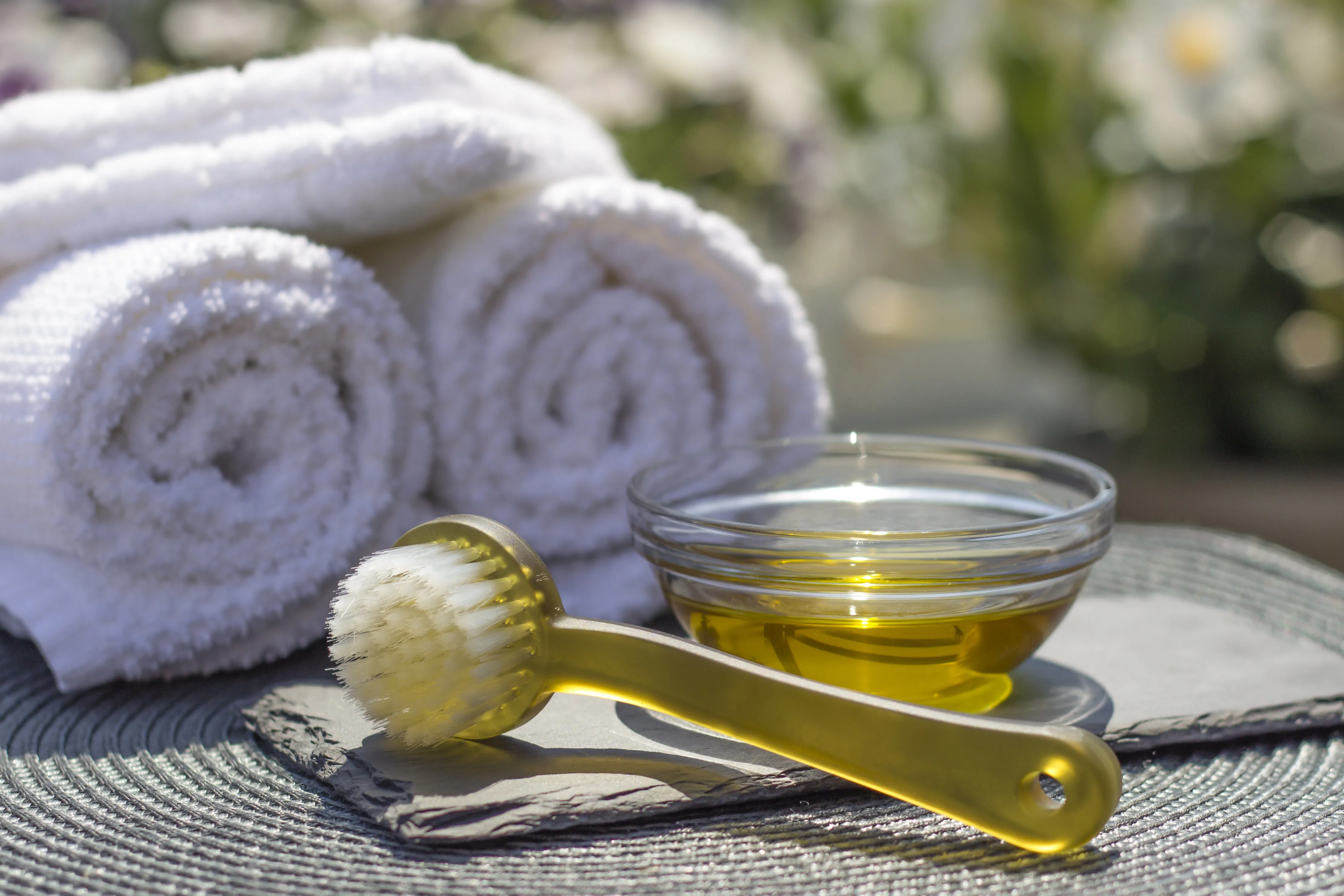
Dispense 5 to 8 drops of pure 100% Japanese camellia oil directly onto the teeth.
Use your dry toothbrush to spread the golden oil thoroughly between every tooth, along the spine, and over the handle until the entire tool glistens.
3. The 24-Hour Rest Period (Sealing)
Wrap the oiled comb loosely in a sheet of clean plastic film or place it inside a sealed zip bag. Allow it to rest at room temperature for 12 to 24 hours. During this period:
Old, oxidized hair sebum dissolves into the fresh camellia oil.
The porous wood fibers absorb fresh non-drying lipids deep into their core.
4. Polish With a Soft Cotton Cloth
Unwrap the comb. You will notice the oil has lifted residual grime.
Take a clean microfiber or cotton cloth and wipe away the excess oil and dissolved debris.
Buff the surface with light pressure until the wood feels smooth, silky, and dry to the touch, without sticky residue.
Your comb is now deeply conditioned, glowing with a warm honey tone, and ready to restore silken polish to your hair.
Caring for Cushion Paddle Brushes With Wooden Bristles
If your tool is a wooden-bristle cushion paddle brush (where wooden pins are set into an elastic rubber base) rather than a solid boxwood comb:
Avoid Soaking the Rubber Pad: Do not immerse the entire cushion base in oil, as concentrated lipids can soften and degrade synthetic rubber pads over time.
Targeted Pin Coating: Dispense 2 to 3 drops of camellia oil onto a soft cloth and wipe down the wooden pins individually.
Dusting With a Dry Brush: Use an angled dry nylon brush to whisk lint away from the pin bases before buffing.
Signs to Stop and When to See a Doctor
Because natural wooden combs and pure camellia oil are gentle cosmetic grooming aids, adverse reactions are exceedingly rare.
Because allergic contact dermatitis remains a frequent scalp concern evaluated by physicians,[2] cease using camellia oil if you have a documented seed or botanical allergy and develop redness, itching, or swelling around your hairline or ears.
When spending extended daytime hours outdoors, remember that daily sunscreen defense remains essential along vulnerable hair parting zones[3] where exposed scalp skin is prone to solar radiation damage. If you notice persistent flaking, chronic scaling, or painful scalp lesions, consult a certified dermatologist for professional clinical assessment rather than relying on hair accessories.
FAQ
Q1. What happens if I accidentally wash my wooden comb with water?
A. Dry it immediately with a towel and do not use a hair dryer or direct sun.(Details)
If your wooden tool gets wet, gently blot it dry with a soft cloth and let it air-dry naturally in the shade. Never use hot blow dryer heat, which causes wood to warp and crack. Once dry, perform an oil soak (*abura-tsuke*) to restore lost lipids.
Q2. Can I use jojoba oil or argan oil instead of camellia oil?
A. Yes, pure jojoba oil is a suitable alternative for wooden tools.(Details)
Jojoba oil is a liquid wax ester with superb oxidation resistance, making it safe for wooden combs. However, Japanese camellia oil remains the gold standard because its lipid balance closely resembles human sebum, transferring optimal suppleness to hair fibers.
Q3. How often should I oil my wooden comb?
A. Oiling once a month is optimal for regular daily use.(Details)
When you first purchase a raw wooden comb, oiling it every two weeks for the first three months helps saturate the grain. Afterward, a monthly maintenance soak is all that is required to keep the wood lustrous and water-repellent.
Q4. Will using an oiled comb make clean hair greasy?
A. No, properly wiped wooden combs dispense only an imperceptible sheen.(Details)
Because excess surface oil is wiped completely dry with a cloth before use, the comb does not deposit wet grease. It transfers only microscopic lipid traces that calm static electricity and seal cuticle edges without clumping strands.
Q5. Can I use a tsuge comb on wet hair out of the shower?
A. No, wooden combs should strictly be used on dry or mostly dry hair.(Details)
Combing soaking-wet hair transfers moisture into the wood grain, which can degrade the oil seal over time. Furthermore, wet cuticles are swollen and fragile. Use a wide-toothed plastic detangler for wet hair, reserving your wooden comb for dry styling.
Disclaimer: This article is for general information and education about Japanese cosmetics and their labels. It is not a substitute for professional medical advice, diagnosis, or treatment. Skincare results vary from person to person. Product formulas, availability, prices, and regulations change, and products sold in Japan can differ from versions sold elsewhere, so always check the current label. Do a patch test before introducing a new product, and consult a doctor or dermatologist if you have a skin condition or specific concerns.