Japanese Skincare for Dark Skin Tones: Inclusive Guide
ConcernsBy Miho Tanaka
slug: japanese-skincare-for-dark-skin-tones-and-skin-of-color
title: Japanese Skincare for Dark Skin Tones: Inclusive Guide
meta_description: A guide to Japanese skincare for dark skin tones: zero white-cast sunscreens, PIH pigment care, bihaku label clarity, and barrier hydration.
date: "2026-11-17"
category: concerns
tags:
dark skin tones
skin of color
Japanese skincare
post inflammatory hyperpigmentation
no white cast sunscreen
Japanese Skincare for Dark Skin Tones: Inclusive Guide
For global beauty enthusiasts with rich melanin complexions—ranging from South Asian, Middle Eastern, and Latinx skin to Afro-descendant deep skin tones (Fitzpatrick phototypes IV through VI)—exploring Japanese beauty (J-beauty) often brings up important questions. Can lightweight Japanese lotions adequately hydrate dry, ashy-prone skin? Do Japanese sunscreens leave a chalky purple cast? Most importantly, what does the omnipresent Japanese word bihaku (often translated as brightening) really mean for darker complexions?
Far from being exclusive to fair skin, Japanese skincare philosophy is exceptionally well aligned with the dermatological needs of skin of color. Rich melanin skin possesses a strong natural barrier and inherent photoprotection against sunburn, but it is also uniquely prone to post-inflammatory hyperpigmentation (PIH), reactive melanocyte activity, and visible surface dehydration. Understanding how J-beauty formulations operate empowers individuals with deeper complexions to leverage Japan's gentle, science-backed routines for an even, glowing finish.
Quick answer: Is Japanese skincare suitable for dark skin tones?
Yes. Japanese skincare is exceptionally well-suited for skin of color (Fitzpatrick types IV to VI) due to its emphasis on zero-friction application, intense stratum corneum hydration, and advanced clear chemical sunscreens that leave zero white cast. Furthermore, Japanese bihaku (brightening) products do not alter natural skin tone; rather, they regulate tyrosinase enzyme activity to soften the appearance of post-inflammatory hyperpigmentation (PIH) and even out complexion tone safely.
Demystifying "Bihaku": Why Japanese brightening is not skin alteration
The most common point of apprehension for consumers with deeper skin tones is encountering Japanese products labeled as bihaku or marketed in overseas translations as brightening[1].
In some global markets, unregulated lightening creams contain toxic chemicals like hydroquinone, mercury, or high-potency corticosteroids formulated to artificially strip natural eumelanin.
In Japan, bihaku has an entirely different regulatory and clinical definition:
Statutory Definition: Under the Japanese Pharmaceutical and Medical Devices Act (PMD Act), bihaku is a legally regulated quasi-drug category. Products must prove they "suppress melanin production to prevent dark spots and freckles caused by sun exposure."
Physiological Action: Japanese quasi-drug brightening actives—such as tranexamic acid, arbutin, niacinamide, and stabilized vitamin C derivatives—do not alter baseline skin genetics or degrade healthy melanin.
Targeting Hyperpigmentation: These ingredients work by modulating tyrosinase enzyme activity and dampening inflammatory signaling between keratinocytes and melanocytes. For darker complexions, this makes bihaku products outstanding tools for diminishing the appearance of localized acne marks, sunspots, and post-inflammatory hyperpigmentation (PIH) without affecting the surrounding natural complexion.
Scroll horizontally to see more
Active Ingredient
Quasi-Drug Mechanism
Impact on PIH & Melanin
Suitability for Rich Melanin
Recommended Formulation
Tranexamic Acid (Toranekisamusan)
Plasmin inhibitor; blocks UV- and inflammation-triggered melanocyte signals
Prevents melanocyte hyperactivity; softens the look of stubborn dark marks evenly
Exceptional; will not lighten unaffected natural skin tone
Water-light lotions (keshosui) and barrier serums
Dipotassium Glycyrrhizate (Kanzou Ekisu)
Inhibits inflammatory prostaglandins and leukotrienes
Quells active irritation before it can trigger post-acne dark marks
Crucial for acne-prone or easily irritated darker skin
Soothing gel-creams and gentle cleansing foams
Ethyl Ascorbic Acid (Vitamin C Derivative)
Direct free-radical scavenger; chemical reduction of oxidized melanin
Clarifies surface dullness and speeds up mark dissipation
High; provides antioxidant defense without acidic irritation
Daily brightening essence drops
Photostable Chemical UV Filters (Tinosorb S, Uvinul A Plus)
Broad-spectrum UVA & UVB photonic absorption
Blocks solar wavelengths that drive melanin overproduction
Optimal; dissolves completely transparent without grey or purple film
Watery essence and gel sunscreens
Multi-Ceramide Complexes (Ceramides NP, AP, EOP)
Intercellular lipid replenishment in the stratum corneum
Smooths rough, ashy surface flakes and locks in humectants
Essential; creates radiant, luminous luster on dark skin
Fluid emulsions (nyueki) and rich barrier creams
The dermatological reality of skin of color (Fitzpatrick IV–VI)
Dermatologists specializing in ethnic skin identify distinct structural and immunological characteristics in rich melanin complexions[2]:
1. Robust photoprotection vs. hyperactive melanocytes
Melanocytes in dark skin contain larger, individually dispersed melanosomes packed with protective eumelanin, offering natural cellular defense equivalent to an intrinsic SPF of approximately 13. However, these melanocytes are also immunologically hyper-responsive. Any physical trauma—including rough scrubbing, hot water, aggressive chemical acids, or inflammatory acne—causes melanocytes to overproduce pigment, resulting in stubborn post-inflammatory hyperpigmentation (PIH) that can persist for months.
2. The critical role of friction-free application
Because mechanical friction triggers sub-clinical inflammation that exacerbates PIH, the traditional Japanese application technique is an exceptionally beneficial approach for skin of color. Rather than aggressively rubbing products across the face, Japanese skincare emphasizes friction-free pressing and gentle cupping:
Cleansers are whipped into dense micro-foams so fingertips never directly drag against the epidermis.
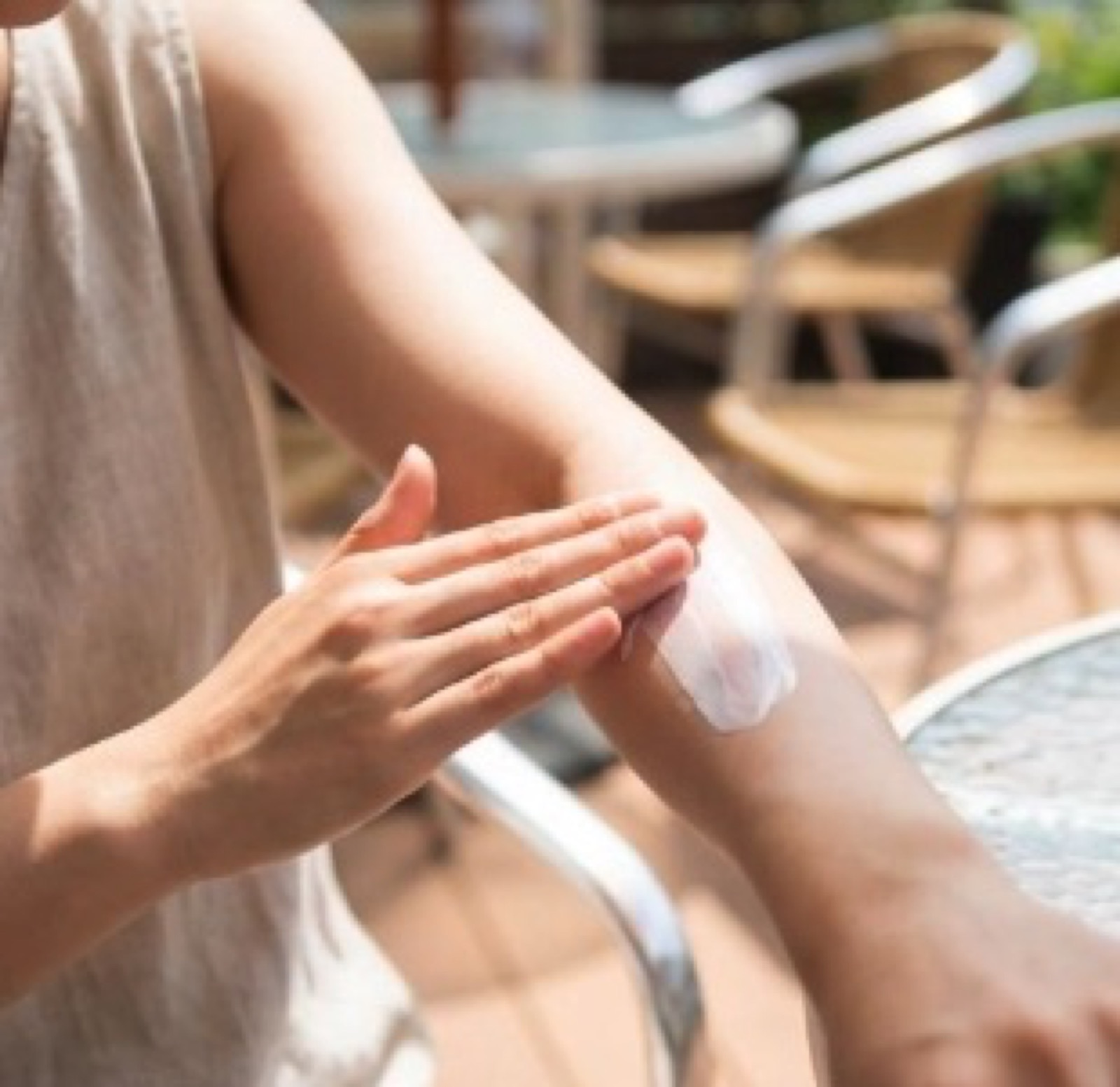
Lotions and emulsions are gently patted or pressed using the full palms, minimizing shear stress on delicate facial tissues.
Zero white-cast: Why Japanese sunscreens excel for deep skin
For people with dark skin tones, the biggest obstacle in sun protection has historically been the dreaded white cast—the chalky, purple, or ghost-like film left by mineral sunscreens containing zinc oxide and titanium dioxide[3].
Because UV radiation (particularly UVA and high-energy visible light) actively stimulates hyperpigmentation in melanin-rich skin, daily sun defense is non-negotiable. This is where Japanese sun care leads the global market:
Next-Generation Organic Filters: Japanese cosmetic chemists formulate predominantly with advanced, photostable chemical filters like Tinosorb S (Bis-Ethylhexyloxyphenol Methoxyphenyl Triazine), Uvinul A Plus (Diethylamino Hydroxybenzoyl Hexyl Benzoate), and Octinoxate.
Transparent Water-Gel Matrices: These micro-fine organic filters dissolve smoothly into alcohol-free or low-alcohol watery gels and essences. When applied to dark skin, they dry down 100% transparent within seconds, leaving zero residue, zero grey cast, and zero tackiness.
Natural Glow Finish: Japanese sunscreens impart a healthy, hydrated sheen (tsuya) that looks vibrant and radiant on deep skin rather than greasy or chalky.
Banishing the "Ashy" look: Layering hydration for radiant luster
In deep skin tones, dry surface cells refract light unevenly, producing a dull, chalky, or grey appearance commonly referred to as "ashiness." While many Western routines combat ashiness with heavy petrolatum ointments that can clog pores, Japanese skincare addresses the root cause through hierarchical water-and-oil layering:
Hydration Plumping (Keshosui): Saturate skin with multiple layers of watery lotion packed with hyaluronic acid, glycerin, and fermented rice filtrate (kome koji). This quenches dehydrated keratinocytes from within the stratum corneum.
Ceramide Barrier Sealing (Nyueki): Follow immediately with a lightweight milk or emulsion containing skin-identical ceramides and plant squalane. This locks the water into the lipid bilayer, restoring natural skin suppleness without heaviness.
Targeted Spot Care: Apply a tranexamic acid or vitamin C essence directly over post-acne marks to encourage steady, uniform tonal clarity.
Signs to stop and when to see a doctor
While gentle Japanese routines offer substantial benefits for skin of color, unexpected reactions can occur. Discontinue use and consult a board-certified dermatologist if you experience:
Signs of allergic contact dermatitis: Persistent facial redness, intense itching, swelling, or blistering following the introduction of a new product, which can trigger severe PIH in dark skin.
Rapidly darkening or spreading hyperpigmentation: Sudden onset of dark, mottled patches that worsen despite sun protection, which may indicate hormonal changes or lichenoid reactions requiring clinical medical prescription.
Asymmetric or atypical pigmented lesions: Any dark spot that changes size, shape, or color, or begins bleeding, requiring urgent dermoscopic examination to rule out acral lentiginous melanoma or other cutaneous neoplasms[4].
Severe cystic breakouts or follicular pustules: Deep, painful inflammatory breakouts that cannot be controlled with over-the-counter quasi-drugs and risk causing long-term pigmentary or textural scarring[5].
Gentle cosmetic practices support daily radiance, but clinical skin pathologies require professional medical management.
FAQ: Japanese Skincare for Dark Skin Tones
Q1. Does Japanese "bihaku" skincare alter or lighten dark skin?
A. No, Japanese bihaku products brighten localized dark spots without modifying your natural skin tone.(Details)
Under Japanese law, *bihaku* (quasi-drug brightening) formulas are clinically approved to prevent and diminish the appearance of ultraviolet-induced hyperpigmentation and freckles. Ingredients like tranexamic acid, arbutin, and vitamin C derivatives regulate the tyrosinase enzyme and calm post-inflammatory pathways. They cannot destroy melanin or alter your genetic baseline skin color, making them completely suitable for rich melanin tones.
Q2. Which Japanese sunscreens are reliable for avoiding a white cast on dark skin?
A. Look for chemical/organic sunscreen formulas labeled as "Watery Gel" or "Watery Essence."(Details)
Japanese sunscreens formulated strictly with modern organic filters (such as Tinosorb S, Uvinul A Plus, and Uvinul T 150) dry down 100% invisible on all Fitzpatrick skin phototypes. Avoid products labeled "Tone Up" or formulas featuring zinc oxide and titanium dioxide high on the ingredient list, as these are intentionally designed with mineral pigments that leave a pale tint.
Q3. Can rich melanin tones use Japanese exfoliating toners or peeling gels?
A. Yes, but choose gentle enzyme powders or mild lactic/mandelic acids over aggressive physical scrubs.(Details)
Mechanical scrubs and high-percentage glycolic acid peels can trigger inflammatory flares that cause post-inflammatory hyperpigmentation in dark skin. Japanese enzyme cleansing powders (containing papain or protease) and mild cellulose gommage peeling gels gently dissolve dead surface keratinocytes without mechanical trauma or chemical stress, making them ideal when used once weekly.
Q4. How do I avoid ashy-looking skin when using Japanese lightweight lotions?
A. Always seal watery lotions with an emulsion or lipid cream to prevent moisture evaporation.(Details)
Watery lotions (*keshosui*) deliver deep hydration, but in dry climates, the water will evaporate from the stratum corneum if not sealed, leaving dark skin looking ashy. Always follow your lotion with a ceramide-rich milk (*nyueki*) or cream containing squalane or macadamia nut oil within two minutes of application to trap hydration and impart a radiant finish.
Q5. Can Japanese brightening products help with dark spots on the body?
A. Yes, affordable large-format Japanese tranexamic acid lotions work well on body PIH.(Details)
Many Japanese brands offer 400 mL to 500 mL pump bottles of quasi-drug brightening lotions formulated with tranexamic acid or dipotassium glycyrrhizate. These generous sizes can be patted directly onto the chest, back, shoulders, or inner thighs to diminish the look of frictional discoloration, post-ingrown hair marks, and sun-induced unevenness comfortably and economically.
Summary
Safety of Bihaku: Japanese brightening products regulate tyrosinase to diminish the appearance of hyperpigmentation and PIH without altering natural melanin tones.
Friction-Free Philosophy: Pressing and patting dense foams and hydrating lotions minimizes the mechanical shear stress that triggers dark spots.
Zero White-Cast UV Care: Advanced Japanese chemical sunscreens melt transparently into deep skin, providing invisible broad-spectrum photoaging defense.
Banishing Ashiness: Layering humectant lotions with ceramide-packed emulsions locks in hydration and provides a radiant, healthy finish without heavy pore-clogging oils.
Inclusive J-Beauty: The combination of gentle quasi-drug actives and barrier-focused hydration makes Japanese skincare exceptionally beneficial for skin of color.
References
Pharmaceuticals and Medical Devices Agency (PMDA) - Japan. Standards for Quasi-Drug Brightening and Active Ingredient Approval. Published 2021.
Taylor SC. Skin of color: Biology, structure, and distinctive dermatological considerations. J Am Acad Dermatol. 2002;46(2 Suppl Understanding):S41-S62.
Alexis AF, Blackcloud P. Natural products for the treatment of hyperpigmentation in skin of color. J Clin Aesthet Dermatol. 2013;6(9):32-40.
American Academy of Dermatology (AAD). Guidelines of care for the management and evaluation of hyperpigmentation disorders in skin of color. Published 2023.
Davis EC, Callender VD. Postinflammatory hyperpigmentation: A review of the epidemiology, clinical features, and treatment options in skin of color. J Clin Aesthet Dermatol. 2010;3(7):20-31.
Disclaimer: This article is for general information and education about Japanese cosmetics and their labels. It is not a substitute for professional medical advice, diagnosis, or treatment. Skincare results vary from person to person. Product formulas, availability, prices, and regulations change, and products sold in Japan can differ from versions sold elsewhere, so always check the current label. Do a patch test before introducing a new product, and consult a doctor or dermatologist if you have a skin condition or specific concerns.