title: Glycation and Anti-Glycation Skincare: The Japanese Approach description: Explore how Japanese skincare tackles glycation and AGEs. Learn about the biology of collagen stiffening, botanical extracts, and daily habits for skin resilience. published_at: '2026-11-14' updated_at: '2026-11-14' fact_checked_at: '2026-11-14' author: Miho Tanaka fact_checker: Miho Tanaka thumbnail: /images/stock/hero-glycation-anti-glycation-skincare-japan.jpg thumbnail_alt: Golden honey-amber botanical extract droplet representing anti-glycation skincare research category: how-japan-works tags:
- glycation
- anti-aging
- j-beauty
- botanical extracts
- skin longevity
Glycation and Anti-Glycation Skincare: The Japanese Approach
While global anti-aging discussions often center exclusively on sunscreen and retinoids, Japanese dermatological laboratories have spent over two decades pioneering another critical frontier of skin longevity: anti-glycation care (toka care). Glycation describes the biochemical process wherein surplus sugars bind to structural proteins like collagen and elastin, forming rigid cross-links known as Advanced Glycation End-products (AGEs).
Over time, the accumulation of AGEs causes dermal proteins to lose their youthful elasticity and turn yellowish-brown—a phenomenon Japanese researchers identified as a primary contributor to both stubborn facial sagging and age-related sallow dullness (kigumi). By pairing advanced botanical extraction with mindful lifestyle habits, the Japanese skincare industry has created a distinctive, proactive model for intercepting glycation before it alters skin architecture.
Quick answer: The Japanese Anti-Glycation Framework
- Core Biology: Excess reducing sugars bond non-enzymatically with collagen fibers, stiffening the dermal matrix and generating yellow-tinted AGE molecules.
- Dual Manifestation: Glycation simultaneously causes mechanical loss of skin rebound and an uneven, yellowish dullness (kigumi) distinct from UV-induced melanin.
- Targeted Botanicals: Formulas utilize verified plant extracts—including cherry blossom (sakura), chamomile (kamitsure), green tea (ryokucha), and shell ginger (getto)—to inhibit early glycation cascades.
- Holistic Integration: Japanese beauty treats glycation through both topical shields and dietary rhythms, such as blood sugar moderation and meal pacing.
What Is Glycation? The Science of AGEs in Dermal Collagen
Glycation is fundamentally a non-enzymatic reaction, commonly referred to in biochemistry as the Maillard reaction. When excess glucose, fructose, or related reducing sugars circulate in the bloodstream and interstitial fluid, they react spontaneously with the free amino groups of proteins:
- Early Phase (Schiff Bases & Amadori Products): Sugar molecules attach to amino acids, creating unstable early compounds. At this early stage, the reaction is partially reversible if blood sugar levels stabilize quickly.
- Intermediate Phase (Oxidative Rearrangement): If high sugar concentrations persist, these intermediate products undergo oxidative degradation and dehydration reactions.
- Late Phase (Advanced Glycation End-Products - AGEs): The molecules undergo irreversible cross-linking, permanently fusing structural fibers together into stubborn, yellowish AGE complexes.
The Impact on Skin Elasticity
Collagen type I and type III provide the mechanical scaffolding of the human dermis. In healthy youth, these fibers slide smoothly past one another, allowing the skin to stretch and bounce back effortlessly.
When AGEs form cross-links between neighboring collagen strands, the fibers become brittle, rigid, and immobilized—much like flexible rubber bands turning stiff and brittle when exposed to prolonged heat. Furthermore, glycated collagen is highly resistant to natural matrix metalloproteinase (MMP) turnover, preventing the body from efficiently clearing damaged proteins to make room for freshly synthesized fibers.
To safeguard dermal structural networks, Japanese beauty researchers investigate advanced physiological defense mechanisms. Major corporate research centers, such as Shiseido Company, Limited, consistently study dermal matrix resilience and cellular longevity pathways [1].
The Visual Signature: Yellow Dullness (Kigumi) and Elasticity Loss
Many individuals in their late thirties and forties notice that their complexion appears tired or yellowish even when they have no sun-induced freckles or active post-inflammatory hyperpigmentation. In Japanese dermatology, this specific skin appearance is termed kigumi (yellow dullness).
How AGEs Change Skin Color
Unlike melanin—which produces distinct brown or black spots in the upper epidermal layers—AGEs accumulate primarily in the deeper dermal matrix and the stratum corneum. Because AGE molecules naturally carry a characteristic yellow-brown fluorescent hue, their accumulation deep beneath the skin acts like a yellowish filter, altering how ambient light bounces back through the epidermis. The skin loses its translucent, rosy radiance and takes on an opaque, sallow cast.
The Dangerous Synergy Between UV and Glycation
Glycation and ultraviolet exposure do not act in isolation; they mutually amplify one another:
- Solar Elastosis & AGEs: UVA-induced reactive oxygen species accelerate the oxidative steps required to convert Amadori intermediates into permanent AGEs.
- RAGE Receptor Activation: AGEs bind to specific cell receptors (RAGE), triggering downstream inflammatory signals that degrade healthy extracellular matrix components.
Understanding this destructive cycle is why Japanese cosmetic formulators approach sun care and anti-glycation care as two halves of a singular protective system.
Key Japanese Botanical Ingredients in Anti-Glycation Formulations
Japanese cosmetic laboratories were among the first globally to screen hundreds of domestic and traditional Asian plant extracts for their capacity to intercept the Maillard reaction. Several botanical extracts have demonstrated remarkable efficacy in scientific evaluations:
1. Cherry Blossom (Sakura) Leaf Extract
Derived from the leaves and petals of Prunus yedoensis, sakura extract contains potent caffeoyl glucose and quercetin glucoside compounds. In laboratory assays, sakura extract has been shown to inhibit intermediate AGE formation, protect fibroblasts from sugar-induced apoptosis, and support natural collagen synthesis.
2. Chamomile (Kamitsure) Flower Extract
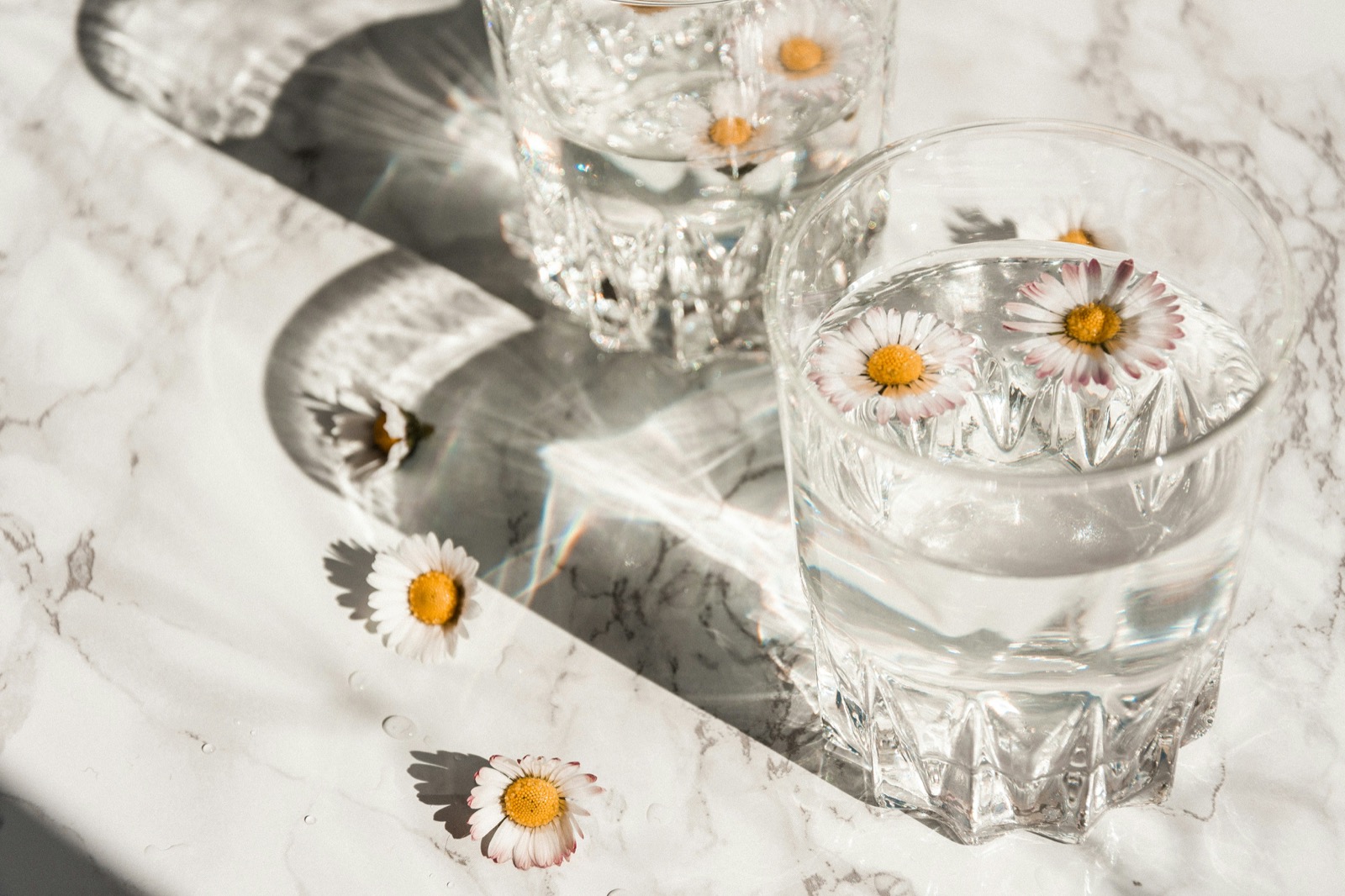
Chamomile has a long history in the Japanese Quasi-Drug (Iyakubugaihin) system as an approved skin-conditioning agent. Rich in apigenin and chamazulene, chamomile extract suppresses inflammatory pathways that accelerate collagen cross-linking while soothing surface micro-irritation.
3. Green Tea (Ryokucha) Catechins
Unfermented green tea contains high concentrations of epigallocatechin gallate (EGCG). In addition to functioning as a world-class free radical scavenger, EGCG directly competes with reducing sugars for protein binding sites, substantially curtailing the initial formation of Schiff base complexes.
4. Shell Ginger (Getto) Leaf Extract
Native to subtropical Okinawa, shell ginger (Alpinia zerumbet) leaves contain thirty times more polyphenolic antioxidants than red wine. Okinawan cosmetic research demonstrates that getto extracts inhibit elastase and collagenase enzyme activity while protecting structural proteins against sugar-mediated stiffening.
Major cosmetic innovators, such as Kao Corporation Global Site, have dedicated extensive research to micro-defense systems and botanical efficacy, helping maintain skin barrier integrity under environmental stress [2].
Comparing Skin Aging Accelerators: Glycation vs Photoaging vs Oxidation
To build a truly effective preventative skincare ritual, it is vital to distinguish between the three primary environmental and metabolic mechanisms driving skin changes:
Scroll horizontally to view full table
| Aging Factor | Primary Biochemical Driver | Visible Skin Manifestation | Primary J-Beauty Countermeasure |
|---|---|---|---|
| Glycation (AGEs) | Excess sugars binding non-enzymatically to collagen and elastin | Deep structural stiffness, lack of rebound, sallow yellow tone (*kigumi*) | Sakura extract, blood sugar regulation, low-GI diet, chamomile |
| Photoaging (UV) | UVA/UVB radiation creating DNA damage and activating MMP enzymes | Hyperpigmentation, solar elastosis, coarse leathery texture, fine lines | Daily high-SPF/PA broad-spectrum sunscreen, UV parasols, physical shade |
| Oxidation (ROS) | Free radicals generated by pollution, metabolic stress, and blue light | Barrier compromise, lipid peroxidation, dullness, surface inflammation | Vitamin C derivatives, green tea polyphenols, ferulic acid, astaxanthin |