title: How to Find Your Skin Type: The Japanese Self-Check Method description: "Find your skin type using the Japanese two-axis method. Evaluate moisture vs sebum levels, test bare-skin reactions, and tailor your J-Beauty routine." meta_description: Find your skin type using the Japanese two-axis method. Evaluate moisture vs sebum levels, test bare-skin reactions, and tailor your J-Beauty routine. published_at: "2026-11-17" updated_at: "2026-11-17" fact_checked_at: "2026-11-17" author: "Miho Tanaka" category: "how-japan-works" slug: "how-to-find-your-skin-type-japanese-method" thumbnail: "/images/stock/woman-checking-skin-in-bathroom-mirror.jpg" thumbnail_alt: "Woman observing her facial skin condition in a bathroom mirror to determine skin type" affiliate: false ja_equivalent: null publish: true
How to Find Your Skin Type: The Japanese Self-Check Method
Before selecting a single Japanese lotion, emulsion, or sunscreen, you must know your baseline skin condition. In Western beauty culture, skin types are often viewed as rigid, lifelong labels: "oily," "dry," or "combination."
In Japanese dermatology, however, skin is analyzed along a two-axis matrix: Moisture (Suibun) versus Sebum (Yubun). Rather than viewing skin as static, J-Beauty diagnostics recognize that water and lipid levels fluctuate with seasons, hormones, and environmental stress.
Understanding this dynamic balance allows you to accurately diagnose your skin profile at home and adjust your routine with surgical precision.
The Japanese self-check method evaluates skin across two distinct physiological axes: moisture content (*water*) and sebum secretion (*oil*). To test at home, wash your face with a mild amino-acid cleanser, pat dry, and leave skin completely bare without applying any products for 20 minutes. Observe how your T-zone and cheeks react: balanced skin feels comfortable and soft, dry skin feels tight throughout, oily skin develops shine across the entire face, and dehydrated-oily (*inner dry*) skin feels tight and parched on the cheeks while producing noticeable shine on the nose and forehead.
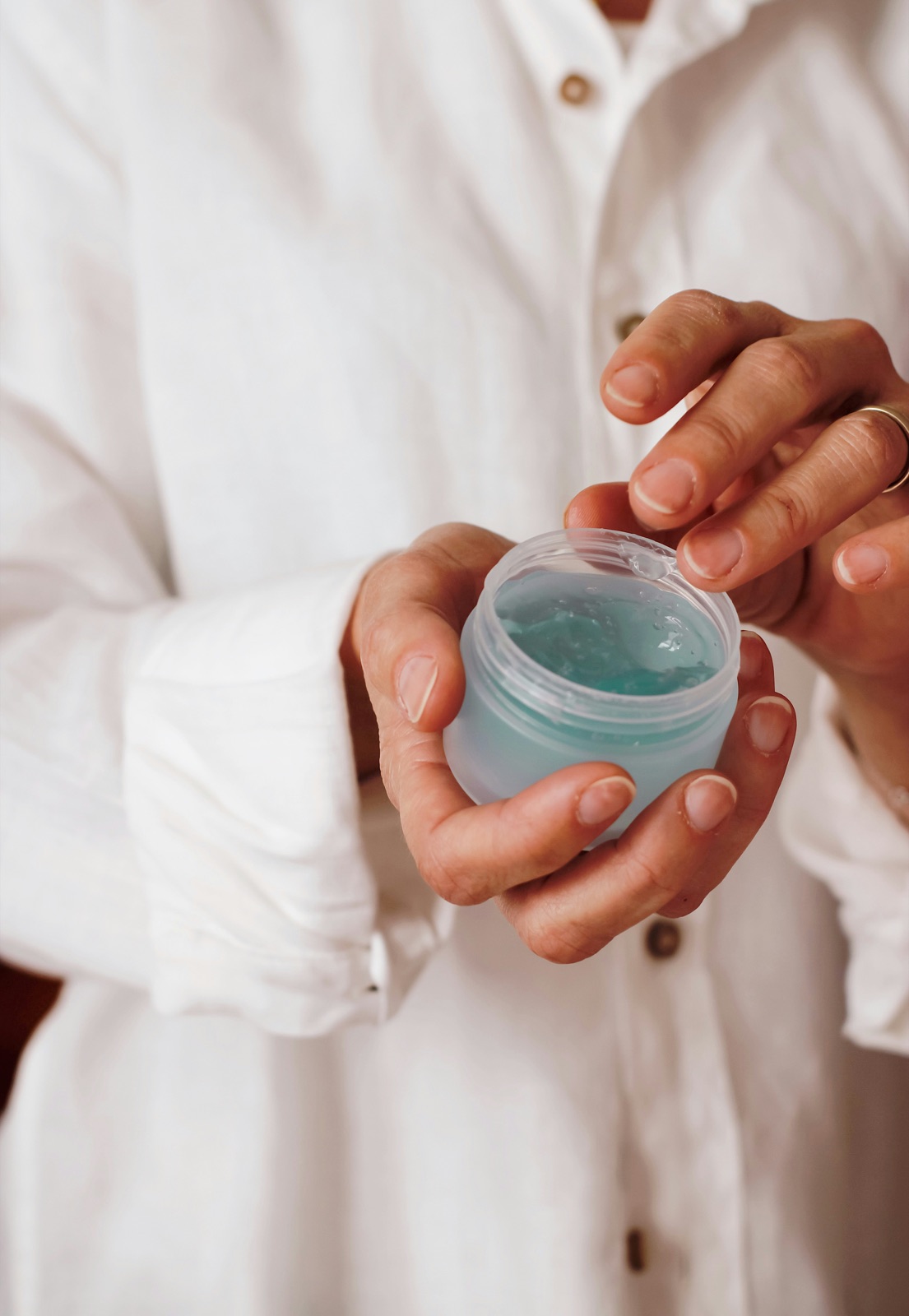
Observing bare skin in natural light 20 minutes after cleansing reveals genuine lipid and hydration dynamics.
The Japanese Two-Axis Philosophy: Water vs Oil
Japanese cosmetic scientists map skin profiles onto a Cartesian coordinate system:
- Horizontal Axis (Moisture / Suibun): Represents water saturation within the epidermis—the outermost of the three layers[1] that make up the skin. This reflects the health of natural moisturizing factors (NMF) within the stratum corneum composed of flattened, terminally differentiated keratinocytes[2].
- Vertical Axis (Sebum / Yubun): Represents the volume of lipids secreted by a sebaceous gland—a microscopic exocrine gland[3] attached to hair follicles.
By plotting these two independent variables, Japanese beauty identifies four primary quadrants:
- Normal Skin (Futsu-hada): High moisture, balanced sebum. The skin feels bouncy, supple, and comfortable without midday greasiness.
- Dry Skin (Kansou-hada): Low moisture, low sebum. The complexion feels tight, rough, or flaky, showing premature dehydration lines.
- Oily Skin (Shisei-hada): Moderate-to-high moisture, high sebum. Excess oiliness appears across the entire face, with noticeable shine and enlarged pores.
- Dehydrated-Oily Skin (Innaa Dorai): Low moisture, high sebum. The most frequently misdiagnosed profile. Surface oil masks severe underlying dehydration.

Lightly pressing the cheek with clean fingertips tests whether surface bounce is driven by water or superficial oil.
The 20-Minute "Bare-Skin" Self-Assessment (Hada-Kantei)
To identify your current quadrant accurately, conduct this simple 20-minute diagnostic protocol on a weekend morning:
Step 1: The Neutral Wash
Wash your face using lukewarm water (around 32°C / 90°F) and a gentle, fragrance-free amino-acid foaming cleanser. Avoid harsh scrubs, cleansing oils, or active exfoliating washes. Pat gently dry with a clean cotton towel.
Step 2: The 20-Minute Wait (Mushochi)
Do not apply any toner, lotion, serum, or moisturizer. Sit in a room with neutral, comfortable temperature and humidity (avoid sitting directly beneath air conditioning vents or forced heating). Let your skin self-regulate for 20 minutes.
Step 3: Tactile and Visual Inspection
After 20 minutes, inspect your skin in front of a well-lit mirror and perform these three touch tests:
- The Smile Test: Smile broadly. Does your skin feel taut, stiff, or uncomfortable around the mouth and eyes? (Indicates low moisture).
- The Cheek Press: Press a clean knuckle or fingertip gently into the center of your cheek. Does it feel soft and cool like fresh mochi, or paper-thin and rough?
- The Tissue Blot: Press a single ply of clean facial tissue across your forehead and nose (T-zone), then against your cheeks (U-zone). Check where translucent oil marks appear.
Interpreting Your Results: The Four Profiles
1. If Your Skin Feels Soft and Balanced → Normal (Futsu-hada)
- Observations: No noticeable tightness. Subtle, healthy sheen on the nose without greasy residue. Cheeks feel supple and cool.
- J-Beauty Focus: Maintenance and protection. Continue using lightweight watery lotion (kesho-sui), a balancing emulsion (nyueki), and daily sunscreen to prevent environmental wear.
2. If Your Entire Face Feels Tight and Stiff → Dry (Kansou-hada)
- Observations: Intense tightness within 5 minutes. No oil visible on the tissue blot. Surface appears dull, with microscopic flaking or fine crepey lines.
- J-Beauty Focus: Barrier replenishment. Layer viscous watery lotions two or three times (kasanezuke), followed by lipid-rich ceramide milks and squalane creams.
3. If Your Face Appears Shiny Everywhere → Oily (Shisei-hada)
- Observations: Zero tightness. The tissue blot reveals oil marks across both the T-zone and outer cheeks. Pores appear visible and prone to blackheads.
- J-Beauty Focus: Low-friction oil regulation. Use refreshing watery lotions with Job's tears (hatomugi) or licorice extract, paired with featherweight oil-free gel creams. Avoid heavy plant oils.
4. If Your Cheeks Feel Tight But Your T-Zone Shines → Dehydrated-Oily (Innaa Dorai)
- Observations: The most common urban profile. Cheeks feel dry, tight, and uncomfortable, yet the forehead and nose show prominent oil within 15 minutes.
- J-Beauty Focus: Water replenishment. The skin is overproducing sebum to compensate for accelerated transepidermal water loss—the loss of water that passes from inside a body[4] through the epidermis. Flood the stratum corneum with humectant-rich watery lotions and seal with a breathable gel emulsion. Do not use harsh alcohol astringents.
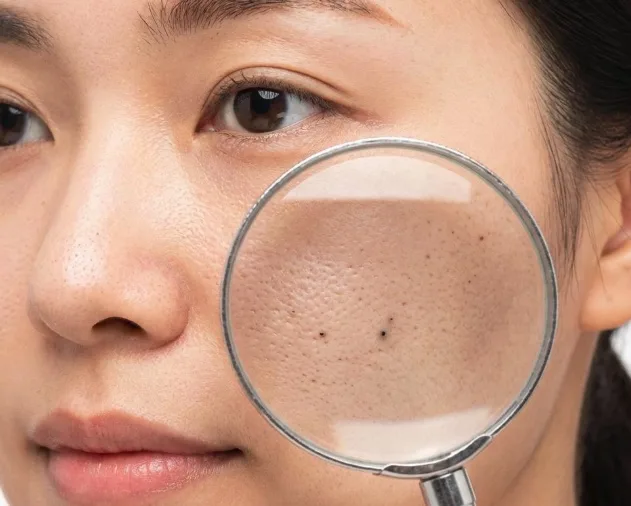
Dehydrated skin often presents visible pore dilation as follicles struggle with uneven moisture distribution.
Comparison Table: The Four Profiles & Routine Guidance
Scroll horizontally to view full table
| Profile | Water (*Suibun*) | Oil (*Yubun*) | 20-Min Bare Skin Feel | Recommended J-Beauty Strategy |
|---|---|---|---|---|
| Normal (*Futsu-hada*) |
Optimal | Optimal | Supple, comfortable, slight sheen | Standard 3-step routine: Lotion + Emulsion + Daily Sunscreen |
| Dry (*Kansou-hada*) |
Deficient | Deficient | Tight throughout, rough, flaking | Layered viscous lotion + Ceramide barrier cream + Facial oil |
| Oily (*Shisei-hada*) |
Moderate | Excessive | Greasy T-zone and greasy cheeks | Amino-acid foam wash + Hatomugi lotion + Oil-free gel cream |
| Dehydrated-Oily (*Innaa Dorai*) |
Deficient | Excessive | Tight cheeks with shiny forehead/nose | Lotion packing (cotton compress) + Breathable gel emulsion |