title: Imabari Towel Guide: Choosing Japanese Face Towels h1: "Imabari Towel Guide: Choosing Japanese Face Towels" description: "Learn why Imabari towels and Japanese face towels protect your skin barrier. Discover softness standards, 5-second absorbency, and friction-free drying." meta_description: Learn why Imabari towels and Japanese face towels protect your skin barrier. Discover softness standards, 5-second absorbency, and friction-free drying. category: "how-japan-works" slug: "imabari-towel-and-japanese-face-towels" publish: true published_at: "2026-11-17" hero_image: "/images/stock/clean-towels-and-skincare-products-basket.webp" hero_image_alt: "Stack of clean fluffy Japanese cotton towels beside skincare products in a serene bathroom"
Imabari Towel Guide: Choosing Japanese Face Towels
In Japanese skincare, gentle facial cleansing is only half the battle. How you dry your face after washing is equally critical to maintaining a healthy moisture barrier. While many people invest in premium cleansers and hydrating essences, drying the face with a rough, coarse, or shared bathroom towel can undo those benefits in seconds through mechanical friction.
A towel is fundamentally a piece of absorbent cloth, or paper, for drying or wiping[1] wet surfaces. However, in Japan, face towels are engineered with the same precision and dermatological care as premium skincare formulations. Chief among these are Imabari towels (Imabari taoru), world-renowned textiles originating from Ehime Prefecture that combine cloud-like softness with instantaneous water absorption.
Imabari face towels must satisfy rigorous regional quality standards, including the famous "five-second rule" where a fabric swatch must sink within five seconds of touching water. Because they absorb surface moisture instantaneously without downward pressure, they remove the need to drag or scrub cloth across delicate facial skin. Pairing soft, long-staple Japanese cotton with a gentle pressing technique prevents micro-abrasions, shields vulnerable stratum corneum lipids, and prepares the skin to receive subsequent hydrating lotions smoothly.
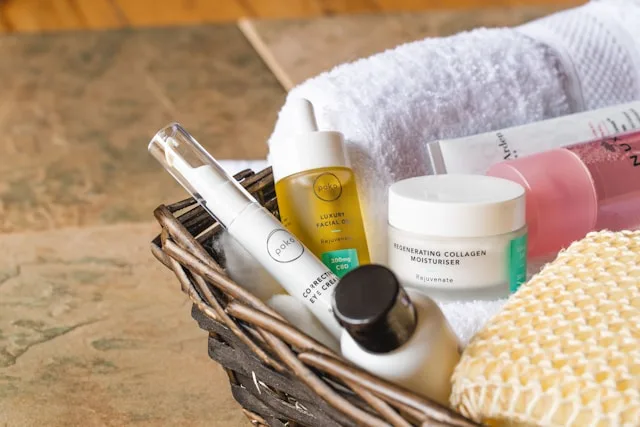
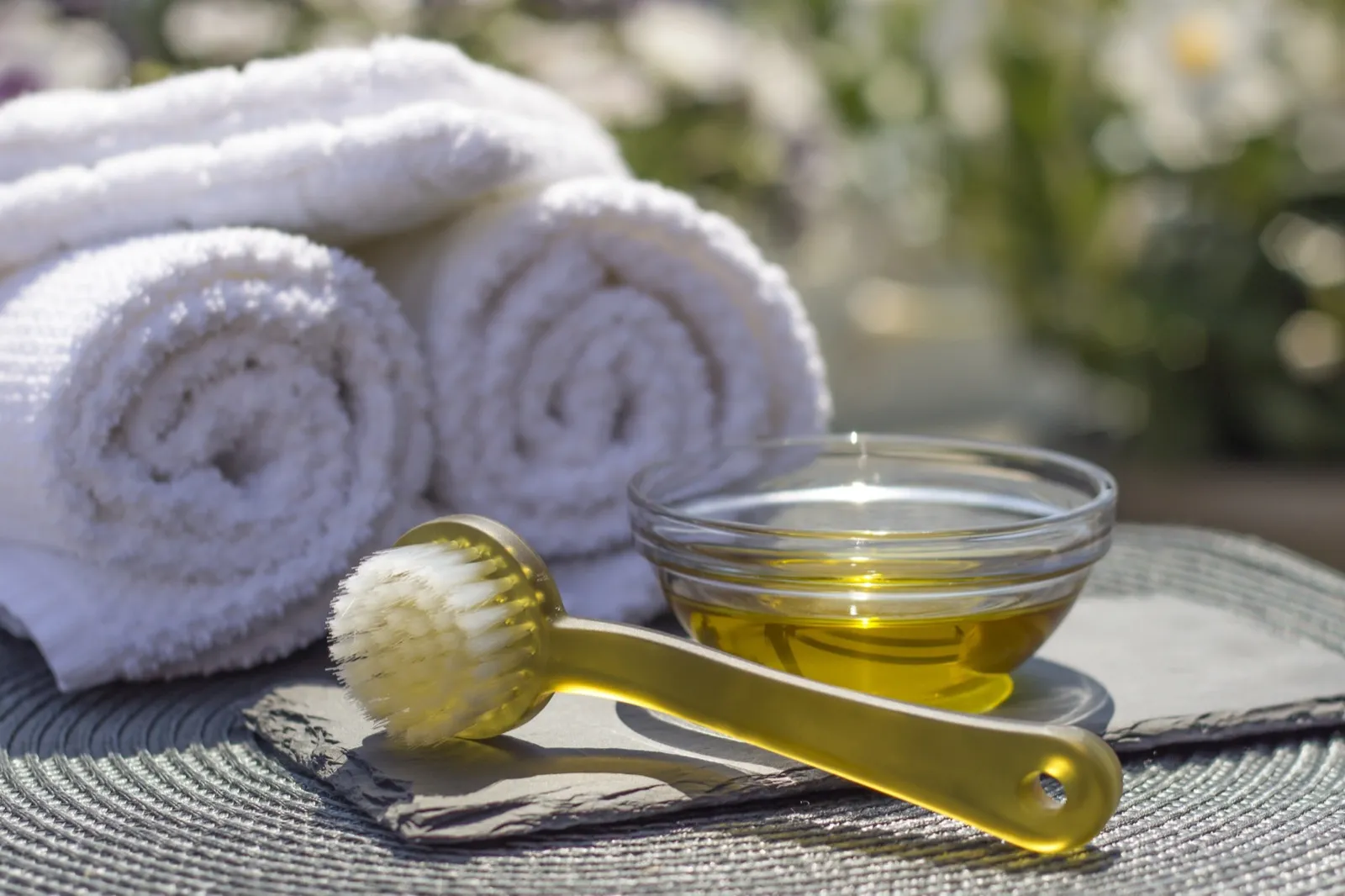
Dedicated, ultra-soft face towels prevent mechanical irritation and maintain optimal skin hygiene after facial cleansing.
Why Towel Quality Matters in Japanese Facial Skincare
To understand why Japanese beauty enthusiasts dedicate specific towels exclusively to their faces, one must examine the physical state of skin immediately after cleansing.
During facial washing, lukewarm water softens the stratum corneum—the outermost layer consisting of flattened, terminally differentiated keratinocytes that have lost their nuclei[4]. While water softens the tissue, it also temporarily loosens the intercellular lipid matrix holding surface cells together. In this hydrated, fragile state, the skin is exceptionally vulnerable to physical shear stress.
When you rub a rough bath towel across your cheeks, stiff cotton fibers create micro-friction against the softened epidermis. This mechanical dragging disrupts delicate corneocytes, leading to subtle barrier fissures, trans-epidermal water loss, and reactive redness. Over months and years, repeated facial friction can also trigger localized hyperpigmentation. By contrast, a high-absorbency towel allows you to remove excess droplets with pure, motionless contact.
What Makes Imabari Towels Special: The 5-Second Absorbency Rule
Produced in the city of Imabari on Shikoku Island for over 120 years, Imabari towels represent the pinnacle of Japanese weaving heritage. What sets genuine Imabari towels apart from generic textiles is their strict certification framework overseen by the Imabari Towel Industrial Association.
Cotton is a soft, fluffy staple fiber that grows in a boll, or protective case, around the seeds[3] of cotton plants. Imabari weavers select premium long-staple cotton fibers and wash them using the exceptionally soft, mineral-sparse subterranean water of the Soja River. This gentle water removes natural waxes and spinning oils without harsh industrial processing, leaving the individual cotton filaments silky and supple.
Furthermore, traditional terrycloth relies on loops of thread which can absorb large amounts of water[2]. To earn the official red, white, and blue Imabari certification label, towels must pass the celebrated 5-second absorbency test: an unwashed fabric swatch placed on water must sink completely within five seconds. While many Western towels are coated with chemical silicone softeners that repel water during initial uses, certified Imabari towels offer instantaneous capillary absorption from the moment you bring them home.

Using an ultra-absorbent towel allows you to simply press the fabric against the skin, lifting water instantly without dragging.
Comparing Japanese Face Towel Materials and Weaves
Japanese textile houses manufacture several distinct face towel styles tailored to diverse skin types and preferences.
Scroll horizontally to view full table
| Towel Category | Fabric Architecture | Absorption Speed | Surface Friction Level | Recommended For |
|---|---|---|---|---|
| Imabari Long-Staple Cotton | Plush terrycloth with airy, untwisted or low-twist yarn loops | Instantaneous (< 5 seconds) | Ultra-low (cloud-like cushion) | Dry, mature, or reactive skin seeking maximum plush comfort |
| Senshu Washed Cotton (*Ato-sarashi*) | Post-weaving purified flat cotton originating from Osaka | Very fast | Low (crisp, light, highly hygienic) | Normal to oily complexions; humid summer seasons |
| Gauze & Terry Double Weave | Smooth Japanese medical gauze on one side, fine terry loops on the other | Fast and lightweight | Minimal (silky flat gauze face) | Sensitive skin, post-procedure recovery, and infant care |
| Single-Use Facial Towels (Tissue Style) | Biodegradable plant-derived rayon or virgin cotton fiber sheets | Fast | Moderate-low | Severe acne sufferers and frequent travelers seeking sterile use |