title: Japanese Cooling Body Wipes: Summer Heat Hacks & Science slug: japanese-cooling-body-wipes-summer-heat-hack category: how-japan-works published_at: '2026-11-23' updated_at: '2026-11-23' meta_description: Explore Japanese cooling body wipes and sheets that drop skin temperature by 3°C using evaporative cooling, menthol, and thick non-woven mesh sheets. keywords:
- japanese cooling body wipes summer heat hack
- biore hiyashi sheet review
- gatsby ice deodorant body paper
- japanese summer sweat wipes
- menthol evaporative cooling body sheets lead_image: /images/stock/clean-towels-and-skincare-products-basket.webp lead_image_alt: Fresh clean cooling towels and Japanese summer refreshing body products in a woven basket thumbnail: /images/stock/clean-towels-and-skincare-products-basket.webp thumbnail_alt: Fresh clean cooling towels and Japanese summer refreshing body products in a woven basket author: Editorial Team publish: true
Japanese Cooling Body Wipes: Summer Heat Hacks & Science
During Japanese summers, temperatures frequently surpass 35°C (95°F) accompanied by stifling relative humidity exceeding 80%. Navigating crowded train platforms, concrete heat islands, and outdoor festivals under these subtropical conditions demands sophisticated cooling countermeasures. While electric mini-fans and parasols are commonplace, the definitive daily summer heat hack across Japan is the specialized cooling body wipe (hiashi sheet or ice body paper).
Walk into any Japanese convenience store or drugstore between June and September, and entire aisles are dedicated to these cooling wipes. Far more advanced than ordinary wet tissues, Japanese body wipes are precision-formulated dermatological tools that deliver immediate thermal relief, dissolve greasy sebum, and reset personal comfort during sweltering commutes.
Quick answer: Japanese cooling body wipes (hiashi sheets / ice body paper) are engineered summer essentials designed to combat intense urban heat and humidity. Unlike basic baby wipes, these large-format sheets combine high-moisture evaporative water reserves with volatile ethanol, cooling l-menthol, and sebum-clearing astringents to physically lower skin surface temperatures by up to 3°C while neutralizing sweat odor on the go.
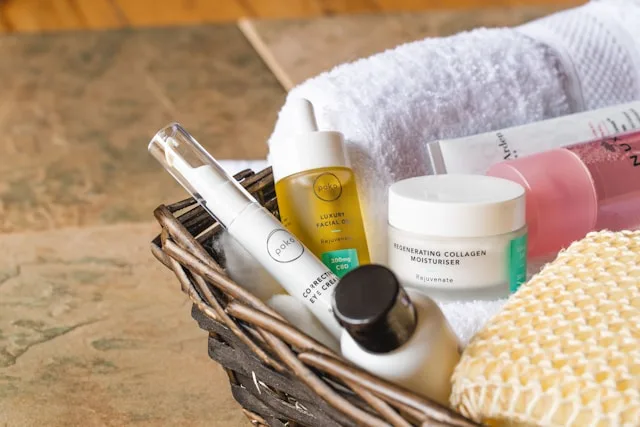
This article examines the thermodynamic and sensory science behind Japanese cooling wipes, compares the major formulations on drugstore shelves, and explains how to integrate them into summer routines safely.
The Dual Thermodynamics of "Skin Temperature -3°C"
The signature selling point of leading Japanese cooling wipes—such as Kao's Biore Hiyashi Sheet series—is an immediate, measurable drop in cutaneous temperature. This rapid cooling relies on two complementary mechanisms:
[High-Water Non-Woven Sheet Saturated with Liquid]
         │
         ├─► Phase 1: Physical Heat Dissipation (Evaporative Cooling)
         │   - Water + Ethanol flash-evaporate upon skin contact
         │   - High latent heat of vaporization pulls thermal energy off skin
         │   - Measurable surface temperature reduction of up to -3°C
         │
         └─► Phase 2: Neurosensory Cold Activation (Menthol Signaling)
             - l-Menthol activates cold-sensitive TRPM8 ion channels on sensory nerves
             - Brain interprets receptor stimulation as icy cold sensation
             - Prolonged shivering freshness even after the liquid dries
1. Latent Heat of Vaporization (Evaporative Physics)
When water evaporates from a surface, it absorbs roughly 2,260 joules of heat energy per gram. Japanese cooling body wipes feature thick, durable sheets saturated with cooling water that lower surface skin temperature by 3 degrees Celsius upon wiping [1]. Volatile ethanol accelerates this flash evaporation, instantly carrying trapped body heat away from flushed necks, chests, and arms.
2. TRPM8 Receptor Stimulation (Menthol Chemistry)
In addition to actual physical heat loss, these formulas are formulated with water, ethanol, and menthol alongside sodium hyaluronate to condition skin while releasing trapped body heat [1]. Menthol binds specifically to the TRPM8 (transient receptor potential melastatin 8) ion channel located on cutaneous sensory nerve endings. This receptor normally fires when ambient temperatures drop below 26°C. Menthol artificially activates this channel at body temperature, tricking the brain into perceiving profound, sustained coldness for 30 to 60 minutes.
Functional Categories: How Japanese Cooling Wipes Differ
Japanese manufacturers engineer cooling sheets into distinct categories depending on whether the primary goal is gentle sensory refreshment, active antiperspirant deodorizing, or extreme icy shock:
Scroll horizontally to view full table
| Product Type | Representative Benchmark | Active Technology | Sensation Profile | Ideal Use Scenario |
|---|---|---|---|---|
| Hydrating Cooling Sheets | Biore Hiyashi Sheet | High water reserve + Menthol + Hyaluronic acid | Gentle -3°C cooling with zero chalky powder | Commuters, office workers, sensitive skin |
| Quasi-Drug Deodorant Papers | Gatsby Ice Deodorant Paper | Isopropyl methylphenol + Zinc salt + High menthol | Sub-zero intense frost + Odor defense | Athletes, intense outdoor labor, heavy sweaters |
| Cooling Towel Neck Wraps | Biore Hiyashi Towel (46cm) | Ultra-long non-woven scarf saturated in liquid | Continuous 1-hour neck drape cooling | Theme parks, summer festivals, hiking trails |
| Powdered Refresh Sheets | Biore SaraSara Body Sheet | Micro-fine silica powders + Mild ethanol | Silky dry matte finish; repels sticky sweat | Post-commute touchups before meetings |