title: Japanese Eyebrow Razors: Safety Guard Facial Shaving Guide slug: japanese-eyebrow-razor-safety-guard-facial category: how-japan-works published_at: '2026-11-23' updated_at: '2026-11-23' meta_description: Explore Japanese eyebrow razors with safety guards. Learn how Kai and Feather precision blades brighten skin tone, remove vellus hair, and smooth makeup. keywords:
- japanese eyebrow razor safety guard facial
- kai beauty guard facial razor
- feather piany eyebrow razor japan
- japanese dermaplaning face shaving vellus hair
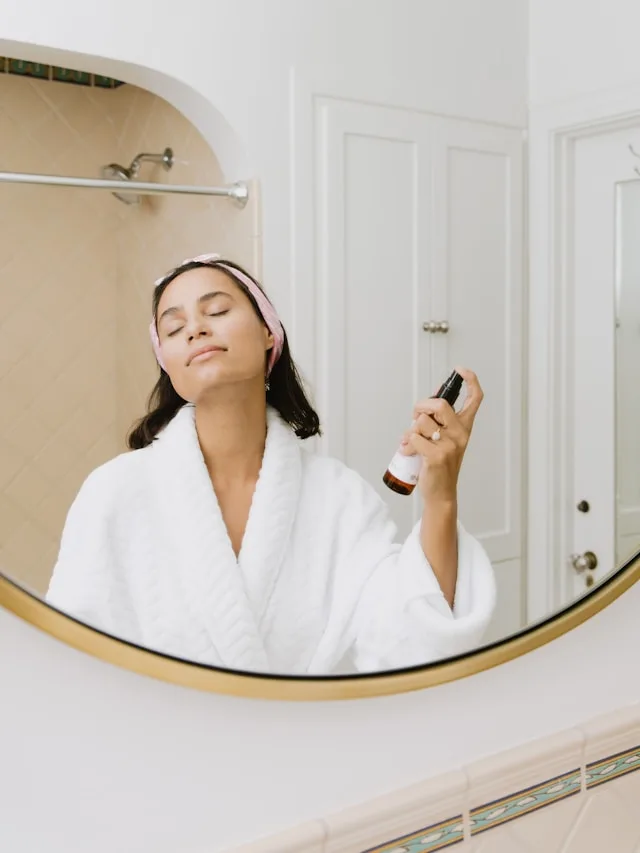
- how to shave face women japanese razor lead_image: /images/stock/woman-skincare-routine-bathroom-mirror.webp lead_image_alt: Woman examining her facial contours in a bathroom mirror preparing for gentle vellus hair care thumbnail: /images/stock/woman-skincare-routine-bathroom-mirror.webp thumbnail_alt: Woman examining her facial contours in a bathroom mirror preparing for gentle vellus hair care author: Editorial Team publish: true
Japanese Eyebrow Razors: Safety Guard Facial Shaving Guide
In Japanese aesthetic culture, facial grooming (kao-zori) has been a core pillar of professional salon care and at-home maintenance for generations. Japanese women routinely shave fine, translucent facial peach fuzz (ubuge) around the forehead, cheeks, and jawline to reveal a radiant complexion. Supported by world-class blade masters like Kai Corporation and Feather Safety Razor, Japan's specialized eyebrow and facial razors feature micro-grooved safety guards that allow close shaving without nicking delicate skin.
Quick answer: Japanese facial and eyebrow razors feature ultra-sharp surgical-grade steel wrapped in micro-wire safety guards. Designed specifically for fine facial peach fuzz (ubuge), these ergonomic tools shave away dark vellus hair and superficial dead skin cells simultaneously. This manual exfoliation immediately boosts skin brightness, refines makeup foundation adherence, and creates a smoother canvas for hydrating skincare without harsh chemical peels.
Why Shaving Peach Fuzz Brightens Skin Tone
Many beauty enthusiasts mistake midday skin dullness for pigmentation or fatigue. In reality, millions of tiny, pigmented vellus hairs carpet the face. While individually almost invisible, collectively they act like a sheer, dark veil that diffuses light unevenly across the cheekbones.
According to technical grooming data from Kai Corporation, removing fine vellus hair clears shadows across the skin surface to elevate overall visual brightness and make pores appear visually tighter[1]. Furthermore, the physical shaving motion lifts away dull dead surface corneocytes and follicular debris alongside fine hair to reveal luminous skin tone[1].
Beyond sheer optical brightening, removing facial hair transforms makeup wear:
- Flawless Base Adhesion: In beauty trials, smooth bare skin allows makeup foundation to glide evenly across the hairline without catching on hair fibers, preventing patchy midday melting[1].
- Enhanced Skincare Absorption: Serums and watery essences settle directly onto the stratum corneum rather than clinging to hair shafts.
- Refined Contours: Sculpting the arch and tail of eyebrows with precision blade edges opens up the eye area.

Anatomy of the Japanese Safety Guard Blade
Unlike Western single-blade dermaplaning scalpels or unguarded straight razors, Japanese facial razors prioritize epidermal defense. Pioneering cutlery manufacturers like Feather have engineered precision disposable blade technology in Japan since their founding in 1932[3].
Leading makers incorporate specialized structural safety features:
- Micro-Wire Safety Guards: Tiny vertical wire ridges or micro-slits run across the cutting edge. Japanese facial razors incorporate fine micro-grooved safety guards across the blade edge to ensure peace of mind and minimize mechanical cuts[2]. Even if the hand slips laterally, the guard prevents the blade from slicing into the skin.
- Specialized Narrow Blade Profiles: Eyebrow razors utilize ultra-short blade heads (often just 5 mm to 15 mm wide), allowing meticulous millimeter-by-millimeter shaping around the orbital bone without nicking eyelash follicles.
- Fluororesin and Platinum Sputtering: Advanced edge coatings reduce friction drag across bare skin, preventing redness during manual strokes.

Tool Comparison: Choosing the Right Japanese Facial Razor
Selecting between L-shaped folding blades, T-shaped facial shavers, and sonic vibration tools depends on your comfort level and target facial area.
| Razor Category | Blade Architecture | Recommended Facial Zones | Primary Strength |
|---|---|---|---|
| Mini Eyebrow Razor | Ultra-short straight blade (5–10 mm) with fine guard | Brow arch, brow bone, bridge of nose, philtrum | Exceptional maneuverability in tight contours |
| Classic L-Type Face Razor | Medium straight blade (30–40 mm) with safety comb | Forehead, temples, cheeks, jawline, neck | Broad sweeping strokes across flat planes |
| Sonic Vibration Razor | High-speed micro-vibrating blade (e.g., bi-hada ompa) | Full face, sensitive cheek areas, mouth corners | Zero-pressure gliding with minimized surface friction |
| T-Shaped Body/Face Razor | Horizontal blade head on ergonomic pivoting neck | Nape of neck, collarbone, sideburn perimeter | Stable pulling motions across wide body areas |