title: Japanese Nail Care & Cuticle Oil: Hydration Techniques h1: "Japanese Nail Care & Cuticle Oil: Hydration Techniques" description: "Discover Japanese nail care and nail oil rituals. Learn how botanical oils, gentle cuticle softening, and daily moisture prevent dryness and brittleness." meta_description: Discover Japanese nail care and nail oil rituals. Learn how botanical oils, gentle cuticle softening, and daily moisture prevent dryness and brittleness. category: "how-japan-works" slug: "japanese-nail-care-and-nail-oil" publish: true published_at: "2026-11-17" hero_image: "/images/stock/hand-nails-delicate-care.jpg" hero_image_alt: "Delicate and healthy natural fingernails cared for with Japanese botanical cuticle oils"
Japanese Nail Care & Cuticle Oil: Hydration Techniques
In international beauty salons, nail appointments often focus primarily on artificial extensions, elaborate acrylics, or rapid chemical gel removals. While Japanese nail art is renowned for intricate craftsmanship, the domestic nail culture in Japan is founded upon a much quieter dermatological priority: jitsume ikusei—the art of nurturing bare, natural nail health from the root.
Nails are characteristically positioned at the tip of the digits ( fingers and toes )[1] to shield delicate sensory nerves and support fine tactile manipulation. Because fingernails are subjected to continuous water exposure, dish detergents, alcohol sanitizers, and climatic dry spells, the surrounding periungual skin requires constant lipid replenishment. In Japan, daily cuticle oil (neiru oiru) application is viewed not as a post-manicure luxury, but as an essential personal hygiene habit equivalent to facial skincare.
Japanese nail care prioritizes preserving natural nail integrity through lipid hydration and zero-trauma cuticle maintenance. Rather than aggressively cutting away the living cuticle (*eponychium*) with nippers, Japanese technicians soften dead surface keratin with warm water and botanical oils before gently pushing back loose residue. Regularly massaging pure botanical oils—such as camellia (*tsubaki*), squalane, and jojoba—into the nail matrix and hyponychium prevents horizontal ridges, strengthens flexibility, and promotes resilient, glossy natural nails.
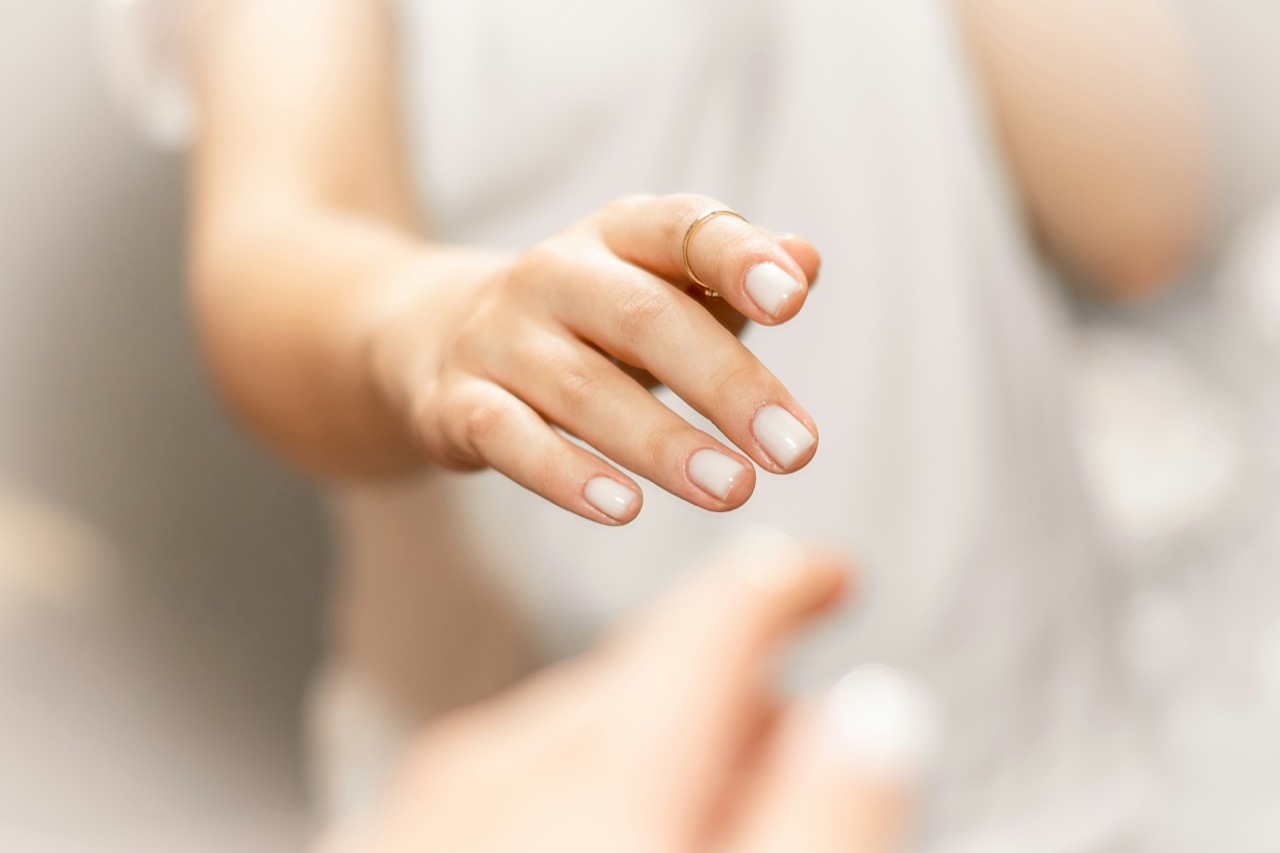
Japanese bare nail philosophy focuses on maintaining natural hydration and structural flexibility rather than concealing damage under thick coats.
The Japanese Philosophy of Bare Nail Health: Ikitsume
To understand why Japanese drugstores and nail boutiques dedicate entire aisles to precision dropper pens and botanical balms, one must understand the biological nature of the nail plate.
Unlike skin, which produces sebum through microscopic sebaceous glands, the nail plate possesses zero oil glands of its own. It is composed of dense fibrous structural proteins; biochemically, keratin is extremely insoluble in water and organic solvents[3]. While this insoluble structure makes nails resilient against mechanical trauma, it also means nails lose hydration rapidly when exposed to environmental stressors.
When nail tissue loses moisture and endogenous lipid binders, the layered keratin sheets separate, leading to flaking free edges, brittle breaks, and painful hangnails (sasakure). The Japanese concept of ikitsume ("living nail cultivation") emphasizes that flexible, shatter-resistant nails require consistent, multi-layered moisture. By keeping the nail plate supplied with lightweight lipids, nails bend rather than snap under everyday pressure.
The Role of the Cuticle and Matrix: Why Moisture Precedes Cutting
A major divergence between Western commercial nail bars and traditional Japanese salons lies in the handling of the cuticle area.
In anatomical terminology, the cuticle is associated with the eponychium ), and to refer to the superficial layer of overlapping cells[2] that seals the gap between the dorsal skin fold and the emerging nail plate. This seal performs a vital biological defense function: it prevents pathogenic bacteria, fungi, and chemical irritants from invading the nail matrix where fresh keratinocytes divide.
Aggressive trimming with metal nippers often clips into living eponychium tissue. In response to this mechanical injury, the body reacts with protective hyperkeratosis, producing thicker, ragged, and harder calluses around the nail contour.
Japanese nail care strictly distinguishes between the living eponychium (which should never be snipped) and loose cuticle (loose, dead epidermal cells clinging to the nail bed). Salons apply warm water or plant-derived emollients to soften the tissue, then use a soft ceramic stone or cotton-wrapped orange stick to sweep away non-living residue without ever breaking the defensive barrier.
Gentle circular massage along the proximal nail fold encourages local blood circulation and delivers lipid nourishment to the underlying matrix.
Comparing Nail Oil Types: Camellia, Jojoba, and Squalane
Japanese nail formulations rely heavily on lightweight botanical lipids that mirror native sebum composition.
Scroll horizontally to view full table
| Oil Variety | Lipid Profile | Absorption & Feel | Moisture Sealing Strength | Ideal Routine Timing |
|---|---|---|---|---|
| Tsubaki (Camellia Japonica) | Rich in oleic acid and natural squalene triglycerides | Medium-weight, velvety, deep cushion feel | High; long-lasting lipid coat | Nighttime intensive conditioning before sleep |
| Jojoba Wax Esters | Liquid wax esters resembling human sebum | Rapidly absorbed, zero greasy residue | Moderate; high biocompatibility | Daytime work, desk routines, smartphone use |
| Plant-Derived Squalane | Hydrogenated bio-identical saturated hydrocarbon | Ultra-light, silky, immediate drying | Light; breathable barrier support | Frequent daily reapplication after handwashing |
| Brush-Pen Gel Serums | Lipids emulsified with hyaluronic acid & ceramides | Non-drip, portable, mess-free gel film | Balanced; dual water-oil delivery | On-the-go travel and commuter touch-ups |