title: Japanese Skincare Refill Pouches: Eco Packaging Guide slug: japanese-skincare-refill-pouch-eco-packaging category: how-japan-works meta_description: Discover Japanese skincare refill pouches. Learn how lightweight eco packaging cuts plastic by 80 percent across J-beauty lotions and gentle cleansers. date: 2026-11-23 author: Seibun Lab Editorial Team publish: true
Japanese Skincare Refill Pouches: Eco Packaging Guide
Quick answer
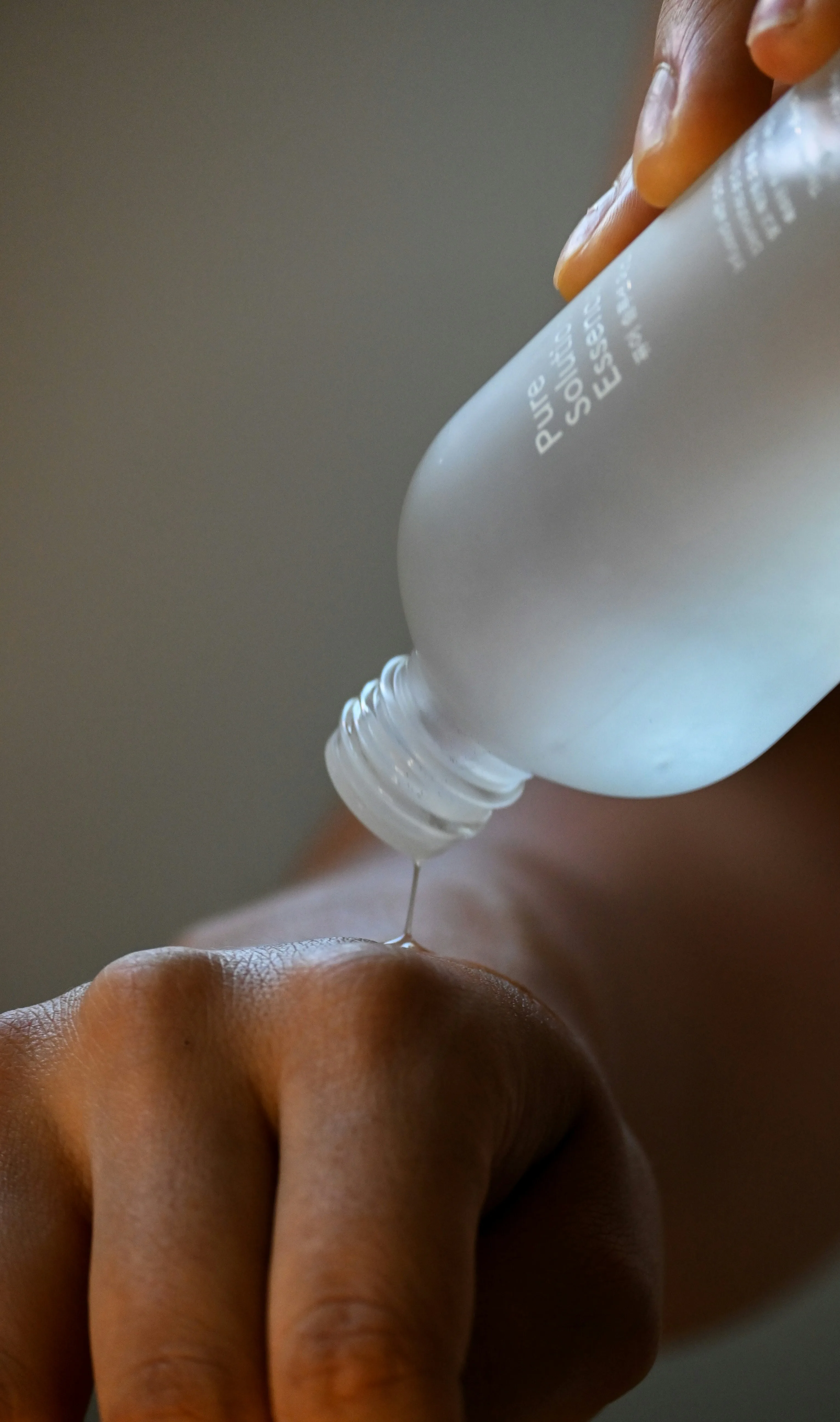
Japanese skincare refill pouches (tsumekae-yo) represent one of the world's most successful sustainable consumer habits. Widely available for hydrating lotions, emulsions, cleansers, and shampoos, these ultra-light flexible film pouches reduce plastic waste by approximately 80 to 85 percent compared to standard rigid pump bottles. Designed with anti-drip pouring spouts and micro-notches, Japanese refills cut manufacturing carbon emissions, lower consumer retail prices, and maintain formula integrity through hygienic decanting practices.
Walk down the personal care aisle of any Tokyo drugstore or supermarket, and you will encounter an eye-opening sight: entire shelves packed with slender, flexible foil pouches hanging above or resting alongside traditional plastic bottles. Known in Japan as tsumekae-yo (for refilling), these eco-pouches are not an obscure niche for zero-waste enthusiasts. They represent the standard way everyday consumers purchase skincare, cleansers, and body washes.
While Western cosmetic packaging often prioritizes heavy, opulent glass or rigid acrylic bottles that end up in municipal incinerators or landfills, Japanese personal care engineering embraces lightweight circularity. By purchasing an initial primary dispenser once and replenishing it repeatedly with flexible pouches, consumers support environmental sustainability without sacrificing formula stability. Here is an in-depth examination of how Japanese refill pouch culture functions, its quantifiable environmental benefits, and essential hygiene steps for decanting at home.
The Refill Revolution: Why Pouches Dominate Japanese Drugstores
Refillable cosmetics first took root in Japan during the 1970s and 1980s, initially driven by resource scarcity, rapid post-war urbanization, and municipal waste management constraints. Over the subsequent decades, strict packaging recycling statutes—such as the Containers and Packaging Recycling Act—incentivized major beauty conglomerates to minimize raw material usage.
Today, Japan boasts one of the highest refill adoption rates worldwide. Across household detergents and body cleansers, refill pouches account for over 80 percent of unit sales. In skincare, major drugstore and department store lines—including Hada Labo, Curel, Minon, Elixir, and d program—offer refill pouches for virtually every liquid lotion (kesho-sui), milky emulsion (nyueki), and cleansing oil.
Beyond ecological responsibility, two primary factors drive consumer devotion:
- Economic Savings: Refill pouches generally cost 10 to 20 percent less than purchasing a new bottle, passing raw material savings directly to the customer.
- Space Efficiency: Compact, ultra-light pouches fit conveniently into small urban apartments and produce minimal post-use domestic trash volume.
Environmental Impact: Cutting Plastic Waste by 80 Percent
The most compelling argument for flexible pouches lies in material reduction. A standard rigid 150 ml skincare pump bottle with a heavy cap, dip tube, and thick resin base weighs between 30 and 50 grams of virgin petroleum plastic. In contrast, a laminated multi-layer refill pouch carrying identical volume weighs merely 5 to 7 grams.
By pouring refill pouch contents into existing primary bottles, consumers reduce discarded plastic waste by approximately 80 percent.[1]
Furthermore, flexible film pouches collapse completely flat during transport from manufacturing plants to retail distribution hubs. This high volumetric efficiency slashes shipping weight and fuel consumption, delivering substantial life-cycle reductions in carbon dioxide (CO2) emissions compared to shipping bulky empty rigid bottles.
The Architecture of a Pouch: Spouts, Notches, and Stand-Up Laminates
Japanese refill pouches are masterpieces of industrial packaging design. Unlike flimsy plastic bags that collapse during pouring, J-beauty pouches employ specialized mechanical engineering:
- Self-Standing Bottom Gussets: Structured laminated bases allow the pouch to stand upright securely on flat vanity surfaces or bathroom ledges during storage.
- Laser-Scored Easy-Tear Notches: Precision micro-perforations enable clean manual opening without requiring scissors, minimizing the risk of jagged tears or plastic particle contamination.
- Rigid Diagonal Spouts: A molded internal plastic channel or folded funnel design directs liquid flow into a narrow, laminar stream, preventing messy glugging, air bubbles, or accidental spills over the bottle neck.
- Multi-Layer Barrier Laminates: Pouches utilize complex composite films—combining polyethylene, polyamide, and vapor-deposited aluminum or silica barriers—that shield sensitive active ingredients like vitamins, tranexamic acid, and hyaluronic acid from moisture loss, oxygen degradation, and light exposure.

Clean Refilling Protocol: Preserving Microbiome Stability and Hygiene
Because cosmetic formulations incorporate water and delicate botanical humectants, decanting refills requires proper hygiene to prevent bacterial or mold proliferation. Japanese cosmetic manufacturers provide standardized refilling guidelines:
- Empty Completely Before Refilling: Never top off a half-empty bottle with fresh product. Use every last drop of the previous batch so old and new preservatives do not mix irregularly.
- Do Not Rinse the Bottle with Tap Water: A common mistake is washing the empty bottle with tap water. Moisture droplets left inside the container dilute the preservative system and introduce domestic waterborne microbes. If the inside of the bottle appears clean, pour the refill directly into the dry container.
- Clean and Dry the Pump Mechanism: If dust or dried product accumulates around the exterior pump nozzle, wipe it cleanly with a 70 percent isopropyl alcohol wipe and let it air-dry thoroughly.
- Record the Batch Number: Japanese pouches feature a printed lot number on the bottom seal. Keep a quick photo of this code in case you ever need to report a quality issue to customer service.
- Replace Primary Bottles Periodically: While bottles are reusable multiple times, pump springs and plastic caps experience mechanical fatigue. Manufacturers suggest purchasing a brand-new primary dispenser after three to five refill cycles.

Corporate Commitments: 5Rs and Film-to-Film Recycling Initiatives
Major Japanese cosmetics and household care leaders are advancing beyond simple material reduction toward closed-loop circular systems.
The corporate group operates under a proprietary packaging development philosophy known as the 5Rs to mitigate environmental footprint and advance circular economy goals.[2] These core principles encompass Respect (for planetary boundaries), Reduce (lowering material mass), Reuse (advancing refill ecosystems), Recycle (designing for material recovery), and Replace (substituting virgin resins with plant-derived bio-polyethylene or PCR plastics).
Simultaneously, historical technical barriers surrounding multi-layer laminate recycling are being resolved through cross-industry partnerships. Cross-industry collaborative initiatives strive to advance plastic container resource circulation and establish closed-loop film recycling infrastructure.[3] Through joint initiatives between conglomerates like Kao and Lion, collection bins installed at retail pharmacies collect empty used pouches from consumers, shredding and separating composite films to manufacture new post-consumer recycled pouches.

Conventional Rigid Bottles vs. Flexible Refill Pouches Comparison
The following comparative table illustrates key functional and environmental differences between purchasing standard bottles versus flexible refill pouches:
Scroll horizontally to view full table
| Packaging Dimension | Standard Rigid Pump Bottle | Japanese Flexible Refill Pouch |
|---|---|---|
| Plastic Resin Weight | ~30g to 50g per container | ~5g to 7g (approx. 80% to 85% reduction) |
| Retail Purchase Price | Standard baseline MSRP | 10% to 20% discount versus new bottle |
| Post-Use Disposal Volume | Bulky rigid hollow vessel | Collapses completely flat into minimal mass |
| Transportation Carbon Footprint | High volume-to-weight ratio | Low volume, dense packing, lower freight emissions |
| Formula Barrier Protection | Thick resin walls with airtight pump | Multi-layer metallized barrier film |
| Application Convenience | One-touch daily pump dispensing | Requires initial one-minute decanting step |