Mistakes After Switching from K-Beauty to J-Beauty: How to Avoid Them
How Japan WorksBy Miho Tanaka
title: Mistakes After Switching from K-Beauty to J-Beauty: How to Avoid Them
description: Switching from K-beauty to Japanese skincare? Avoid common mistakes: over-layering, skipping emulsion (nyueki), misunderstanding bihaku, and misusing toners.
published_at: "2026-11-15"
updated_at: "2026-11-15"
fact_checked_at: "2026-11-15"
author: "Miho Tanaka"
category: "how-japan-works"
thumbnail: "/images/stock/dermatologist-vs-chemist-mirror-reflection-care.jpg"
thumbnail_alt: "Woman examining her reflection in a bathroom mirror while adjusting her daily skincare routine"
Mistakes After Switching from K-Beauty to J-Beauty: How to Avoid Them
Quick answer: Switching from K-beauty to Japanese skincare? Avoid common mistakes: over-layering, skipping emulsion (nyueki), misunderstanding bihaku, and misusing toners.
The global rise of Korean skincare (K-Beauty) popularized the multi-step ritual, viral ingredients like snail mucin and centella asiatica, and the luminous aesthetic of "glass skin." Yet, an increasing number of beauty enthusiasts are transitioning toward Japanese skincare (J-Beauty), attracted by its minimalist discipline, century-old pharmaceutical heritage, and focus on long-term barrier preservation.
However, making the transition from Seoul to Tokyo skincare routines is not simply a matter of swapping product brands. K-Beauty and J-Beauty operate on fundamentally different cosmetic philosophies, formulation chemistries, and application mechanics. Applying K-Beauty habits to Japanese products often results in clogged pores, formulation pilling, or feelings of dryness. This guide analyzes the five most common mistakes made when switching from K-Beauty to J-Beauty and explains how to align your routine with Japanese skin science.
5 Common Pitfalls When Transitioning from K-Beauty to J-Beauty
Understanding the contrasting philosophies prevents routine friction:
Scroll horizontally to view full table
Mistake
The K-Beauty Habit
The J-Beauty Reality
Correct Japanese Approach
1. Over-Layering (The 10-Step Trap)
Stacking 7 to 10 separate serums, ampoules, essences, and creams.
Focus on "Subtraction" (*Hiki-zan*); 3 to 4 core steps formulated to work synergistically.
Cleanse, infuse water with lotion (*keshosui*), seal with emulsion (*nyueki*), and apply UV defense.
2. Skipping Emulsion (*Nyueki*)
Treating "milky lotions" as optional extra serums or light toners.
*Nyueki* is the vital lipid seal that mirrors natural intercellular ceramide ratios.
Never skip *nyueki*; it locks in watery lotion without heavy occlusive pore-clogging.
3. Treating "Lotion" Like an Astringent Toner
Wiping the face vigorously with a saturated cotton pad.
Japanese *keshosui* is a liquid moisturizer, not an astringent cleanser.
Dispense into cupped palms and press gently into the skin (*osae-komi*) without friction.
4. Expecting Reflective "Glass Skin"
Aiming for high-shine, dewy, hyper-reflective surface glaze.
J-Beauty targets *Mochi-Hada* (rice-cake skin): plump, firm, velvety, and touch-dry.
Focus on internal stratum corneum hydration rather than reflective surface oils.
5. Misinterpreting "Bihaku" (Whitening)
Fearing harsh bleaching agents, or expecting instant tone lightening.
Regulated Quasi-Drug actives that calm inflammation and prevent excess melanin.
Use tranexamic acid and licorice derivatives for gentle PIH and dark spot prevention.
1. The Over-Layering Trap: Why 10 Steps Suffocate Japanese Formulations
K-Beauty's legendary 10-step routine is built on micro-layering single-target active ingredients (e.g., separate propolis ampoules, mugwort essences, ceramide creams). In contrast, Japanese beauty operates on the principle of Subtraction Aesthetic (Hiki-zan no Bi).
Leading Japanese cosmetic laboratories such as Shiseido, Kao Corporation, and KOSÉ Corporation engineer comprehensive multi-functional vehicles. A single Japanese hydrating lotion (keshosui) often contains five distinct molecular weights of hyaluronic acid, amino acid complexes, and anti-inflammatory quasi-drugs. Stacking four different essences and ampoules on top of a rich Japanese lotion over-saturates the epidermis, creating a gummy barrier that traps dead cells and causes comedonal bumps.
2. Skipping Emulsion (Nyueki): The Missing Lipid Link
In K-Beauty, routines often jump directly from watery toners and ampoules to heavy snail-mucin creams or sleeping packs. Newcomers to J-Beauty frequently bypass Emulsion (Nyueki), assuming a "milky liquid" is redundant.
In Japanese dermatological science, nyueki is irreplaceable:
Biomimetic Lipid Ratio: Healthy skin requires an 80:20 balance of water and intercellular lipids. Watery lotions deliver the 80% hydration; nyueki provides the missing 20% fine ceramides and squalane.
Micro-Emulsion Technology: Japanese emulsions use high-pressure homogenization to disperse plant oils into microscopic droplets. If you skip nyueki and jump to a heavy cream, the water inside the skin quickly evaporates beneath the heavy wax, leaving your skin feeling dry and tight underneath (inner dryness).
3. "Glass Skin" vs. "Mochi Skin" (Mochi-Hada)
A frequent point of confusion is skin finish:
Korean Glass Skin: Originating from the K-Drama aesthetic, glass skin prioritizes intense exterior shine, high translucency, and an almost wet-looking glaze achieved through facial oils, dewy cushion compacts, and rich balms.
Japanese Mochi Skin (Mochi-Hada): Inspired by traditional Japanese rice cakes, mochi skin is firm, deeply quenched from within, bouncy when gently pressed, and velvety smooth on the surface. It is touch-dry, satin, and resistant to excess sebum shine.
If you switch to Japanese skincare expecting a high-gloss wet glaze, you may mistakenly believe the products are "not working" because they absorb cleanly without leaving an oily surface film. In reality, Japanese products are working exactly as intended: fortifying the skin from the inside out.
4. How to Transition Safely: A 3-Step Migration Plan
If you want to migrate from a Korean routine to a Japanese regimen without shocking your skin barrier:
Week 1: Replace Your Toner with Japanese Keshosui:
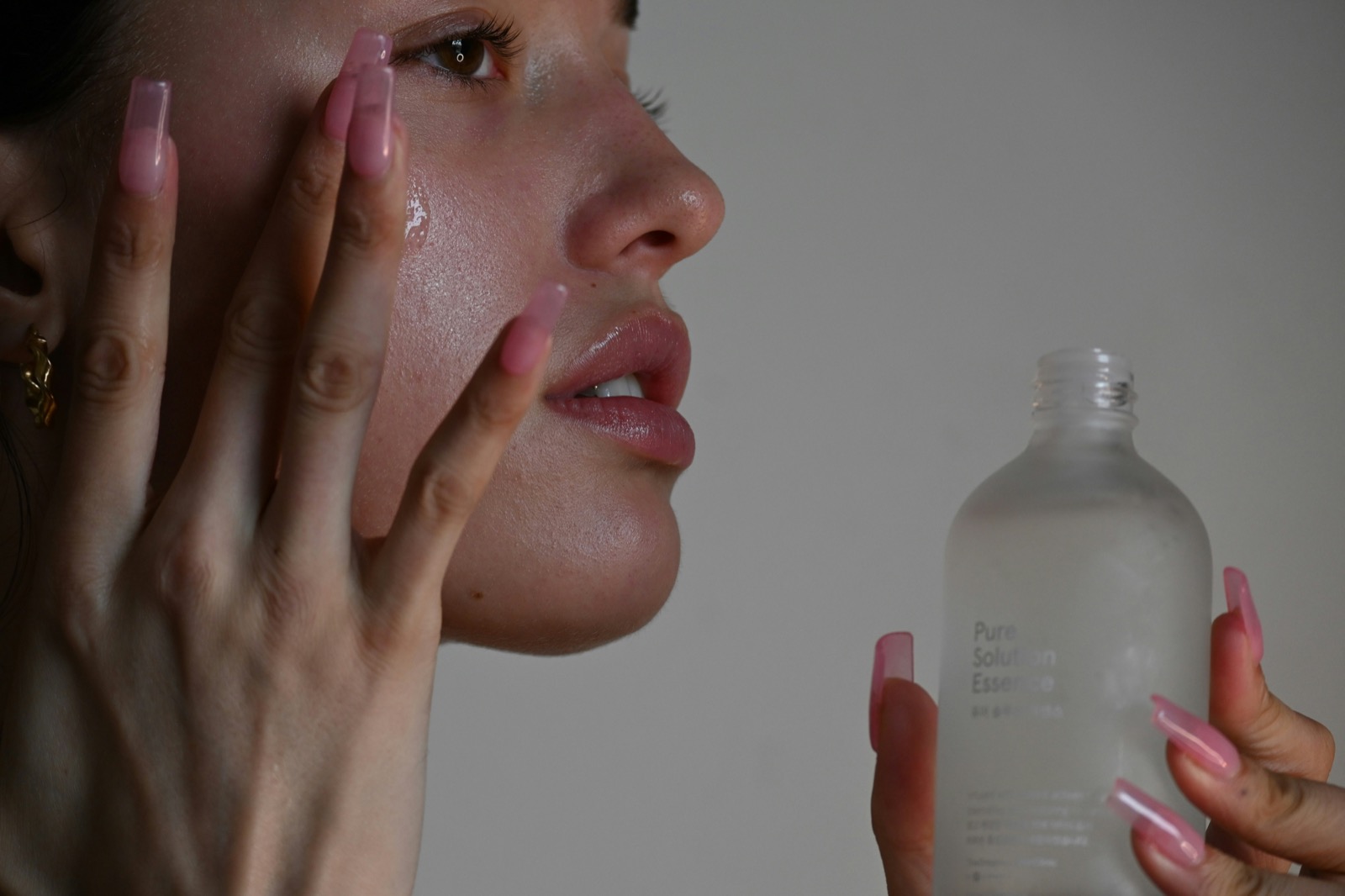
Swap your astringent or single-note Korean toner for a comprehensive Japanese hydrating lotion. Stop wiping with rough cotton pads; pour a coin-sized puddle into cupped palms and press gently into your face (osae-komi).
Week 2: Introduce Nyueki as Your Daytime Moisturizer:
Replace heavy daytime creams with a fluid Japanese emulsion. Experience the featherlight satin finish under your morning sunscreen.
Week 3: Upgrade to Japanese Daily UV Defense:
Swap your sunscreen for an authentic Japanese SPF50+ PA++++ watery gel or sweat-resistant milk. Japanese UV formulations excel at high-heat durability and invisible wear under makeup.
FAQ
Q1. Can I mix Korean serums with Japanese lotions and emulsions?
A. Yes, Korean targeted serums layer seamlessly between a Japanese lotion and emulsion. (Details)
You do not need to discard favorite Korean serums (such as centella or propolis ampoules). Simply apply your watery Japanese lotion (*keshosui*) first to prime the stratum corneum, layer your Korean serum next while the skin is damp, and lock everything in with your Japanese emulsion (*nyueki*).
Q2. Why do Japanese products feel less fragranced than Korean products?
A. Japanese formulations prioritize hypoallergenic, quasi-drug testing and clinical barrier neutrality. (Details)
While many K-Beauty lines feature delightful floral scents or aromatic fruit extracts, Japanese drugstore staples emphasize pharmaceutical minimalism (*teishigeki* / low irritation). Formulas are frequently free of artificial fragrance, colorants, and mineral grease to ensure suitability for highly sensitive barriers.
Q3. Why doesn't my Japanese skincare give me the shiny "glass skin" look?
A. Japanese skincare targets velvety mochi skin rather than high-dew topical shine. (Details)
Japanese formulations are engineered to absorb completely into the skin rather than sitting on top as a reflective oil slick. The goal is *mochi-hada*—skin that feels bouncy, plump, and deeply hydrated when touched, with a refined, touch-dry satin finish that controls daytime oil breakthrough.
Q4. What does "Quasi-Drug" on a Japanese bottle mean compared to Korean functional cosmetics?
A. Japanese Quasi-Drugs undergo strict pharmaceutical review for efficacy and stability by the MHLW. (Details)
In Japan, a **Quasi-Drug** (*iyaku-bugaipin*) occupies a legal middle ground between cosmetics and medical drugs, certified by the Ministry of Health, Labour and Welfare. While Korea's "functional cosmetics" system is also robust, Japanese quasi-drug status guarantees that active ingredient concentrations (such as tranexamic acid or dipotassium glycyrrhizate) meet rigorous clinical dosage standards.
Q5. Can I use Japanese double cleansing if I used water-based cleansers in K-Beauty?
A. Yes, Japanese oil cleansing is exceptionally gentle and essential for waterproof sunscreen removal. (Details)
Japanese cleansing oils are formulated with sophisticated emulsifiers that rinse completely clean with lukewarm water. Unlike cleansing waters that require abrasive cotton rubbing, an oil cleanser melts away silicone sunscreens and oxidized sebum with zero mechanical friction, preserving skin barrier lipids.
Summary and Key Takeaways
Transitioning from K-Beauty to J-Beauty is an invitation to simplify and strengthen:
Embrace Subtraction: Pare down 10-step excess to 3 or 4 high-performance steps that work in harmony.
Respect Nyueki: Always include a fluid emulsion to restore the skin's essential 80:20 water-to-lipid ratio.
Aim for Mochi Skin: Appreciate velvety, plump interior hydration (mochi-hada) over superficial high-shine glaze.
Handle with Zero Friction: Press products into the skin using bare palms (osae-komi) rather than rubbing with cotton pads.
Japan Cosmetic Industry Association (JCIA). (n.d.). Cosmetic and Quasi-Drug Regulatory Standards and Guidelines. Tokyo, Japan.
Disclaimer: This article is for general information and education about Japanese cosmetics and their labels. It is not a substitute for professional medical advice, diagnosis, or treatment. Skincare results vary from person to person. Product formulas, availability, prices, and regulations change, and products sold in Japan can differ from versions sold elsewhere, so always check the current label. Do a patch test before introducing a new product, and consult a doctor or dermatologist if you have a skin condition or specific concerns.