What Is Tsuya Skin? Japanese Beauty Glow Explained
How Japan WorksBy Miho Tanaka
title: What Is Tsuya Skin? Japanese Beauty Glow Explained
h1: "What Is Tsuya Skin? Japanese Beauty Glow Explained"
description: "Discover what tsuya skin means in Japanese beauty. Learn the difference between moisture glow and surface oiliness, key routine steps, and gentle habits."
meta_description: Discover what tsuya skin means in Japanese beauty. Learn the difference between moisture glow and surface oiliness, key routine steps, and gentle habits.
category: "how-japan-works"
slug: "what-is-tsuya-skin-glow-japanese-beauty"
publish: true
published_at: "2026-11-17"
hero_image: "/images/stock/translucent-luminous-skin-finish.jpg"
hero_image_alt: "Woman with natural translucent luminous skin showing healthy moisture glow in soft lighting"
What Is Tsuya Skin? Japanese Beauty Glow Explained
In the world of Japanese beauty (J-Beauty), the ideal complexion is defined not by heavy foundations or glittery highlighters, but by an innate luminosity known as tsuya (often written as tsuya-hada or glowing skin). Unlike Western trends that often rely on reflective pearl powders or Korean "glass skin" with high-gloss mirror shine, tsuya describes a quiet, healthy radiance emanating from deep stratum corneum hydration and finely textured skin.
Quick answer: What is Japanese tsuya skin?
In Japanese skincare aesthetics, *tsuya* refers to a subtle, lit-from-within glow born from balanced hydration and a smooth skin surface. Rather than an oily gleam (*tekari*) sitting on top of the face, *tsuya* occurs when fully hydrated outer skin cells reflect and diffuse ambient light evenly. It is achieved through methodical hydration layering—such as pairing hydrating watery lotions (*keshosui*) with breathable moisture milk (*nyueki*)—coupled with low-friction handling and daily sun defense.
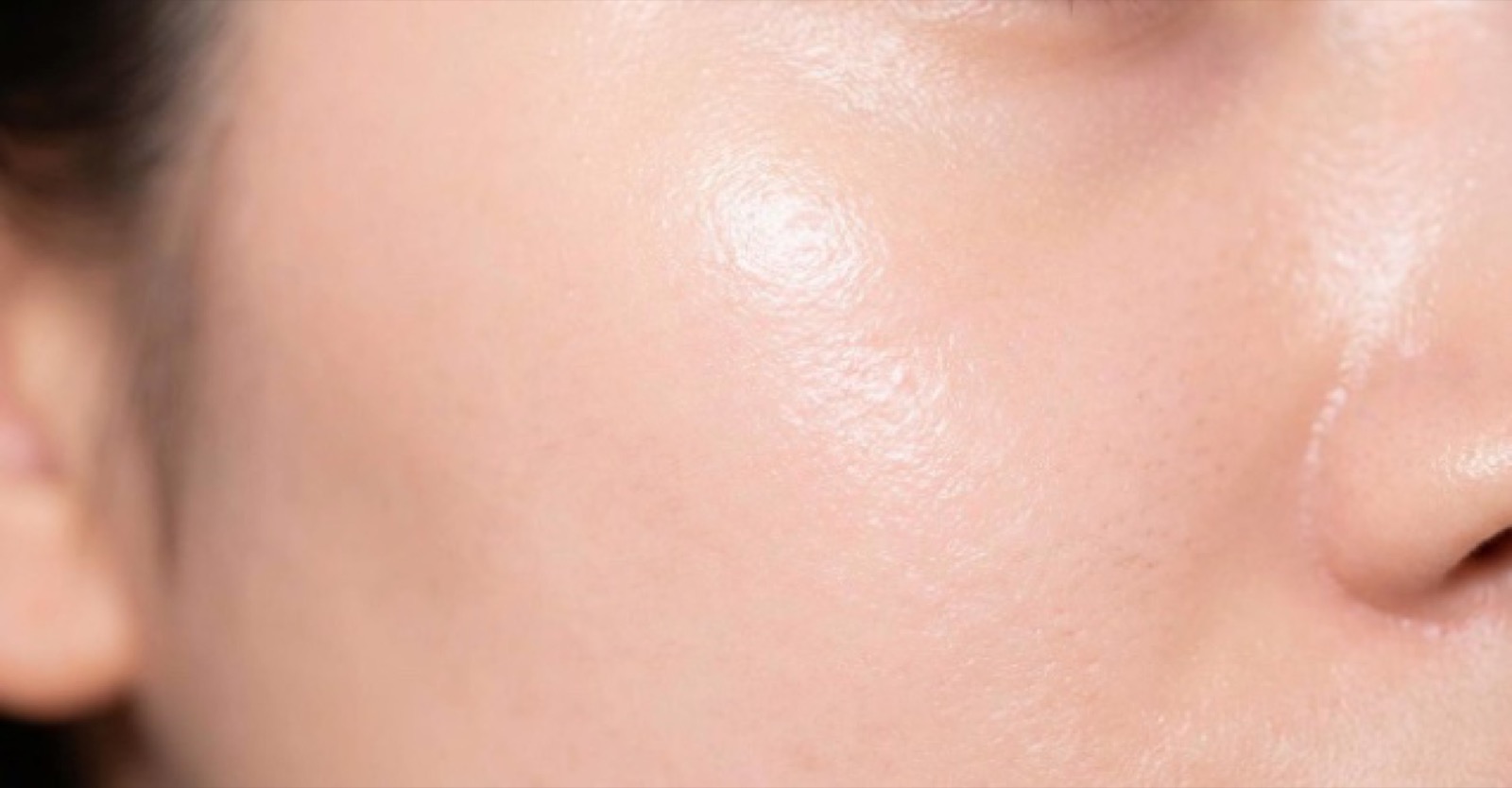
Natural tsuya represents an even, lit-from-within radiance created by well-hydrated skin cells rather than oily cosmetic shine.
The Philosophy of Tsuya: Inner Moisture vs Surface Shine
To understand tsuya, one must understand how Japanese dermatological aesthetics distinguish between desirable moisture radiance and undesirable surface oiliness.
The outer covering of the body and is the largest organ of the integumentary system[4], and human skin naturally secretes protective lipids. In mammalian biology, sebum lubricates the skin and hair of mammals[3] to maintain surface suppleness. However, when excess sebum accumulates along the forehead, nose, and chin, it produces an uneven, sticky shine known in Japanese as tekari. Tekari typically pools in open pores, emphasizes uneven skin texture, and breaks down cosmetic formulas.
In contrast, tsuya represents uniform optical radiance. When the outer epidermis is rich in moisture, skin cells swell slightly into plump, uniform tiles. Light striking this smooth cellular surface undergoes both specular reflection and internal light scattering, producing a soft, translucent halo across high points like the cheekbones and temples without feeling sticky or looking greasy.
How Japanese Tsuya Differs from Western and Korean Glow Trends
Global beauty cultures celebrate skin radiance, yet each culture pursues a distinct visual finish and formulation strategy.
Scroll horizontally to view full table
Attribute
Japanese Tsuya Skin
Korean Glass Skin
Western Dewy / Highlighter Glow
Aesthetic Focus
Translucent, quiet inner glow with soft velvet-smooth texture
Ultra-reflective, glassy, pore-free mirror shine
Targeted high-shine luminosity on facial peaks
Tactile Sensation
Plump, silky, zero surface tackiness, weightless touch
Deeply hydrated, high-slip, slightly dewy surface film
Varies from emollient balm feel to powdery shimmer
Intensive multi-layer ampoules, essences, and sheet masks
Mica-infused primers, facial oils, and cream highlighters
Longevity in Humidity
Maintains balanced refinement without dissolving or breaking
Requires blotting or powdering in tropical or summer weather
Can turn shiny quickly unless locked with setting sprays
Formulas designed for tsuya prioritize fast-absorbing humectants and breathable emulsions that leave zero greasy film on the surface.
Skin Science: The Biological Foundation of Natural Luminosity
Natural skin glow is fundamentally an optical phenomenon governed by stratum corneum health.
The stratum corneum is composed of corneocytes, which are flattened, terminally differentiated keratinocytes that have lost their nuclei[1]. In healthy skin, these corneocytes are arranged in organized, overlapping tiers surrounded by an intercellular lipid matrix consisting of ceramides, cholesterol, and free fatty acids.
When skin suffers from dehydration or harsh cleansing friction, corneocytes shrink, curl at the edges, and desquamate irregularly. This rough, microscopic landscape scatters incoming light in chaotic directions, making the complexion appear dull, flat, and fatigued.
Conversely, when humectants bind abundant moisture within corneocytes, the cell surfaces smooth out. To preserve this state, topical emollients and occlusives form a hydrophobic coating on the surface of the skin[2] to reduce trans-epidermal water loss. The resulting smooth surface allows ambient light to bounce back cleanly, creating the coveted tsuya effect.
Step-by-Step J-Beauty Routine to Build Tsuya Skin
Cultivating lasting tsuya does not require dozens of complicated products. Instead, it relies on disciplined, everyday habits centered on moisture retention and barrier protection.
Pressing hydrating formulas gently with warm palms encourages smooth absorption without creating micro-friction across skin tissues.
Step 1: Low-Friction Cleansing
Harsh foaming washes and aggressive facial scrubs disrupt the intercellular lipid envelope. J-Beauty advocates for gentle cleansing oils or cushiony cleansing milks in the evening, followed by a mild foam whipped into dense, micro-bubbles so your fingers never directly drag across the facial surface.
Step 2: Layering Hydrating Lotion (Keshosui)
Rather than applying thick, heavy creams immediately after washing, Japanese routines begin with keshosui—watery conditioning lotions loaded with humectants such as hyaluronic acid, glycerin, and fermented rice filtrate (sake kasu). Press 2 to 3 thin layers into the face with your palms, giving each layer several seconds to sink into the stratum corneum.
Step 3: Sealing with Moisture Milk (Nyueki)
While Western routines often skip straight to heavy balms, J-Beauty favors nyueki (a lightweight, fluid emulsion). Nyueki blends purified water, lightweight lipids, and squalane in a balanced ratio, sealing in the watery hydration from step 2 while leaving a breathable, soft-focus finish that never looks greasy.
Step 4: Daily Photoprotection
UV exposure degrades structural proteins and triggers surface dehydration, leading to rough texture and premature dullness. Wearing a lightweight, cosmetically elegant Japanese sunscreen with PA++++ broad-spectrum UVA protection shields the delicate stratum corneum daily.
Common Misconceptions About Tsuya Skin
Achieving healthy radiance requires steering clear of several common skincare pitfalls:
"More facial oil does not create more glow": Slathering thick plant oils over parched skin traps dead flakes without delivering necessary water molecules. Pure oils create temporary tekari (oil shine) rather than true hydration-driven tsuya.
"Frequent scrubbing reveals fresh luminosity": Aggressive daily scrubs strip away essential ceramides, triggering reactive oil production and persistent surface micro-cracks.
"Tsuya is only for young or flawless skin": Because tsuya stems from hydration uniformity rather than pore size, individuals of any age and skin tone can cultivate a luminous, vibrant finish through consistent moisture habits.
Consistent hydration layering and mindful touch cultivate enduring radiance regardless of age or baseline skin tone.
Signs to stop and when to see a doctor
While pursuing a radiant complexion through gentle skincare is safe for most individuals, over-moisturizing with heavy occlusives or introducing incompatible active ingredients can trigger barrier irritation.
Cease using new products and simplify your routine if you experience:
Persistent facial stinging, burning, or heat sensations after applying gentle lotions
Clusters of tiny red bumps, itching papules, or clogged comedones resembling folliculitis
Flaking, greasy yellow scales around the nasal folds, eyebrows, or hairline (potential indicators of seborrheic dermatitis)
Expanding erythema (redness) or swelling that does not subside after cleansing
If symptoms persist beyond 48 to 72 hours, or if you suspect an acute allergic reaction or cutaneous infection, consult a board-certified dermatologist or medical professional for specialized diagnosis and evaluation.
FAQ
Q1. How long does it take to see natural tsuya after adjusting my routine?
A. Most individuals notice improved surface softness within a few days, with structural radiance building over 4 to 6 weeks.(Details)
Because surface hydration (*keshosui* application) immediately plumps superficial corneocytes, skin often looks fresher and smoother within 3 to 7 days. However, true lasting *tsuya* depends on complete epidermal renewal and barrier stabilization, which typically requires a full 28-to-40-day skin cell turnover cycle.
Q2. Can oily or acne-prone skin types achieve tsuya without looking greasy?
A. Yes, by prioritizing water-based humectants and oil-free gel emulsions over heavy facial oils.(Details)
Oily skin frequently suffers from underlying surface dehydration (*inkanso*), which prompts sebaceous glands to overproduce sebum. By flooding the skin with light watery lotions containing hyaluronic acid and amino acids, then sealing with a lightweight, pore-friendly emulsion, oily skin achieves a refined moisture glow without developing midday slickness.
Q3. Is tsuya skin created through makeup primers or skincare?
A. In Japanese beauty philosophy, genuine tsuya is rooted in skincare, though sheer makeup can complement it.(Details)
While pearlescent primers and liquid illuminators can simulate glow temporarily, authentic *tsuya* originates from the health of bare skin. Japanese makeup artists emphasize skin preparation (*shitate*) before cosmetics, using hydrating lotions and thin emulsions so minimal foundation is needed.
Q4. What is the main difference between tsuya and Korean chok-chok skin?
A. Chok-chok emphasizes an overtly dewy, wet finish, while tsuya emphasizes a smooth, velvet-like internal radiance.(Details)
*Chok-chok* is an onomatopoeic Korean term describing deeply drenched, dewy skin that feels moist to the touch. In contrast, Japanese *tsuya* focuses on light dispersion and cellular clarity, aiming for a dry-to-the-touch, silky finish that glows naturally under daylight without feeling wet.
Q5. Should I use facial oils every day to cultivate tsuya glow?
A. Not necessarily; facial oils should be used sparingly as an occasional booster rather than a primary moisturizer.(Details)
Pure facial oils supply fatty lipids but zero water. For most skin types, layering a humectant lotion (*keshosui*) and a water-in-oil emulsion (*nyueki*) supplies the ideal moisture-to-lipid ratio. If you choose to use squalane or camellia oil, 1 or 2 drops warmed in your palms and pressed over your emulsion is plenty to seal in moisture without suffocating pores.
Summary
Inner radiance over surface shine: Japanese tsuya represents healthy, light-reflecting skin powered by cellular hydration, distinct from oily tekari.
Balanced moisture layering: Pairing watery humectant lotions (keshosui) with lightweight fluid emulsions (nyueki) establishes optimal moisture without heavy residue.
Zero-friction daily care: Handling skin gently with soft palm pressing preserves fragile stratum corneum lipids and maintains microscopic surface smoothness.
Broad-spectrum sun defense: Daily high-PA sunscreen application prevents UV-induced surface dehydration and preserves long-term complexion clarity.
Inclusive beauty aesthetic: True tsuya is attainable for all skin types, tones, and ages through consistent, gentle barrier nourishment.
Disclaimer: This article is for general information and education about Japanese cosmetics and their labels. It is not a substitute for professional medical advice, diagnosis, or treatment. Skincare results vary from person to person. Product formulas, availability, prices, and regulations change, and products sold in Japan can differ from versions sold elsewhere, so always check the current label. Do a patch test before introducing a new product, and consult a doctor or dermatologist if you have a skin condition or specific concerns.