title: Japanese Milky Emulsion Before Lotion: The Albion First-Milk Method slug: japanese-milky-emulsion-before-lotion-albion-method category: hydration published_at: '2026-11-23' updated_at: '2026-11-23' meta_description: Discover why Japanese skincare applies milky emulsion before lotion, how the Albion first-milk method softens skin, and proper cotton rituals. keywords:
- milky emulsion before lotion
- albion first milk method
- nyueki senko
- japanese emulsion technique
- j-beauty hydration order lead_image: /images/stock/japanese-skincare-routine-with-only-lotion-and-emulsion-hero.webp lead_image_alt: Japanese lotion and emulsion pairing on clean wooden surface demonstrating hydration sequencing author: Editorial Team publish: true
Japanese Milky Emulsion Before Lotion: The Albion First-Milk Method
In standard Western and global skincare regimens, cosmetic sequencing follows a strict ascending rule of viscosity: liquids first, followed by serums, then lightweight lotions, and finally heavy sealing creams. Yet walk up to any beauty counter of Japanese luxury prestige house Albion (Arubion), and beauty advisors will instruct you to do the exact opposite: apply milky emulsion immediately after washing your face, prior to your hydrating toner lotion.
Known across Japan as nyuueki senkou (the "first-milk" philosophy), this inverted sequence has maintained a devoted cult following for over sixty years. Far from a marketing gimmick, applying emulsion before lotion is grounded in skin physiology, lipophilic absorption mechanisms, and stratum corneum softness.
Quick answer: The Japanese Albion first-milk method reverses traditional skincare order by applying a specialized milky emulsion immediately after cleansing. Because freshly washed skin loses surface lipids and natural moisturizing factors, this balanced lipid-water emulsion softens compacted keratinocytes and restores lipid balance, allowing subsequent watery lotions to absorb more evenly without friction.
The origin of inverted sequencing: why Albion pioneered first-milk
When cosmetic pioneer Albion established its skincare philosophy in 1956, researchers studied what happens to the epidermal barrier the exact moment after cleansing. Facial washing successfully removes oxidised sebum and grime, but it also temporarily strips natural surface sebum and washes away water-soluble Natural Moisturizing Factors (NMF).
Albion dermatologists recognized that parched, freshly stripped skin cells shrink and curl, creating surface tension that causes pure watery lotions to bead up and evaporate rather than absorb. To resolve this, they formulated specialized balancing milks designed not merely to create an occlusive surface barrier on top of the skin[2]. Instead, these emulsions are formulated to match the ideal moisture balance inherently found within healthy human skin[2]—composed of roughly equal parts moisture, oil, and humectant factors.
The dermatological mechanism: how first-milk enhances lotion absorption
Why does applying a lipid-containing milk before a watery lotion not block water absorption? The secret lies in emulsion chemistry and stratum corneum pathways:
1. Realigning Intercellular Lipids
The outer layer of the skin consists of flattened keratinocytes surrounded by a dense matrix of structured lipids (ceramides, cholesterol, and fatty acids). Applying a bio-compatible emulsion delivers gentle lipids that nestle between dry keratinocytes, softening rigid cellular borders and increasing tissue flexibility (juunan-sei).
2. Preventing Water Repulsion
When dry skin encounters pure water, hardened sebum residues can cause surface repulsion. By introducing an emulsion that contains micro-emulsified humectants and fine lipids first, you establish lipophilic bridges that guide subsequent water molecules deep into inter-cellular gaps.
3. Immediate Friction Cushioning
Right after cleansing, skin is vulnerable to mechanical abrasion. The American Academy of Dermatology (AAD) highlights gentle handling: "Resist the temptation to scrub your skin because scrubbing irritates the skin"[1]. Smoothing a generous layer of milk creates a smooth gliding buffer, avoiding fingertip dragging.
Why cotton pads are non-negotiable for Albion-style milk
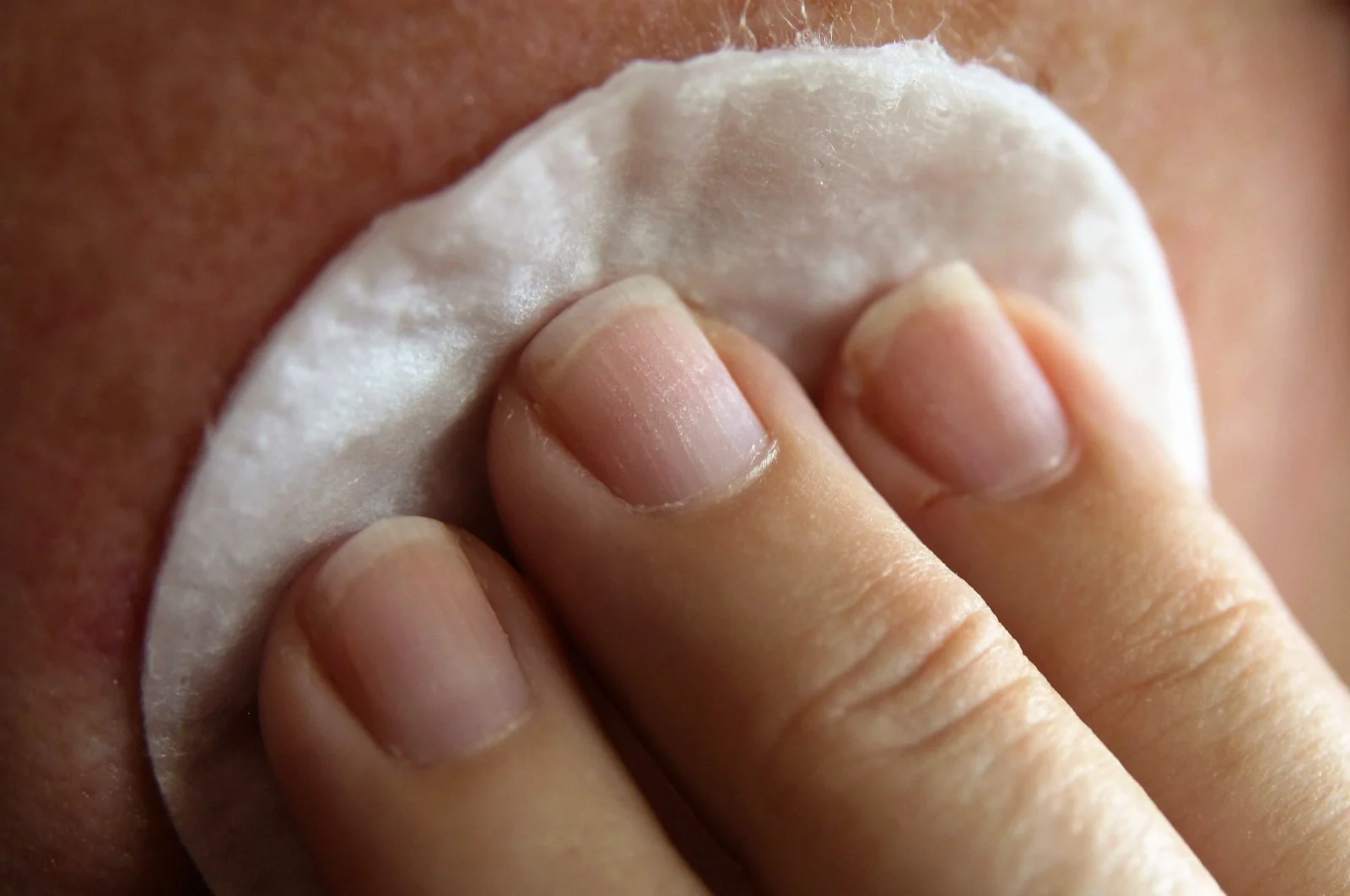
One of the most surprising aspects of the Japanese first-milk method for newcomers is the mandatory use of high-grade facial cotton pads rather than bare palms:
- Even Surface Distribution: Human palms absorb a significant portion of skincare lipids, and fingers exert uneven pressure across facial contours. A soft cotton pad ensures the emulsion distributes with uniform thickness across fine facial folds, nostril crevices, and jawlines.
- Micro-Exfoliation Without Abrasion: Gliding a plush cotton pad soaked in milk sweeps away residual loose dead surface flakes loosened by the emulsion, polishing the skin texture gently without manual scrubbing.
- Controlled Product Delivery: Albion recommends three full pumps of milk per application. While three pumps feel excessively heavy when applied with bare fingers, a cotton pad holds and releases the fluid gradually, allowing the skin to absorb it smoothly.
Step-by-step guide: mastering the first-milk routine
To experience the skin-softening benefits of the Japanese first-milk ritual, follow this traditional application protocol:
Step 1: Gentle lukewarm cleansing
Cleanse your complexion thoroughly without stripping. The AAD emphasizes: "Wet your face with lukewarm water and use your fingertips to apply cleanser"[1]. Rinse cleanly by following their instructions: "Rinse with lukewarm water and pat dry with a soft towel"[1].
Step 2: Dispense three pumps onto plush cotton
Take a thick, unbleached Japanese cotton pad. Dispense three full pumps of first-milk directly onto the center of the pad. Place the cotton over your middle and ring fingers, securing the edges with your index and pinky fingers.
Step 3: Divide and glide outward
Dot the milk onto five points of your face: forehead, both cheeks, nose, and chin. Using broad, sweeping motions, glide the cotton pad from the center outward along facial muscle lines:
- Cheeks: Glide from inner nose contours toward temples.
- Forehead: Sweep upward from brows toward hairline.
- Nose and Chin: Smooth downward along nasal bridge and outward across jawline.
Step 4: Pat subsequent hydrating lotion
Now that your stratum corneum is supple and receptive, pour your favorite watery hydrating lotion (keshosui) into your palms or onto a fresh cotton pad. Press or pat the lotion into your face. You will notice the watery fluid absorbs almost instantly, leaving skin quenched rather than wet on the surface.
Step 5: Seal with serum or cream
Conclude your routine with your preferred targeted essence (biyoueki) and, if needed, a lightweight finishing cream to lock in daytime or nighttime hydration.
Comparing hydration orders: standard vs. first-milk method
Scroll horizontally to view full table
| Parameter | Standard J-Beauty Sequencing | Albion First-Milk Method |
|---|---|---|
| First Step After Cleansing | Watery Lotion (*Keshosui*) | Balancing Emulsion (*Nyuueki*) |
| Application Tool | Bare palms or thin cotton | Plush thick cotton pad |
| Primary Purpose | Hydrate stratum corneum cells | Restore natural lipid-water balance |
| Subsequent Lotion Behavior | Builds moisture layer by layer | Absorbs rapidly into softened skin |
| Skin Finish | Dewy and fresh | Velvety, supple, and cashmere-soft |
| Ideal Skin Profiles | Normal, oily, or combination skin | Stiff, dehydrated, rough, or mature skin |