Japanese Natto Gum & Polyglutamic Acid Hydration Guide
HydrationBy Editorial Team
title: Japanese Natto Gum & Polyglutamic Acid Hydration Guide
slug: japanese-natto-gum-polyglutamic-acid-hydration
category: hydration
published_at: '2026-11-23'
updated_at: '2026-11-23'
meta_description: Discover how Japanese natto gum and polyglutamic acid (PGA) outperform hyaluronic acid in surface hydration. Learn molecular benefits and layering steps.
keywords:
japanese natto gum skincare
polyglutamic acid pga hydration
fermented soybean extract
hyaluronic acid vs polyglutamic acid
j-beauty moisture barrier
lead_image: /images/stock/skincare-hydration-water-droplet.webp
lead_image_alt: Macro water droplet capturing light on transparent glass representing intense skin hydration
thumbnail: /images/stock/skincare-hydration-water-droplet.webp
thumbnail_alt: Macro water droplet capturing light on transparent glass representing intense skin hydration
author: Editorial Team
publish: true
Japanese Natto Gum & Polyglutamic Acid Hydration Guide
For generations, the traditional Japanese breakfast staple natto—fermented soybeans famous for their pungent aroma and viscous, stringy threads (neba-neba)—has been celebrated as a dietary superfood. Yet behind the sticky threads that stretch from a freshly stirred bowl lies one of the most remarkable moisture-binding polymers in natural science: gamma-polyglutamic acid (gamma-PGA), commercially listed on cosmetic labels as natto gum or fermented soybean extract (natto ekisu).
While hyaluronic acid has long reigned as the benchmark humectant in global skincare, Japanese cosmetic chemists discovered that bio-fermented polyglutamic acid holds up to five times more moisture than standard hyaluronic acid. In modern J-Beauty formulas, natto gum functions as an invisible, breathable moisture reservoir that seals the stratum corneum, inhibits internal enzyme degradation of natural moisturizing factors (NMF), and imparts an ultra-dewy glass skin finish.
Quick answer: Natto gum is a natural biopolymer comprised of gamma-polyglutamic acid (gamma-PGA) produced by *Bacillus subtilis* during traditional soybean fermentation. Unlike low-molecular hyaluronic acid, which absorbs into surface layers, PGA forms a flexible, water-locking film on the skin's surface that holds up to 5,000 times its molecular weight in water. By inhibiting hyaluronidase (the enzyme that degrades natural hyaluronic acid), PGA preserves skin bounce and provides long-lasting epidermal hydration without stickiness.
Draws atmospheric water into deeper stratum layers
The Ferment Chemistry: How Natto Creates Polyglutamic Acid
When steamed soybeans are inoculated with Bacillus subtilis var. natto, the bacteria produce mucilaginous strings composed of two primary polymers: fructan and gamma-polyglutamic acid.
Structurally, PGA is a naturally occurring polyamide made from repeating L-glutamic acid units linked by gamma-amide bonds. Because its repeating carboxyl groups (-COOH) are highly ionized at human skin pH, PGA creates an electrostatic mesh that traps water molecules with tremendous tenacity.
Furthermore, PGA exhibits a unique biological protective mechanism: it acts as a competitive inhibitor of hyaluronidase, the endogenous enzyme that gradually breaks down your skin's own hyaluronic acid. By slowing enzyme breakdown, topical natto gum helps maintain the skin's intrinsic structural volume for extended hours.
In Japanese beauty philosophy, formulators often harmonize multiple humectant weights. High-moisture Japanese formulas, such as benchmark lotions from Rohto's Hada Labo line, showcase a high-moisture lotion where hydration lasts for long hours, formulated with generous hyaluronic acids to quench deep epidermal layers[2]. Adding natto gum to such routines complements this approach, achieving a rich, viscous texture that blends smoothly and easily into skin while forming a resilient protective seal over the surface[2].
Why Polyglutamic Acid and Hyaluronic Acid Work Better Together
Rather than viewing polyglutamic acid as a replacement for hyaluronic acid, Japanese laboratories advocate using them as synergistic partners:
Dual-Depth Stratification: Low-molecular-weight hyaluronic acid absorbs into lower stratum corneum layers to quench intercellular thirst. High-molecular-weight natto gum remains on the epidermal surface, acting as a dynamic shield against trans-epidermal water loss (TEWL).
Smooth Cushion Without Tackiness: High concentrations of pure hyaluronic acid can feel rubbery or peel when layered beneath sunscreen. Natto gum provides a fluid, satin slip that cushions the skin and smooths dry fine lines.
Enhanced Elasticity: Topical application of PGA stimulates the skin's natural production of pyrrolidone carboxylic acid (PCA) and urocanic acid, key building blocks of the skin's natural moisturizing factor (NMF).
How to Layer Natto Gum in Your Daily Routine
To prevent pilling and ensure maximal humectant efficiency, apply natto gum products in the correct molecular sequence over thoroughly dampened skin.
When cleansing before applying hydrating layers, the American Academy of Dermatology (AAD) reminds us: "Wet your face with lukewarm water and use your fingertips to apply cleanser"[1]. They stress: "Resist the temptation to scrub your skin because scrubbing irritates the skin"[1]. Gentle application prepares the stratum corneum to absorb watery essences freely without inflammatory swelling.
Follow these recommended layering steps:
Step 1: Watery Hydration: Splash a watery hydrating lotion (keshosui) containing multi-weight hyaluronic acid across your face and gently press with your palms.
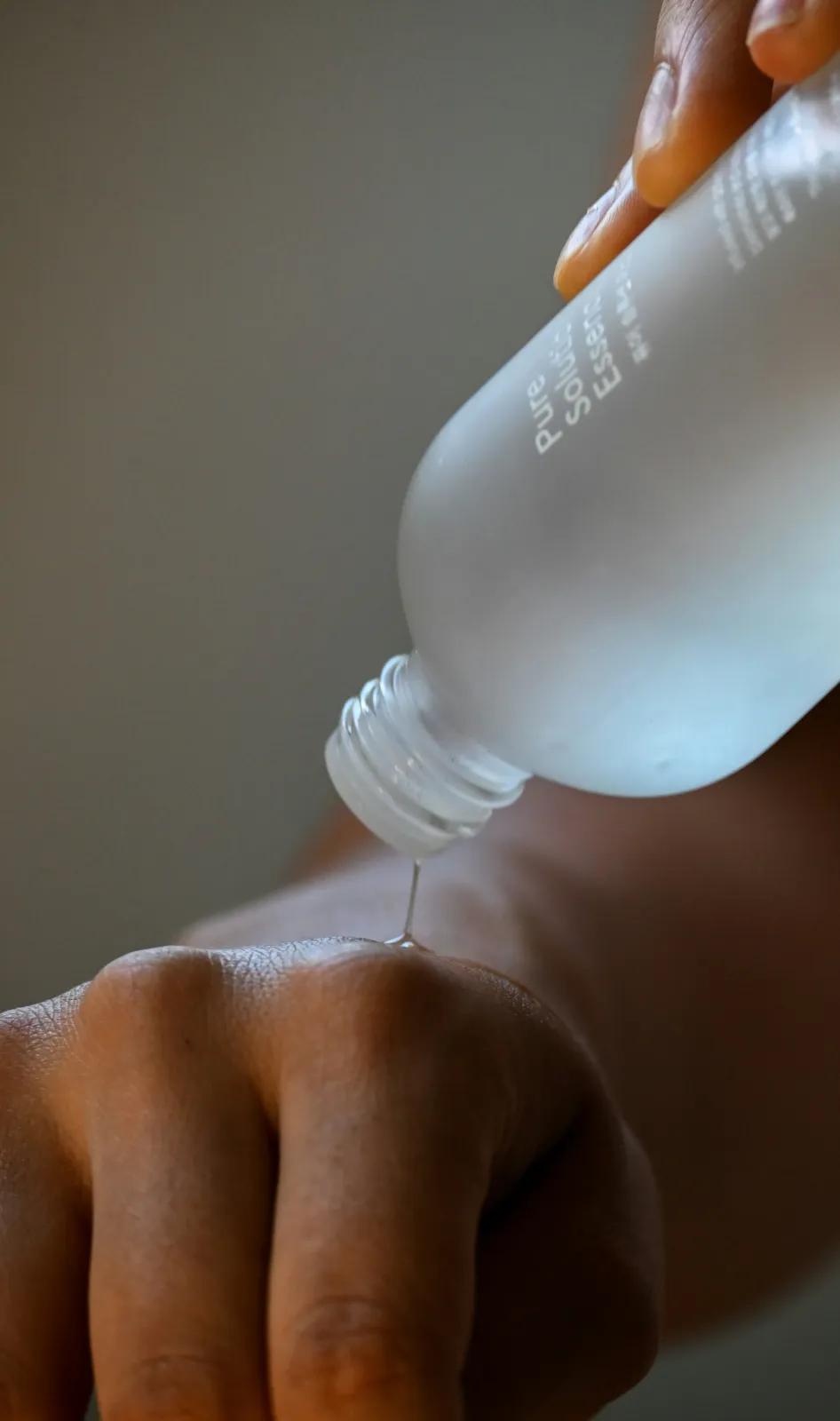
Step 2: Natto Gum Essence: Dispense two to three drops of natto gum serum onto your fingertips. Gently sweep across cheeks and forehead. You will feel an immediate elastic slip that absorbs into a luminous sheen within 30 seconds.
Step 3: Lipid Emulsion Seal: Lock in the humectant reservoir with a lightweight milky emulsion or squalane cream to prevent surface moisture from evaporating in dry indoor environments.
Signs to stop and when to see a doctor
Natto gum is gentle, non-greasy, and well-tolerated by most skin types. However, individuals with severe systemic food allergies to soy proteins should exercise caution.
Discontinue use of natto gum skincare and consult a medical professional if you observe any of the following symptoms:
Erythematous Welts or Urticaria: Sudden itchy red hives developing across the face or neck shortly after application, which could indicate a contact hypersensitivity to residual soy protein fragments.
Periorbital Edema: Swelling around the eyelids or mouth.
Persistent Itching or Heat: A stinging, warm sensation that fails to subside within 15 minutes of washing.
If adverse skin reactions occur, consult a board-certified dermatologist. Provide the product ingredient list so your doctor can evaluate whether soy-derived fermentation byproducts contributed to the reaction.
FAQ
Q1. Does natto gum skincare smell like fermented natto food?
A. No, cosmetic natto gum is completely purified and possesses zero food odor.(Details)
The distinctive, pungent aroma of breakfast natto comes from volatile pyrazines and short-chain fatty acids produced during food fermentation. Cosmetic laboratories thoroughly isolate and purify the pure gamma-polyglutamic acid polymer, yielding a crystal-clear, completely odorless serum.
Q2. Is natto gum sticky like the threads of natto food?
A. No, cosmetic formulations are calibrated to absorb smoothly with zero residual stickiness.(Details)
While the serum may exhibit a slight elastic stretch when dispensed from the dropper, it thins out into water-like fluid upon contact with the skin's warmth and mineral salts. It dries down to a silky, weightless film without any tacky or glue-like residue.
Q3. Can people with soy allergies use natto gum skincare?
A. Highly refined PGA typically lacks intact soy allergens, but patch testing is essential.(Details)
Pharmaceutical-grade polyglutamic acid is isolated from bacterial fermentation and filtered to remove whole soy proteins. However, if you have an acute systemic allergy to soy or legumes, you should conduct a 24-hour patch test on your inner arm or consult an allergist before using fermented soybean skincare.
Q4. Can I use polyglutamic acid alongside active ingredients like retinol or AHA/BHA?
A. Yes, PGA acts as an exceptional protective buffer against active-induced peeling.(Details)
Because polyglutamic acid is a neutral, non-irritating humectant that strengthens barrier moisture, it layers easily alongside exfoliating acids and gentle retinoids. Applying PGA reduces the flaking, stinging, and dryness commonly triggered by exfoliating actives.
Q5. Why is polyglutamic acid considered superior to hyaluronic acid for dry air environments?
A. Its flexible surface film prevents water from being pulled out of skin in arid conditions.(Details)
In extremely dry air (like heated winter rooms or airplane cabins), standard low-molecular hyaluronic acid can inadvertently draw water from deeper skin layers outward into the dry atmosphere. Polyglutamic acid forms a physical occlusive-humectant barrier that traps moisture within the stratum corneum regardless of external humidity.
Summary
Japanese natto gum and polyglutamic acid represent the extraordinary cosmetic potential hidden inside ancestral fermentation traditions. By harvesting the super-hydrating gamma-PGA polymer produced during soybean fermentation, Japanese skincare offers an intensely hydrating, barrier-protective shield that outperforms conventional humectants. Whether used alongside hyaluronic acid or layered under creams, natto gum delivers long-lasting moisture, bounce, and a dewy glass-skin glow.
Disclaimer: This article is for general information and education about Japanese cosmetics and their labels. It is not a substitute for professional medical advice, diagnosis, or treatment. Skincare results vary from person to person. Product formulas, availability, prices, and regulations change, and products sold in Japan can differ from versions sold elsewhere, so always check the current label. Do a patch test before introducing a new product, and consult a doctor or dermatologist if you have a skin condition or specific concerns.