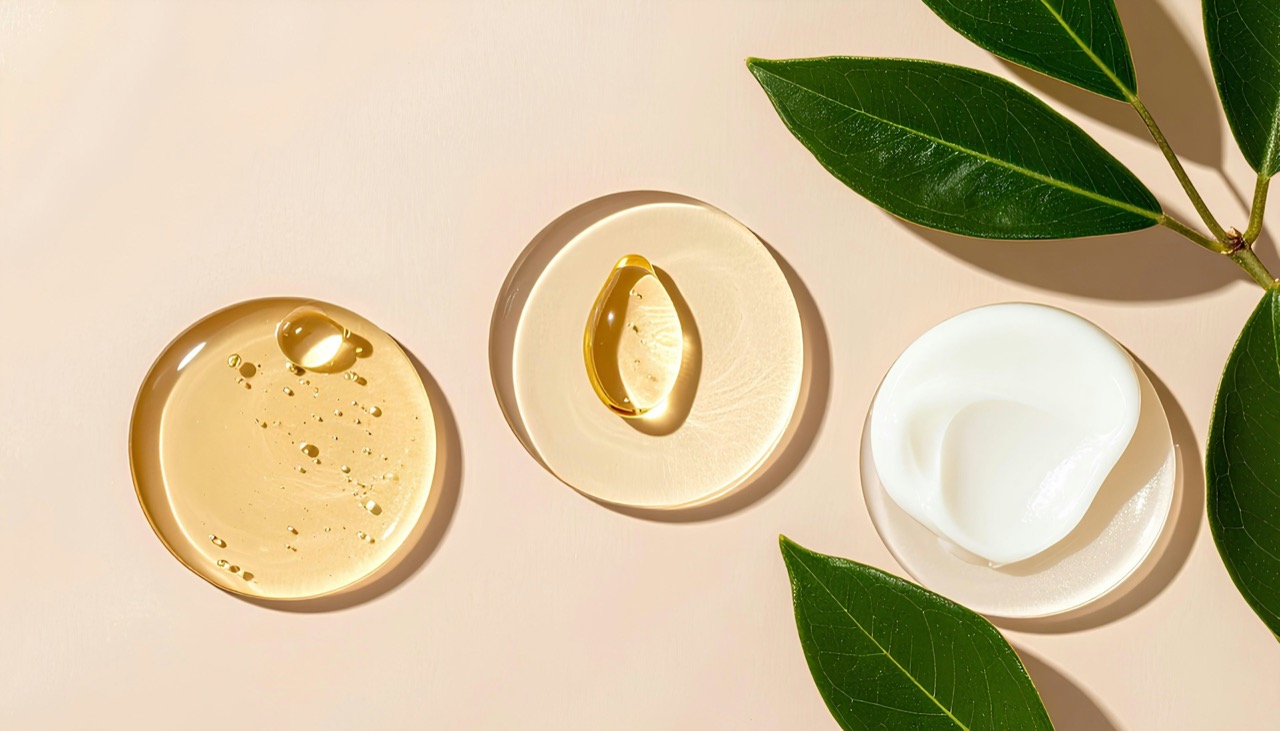
title: Mineral Oil in Japanese Cosmetics: Safety, Purity & Myths Explained meta_description: Explore mineral oil safety in Japanese cosmetics. Learn how high-grade purification, comedogenicity tests, and barrier occlusion dispel common pore myths. slug: mineral-oil-in-japanese-cosmetics-safety-explained category: ingredients hero_image: /images/stock/cream-oil-texture-petri-dishes.jpg hero_image_alt: Purified cosmetic-grade mineral oil and emollient textures displayed in laboratory petri dishes published_at: 2026-11-22 updated_at: 2026-11-22 author: Editorial Team
Mineral Oil in Japanese Cosmetics: Safety, Purity & Myths Explained
Few skincare ingredients evoke as much polarizing debate as mineral oil (kōbutsu-yu). In popular clean beauty marketing, it is frequently maligned as a cheap petroleum byproduct that suffocates pores, causes persistent blackheads, and traps toxins within the skin. Conversely, dermatologists worldwide and formulation chemists in Japan frequently celebrate high-purity mineral oil as one of the most chemically inert, non-sensitizing, and effective occlusive emollients available in modern cosmetic science.
In Japan, cosmetic-grade white mineral oil undergoes stringent, multi-stage fractional distillation and hydrogenation protocols to remove all polycyclic aromatic hydrocarbons (PAHs) and unsaturated impurities. Regulated under the Japanese Pharmacopoeia (JP) and the Pharmaceutical and Medical Devices Act (PMDA), Japanese cosmetic mineral oil is virtually odorless, colorless, and biologically unreactive. It forms the protective backbone of gentle cleansing oils, pediatric barrier balms, and post-procedure ointments.
This guide explores the historical origin of mineral oil anxieties, examines the molecular science of cosmetic-grade refinement, dispels persistent comedogenicity myths with published dermatological data, and compares mineral oil objectively against natural plant oils.
Cosmetic-grade mineral oil used in Japanese skincare is an ultra-refined, purified liquid alkane that meets rigorous Japanese Pharmacopoeia standards. Unlike industrial petroleum, it contains zero carcinogenic impurities or unsaturated bonds. Because its molecular structure is too large to enter viable skin layers, it remains on the surface to form a breathable occlusive film that prevents transepidermal water loss. Comprehensive clinical studies confirm that pure cosmetic mineral oil is non-comedogenic and significantly less allergenic than unrefined plant oils, making it especially suitable for eczema-prone, compromised, or sensitive skin barriers.
The Historical Origin of the "Mineral Oil Myth"
To understand why mineral oil developed a negative reputation, one must examine post-war cosmetic history in Japan during the mid-20th century:
1. The Mid-Century Impurity Crisis
In the 1960s and early 1970s, primitive industrial refining techniques occasionally left trace polycyclic aromatic hydrocarbons (PAHs) and sulfur compounds in cosmetic raw materials. In several documented instances, unrefined coal-tar derivatives and poorly purified oils reacted with sunlight, triggering a condition known in Japan as joshi ganban-shō (female facial melanosis)—a persistent hyperpigmentation disorder.
2. The Modern Refining Revolution
The Japanese Ministry of Health and modern chemical manufacturers responded by overhauling national cosmetic manufacturing standards. Today, cosmetic white mineral oil undergoes advanced catalytic hydro-treating and vacuum distillation. This intensive refining strips away 100% of aromatic hydrocarbons, heavy metals, and unsaturated bonds, producing a pure, medical-grade hydrocarbon that bears no chemical resemblance to raw petroleum or mid-century cosmetic oils.
3. Persistent Clean Beauty Misconceptions
Despite over five decades of spotless safety records, modern marketing campaigns often equate cosmetic mineral oil with motor grease or crude oil. This conflation ignores the reality that many standard pharmaceutical ointments—such as sterile petroleum jelly used in hospital burn units—are derived from the exact same highly purified hydrocarbon family.
Dermatological Science: Purity, Occlusion, and Stability
Evaluating mineral oil through a dermatological lens reveals unique physicochemical properties that plant oils cannot replicate:
1. Chemical Inertness and Non-Oxidation
Unlike plant-derived oils (such as olive, rosehip, or soybean oil) which contain unsaturated fatty acids with vulnerable carbon-carbon double bonds, mineral oil is composed entirely of saturated straight-chain and branched alkanes. Because it has no double bonds, it cannot oxidize or turn rancid when exposed to oxygen, UV light, or heat. It produces zero lipid peroxides—the primary cause of oxidation-induced skin irritation and clogged pores.
2. Large Molecular Weight and True Surface Occlusion
Research in PLOS ONE affirms: 'The stratum corneum (SC) provides a permeability barrier that limits the inflow and outflow of water.'[1] The molecular weight of cosmetic liquid paraffin ranges from approximately 300 to 500 Da, with branched hydrocarbon chains that are physically too large to squeeze between intercellular stratum corneum lipid bilayers. Instead of absorbing into deeper dermal layers, it forms a light, water-repellent film on the outermost stratum corneum, reducing transepidermal water loss (TEWL) by up to 30%.
3. Low-Irritation Profile for Reactive Skin
Because mineral oil contains no proteins, terpenes, or botanical fragrance allergens, allergic contact dermatitis to cosmetic-grade mineral oil is exceptionally rare in dermatological literature. It provides gentle barrier shielding for reactive skin types that flare when exposed to active botanical oils.
Mineral Oil vs Botanical Plant Oils: Objective Comparison
Neither category is universally superior; each serves distinct formulation purposes:
Scroll horizontally to view full table
| Property | Cosmetic-Grade Mineral Oil | Botanical Plant Oils (e.g., Camellia, Jojoba) |
|---|---|---|
| Primary Source | Highly purified, fractionated liquid alkane hydrocarbons | Expeller-pressed or cold-pressed botanical seeds and fruits |
| Oxidative Stability | Infinite stability; does not oxidize, turn rancid, or degrade in heat. | Prone to oxidation over time; requires antioxidant stabilizers (Vitamin E). |
| Allergy Potential | Extremely low; biologically inert with zero natural protein allergens. | Moderate; unrefined botanicals can contain sensitizing plant terpenes. |
| Action Mechanism | Pure surface occlusion; physically blocks moisture evaporation. | Physiological lipid delivery; supplies linoleic or oleic acids to stratum corneum. |
| Feel & Cleansing | Ultra-slick cushion glide; dissolves waterproof pigments effortlessly. | Rich, velvety cushion; can feel heavier depending on fatty acid profile. |