Combination Skin Balancing: Japanese Toner Method Guide
RoutinesBy Miho Tanaka
title: Combination Skin Balancing: Japanese Toner Method Guide
meta_description: Master the Japanese toner method for combination skin. Learn multi-layer hydration, zone-mapping, and lightweight balancing routines for oily T-zones.
published_at: 2026-11-19
updated_at: 2026-11-19
fact_checked_at: 2026-11-19
author: Miho Tanaka
thumbnail: /images/stock/toner-pour-hand-application-texture.webp
thumbnail_alt: Watery Japanese toner poured into palms for balancing combination skin hydration
affiliate: false
ja_equivalent: null
publish: false
Combination Skin Balancing: Japanese Toner Method Guide
Managing combination skin often feels like solving an impossible paradox. Your T-zone (forehead, nose, and chin) produces excess sebum and shines by midday, while your U-zone (cheeks, jawline, and eye contours) feels parched, tight, and prone to flaking. Standard skincare approaches frequently worsen the problem by addressing the entire face as either exclusively oily or uniformly dry. In Japanese beauty (J-beauty), formulators solve this puzzle by decoupling hydration from oil, using the Japanese Toner Method (keshosui layering) to balance both zones without clogging pores or stripping delicate skin.
Quick answer:
How does the Japanese toner method balance combination skin?
The Japanese toner method uses **alcohol-free watery lotions (*keshosui*)** to deliver intensive, oil-free hydration across the entire face, followed by **zone-mapping techniques**. By applying multiple lightweight liquid layers and targeted 3-minute cotton lotion packs (*roshon pakku*) to dehydrated cheeks, the skin barrier receives ample water without adding greasiness to the T-zone. Sealing with a calibrated layer of milky emulsion (*nyueki*) prevents transepidermal water loss while keeping oily areas clear.
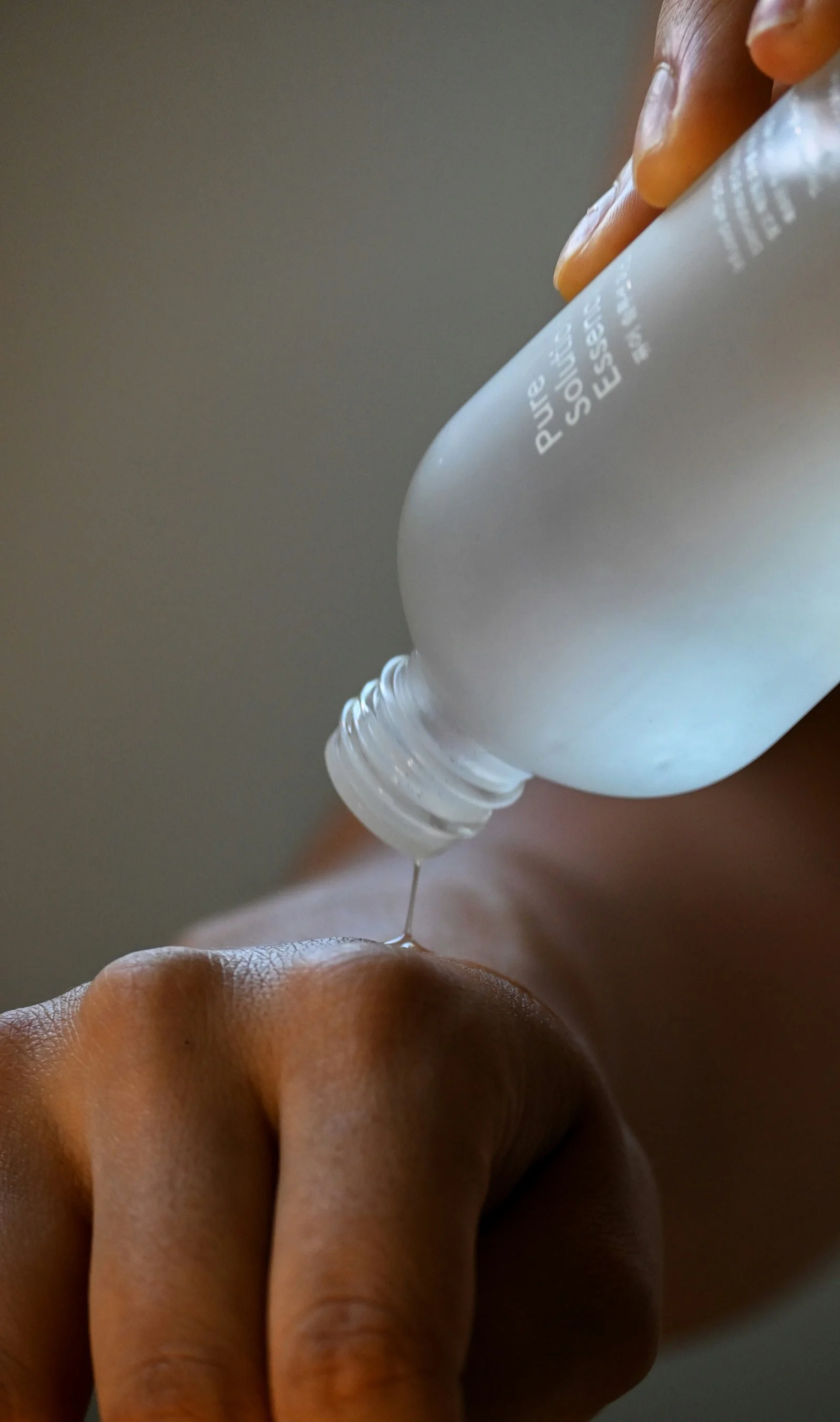
Japanese watery lotions (keshosui) deliver oil-free hydration that quenches dehydration without triggering T-zone shine.
Why Combination Skin Struggles with Western Astringents
Conclusion: Alcohol-heavy astringents strip dry cheeks while triggering rebound oiliness on the T-zone, whereas alcohol-free Japanese lotions hydrate inner layers calmly.
Understanding why conventional approaches backfire helps clarify the logic of Japanese balancing rituals:
Scroll horizontally to view the full comparison.
Approach Element
Western Astringent Method
Japanese Balancing Toner Method
Primary Toner Vehicle
Alcohol-heavy astringent or clarifying fluids
Alcohol-free watery lotions packed with humectants
Strips lipid bilayers, causing tightness and micro-flaking
Supplements natural moisturizing factors (NMF)
Application Strategy
Wiped aggressively across the face with cotton
Gentle palm-pressing and zone-specific layering
Moisture-Sealing Step
Heavy creams or completely skipped
Lightweight milky emulsion (*nyueki*) adjusted by zone
The 4-Step Japanese Toner Balancing Method
Conclusion: Structuring application through a base palm press, targeted cheek layering, weekly cotton packs, and calibrated emulsion sealing balances both zones.
To harmonize an oily T-zone and parched cheeks, follow this zone-tailored Japanese routine morning and evening:
Step 1: Base Hydration Layer (First Press)
Dispense a nickel-sized puddle of alcohol-free watery lotion into clean, dry palms. Warm the fluid between your hands for three seconds. Gently press your palms flat against your cheeks, forehead, and chin. This initial layer replenishes baseline water levels across the entire stratum corneum.
Step 2: Targeted Layering (Kasane-Zuke)
Without adding product to your T-zone, dispense a second, smaller portion of lotion into your fingertips. Gently tap this extra moisture specifically onto your cheeks, orbital perimeter, and jawline. This targeted technique delivers double the hydration to dry zones without increasing oiliness on the nose or forehead.
Step 3: The 3-Minute Cotton Lotion Pack (Roshon Pakku)
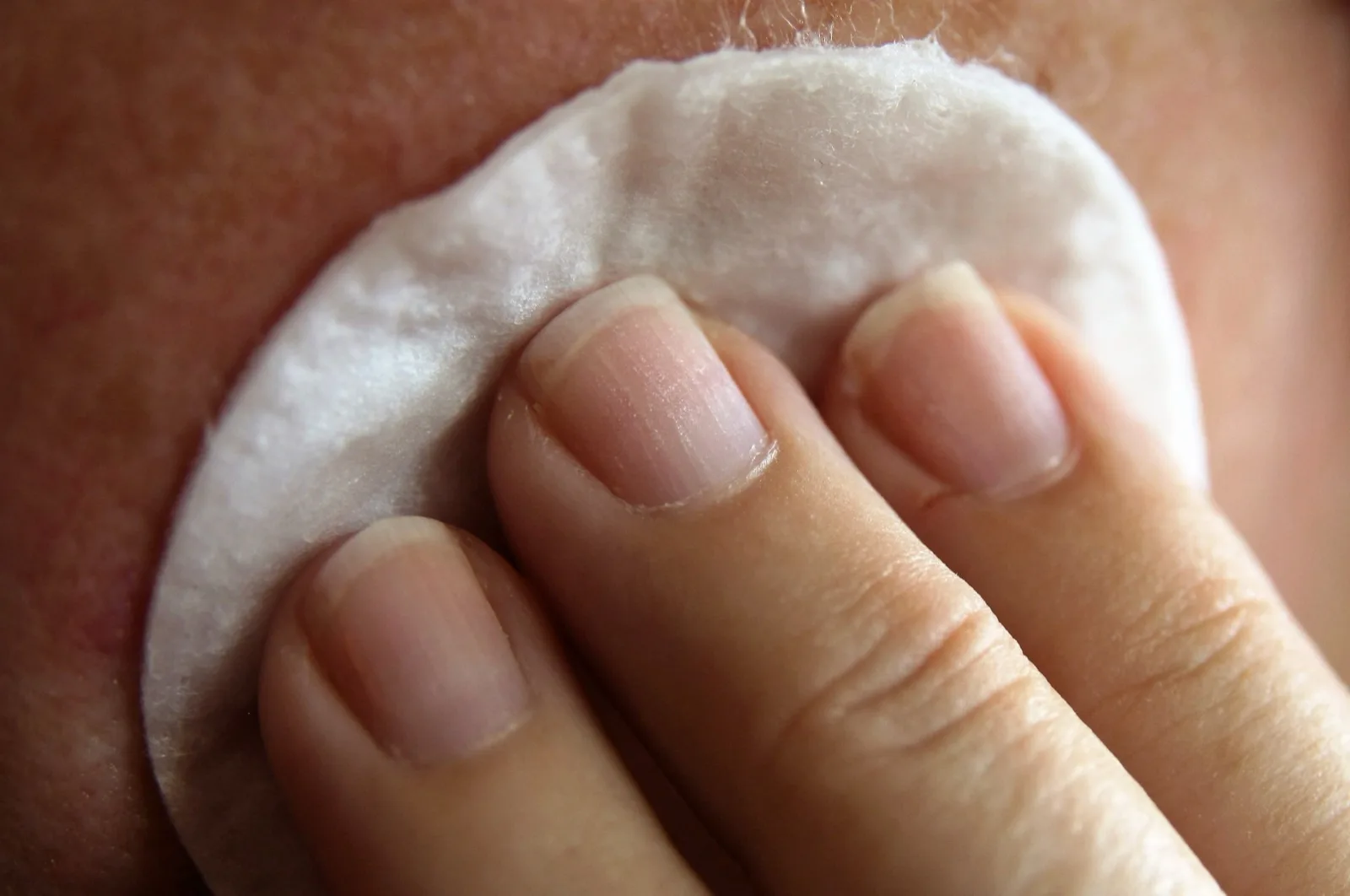
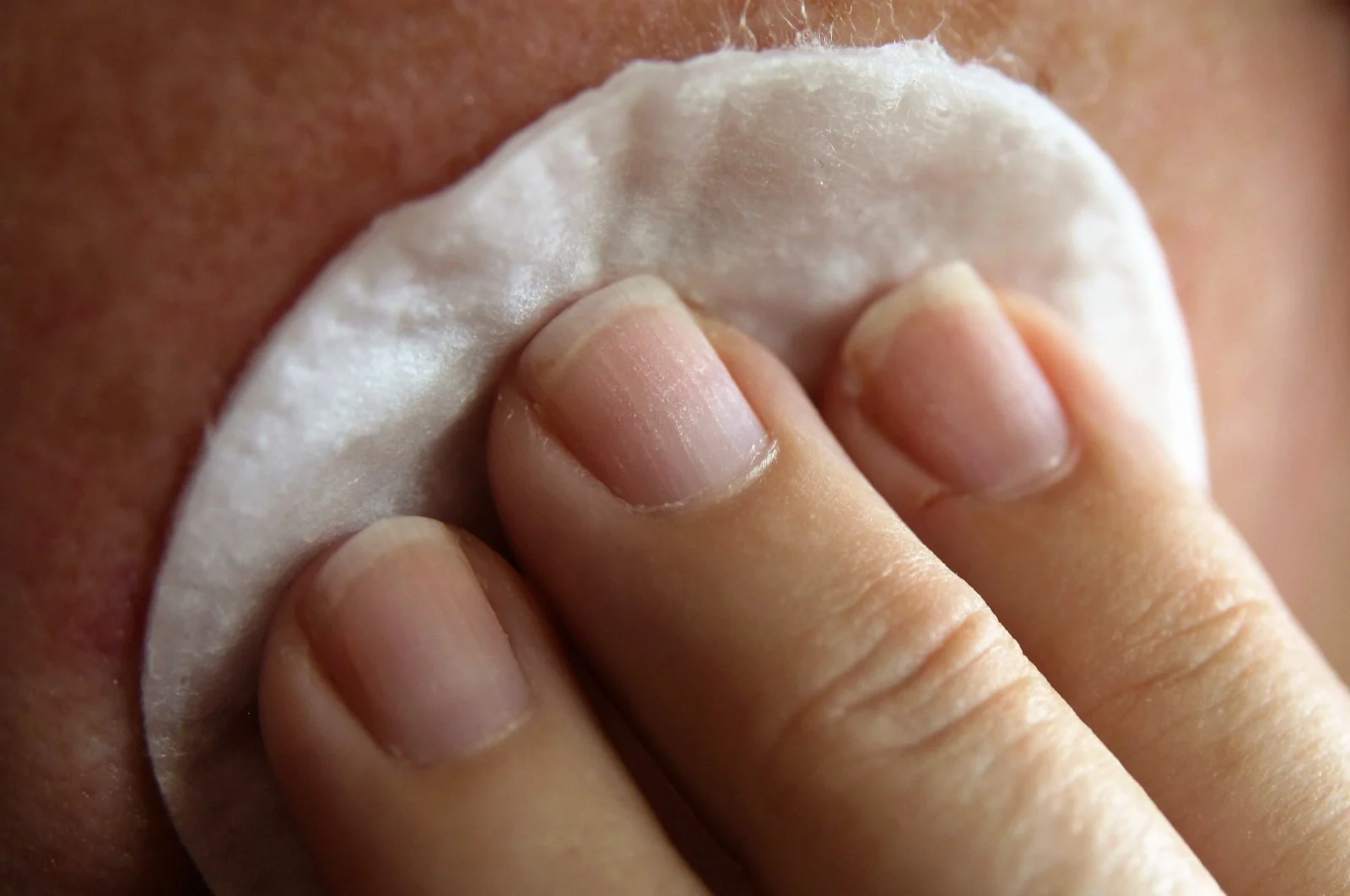
Two to three times a week, practice the classic Japanese lotion pack. Saturate multi-layer cosmetic cotton pads with your watery lotion, peel them into thin sheets, and place them across your cheeks for 3 minutes. This temporary compress infuses deep hydration directly into dry zones while leaving your T-zone completely unobstructed.
Never apply heavy face cream uniformly over combination skin. Instead, take a dime-sized amount of lightweight milky emulsion (nyueki). Smooth it primarily across your dry cheeks and jawline first. Then, use only the sheer, residual film left on your palms to lightly touch the T-zone. This provides just enough lipid barrier protection without promoting clogged pores.
A 3-minute cotton lotion pack infuses targeted moisture into dry cheeks while keeping oily zones clear.
Key Ingredients to Look for in Japanese Balancing Lotions
Conclusion: Multi-molecular hyaluronic acid, dipotassium glycyrrhizate, and fermented rice extracts deliver deep cellular hydration without pore congestion.
Selecting the right humectant blend ensures maximum water retention with zero heaviness:
Multi-Molecular Hyaluronic Acid: Combines low-molecular weights that hydrate outer epidermal micro-crevices with high-molecular weights that form a breathable moisture shield.
Dipotassium Glycyrrhizate (Kanzo): A soothing licorice-root active certified in Japanese quasi-drugs that calms localized redness in both oily and dry zones.
Fermented Rice Filtrate (Kome Hakko-Eki): Packed with bio-available amino acids and peptides that mirror human natural moisturizing factors, conditioning rough texture.
Trehalose and Polyquaternium-51 (Lipidure): Advanced Japanese botanical and biomimetic humectants that retain water even in low-humidity environments.
Pairing watery lotion with a calibrated layer of emulsion balances the water-oil equilibrium across combination skin.
Crucial Daily Precautions: Cleansing and Sun Protection
Conclusion: Never scrub combination skin aggressively, rinse with lukewarm water, and shield against UV sebum peroxidation with broad-spectrum SPF 30+ / PA++++ sunscreen.
Balancing combination skin requires avoiding aggressive friction and shielding delicate zones from ultraviolet damage:
Avoid Aggressive Scrubbing: When washing away evening skincare or makeup, harsh friction easily traumatizes skin. Dermatologists advise using a gentle, non-abrasive cleanser that does not contain alcohol to protect skin health.[1] It is recommended practice to wet your face with lukewarm water and use your fingertips to apply cleanser without friction.[1]
Gentle Cleansing Discipline: Skin experts advise that individuals resist the temptation to scrub your skin because scrubbing irritates the skin.[1] In addition, when cleansing the face, dermatologists remind us: while washing, resist the temptation to scrub your skin, even to remove makeup.[2] Physical abrasion is counterproductive because scrubbing irritates your skin, which can make it look worse.[2]
Lukewarm Rinsing: After washing, always rinse with lukewarm water and pat dry with a soft towel to prevent irritation.[1] Board-certified dermatologists recommend that people limit washing to twice a day and after sweating.[1]
Mandatory Daily Sunscreen: Ultraviolet radiation oxidizes surface sebum, creating irritating lipid peroxides on the T-zone while drying out cheeks. Board-certified dermatologists advise consumers: choose a sunscreen that has an SPF of 30 or higher, is water resistant, and provides broad-spectrum (UVA and UVB rays) coverage.[3] Dermatologists emphasize that to remain protected when outdoors, reapply sunscreen every two hours, and immediately after swimming or sweating.[3]
Supplying weightless water hydration calms inner dehydration and stabilizes overall sebum production.
Signs to Stop and When to See a Doctor
Conclusion: Cease cotton pack compression if irritation emerges, and seek dermatological advice for persistent rosacea or severe inflammatory breakouts.
While watery lotion layering is inherently low-risk, excessive manipulation or incompatible formulations can occasionally provoke barrier fatigue. Discontinue your regimen and consult a board-certified dermatologist if you notice:
Sudden red patches or expanding contact irritation after applying cotton compress packs.
Persistent burning or stinging during application that lasts longer than five minutes.
Severe flaking, itching, or cracking that fails to improve after two weeks of gentle hydration.
Individuals managing active rosacea, seborrheic dermatitis, or severe acne vulgaris should seek professional medical evaluation for tailored prescription treatments.
FAQ
Q1. Can I use two different moisturizers for my T-zone and cheeks?
Q1. Can I use two different moisturizers for my T-zone and cheeks?(Details)
Yes. Many people with pronounced combination skin prefer using an oil-free hydrating gel on the forehead and nose, while applying a richer ceramide cream on dry cheeks. However, the Japanese method of using a single milky emulsion applied in calibrated amounts often achieves identical balance with fewer products.
Q2. How often can I perform the Japanese cotton lotion pack?
Q2. How often can I perform the Japanese cotton lotion pack?(Details)
Two to three times a week is sufficient for combination skin. Always ensure the cotton pads are thoroughly soaked and remove them after three minutes while still moist. Leaving cotton pads on until they dry out can pull moisture back out of the stratum corneum.
Q3. Will layering watery toner multiple times make my oily T-zone breakout?
Q3. Will layering watery toner multiple times make my oily T-zone breakout?(Details)
No, provided your toner is free from drying ethanol, pore-clogging waxes, and heavy synthetic oils. Pure water-based humectants hydrate the interior stratum corneum without contributing to sebum blockages. In fact, well-hydrated pores are less prone to reactive oil overproduction.
Q4. Should I use a cotton pad or bare hands to apply Japanese lotion?
Q4. Should I use a cotton pad or bare hands to apply Japanese lotion?(Details)
Bare hands are ideal for daily application because palm-pressing warms the lotion and minimizes mechanical fabric friction. Reserve cotton pads exclusively for targeted 3-minute lotion packs on dehydrated cheeks.
Q5. What type of sunscreen is ideal for combination skin?
Q5. What type of sunscreen is ideal for combination skin?(Details)
Japanese 'watery essence' or 'aqua gel' sunscreens are optimal for combination complexions. They deliver broad-spectrum UV filters within an ultra-light, refreshing water base that absorbs quickly without leaving an oily film on the forehead or drying out cheeks.
Summary
Decouple Water from Oil: Combination skin requires intense water hydration across all zones, but carefully calibrated lipid amounts.
Zone-Mapping Technique: Press watery lotion all over, then add an extra layer or a 3-minute cotton pack exclusively to dry cheeks.
Calibrate Your Emulsion: Apply milky emulsion (nyueki) generously to the U-zone and use only the residual palm film for the T-zone.
Friction-Free Cleansing: Wash gently with lukewarm water and avoid aggressive rubbing to protect delicate barrier lipids.
Daily Sun Defense: Safeguard against sebum oxidation and UV dryness by applying broad-spectrum SPF 30+ / PA++++ sunscreen daily.
Disclaimer: This article is for general information and education about Japanese cosmetics and their labels. It is not a substitute for professional medical advice, diagnosis, or treatment. Skincare results vary from person to person. Product formulas, availability, prices, and regulations change, and products sold in Japan can differ from versions sold elsewhere, so always check the current label. Do a patch test before introducing a new product, and consult a doctor or dermatologist if you have a skin condition or specific concerns.