title: Japanese Carbonated Foam Face Wash: Micro-Bubble Cleansing Guide slug: japanese-carbonated-foam-face-wash-micro-bubbles category: routines published_at: '2026-11-23' updated_at: '2026-11-23' meta_description: Discover how Japanese carbonated foam face washes use dense micro-bubbles to lift impurities and minimize rubbing friction for a healthier skin barrier. keywords:
- japanese carbonated foam face wash
- micro bubble cleansing
- zero rubbing face wash
- carbonated mousse wash
- j-beauty cleansing routines lead_image: /images/stock/woman-cleansing-face-with-rich-foam.webp lead_image_alt: Japanese woman cleansing her face with ultra-dense micro-bubble foam cushion author: Editorial Team publish: true
Japanese Carbonated Foam Face Wash: Micro-Bubble Cleansing Guide
In Japanese skincare, cleansing is never approached as an act of aggressive scouring. Instead, it is practiced as a mindful ritual designed to protect the delicate stratum corneum. One of the most distinctive innovations in this category is the Japanese carbonated foam face wash (also known as carbonated mousse wash).
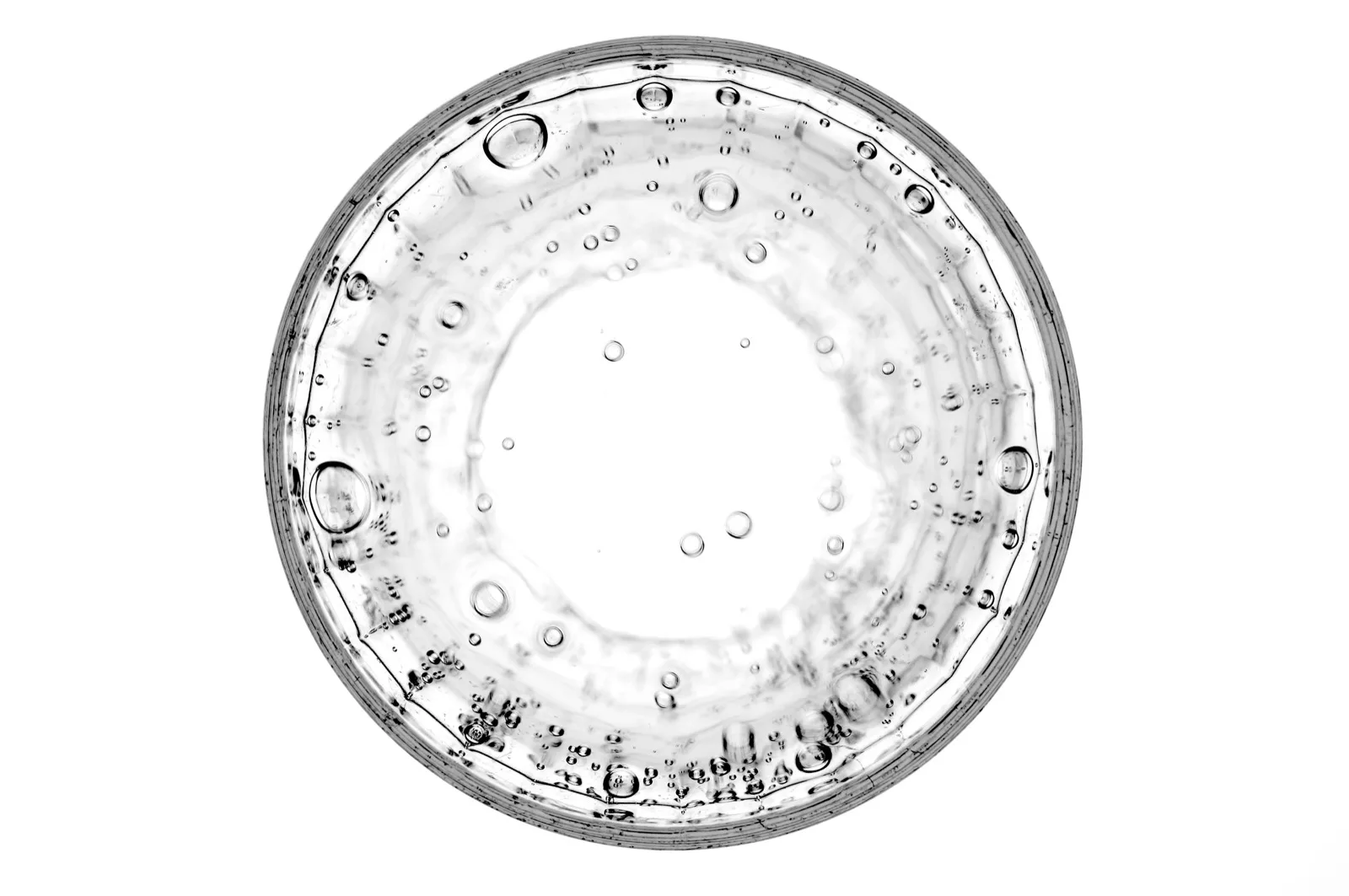
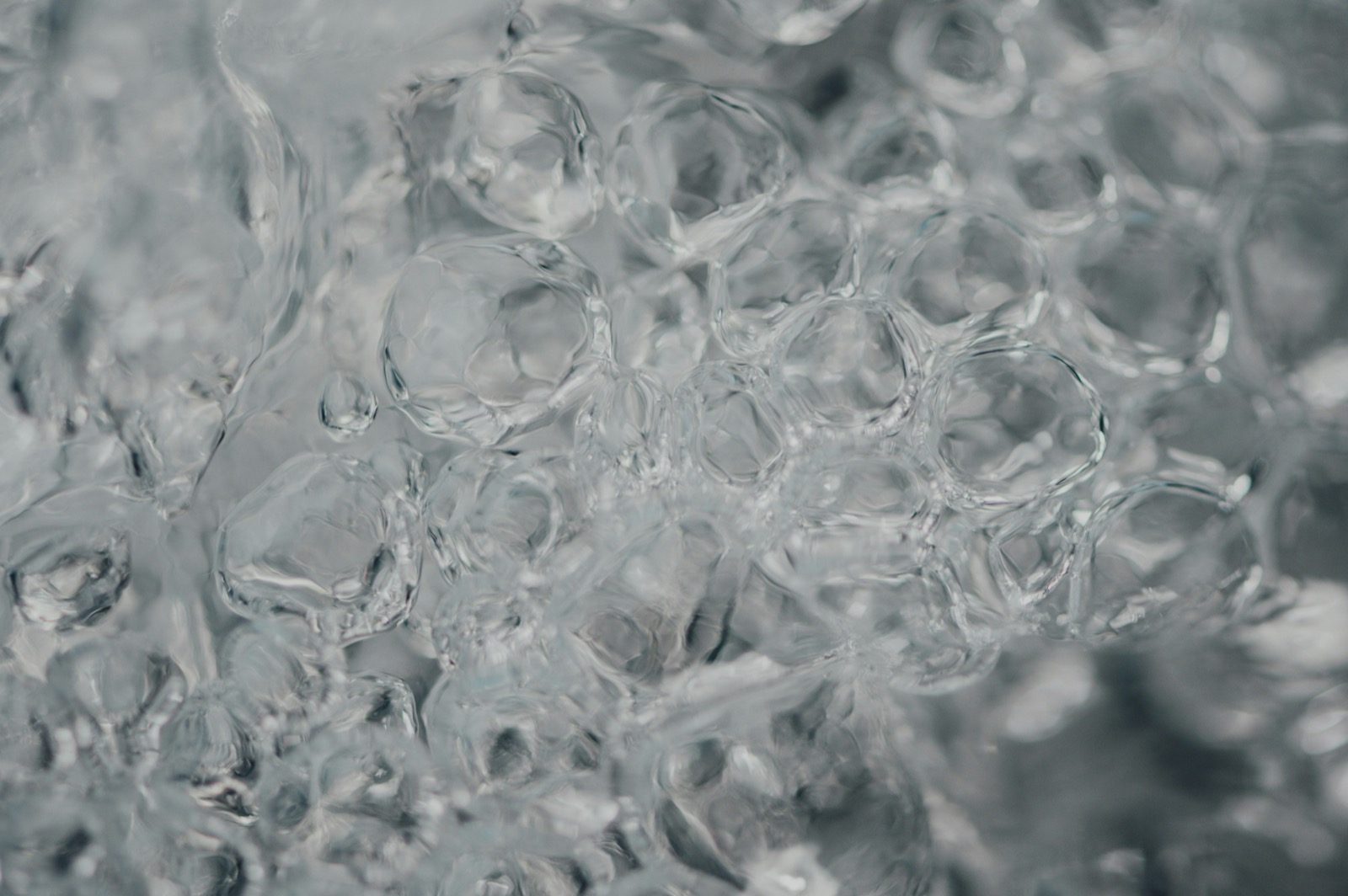
By utilizing carbon dioxide as a propellant, aerosol-based canisters instantly dispense a self-foaming lather packed with millions of micro-bubbles. These bubbles are significantly smaller than the average facial pore, allowing them to dissolve dullness and surface sebum while forming a dense cushion that prevents direct friction between fingertips and the skin surface.
Quick answer: Japanese carbonated foam face washes use pressurized carbon dioxide to dispense an ultra-dense mousse of microscopic bubbles smaller than facial pores. This resilient lather acts as an elastic cushion that lifts excess sebum and surface debris without direct hand-to-face friction, preserving the skin barrier and leaving complexions fresh, soft, and clear.
How carbonated micro-bubbles work
Traditional foaming cleansers require adding water and working up lather using a mesh net or the palms of your hands. While manual foaming nets produce pleasant airy bubbles, individual bubble diameters remain relatively large and variable.
In contrast, Japanese pressurized carbonated cleansers utilize carbon dioxide gas as a propellant to generate ultra-dense micro-carbonated foam[2]. When released from the aerosol valve, the formula rapidly expands into an ultra-dense mousse.
Why micro-bubble density matters
- Crevice Adhesion: Micro-bubbles conform to microscopic facial contours, lifting excess sebum and dirt particles through interfacial surface tension.
- Prolonged Cushion Life: Unlike loosely whipped soap suds that collapse under light pressure, carbonated micro-bubbles maintain elastic structural tension throughout the entire wash.
- Mild Sensation: The subtle effervescence of dissolved carbon dioxide provides a gentle, refreshing sensory experience on the skin without requiring harsh physical scrubbing.
The zero-rubbing cushion: protecting your moisture barrier
Dermatologists worldwide emphasize that physical mechanical stress is a primary contributor to compromised barrier function and chronic surface irritation. According to the American Academy of Dermatology (AAD), individuals should "Resist the temptation to scrub your skin because scrubbing irritates the skin"[1].
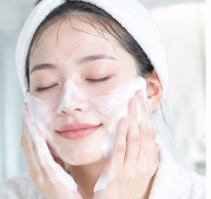
Japanese beauty philosophy operationalizes this advice through what is commonly described as frictionless cleansing (zero friction). When washing with a carbonated mousse, your fingertips should never directly make contact with your skin. The thick, meringue-like foam layer serves as an insulating cushion, absorbing pressure and allowing the surfactant solution to emulsify sebum effortlessly.
Step-by-step guide: how to wash with carbonated mousse
To experience the full protective benefits of micro-bubble technology, follow this traditional Japanese application sequence:
Step 1: Prep skin with lukewarm water
Before dispensing the product, moisten your complexion thoroughly. The AAD advises: "Wet your face with lukewarm water and use your fingertips to apply cleanser"[1]. Warm water softens surface keratin and primes skin for surfactant spreading.
Step 2: Dispense without shaking
Many Japanese carbonated cleansers specify keeping the aerosol can upright without shaking to preserve gas distribution. Dispense a ping-pong-ball-sized dollop of dense foam into clean palms.
Step 3: Divide and envelop the complexion
Distribute the mousse across cheeks, forehead, and chin. As official Japanese mousse cleansing directions instruct, gently envelop the skin with the entire palms without crushing the delicate micro-bubble cushion[2].
Step 4: Circular gliding motions
Glide the foam across your face using subtle spiral motions. Let the micro-bubbles do the work; avoid pressing firmly against underlying bone structures.
Step 5: Thorough lukewarm rinse
Rinse meticulously with abundant lukewarm water until all traces of foam are removed. The AAD notes: "Rinse with lukewarm water and pat dry with a soft towel"[1].
Comparing cleanser types: manual foam vs. carbonated mousse
Scroll horizontally to view full table
| Feature | Standard Foaming Tube | Self-Foaming Pump | Carbonated Aerosol Mousse |
|---|---|---|---|
| Bubble Size | Medium to Large | Medium | Micro-Fine (Ultra-Dense) |
| Cushion Elasticity | Moderate (collapses easily) | Light to moderate | High (springy meringue texture) |
| Friction Reduction | Requires careful net whipping | Moderate | Maximum physical buffer |
| Prep Time | 30–60 seconds | Instant | Instant |
| Ideal For | Normal/Combination skin | Busy mornings | Dullness & friction-sensitive skin |