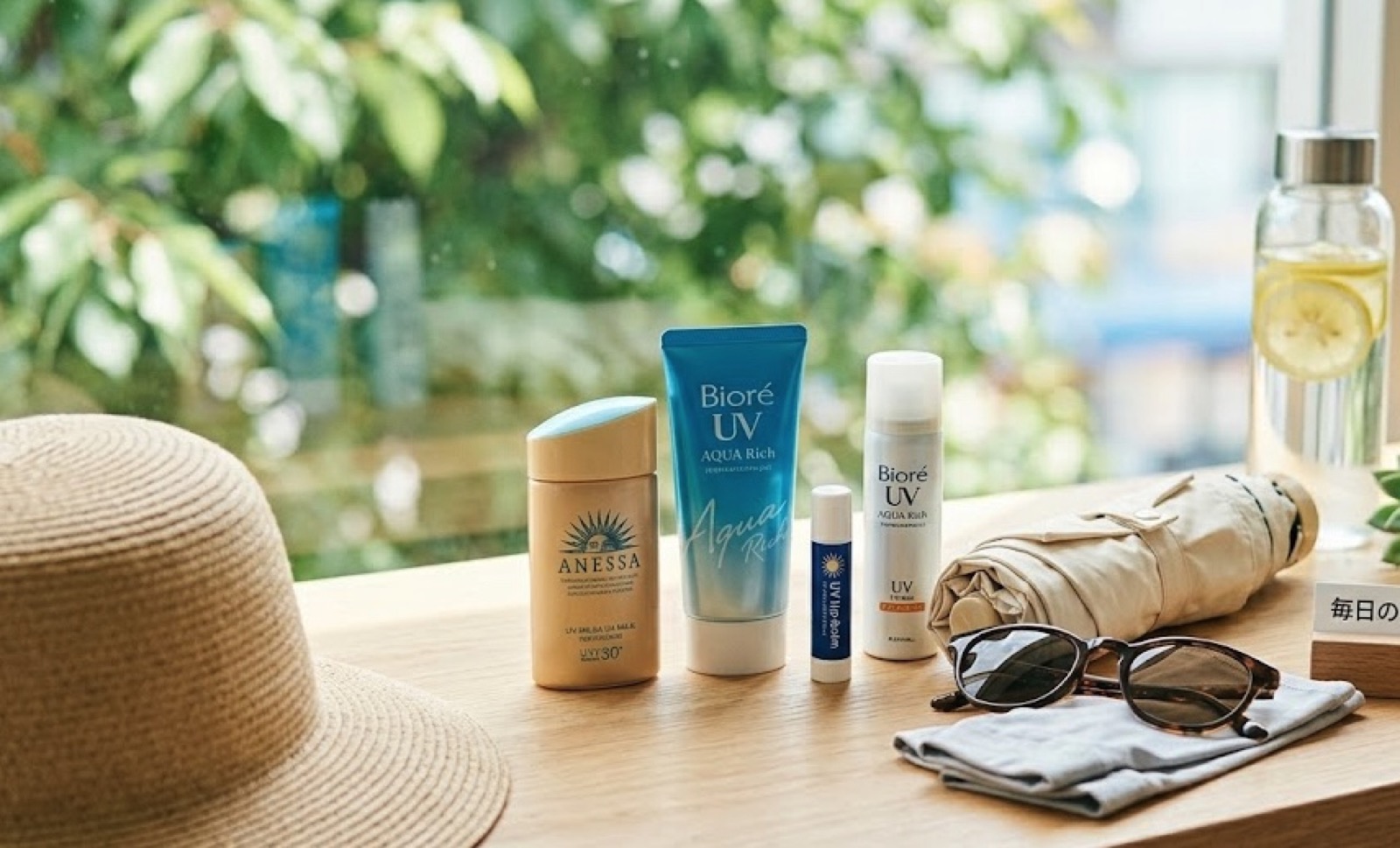
title: Japanese Beauty Stores in the US and UK: Where to Find J-Beauty Locally description: Looking for Japanese skincare in the US or UK? Compare specialty Asian grocers, dedicated J-beauty boutiques, pharmacy chains, and department store counters. author: "Miho Tanaka" fact_checker: "Miho Tanaka" category: "shopping" published_at: "2026-11-15" updated_at: "2026-11-15" featured_image: "/images/stock/japanese-beauty-stores-us-uk-cosmetic-display-tray.webp" featured_image_alt: "Cosmetic display tray featuring Japanese skincare products surrounded by clean botanical greenery"
Japanese Beauty Stores in the US and UK: Where to Find J-Beauty Locally
While international e-commerce platforms make ordering skincare from Tokyo easier than ever, there is an undeniable advantage to purchasing Japanese beauty (J-beauty) products in person. Being able to test lotion textures on the back of your hand, verify expiration dates, avoid international shipping delays, and speak with knowledgeable sales staff transforms the shopping experience.
Quick answer: Consumers in the United States and United Kingdom can find authentic Japanese skincare across four primary physical retail channels: Japanese lifestyle supermarkets (such as Mitsuwa or Japan Centre), dedicated Asian beauty variety boutiques (such as Teso Life or Shibuyala), multi-brand specialty chains (such as Sephora, Ulta, or Space NK), and luxury department store beauty counters (such as Harrods or Saks Fifth Avenue). Each format offers a distinct balance of pricing, tester availability, and brand curation.
The Retail Landscape: 4 Types of Physical Stores Selling J-Beauty Abroad
Rather than a single uniform shopping destination, Japanese skincare is distributed abroad through distinct retail formats, each catering to different consumer priorities.
1. Japanese Lifestyle Grocers and Supermarkets
Major Japanese supermarket chains operating overseas serve as cultural and commercial hubs for expatriates and regional Asian communities.
- United States: Prominent regional supermarket chains include Mitsuwa Marketplace (California, Texas, Illinois, New Jersey), Tokyo Central / Marukai (California), and Nijiya Market (California, Hawaii).
- United Kingdom: Notable London food and lifestyle destinations include Japan Centre (Leicester Square and Westfield Stratford) and Atariya outlets.
- What to Expect: Supermarkets stock dependable mass-market drugstore staples: everyday foaming face washes, value-pack sheet masks, body washes, and standard hyaluronic acid lotions. Products are authentic domestic imports, frequently labeled with English translation stickers on the back carton.
2. Dedicated Japanese and Asian Beauty Variety Stores
Over the past decade, specialized Asian lifestyle variety chains have expanded rapidly across North American and British metropolitan centers.
- Notable Retailers: Chains such as Teso Life, Shibuyala, Reiwatakiya, and Ebisu Life Store in major cities (New York, Los Angeles, London, Chicago).
- What to Expect: A vibrant, high-density shopping atmosphere modeled directly after Tokyo variety stores (such as Don Quijote or Loft). These boutiques carry expansive selections of seasonal cosmetics, cleansing balms, viral hair oils, limited-edition character collaborations, and refill pouches (tsumekae-yo).
3. Multi-Brand Beauty Specialty Chains
Western beauty specialty giants have increasingly integrated curated J-beauty sections into their global retail networks.
- United States & UK: Chains including Sephora, Ulta Beauty, Space NK, and large-format Boots flagship stores.
- What to Expect: Clean, spacious merchandising highlighting internationally certified brands like SHISEIDO, Curél, Tatcha, and Drunk Elephant. All inventory features factory-printed English regulatory packaging, generous return policies, and authorized in-store tester stations.
4. High-End Department Store Beauty Counters
For high-prestige Japanese cosmetic houses, traditional luxury department store counters offer dedicated beauty advisors (BA) and bespoke skin diagnostic consultations (omotenashi).
- Destinations: Saks Fifth Avenue, Bergdorf Goodman, and Nordstrom in the US; Harrods, Selfridges, and Liberty London in the UK.
- Featured Lines: Ultra-luxury houses such as Clé de Peau Beauté, Decorté, and Sensai.
How In-Store Inventory Differs Between Store Formats
Choosing where to shop depends largely on the specific category and formulation style you wish to purchase:
- Eco-Refills and Body Care: Japanese supermarkets and Asian variety stores are the only physical stockists that regularly import lightweight pouch refills (tsumekae), which mainstream Western department stores rarely carry.
- Sun Care Formulations: Mainstream Western stores (Sephora, Boots) exclusively sell versions containing locally approved UV filters (such as FDA-compliant formulas in the US). Conversely, independent Asian variety shops often carry domestic Japanese formulations featuring newer organic filters (like Tinosorb or Uvinul) imported under personal-goods distributor channels.
- High-Active Skincare Serums: For vitamin C derivatives and stabilized retinols, department store counters and certified specialty retailers guarantee climate-controlled supply chains, reducing the risk of product oxidation.
Price and Freshness Considerations Across Retail Types
Pricing and stock rotation vary considerably across different retail channels:
1. Pricing Comparisons
- Mainstream Specialty & Department Stores: Generally exhibit standardized national manufacturer suggested retail pricing (MSRP). Prices reflect official import tariffs, localized laboratory safety dossiers, and corporate customer service overhead.
- Variety Boutiques & Supermarkets: Base pricing fluctuates based on currency exchange movements, air freight volatility, and wholesale import lots. Everyday drugstore lotions that cost roughly 900 JPY in Tokyo typically sell between $15.00 and $22.00 USD in local boutiques.
2. Product Freshness and Batch Tracking
Because Japanese cosmetic regulations do not require explicit expiration dates on containers that remain stable for three years unopened, evaluating freshness in physical shops is essential:
- Inspect the condition of outer shrink-wrap or tamper-evident seal stickers.
- Examine container bases for printed alphanumeric production lot codes.
- In variety shops with open floor layouts, avoid purchasing bottles positioned directly beneath high-heat spotlight displays, which can accelerate emulsion breakdown.
Scroll horizontally to view full table
| Retail Channel Format | Typical Product Curation | Price Level Relative to Japan | In-Store Tester Availability | Regulatory Labeling Format |
|---|---|---|---|---|
| Japanese Supermarkets (Mitsuwa, Japan Centre) | Mass drugstore staples, classic face washes, bath salts | Moderate (+60% to +100% markup) | Limited; occasional testers on key items | Original Japanese packaging with secondary English adhesive sticker |
| Asian Beauty Variety Stores (Teso Life, Shibuyala) | Expansive trend items, seasonal refills, Japanese makeup | Moderate to High (+70% to +120% markup) | Extensive; open testers for most popular makeup and lotions | Original Japanese packaging with importer distribution label |
| Western Specialty Retailers (Sephora, Boots, Ulta) | Curated prestige lines, certified sensitive-skin brands | Standard Authorized MSRP (+40% to +80% markup) | Complete; hygienic tester stations with disposables and cotton pads | Factory-printed localized English/French compliant packaging |
| Luxury Department Stores (Harrods, Saks Fifth Avenue) | Prestige luxury skincare, specialized liposome lines | High-Prestige Luxury (+20% to +50% markup) | Full personalized consultation with computer moisture analysis | Official global luxury packaging with manufacturer warranty |