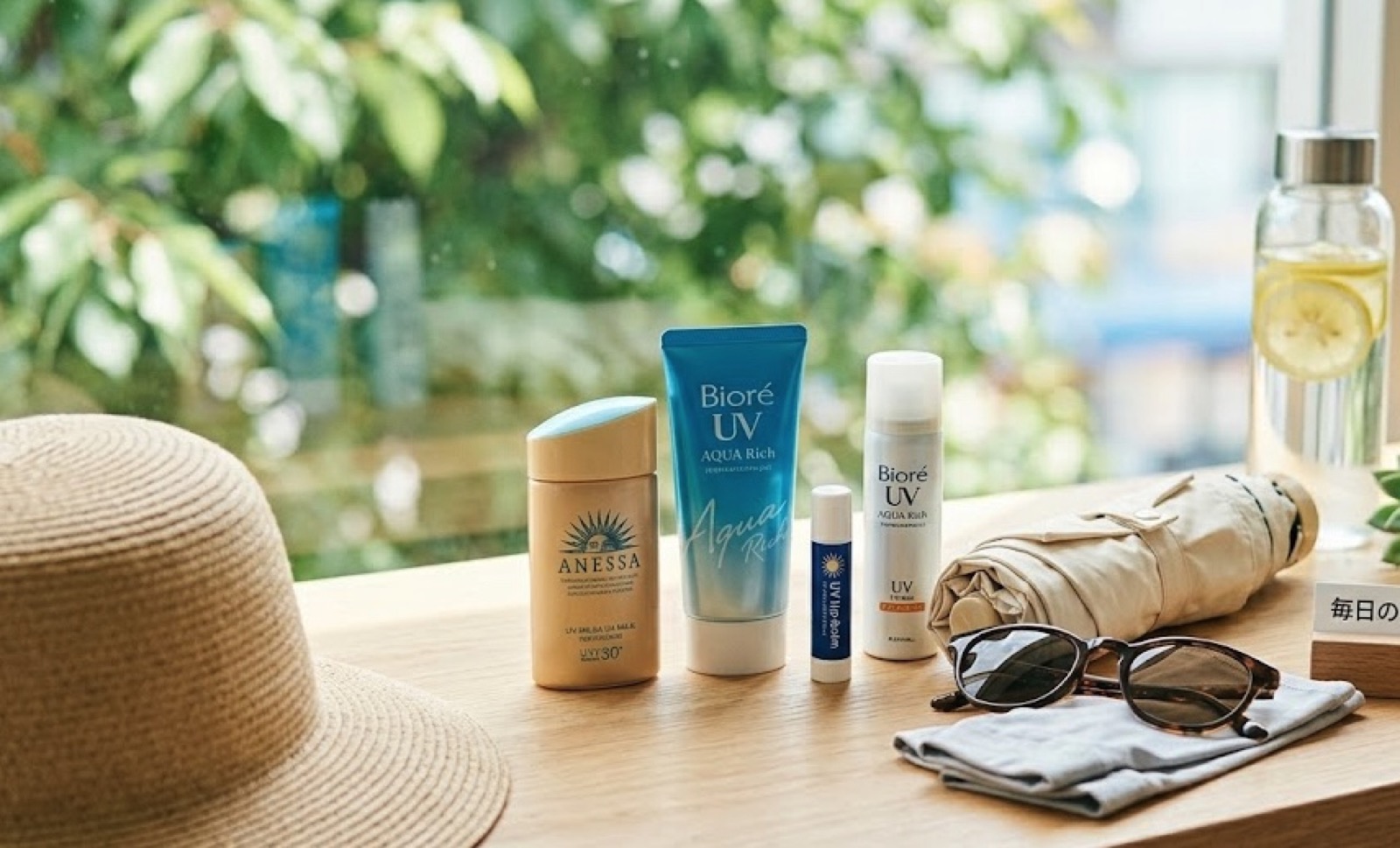
title: Japanese Skincare Prices: Japan vs. Abroad (Cost Factors & Smart Buying) description: Why does Japanese skincare cost 50% to 150% more abroad? Compare domestic Japan vs. US/UK prices, import duty factors, and smart buying strategies. author: "Miho Tanaka" fact_checker: "Miho Tanaka" category: "shopping" published_at: "2026-11-15" updated_at: "2026-11-15" featured_image: "/images/stock/japanese-skincare-price-japan-vs-abroad-bottles-white.webp" featured_image_alt: "Assorted skincare bottles and dispensers neatly aligned on a clean white surface"
Japanese Skincare Prices: Japan vs. Abroad (Cost Factors & Smart Buying)
Anyone who has fallen in love with Japanese skincare (J-beauty) and later tried to replenish their favorite lotion or sunscreen outside Japan has experienced the sudden sticker shock. A drugstore hydrating toner that retails for roughly 900 to 1,500 Japanese Yen in Tokyo can easily command 18 to 28 US Dollars (or 16 to 24 British Pounds) at an authorized Western boutique or local specialty grocer.
Quick answer: Japanese skincare costs between 40% and 150% more outside Japan due to air/ocean freight logistics, import duties, mandatory regulatory dossier compliance (e.g., US FDA MoCRA or EU Cosmetic Regulation 1223/2009), localized translation labeling, and regional distributor margins. While buying directly in Japan or through cross-border retailers offers lower retail pricing, local stockists provide authentic batch guarantees, immediate domestic shipping, and compliant after-sales support.
The Real Price Gap: How Much More Does J-Beauty Cost Overseas?
The price discrepancy between domestic Japanese stores and international retailers varies dramatically depending on brand positioning and product category. Based on market retail surveys conducted in November 2026 (benchmarked at a prevailing exchange rate of approximately 150 to 155 JPY per 1 USD):
- Mass-Market Drugstore Lines: Show the widest percentage markups (often 80% to 160% above domestic prices). Popular foaming cleansers, everyday sunscreens, and hydrating lotions that sell for 600 to 1,200 JPY in Japan (around 4.00 to 8.00 USD) typically retail for 14.00 to 22.00 USD abroad.
- Mid-Tier Pharmacy Actives: Targeted serums containing tranexamic acid or pure vitamin C formulas generally see moderate 50% to 80% markups due to specialized shipping requirements and smaller unit volumes.
- Prestige Department Store Brands: Luxury skincare houses (such as Clé de Peau Beauté, Decorté, or SK-II) maintain global pricing policies. Overseas retail prices are typically only 15% to 35% higher than Japanese domestic counters, primarily reflecting local VAT and luxury sales taxes.
Why Is Japanese Skincare More Expensive Outside Japan?
The price premium added to Japanese skincare abroad is rarely arbitrary price-gouging; it reflects substantial physical and regulatory overhead incurred when legally importing cosmetics across international borders.
1. Cross-Border Freight and Temperature Management
Cosmetic formulations—particularly water-dense lotions, light milk emulsions, and sunscreens—are heavy and sensitive to environmental degradation. Shipping bulk pallets from Japanese fulfillment hubs across Pacific or European cargo routes involves:
- Freight Rates: Elevated maritime ocean container rates and fuel surcharges.
- Climate Control: Temperature-regulated container shipping to prevent formula separation, emulsion splitting, or active ingredient destabilization during long transit times.
- Port Handling and Domestic Warehousing: Customs bonded warehouse fees in arrival countries.
2. Mandatory Regulatory Compliance and Localized Labeling
Every sovereign market enforces distinct legal frameworks governing cosmetic safety:
- United States (FDA MoCRA): Requires facility registrations, product listing dossiers, and strict substantiation of ingredient safety.
- European Union and UK (Regulation 1223/2009): Demands a rigorous Cosmetic Product Safety Report (CPSR), notification on the CPNP/SCPN portal, and designation of an in-region Responsible Person (RP).
- Labeling Translations: Imported bottles must feature localized ingredient nomenclature (INCI), English warning statements, and batch identification. Printing and affixing country-specific secondary labels or creating dedicated overseas export packaging adds production cost.
3. Tariffs, Consumption Taxes, and Retail Margins
In addition to compliance expenses, domestic sales taxes (such as state sales tax in the US or 20% VAT in the UK and Europe) are factored into shelf pricing. Regional importers and brick-and-mortar retailers must also preserve operating margins to cover store leases, staff payroll, and authorized returns.
Price Comparison: Popular Japanese Skincare in Japan vs. US/UK
The table below contrasts standard domestic manufacturer suggested retail prices (MSRP) in Japan with typical authorized retail pricing in the United States and United Kingdom (surveyed in November 2026; tax-inclusive domestic benchmarks).
Scroll horizontally to view full table
| Product Category / Item | Domestic Japan MSRP (JPY / Approx. USD) | Typical US Retail Price (USD) | Typical UK Retail Price (GBP) | Estimated Overseas Markup | Primary Cost Driver |
|---|---|---|---|---|---|
| Hydrating Lotion Refill (170 mL) | 880 JPY (~5.70 USD) | 15.00 - 18.00 USD | 13.00 - 16.00 GBP | +110% to +160% | Low domestic base price makes fixed shipping and import handling look proportionally high. |
| Watery Gel Daily Sunscreen (80 g) | 990 JPY (~6.40 USD) | 16.00 - 20.00 USD | 14.00 - 17.50 GBP | +90% to +150% | Air shipping weight, UV compliance classification, and high overseas consumer demand. |
| Botanical Cleansing Oil (200 mL) | 1,980 JPY (~12.80 USD) | 25.00 - 30.00 USD | 22.00 - 27.00 GBP | +60% to +95% | Heavier fluid transport weight and customized bilingual outer carton packaging. |
| Prestige Botanical Treatment Essence (160 mL) | 18,700 JPY (~121.00 USD) | 165.00 - 180.00 USD | 145.00 - 160.00 GBP | +25% to +45% | Global prestige brand positioning, domestic boutique leases, and localized luxury VAT. |