What to Buy at Matsumoto Kiyoshi & Don Quijote: Skincare Guide
Shopping GuideBy Miho Tanaka
title: What to Buy at Matsumoto Kiyoshi & Don Quijote: Skincare Guide
meta_description: Plan your skincare haul at Matsumoto Kiyoshi and Don Quijote. Learn store differences, Quasi-Drug staples, tax-free procedures, and shelf navigation.
affiliate: false
What to Buy at Matsumoto Kiyoshi & Don Quijote: Skincare Guide
For beauty travelers and skincare enthusiasts visiting Japan, stepping into a cosmetic retailer can feel thrilling yet disorienting. Floor-to-ceiling shelves brim with thousands of colorful bottles, vibrant promotional stickers, and intricate Japanese product descriptions. Two major retail giants dominate the shopping itinerary: Matsumoto Kiyoshi (Matsukiyo), Japan's most recognizable chain drugstore, and Don Quijote (Donki), the legendary discount megastore famous for its maze-like aisles.
While both chains carry overlapping selections of Japanese skincare (puchipura), they offer fundamentally different shopping experiences, pricing models, and specialized inventories. Navigating these bustling retail floors requires understanding where to find government-certified Quasi-Drugs (Iyakubugaihin), how to identify economical refill pouches (tsumeka-e), and how to take advantage of Japan's nationwide tax-free shopping rules.
Quick answer:Matsumoto Kiyoshi is ideal for structured shopping, certified Quasi-Drug sensitive skincare (such as Curél, Minon, and Melano CC), exclusive pharmacy-grade house brands, and testing clean product displays with registered cosmetic advisors. Don Quijote excels at late-night hours, bulk sheet mask boxes (LuLuLun, Keana Nadeshiko), oversized value sets, viral beauty trends, and multi-category tax-free hauls. Plan to visit Matsukiyo for targeted dermatological treatments and Donki for bulk everyday staples.
Retailer Profiles: Matsumoto Kiyoshi vs Don Quijote
Conclusion: Choose Matsumoto Kiyoshi for curated dermatological consultations and organized brand counters; choose Don Quijote for discount bulk bundles and late-night convenience.
Understanding how these retail environments differ helps you optimize your time and budget during your shopping excursion:
Matsumoto Kiyoshi (The Pharmacy-Led Specialist)
Matsumoto Kiyoshi operates as a healthcare-first drugstore chain, unified under the Matsukiyo Cocokara & Co. umbrella:
Organized Category Layout: Aisles are neatly arranged by skin concern—such as sensitive barrier recovery, pore conditioning, hydration, and suncare—making it simple to locate specific formulations.
Expert Staffing: Major urban flagship stores (such as Shibuya, Ginza, and Shinjuku) feature licensed pharmacists and registered cosmetic consultants (touroku hanbaisha) who can assist in verifying active ingredients.
Exclusive House Brands: Look for matsukiyo and matsukiyo LAB private-label products, which offer high-concentration ceramides, squalane, and vitamin C formulations at fraction of national brand costs.
Don Quijote (The High-Energy Discount Megastore)
Don Quijote, affectionately called Donki, is an experiential department discounter celebrated for its packed, labyrinthine layout:
Bulk Packaging & Value Multi-Packs: Donki frequently stocks exclusive 2-pack bundles, oversized 500ml lotion pump bottles, and giant multi-sheet mask boxes that provide exceptional value per milliliter.
Late-Night & 24-Hour Access: Most urban Don Quijote branches remain open 24 hours a day or until 5:00 AM, allowing travelers to complete extensive shopping hauls after sightseeing and dinners.
Trend-Driven Assortment: In addition to classic J-beauty staples, Donki quickly stocks viral social-media favorites, color cosmetics, Japanese false eyelashes, and salon-grade hair treatments (such as Shiseido Fino and Tsubaki).
Iconic Skincare Categories to Target
Conclusion: Focus your Japanese retail haul on water-light cleansing oils, high-capacity lotion toners, advanced photoprotection, and Quasi-Drug active treatments.
When exploring the beauty aisles of either retailer, these core skincare categories represent the gold standard of Japanese cosmetic chemistry:
1. High-Performance Cleansing Oils and Balms
Japanese cleansing technology relies on sophisticated emulsifiers that dissolve waterproof makeup without stripping natural skin lipids:
Speedy Cleansing Oils: Kose Softymo Speedy Cleansing Oil and Fancl Mild Cleansing Oil rinse away cleanly with lukewarm water, leaving zero greasy film.
Bifesta Micellar Waters: Gentle, surfactant-balanced cleansing lotions designed for low-friction wipe-off cleansing on sensitive skin.
2. Multi-Tiered Hydrating Toners (Keshou-sui)
Water-based skin conditioning is central to Japanese skincare philosophy:
Hada Labo Gokujyun Series: Infused with multiple molecular weights of hyaluronic acid to deposit moisture across superficial skin layers.
Naturie Hatomugi Skin Conditioner: An ultra-lightweight, 500ml botanical lotion derived from Job's tears, ideal for cotton-pad facial masking and whole-body post-shower hydration.
3. World-Renowned Chemical and Hybrid Sunscreens
Japanese sunscreen engineering leads the global market in elegant, lightweight textures:
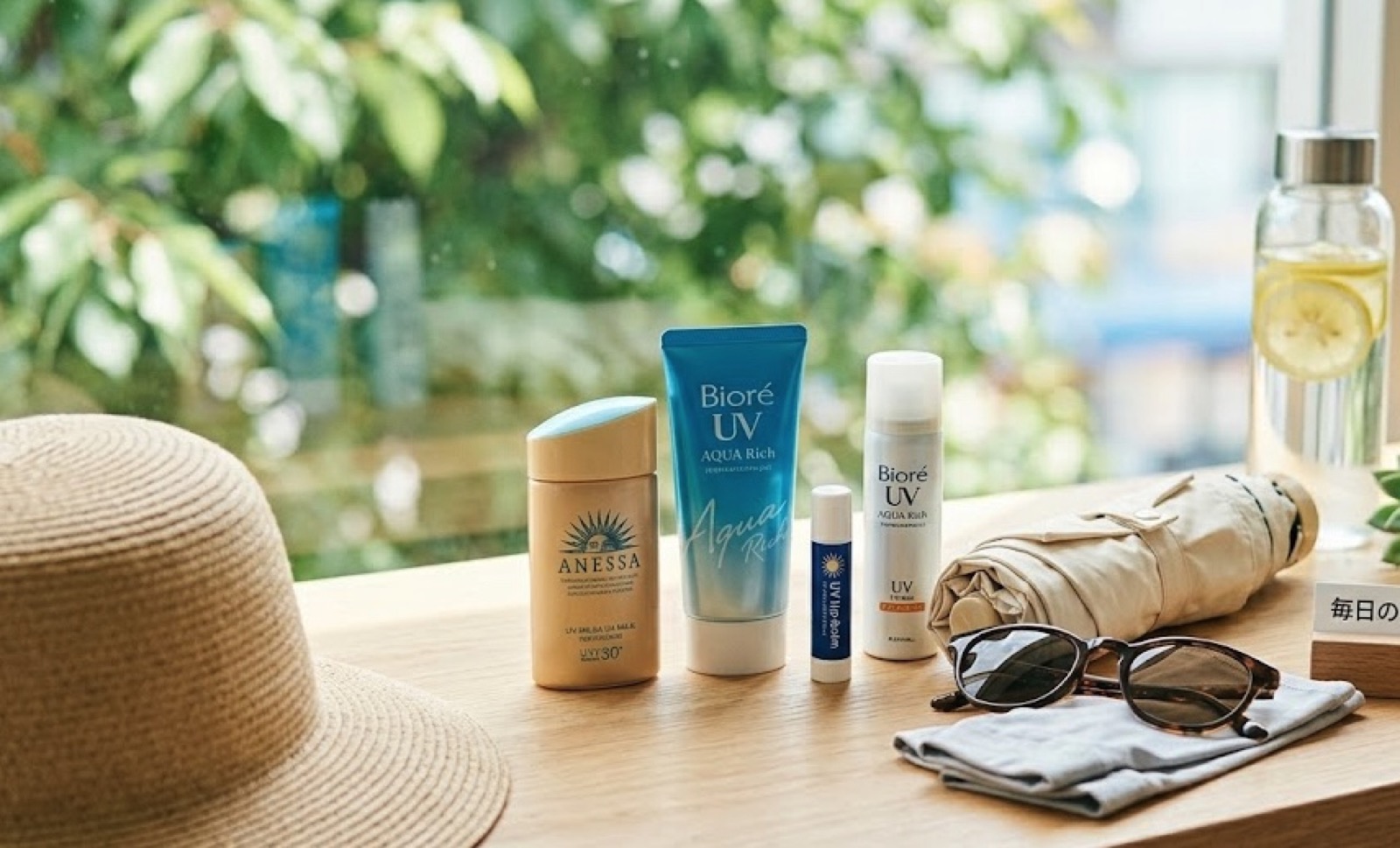
Biore UV Aqua Rich Watery Essence: Formulated with Micro Defense technology that forms a micro-fine protective veil without white cast.
Skin Aqua Super Moisture Gel & UV Super Moisture Milk: Hydrating formulas enriched with hyaluronic acid and collagen that double as smooth makeup primers.
4. Quasi-Drug Active Treatments
Certified under Japan's Ministry of Health, Labour and Welfare (MHLW), these formulas contain regulated concentrations of proven actives:
Melano CC Intensive Anti-Spot Essence: A stabilized pure ascorbic acid and dipotassium glycyrrhizate serum housed in an airtight nozzle tube.
Curél Intensive Moisture Care Cream: Pairs synthetic pseudo-ceramide (Cetyl-PG Hydroxyethyl Palmitamide) with soothing allantoin to condition dry, rough barriers.
Retail Comparison Table: Where to Buy What
Conclusion: Compare retail channel advantages to decide whether to purchase items at Matsumoto Kiyoshi or Don Quijote.
Scroll horizontally to view full table
Product Category
Key Japanese Brands & Products
Recommended Store
Primary Shopping Advantage
Dermatological & Sensitive Care
Curél, Minon Amino Moist, IHADA
Matsumoto Kiyoshi
Full product ranges, dedicated tester bars, pharmacist consultation
Heavy volume discounts and prominent central display stacks
Navigating Aisles, Refills, and Product Labels
Conclusion: Look for Quasi-Drug designations, choose eco-friendly refill pouches to save money, and follow local tester etiquette.
To avoid purchasing errors and shop with confidence, keep these practical navigation pointers in mind:
Spotting Quasi-Drugs (Iyakubugaihin): Look for the Japanese characters for Quasi-Drug on packaging, or check the English product label. These products contain government-approved active ingredients for anti-roughness (hada-are) or sun spot prevention.
Selecting Refill Pouches (Tsumeka-e): Japanese consumers frequently purchase bottled products once and replenish them using flexible refill pouches (tsumeka-e-you). Refills typically cost 15% to 30% less than the initial bottle and take up minimal suitcase space. Ensure you do not accidentally purchase a refill pouch if you do not own a pump dispenser.
Tester Bar Etiquette: Most drugstores offer open tester bottles labeled mihon (sample). Always dispense test product onto the back of your hand or clean cotton pads provided on the counter, rather than applying directly from bottle nozzles.
Checking Expiration Dates: By Japanese pharmaceutical law, cosmetics stable for at least three years under normal storage are not required to display expiration dates. Japanese manufacturers use lot codes instead, guaranteeing rapid stock rotation in high-traffic stores.
Step-by-Step Daily Routine Integration for Drugstore Hauls
Conclusion: Layer your newly purchased Japanese drugstore essentials in order of thinnest to thickest viscosity for maximum barrier comfort.
When returning home with your beauty haul, structure your daily regimen following these dermatologist-aligned principles:
Step 1: Low-Friction Cleansing
Always start by removing pollutants and makeup without harsh mechanical rubbing. The American Academy of Dermatology highlights:
"Use a gentle, non-abrasive cleanser that does not contain alcohol."[1]
Massage two pumps of cleansing oil onto dry skin, emulsify with a splash of lukewarm water, and rinse cleanly.
Step 2: Hydrating Lotion Application
Pour a 500-yen coin-sized pool of hydrating toner (keshou-sui) into your palms. Gently press (hand press) the water into facial contours until the skin feels cool and softly cushioned.
Step 3: Targeted Active Serum
Smooth two to three drops of targeted active serum—such as Melano CC or gentle Niacinamide—over areas prone to dullness or roughness while the skin remains damp.
Step 4: Emulsion or Cream Moisture Seal
Water-based humectants must be locked into the stratum corneum with protective lipids. The American Academy of Dermatology highlights:
"DO apply moisturizer after cleansing. Although you have oily skin, it is still important to apply moisturizer to keep your skin hydrated."[2]
Smooth a nickel-sized amount of moisturizing milk (nyueki) or ceramide facial cream across the face and neck.
Sun protection preserves skin health and defends against premature photoaging. The American Academy of Dermatology highlights:
"Apply a broad-spectrum, water-resistant sunscreen with an SPF of 30 or higher to all skin not covered by clothing."[3]
Conclude your morning routine with two finger-lengths of Japanese sunscreen offering SPF 50+ / PA++++.
Signs to Stop and When to See a Doctor
Conclusion: Introduce new skincare purchases one at a time, discontinue use immediately if contact dermatitis arises, and consult a physician for persistent swelling.
Hauling numerous exciting skincare products can tempt travelers to try multiple new items simultaneously. To safeguard your skin barrier:
The One-At-A-Time Rule: Introduce only one new product every 5 to 7 days. If a reaction occurs, you can easily identify which formulation triggered the issue.
Signs of Sensitivity: If you experience stinging, burning, persistent redness, hives, or tiny itchy papules, wash the area with lukewarm water and discontinue the product immediately.
When to Seek Medical Care: Consult a board-certified dermatologist if you develop intense blistering, facial swelling, eye-area edema, or weeping lesions that fail to resolve within 48 hours.
Tax-Free Shopping Procedures in Japan
Conclusion: Spend at least 5,000 yen before tax per shop per day, present your passport, and complete the customs step before leaving Japan. Details changed on November 1, 2026.
Eligible foreign visitors can get the 10% consumption tax refunded at participating Matsumoto Kiyoshi and Don Quijote branches. Japan's tax-free system changed on November 1, 2026: you now pay the tax-inclusive price and receive the refund after a customs check when you leave Japan, and special sealed bags for cosmetics are no longer required. Goods used or consumed in Japan are not eligible. See our Tax-free shopping guide for the steps:
Minimum Spending Threshold: Your total purchase must be 5,000 yen or more before tax at the same tax-free shop in a single day.
Passport Required: Present your passport at the shop and again at departure. Confirm what the shop accepts, and do not rely on photocopies or screenshots.
Keep Goods Unused: Special sealed bags are no longer required for cosmetics, but items used or consumed in Japan are not eligible for the refund.
Airport Security & Checked Bags: Complete the customs step first, then pack lotions and sunscreens over 100 ml in checked luggage; the 100 ml carry-on liquid limit applies at security.
FAQ
Q1. Is Matsumoto Kiyoshi cheaper than Don Quijote for Japanese cosmetics?
A. Neither is universally cheaper; Matsukiyo discounts Quasi-Drugs while Donki discounts bulk goods. (Details)
Pricing varies by product type. Don Quijote generally offers lower prices on high-volume items like 500ml Hatomugi lotions, multi-pack sheet masks, and hair masks. Matsumoto Kiyoshi frequently runs loyalty point promotions, coupon discounts, and competitive prices on dermatological pharmacy brands like Curél and Minon.
Q2. Can I use cosmetics purchased tax-free while traveling in Japan?
A. No, items used or consumed in Japan are not eligible for the tax refund. (Details)
If you want to use a sunscreen or moisturizer during your trip, buy it separately and keep it out of your tax-free claim; only items you will take home should be included.
Q3. Are Japanese drugstore cosmetics genuine and fresh?
A. Yes, high customer turnover at major chains supports authentic products and fresh inventory. (Details)
Both Matsumoto Kiyoshi and Don Quijote source inventory directly from authorized domestic distributors. Counterfeit goods are virtually non-existent in licensed Japanese chain retailers, and rapid product turnover helps ensure formulas are newly manufactured.
Q4. What does "Quasi-Drug" mean on Japanese cosmetic bottles?
A. It signifies the product contains Ministry-regulated active ingredients with proven functional benefits. (Details)
In Japan, Quasi-Drugs (Iyakubugaihin) occupy a distinct regulatory tier between cosmetics and pharmaceuticals. They contain clinical concentrations of active compounds (such as Tranexamic Acid, Dipotassium Glycyrrhizate, or Allantoin) verified to soothe skin roughness or prevent sun spots.
Q5. Can I get a tax-free discount using a passport photo on my smartphone?
A. Plan to present your actual passport; check the shop's instructions for digital options. (Details)
Shops follow Japan Tourism Agency procedures, so do not rely on photocopies or screenshots, and ask what the shop accepts.
Summary
Shopping for skincare in Japan is one of the most rewarding aspects of visiting the country. By understanding the distinct strengths of Matsumoto Kiyoshi and Don Quijote, you can curate a personalized haul of high-performance cleansers, hydrating lotions, and certified Quasi-Drug treatments suited to your skin's unique needs.
Essential Takeaways for Japanese Skincare Shopping:
Shop Strategically by Retailer: Head to Matsumoto Kiyoshi for curated sensitive-skin lines and pharmacist support; choose Don Quijote for bulk sheet masks, hair treatments, and late-night hauls.
Look for Quasi-Drug Actives: Identify formulas containing regulated actives like Dipotassium Glycyrrhizate, Allantoin, and stable Vitamin C derivatives.
Save with Refill Pouches: Choose eco-friendly refill pouches (tsumeka-e) for favorite toners and cleansing oils to reduce cost and suitcase weight.
Prepare for Tax-Free: Spend over 5,000 yen before tax, carry your passport, avoid using goods you plan to claim, and pack liquid purchases into checked luggage after the customs step.
Patch Test at Home: Introduce new skincare products one at a time to maintain optimal barrier health and comfort.
Disclaimer: This article is for general information and education about Japanese cosmetics and their labels. It is not a substitute for professional medical advice, diagnosis, or treatment. Skincare results vary from person to person. Product formulas, availability, prices, and regulations change, and products sold in Japan can differ from versions sold elsewhere, so always check the current label. Do a patch test before introducing a new product, and consult a doctor or dermatologist if you have a skin condition or specific concerns.