Japanese Scalp Sunscreen Spray for UV Hair Protection
Sun CareBy Seibun Lab Editorial Team
title: Japanese Scalp Sunscreen Spray for UV Hair Protection
slug: japanese-scalp-sunscreen-spray-uv-hair-protection
category: sun-care
category_label: Sun Care
published_at: '2026-11-24'
updated_at: '2026-11-24'
meta_description: Protect hair partings and scalp from sunburn with Japanese UV sunscreen spray. Discover clear aerosol mists, oil control, and damage prevention.
description: Protect hair partings and scalp from sunburn with Japanese UV sunscreen spray. Discover clear aerosol mists, oil control, and damage prevention.
lead_image: /images/stock/japanese-hair-scalp-uv-protection-hero.webp
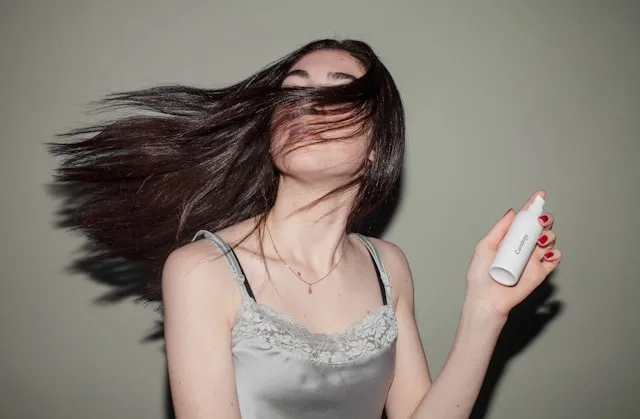
lead_image_alt: Woman protecting hair parting and scalp with Japanese aerosol UV sunscreen spray outdoors
thumbnail: /images/stock/japanese-hair-scalp-uv-protection-hero.webp
thumbnail_alt: Woman protecting hair parting and scalp with Japanese aerosol UV sunscreen spray outdoors
author: Editorial Team
publish: true
Japanese Scalp Sunscreen Spray for UV Hair Protection
While most beauty routines faithfully apply facial and neck sunscreen every morning, the very top of the head is frequently forgotten. Yet because the vertex of the cranium faces the sun at a direct perpendicular angle, the exposed scalp along your hair parting (wake-me) receives more intense ultraviolet radiation than any other part of the body.
Left unprotected under summer daylight, the scalp experiences acute erythema, barrier flaking, and lipid peroxidation. Concurrently, solar radiation degrades hair cuticles, causing dyed color to oxidize into a brassy tone and leaving ends brittle. In Japan, protecting this vulnerable zone is considered fundamental to long-term hair density and anti-aging care. Rather than smearing greasy body lotions onto hair, Japanese cosmetic chemistry offers specialized aerosol UV sprays (biyou heasupure) that deliver feather-light, invisible photoprotection. Here is how to master Japanese hair and scalp UV defense.
The Hidden Vulnerability: Why Hair Partings Burn First
Understanding why cranial skin is uniquely susceptible to solar damage highlights the importance of dedicated protection:
1. Perpendicular Solar Incidence
When walking outdoors, solar UV rays hit facial contours at varying oblique angles. In contrast, the top of the skull receives unfiltered, direct overhead sunlight. A exposed linear parting acts as a concentrated target, absorbing up to three times the cumulative UV dose of the forehead or nose.
2. Squalene Peroxidation and Follicular Stress
The scalp possesses the highest density of sebaceous glands on the human body. When ultraviolet rays collide with natural sebum lipids—especially unsaturated squalene—they trigger rapid lipid peroxidation. These oxidized squalene byproducts generate reactive oxygen species (ROS) that irritate surrounding hair follicles. While cranial follicular vitality and sebum lipid secretion rates undergo natural shifts over time[1], chronic photo-oxidative stress accelerates scalp stiffness and hair fiber shedding.
Aerosol UV Sprays vs Traditional Sunscreens
Traditional lotion sunscreens cannot be applied to hair without matting strands. Japanese aerosol technology provides a distinct alternative:
Scroll horizontally to view more
Feature
Standard Sunscreen Milk / Cream
Japanese Scalp & Hair UV Spray
Application Texture
Dense emollient emulsion; leaves white cast on hair
Micro-fine transparent gas aerosol; zero white residue
Finish on Strands
Clumps hair, flattens roots, feels oily
Quick-drying powdery mist; preserves natural volume and bounce
Photoprotection Rating
SPF 30 to 50+ / PA++++
Broad-spectrum SPF 50+ / PA++++
Reapplication Feasibility
Difficult over styled hair throughout the day
Effortless 3-second mist over parting and crown anytime outdoors
Botanical Conditioning
Heavy occlusives and facial humectants
Lightweight botanical oils (camellia, rice germ, green tea extract)
Style your hair completely before applying your scalp spray. Because Japanese hair UV sprays act as setting shields, they should be applied after hair oils, serums, or waxes have settled into place.
Step 2: Shake Vigorously
Most Japanese aerosol sunscreens contain internal mixing balls and sebum-absorbing powders (such as silica). Shake the canister up and down at least 5 to 6 times until you hear the ball clicking freely to ensure uniform suspension of UV filters.
Step 3: Maintain Proper Spraying Distance
Hold the spray nozzle approximately 15 to 20 cm (6 to 8 inches) away from your scalp. Spraying from too close concentrates liquid propellants in one spot, causing wet clumping.
Step 4: Sweep Along the Parting Line
Close your eyes and mouth. Depress the nozzle and sweep in a smooth, continuous motion along the exposed scalp line from the front hairline to the crown. Continue misting lightly over the surface of your hair cuticles for complete strand protection.
Step 5: Shift Your Parting Periodically
A smart Japanese lifestyle tip is shifting your hair parting by a few millimeters every few weeks. This simple habit prevents one localized strip of scalp tissue from absorbing cumulative solar wear year after year.
Remember that protecting vulnerable cranial skin with daily morning broad-spectrum sunscreen prevents UV-induced oxidative scalp stress[2] that compromises follicle comfort.
Common Mistakes That Compromise Scalp Protection
Avoid these everyday habits to protect both hair cuticles and scalp balance:
1. Spraying at Point-Blank Range
Holding aerosol canisters directly against the scalp chills tissue abruptly and leaves concentrated propellant deposits. Note that spraying aerosol mists too closely against sensitized scalp tissue can provoke acute contact irritation[3] and localized stinging.
2. Skipping the Nighttime Wash
Just like facial sunscreen, UV filters and oil-absorbing powders deposited on the scalp must be washed away at night. Leaving sunscreen residues overnight can mix with sebum and congest follicular openings. Always cleanse with a mild amino acid shampoo in the evening.
3. Inhaling Aerosol Mists
Never spray hair sunscreens in poorly ventilated, small enclosed bathrooms. Step onto a balcony, open a window, or hold your breath for 3 seconds while misting to avoid breathing in airborne droplets.
Signs to Stop and When to See a Doctor
While scalp sunscreens prevent solar damage, acute cutaneous flare-ups warrant medical advice:
1. Scalp Sunburn vs Allergic Dermatitis
Mild Solar Redness: Warm pinkish scalp line that cools within 24 hours of aloe gel or cold towel compresses.
Contact Dermatitis Reaction: Intense itching, stinging bumps, swelling, or hives flaring along the hairline following aerosol application.
2. When to Consult a Board Dermatologist
Schedule a clinical appointment if:
Blistering sunburn (suibukure) develops on the scalp parting.
Yellow crusting, persistent oozing, or painful follicular pimples appear after outdoor exposure.
Scalp flaking and redness do not subside after 7 days of gentle shampooing and sun avoidance.
FAQ
Q1. Will Japanese scalp sunscreen spray make my hair look oily or flat?
A. No, Japanese hair mists are formulated with fast-evaporating gas and sebum-absorbing powders.(Details)
Unlike body sunscreens, Japanese hair and scalp mists utilize micro-particulate aerosol technology. The carrier solvents evaporate in seconds upon contact, leaving a completely dry, non-sticky protective veil that preserves hair volume and prevents midday greasiness.
Q2. Does scalp sunscreen help prevent hair color fading?
A. Yes, UV filters prevent solar oxidation of synthetic hair dyes.(Details)
Ultraviolet rays break down chemical dye molecules and strip hair cuticles of natural protective 18-MEA lipids. Applying a broad-spectrum UV spray shields dyed pigments from photo-degradation, significantly extending the vibrance of salon colors.
Q3. Can I spray Japanese scalp sunscreen upside down?
A. Many Japanese canisters feature 360-degree valves designed for multi-angle spraying.(Details)
Check the packaging for the label *sakasama demo tsukaeru* (usable upside down). Most leading Japanese brands (such as Suncut or Parasola) allow you to spray upside down, making it effortless to coat the back of your head, neck, and crown independently.
Q4. How do I remove scalp sunscreen completely at night?
A. A standard double shampoo wash removes daily sunscreen and sebum cleanly.(Details)
Rinse hair thoroughly with lukewarm water for 60 seconds to wash away water-soluble debris. Then lather a gentle amino acid or weakly acidic shampoo, massaging with the pads of your fingers or a scalp brush to dissolve sunscreen filters without scrubbing aggressively.
Q5. Can I use regular facial sunscreen on my scalp parting instead?
A. Mineral sunscreen sticks can be used in a pinch, but sprays provide cleaner coverage.(Details)
Dabbing a non-greasy clear sunscreen stick directly along the parting line is acceptable for tight braids or ponytails. However, liquid creams easily get trapped in hair fibers, creating a greasy, unwashed appearance. Aerosol sprays remain the gold standard for loose hairstyles.
Summary and Key Takeaways
Protecting your hair parting from the sun is one of the most effective ways to preserve vibrant hair health:
Recognize Overhead Risk: The scalp parting receives three times more direct UV radiation than facial skin.
Choose Clear Aerosols: Use invisible Japanese hair UV sprays that offer SPF 50+ PA++++ without stickiness.
Maintain Distance: Spray from 15 to 20 cm away across styled hair and partings.
Cleanse Nightly: Wash away daily filters and oxidized sebum with gentle amino acid shampoos.
Shift Your Parting: Rotate your hair line periodically to prevent cumulative sun damage on one spot.
By incorporating this simple 3-second morning habit, you ensure your scalp and hair remain youthful, glossy, and sun-safe all year round.
References
The Japanese Dermatological Association. Sunburn Q&A on Photoaging and Biological Alterations in Aging Skin (Q5). https://www.dermatol.or.jp/qa/qa2/q05.html (Accessed 2026-11-24)
The Japanese Dermatological Association. Dermatological Q&A on Sunscreen Application for Long-Term Prevention (Q25). https://www.dermatol.or.jp/qa/qa3/q25.html (Accessed 2026-11-24)
The Japanese Dermatological Association. Dermatological Q&A on Contact Irritation and Scalp Friction Mechanisms (Q1). https://www.dermatol.or.jp/qa/qa4/q01.html (Accessed 2026-11-24)
Disclaimer: This article is for general information and education about Japanese cosmetics and their labels. It is not a substitute for professional medical advice, diagnosis, or treatment. Skincare results vary from person to person. Product formulas, availability, prices, and regulations change, and products sold in Japan can differ from versions sold elsewhere, so always check the current label. Do a patch test before introducing a new product, and consult a doctor or dermatologist if you have a skin condition or specific concerns.