title: Japanese Cotton Pad Guide for Lotion: Types & Techniques description: "Discover the best Japanese cotton pads for lotion application. Compare multi-layer, sponge, and organic types, plus hands vs cotton methods." meta_description: Discover the best Japanese cotton pads for lotion application. Compare multi-layer, sponge, and organic types, plus hands vs cotton methods. published_at: "2026-11-17" updated_at: "2026-11-17" fact_checked_at: "2026-11-17" author: "Miho Tanaka" fact_checker: "Miho Tanaka" category: "how-japan-works" tags:
- japanese cotton pads
- lotion application
- j-beauty tools
- silcot uru uru
- shiseido facial cotton thumbnail: "/images/stock/cotton-pad-lotion-application-closeup.jpg" thumbnail_alt: "Saturated Japanese cosmetic cotton pad gently applying watery hydrating lotion"
Japanese Cotton Pad Guide for Lotion: Types & Techniques
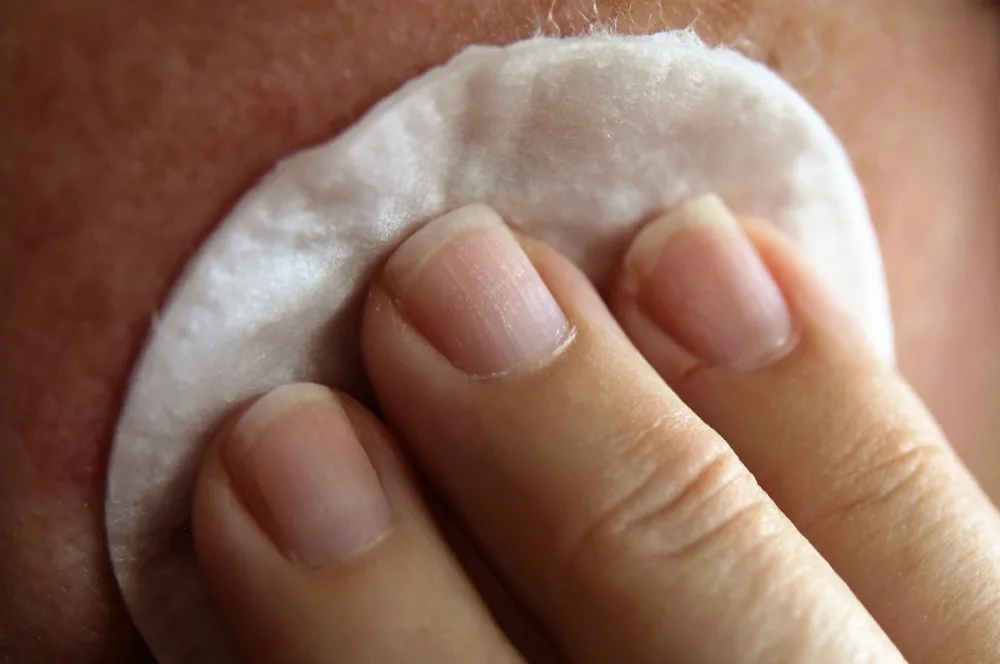
Japanese cosmetic cotton pads (*keshō men*) are engineered textiles designed specifically to deliver watery lotions evenly without linting or scratching:
- Why They Differ: Unlike rough Western makeup rounds that soak up and trap expensive liquids, Japanese pads feature multi-layered natural cotton, sealed pocket edges, or specialized micro-sponge fibers that release moisture efficiently back onto the skin.
- Hands vs. Cotton: Bare hands offer zero friction and warmth for sensitive barriers; cotton pads provide superior uniform coverage across facial contours and micro-texture.
- Key Types: 1) Multi-layer peelable pads for DIY sheet masks, 2) Side-sealed pads for non-linting patting, 3) Sponge-touch sheets (using 50% less lotion), and 4) Unbleached natural cotton.
- The Golden Rule: Fully saturate the pad and use gentle stamping or pressing motions—never drag or scrub across dry skin.
In Western skincare routines, cotton rounds are frequently viewed as cheap, disposable commodities reserved primarily for removing nail polish or stripping waterproof mascara. In Japan, however, the cosmetic cotton pad (keshō men) serves as a sophisticated, precision skincare applicator.
Japanese cosmetic manufacturers—from heritage houses like Shiseido to personal care innovators like Unicharm—invest significant engineering into fiber alignment, liquid release dynamics, and tactile softness. When paired with watery Japanese lotions (keshōsui), a high-quality cotton pad ensures that hydration reaches every facial contour without leaving behind fuzzy lint or causing friction.
This comprehensive guide breaks down the different varieties of Japanese cosmetic cotton, compares hand pressing with cotton application, and details the classic three-finger holding technique for comfortable, barrier-friendly hydration.
The Four Major Types of Japanese Cotton Pads
Not all Japanese cotton pads serve the same functional purpose. Understanding their textile construction helps you select the right format for your preferred skincare formulas.
+-------------------------------------------------------------------------+
|                  Japanese Cosmetic Cotton Categories                    |
|                                                                         |
|  1. Multi-Layer Peelable     2. Side-Sealed / Pocket   3. Micro-Sponge  |
|  - Splits into 4-5 sheets    - Wrapped edges           - Releases 100%  |
|  - Ideal for lotion packs    - Zero linting or fray    - Halves lotion  |
|                                                                         |
|                     4. Unbleached Natural Cotton                        |
|                     - Unprocessed natural fibers, brown husks           |
|                     - Ultra-soft on reactive skin                       |
+-------------------------------------------------------------------------+
1. Multi-Layer Peelable Cotton (For Lotion Packs)
Peelable cotton pads consist of several ultra-thin, compressed sheets stacked together into a single plush rectangular wafer.
- How It Works: Saturate the entire pad with watery lotion, then gently peel it apart horizontally into 4 to 5 paper-thin, stretchy layers.
- Primary Use: Applying localized DIY sheet mask compresses to the forehead, cheeks, and chin. Learn the full technique in our guide to the Chizu Saeki lotion mask method.
- Popular Examples: Cotton Labo 5-Layer Cotton, Muji Peelable Cotton.
2. Side-Sealed Pocket Cotton (For Gliding and Patting)
Side-sealed cotton pads feature an ultra-soft inner core encased in a silky non-woven outer mesh, with the left and right edges heat-crimped.
- How It Works: The sealed perimeter prevents the inner cotton fibers from fraying, spilling out, or shifting during application.
- Primary Use: Daily lotion patting and gentle wiping. Because the edges are bonded, the pad remains structurally stable even when soaked with rich emulsions.
- Popular Examples: Unicharm Silcot Silky Touch, Kao Sofina Cotton.
3. Micro-Sponge Moisture-Releasing Cotton (Saves 50% Lotion)
Pioneered by Unicharm's famous Silcot Sponge Touch (Uru-Uru Cotton), this category abandons traditional fluffy cotton wool entirely in favor of an engineered pulp and rayon sponge blend.
- How It Works: Traditional cotton absorbs liquid and locks it within microscopic fiber hollows. Micro-sponge pads, by contrast, act like a damp sponge: applying light pressure forces 100% of the absorbed liquid out onto the skin.
- Primary Use: Delivering watery toners while using roughly half your usual product volume. Each pad features curved, perforated center lines that tear cleanly into two eye-contour patches.
- Popular Examples: Unicharm Silcot Sponge Touch Moisturizing Cotton.
4. Unbleached Organic Cotton (For Sensitive Skin)
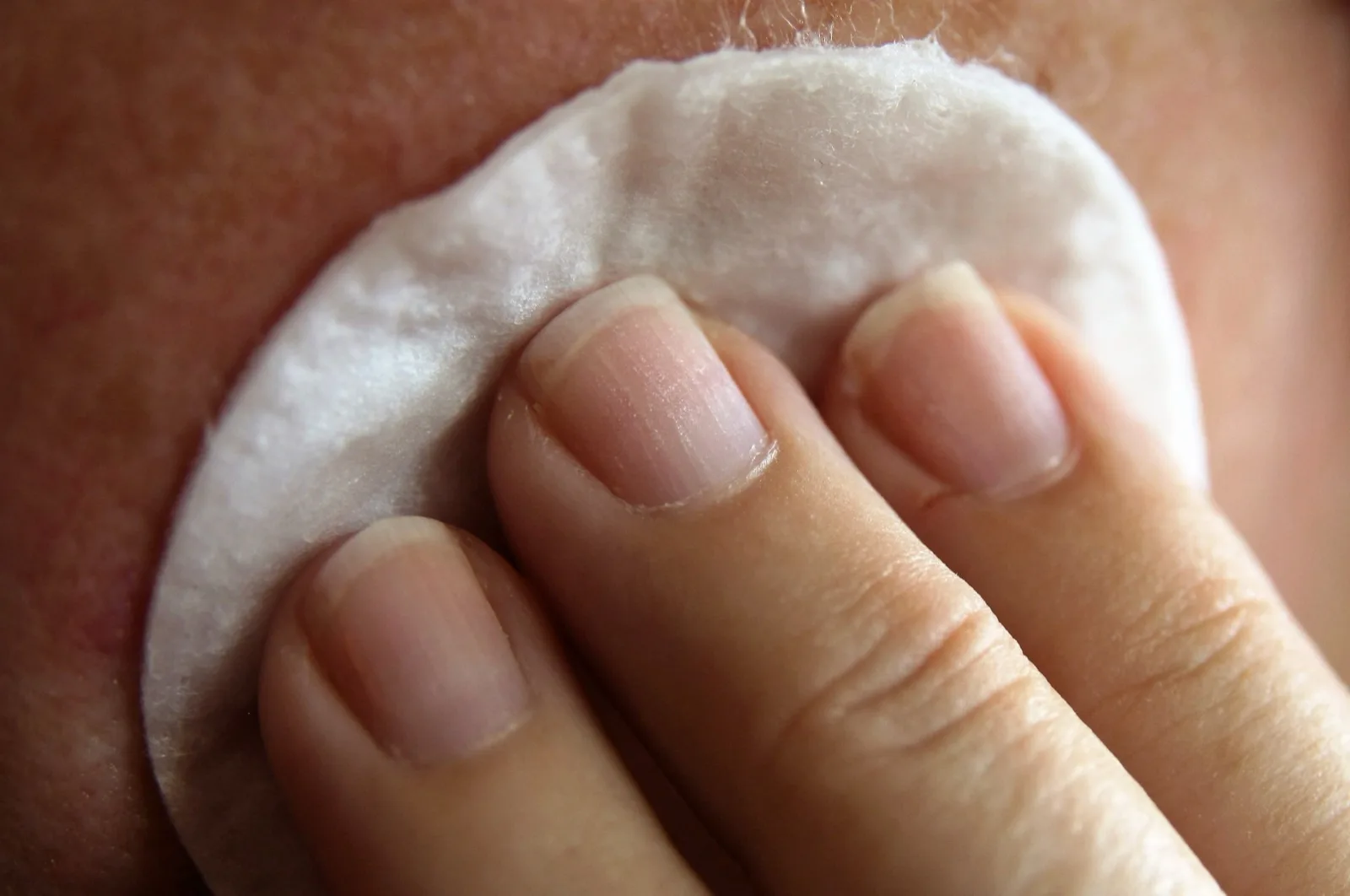
Unbleached cotton pads are manufactured from 100% natural cotton fibers without chlorine processing, chemical brightening agents, or dye baths.
- Appearance: Off-white or ecru color with small, harmless dark specks—which are natural fragments of cottonseed husks and leaves.
- Tactile Feel: Unmatched cloud-like pillowy softness that creates negligible drag across hypersensitive or compromised skin.
- Popular Examples: Shiseido Facial Cotton, Muji Unbleached Cut Cotton.
Hands vs. Cotton Pads: Which Application Method Is Better?
A perennial debate among beauty enthusiasts is whether Japanese lotion should be pressed in with bare hands or applied with a cotton pad. Both methods are supported by dermatological and cosmetic science.
General medical classifications define cotton pads as sheets made of cotton which are used for medical or cosmetic purposes[1]. In cosmetic contexts, they are designed to be soft enough that they can be used to clean babies and support delicate skin contact[1].
Furthermore, comprehensive skincare frameworks encompass core functions such as cleansing, hydration, exfoliation, absorption, degreasing or unclogging pores, tightening skin, and restoring barrier comfort[2]. How you apply your lotion directly influences these functional goals:
The Case for Hands
- Zero Absorption Waste: Bare palms are non-porous; every drop of liquid dispensed transfers directly to your face rather than being discarded in the trash.
- Warmth and Soothing Touch: Natural palm warmth can soften botanical oils and enhance relaxation during an evening routine.
- Minimal Friction Hazard: If your skin barrier is severely inflamed, broken, or reacting to retinoids, bare hands minimize the risk of accidental abrasive dragging.
The Case for Cotton Pads
- Uniform Micro-Coverage: Clinical imaging by Japanese cosmetic research laboratories reveals that bare hands frequently miss small facial hollows—such as the inner eye corners, nasal creases, and submandibular jaw contours. A saturated cotton pad deposits an even liquid film across every microscopic pore.
- Gentle Physical Debris Clearing: Gliding a moist cotton pad across the skin offers mild surface clearing of loose environmental dust and dead keratinocytes without harsh scrubbing.
- Cooling Temperature Effect: Cotton application lowers skin surface temperature slightly, providing a soothing, pore-refining finish that preps skin for daytime makeup.
To understand how lotion fits into a full multi-step Japanese regimen, review our guide to Japanese skincare routine steps.
How to Apply Lotion with a Cotton Pad Without Friction
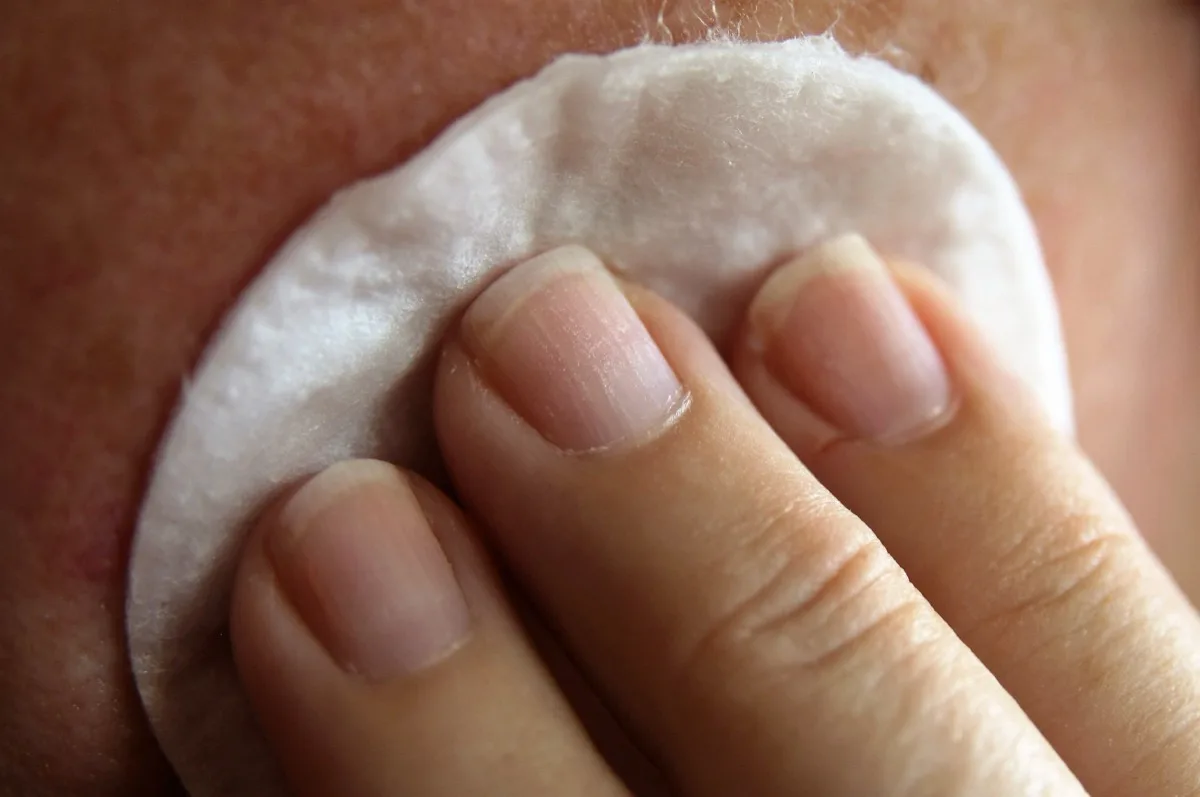
The single greatest hazard of cotton application is physical dragging. Dermatologists remind us that you must resist the temptation to scrub your skin because scrubbing irritates the skin[3].
Follow this standard Japanese salon method to ensure smooth, non-irritating hydration:
1. The Classic Three-Finger Grip
- Lay the cotton pad horizontally across the palmar surfaces of your middle and ring fingers.
- Secure the left edge using your index finger and the right edge using your pinky finger.
- This grip arches the cotton pad smoothly over your fingers, creating a wide, cushioned contact zone that distributes pressure evenly and prevents the pad from crumpling.
2. Generous Saturation (The 500-Yen Coin Rule)
- Pour sufficient lotion onto the center of the pad until a wet circle the size of a 500-yen coin (roughly a silver dollar) forms.
- The pad should feel visibly heavy and translucent. If dry cotton fibers touch your face, friction occurs immediately.
3. Rhythmic Stamping (Pressing, Not Rubbing)
- Start from the center of the face and move outward: cheeks, forehead, nose, and chin.
- Use a soft "press-and-release" stamping motion (patting), allowing the liquid to transfer through capillary action.
- Never scrub back and forth across the cheeks.
Comprehensive Comparison: Hands vs. Cotton Pad Modalities
Scroll horizontally to see full details.
| Application Mode | Primary Strength | Product Efficiency | Friction Risk Level | Ideal Skin Condition |
|---|---|---|---|---|
| Bare Hands | Comforting warmth, zero product absorption | Highest (100% goes to skin) | Lowest (zero drag) | Compromised barrier, active eczema, or very dry skin |
| Standard Cotton | Uniform micro-coverage, soft physical clearing | Moderate (absorbs some liquid) | Low (when fully saturated) | Normal to oily skin, textured skin, pre-makeup prep |
| Micro-Sponge Pad | Releases 100% of liquid back, splits into masks | High (halves lotion use) | Low | Budget-conscious routines, watery lotion layering |
| Peelable Multi-Layer | Customizable DIY localized sheet masks | Moderate | Low | Dehydrated skin needing targeted 3-minute compresses |