title: Japanese Facial Roller vs Gua Sha: Differences & Usage Guide description: "Compare Japanese facial rollers and gua sha tools. Discover mechanical kneading vs scraping, friction risks, microcurrents, and safe technique tips." meta_description: Compare Japanese facial rollers and gua sha tools. Discover mechanical kneading vs scraping, friction risks, microcurrents, and safe technique tips. published_at: "2026-11-17" updated_at: "2026-11-17" fact_checked_at: "2026-11-17" author: "Miho Tanaka" fact_checker: "Miho Tanaka" category: "how-japan-works" tags:
- facial roller vs gua sha
- refa roller
- japanese beauty tools
- kassa plate
- lymphatic drainage face thumbnail: "/images/stock/skincare-massage-guasha-roller-step.jpg" thumbnail_alt: "Facial jade roller and sculpted gua sha board arranged with clean skincare essentials"
Japanese Facial Roller vs Gua Sha: Differences & Usage Guide
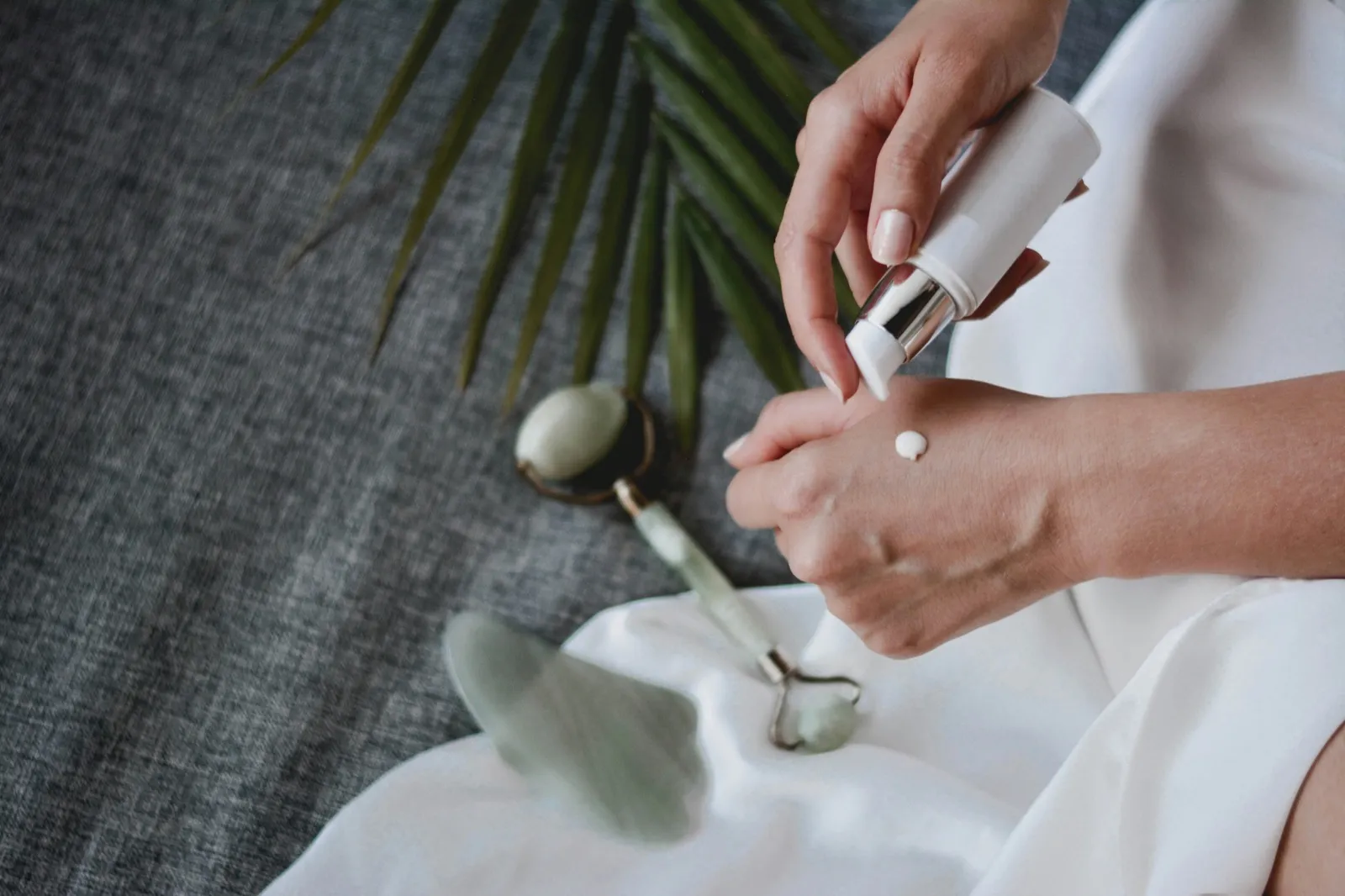
Both facial rollers and gua sha boards promote lymphatic drainage and ease facial tension, but they function through completely different mechanical actions:
- Facial Rollers (e.g., ReFa 3D Kneading): Rely on revolving multi-angular spheres that grip and knead tissue (*petrissage*) with minimal surface drag, often incorporating solar-powered microcurrents.
- Gua Sha (Kassa Plates): Flat contoured stone or ceramic edges glide across the skin to release deep fascial adhesions and sculpt bone contours.
- Friction Hazard: Rollers carry negligible surface drag; gua sha creates high shear stress and strictly requires heavy lubrication with oil or rich cream.
- Recommended Selection: Choose rollers for quick morning de-puffing and masseter muscle kneading; choose gua sha for intentional evening contouring along the jaw and cheekbones.
Among modern Japanese beauty rituals, manual handheld tools hold a prominent position on dressing tables. In department store beauty halls and high-street electronics boutiques (kaden ryōhanten), shelves display a vast spectrum of devices—from iconic platinum-coated double-sphere rollers to traditional porcelain and stone kassa (gua sha) scraping plates.
While both instruments promise sharpened jawlines, relaxed facial muscles, and diminished morning fluid retention, their physical impact on epidermal tissue and underlying musculature differs significantly. Choosing the wrong tool—or using it with incorrect technique—can cause painful skin pinching or mechanical micro-friction that accelerates sagging.
This comprehensive guide compares Japanese facial rollers against gua sha boards, analyzing their mechanical principles, friction profiles, optimal anatomical zones, and safe step-by-step methods.
Mechanical Differences: Kneading vs. Contoured Scraping
The primary distinction between a facial roller and a gua sha board lies in how each tool transfers mechanical force to the skin.
+-------------------------------------------------------------------------+
|                  Tool Mechanics Comparison                              |
|                                                                         |
|  Facial Roller (ReFa Style)         Gua Sha / Kassa Plate               |
|  - Rotating spheres                 - Stationary contoured edge         |
|  - Mechanical "pinch & roll"        - Unidirectional sweeping glide     |
|  - Minimal surface friction         - High friction (oil mandatory)     |
|  - Targets muscle belly & fascia    - Targets bone edges & lymph nodes  |
+-------------------------------------------------------------------------+
1. Facial Rollers: The 3D Kneading Principle
Unlike flat jade cylinders that merely glide across the surface, Japanese engineering (championed by brands like ReFa) focuses on three-dimensional rotational kneading.
- Dual-Sphere V-Angle: The rollers are positioned at an exact anatomical angle. As you glide the handle across your jaw or cheeks, the spheres draw in, lift, and gently compress the soft tissue between them, mimicking the rhythmic thumb-and-finger pinching technique (petrissage) used by professional aestheticians.
- Microcurrent Integration: Many Japanese rollers incorporate a slim solar panel in the handle that absorbs ambient light to emit microcurrents—very weak electrical currents that mirror the body’s natural bioelectric signals to support tissue vitality.
- Low Friction Profile: Because the rolling heads rotate smoothly over the skin, the device creates minimal surface drag, making it safe for quick use over light moisturizers.
2. Gua Sha (Kassa): The Contoured Fascial Glide
Originating from traditional East Asian wellness systems, gua sha is historically recognized as a practice involving skin scraping across specialized meridians[1]. In authentic applications, the skin is typically prepared with massage oil, balm, or even specialized botanical infusions to prevent surface abrasion[1].
- Contoured Edges: Modern Japanese kassa plates—crafted from Gifu ceramics, Bian stone, rose quartz, or sculpted metal alloys—feature curved indents designed to hug anatomical landmarks such as the jawline, cheekbones, and brow ridge.
- Fascial Release: Rather than pinching muscle, a gua sha tool is held at a low angle (15 to 45 degrees) and drawn flat across the skin. This sweeping pressure mobilizes stagnant interstitial fluid and eases tension in the superficial musculoaponeurotic system (SMAS) fascia.
- High Friction Risk: Because the tool does not rotate, dry application will drag and stretch the skin, causing redness or broken capillaries.
Hands-On Comparison: Rollers vs. Gua Sha
Both devices align with broader skincare goals, which encompass essential functions such as cleansing, hydration, exfoliation, absorption, degreasing or unclogging pores, tightening skin, and restoring barrier equilibrium[2].
The table below contrasts their operational characteristics:
Scroll horizontally to see full details.
| Feature | Japanese Facial Roller | Gua Sha (Kassa Plate) |
|---|---|---|
| Primary Mechanism | Rotational kneading & pinching | Unidirectional edge scraping & gliding |
| Surface Drag | Low (spheres roll over skin) | High (requires generous oil/balm slip) |
| Depth of Pressure | Subcutaneous muscle & fat pads | Fascial adhesions & bone margins |
| Key Anatomical Targets | Cheeks, jawline, neck, and trapezius | Jaw edge, zygomatic arch, brow, scalp |
| Preparation Needed | Light lotion, gel, or bare skin | Heavy facial oil or rich massage balm |
| Primary Hazard | Pinching thin skin if angled too steep | Frictional abrasions & broken capillaries |