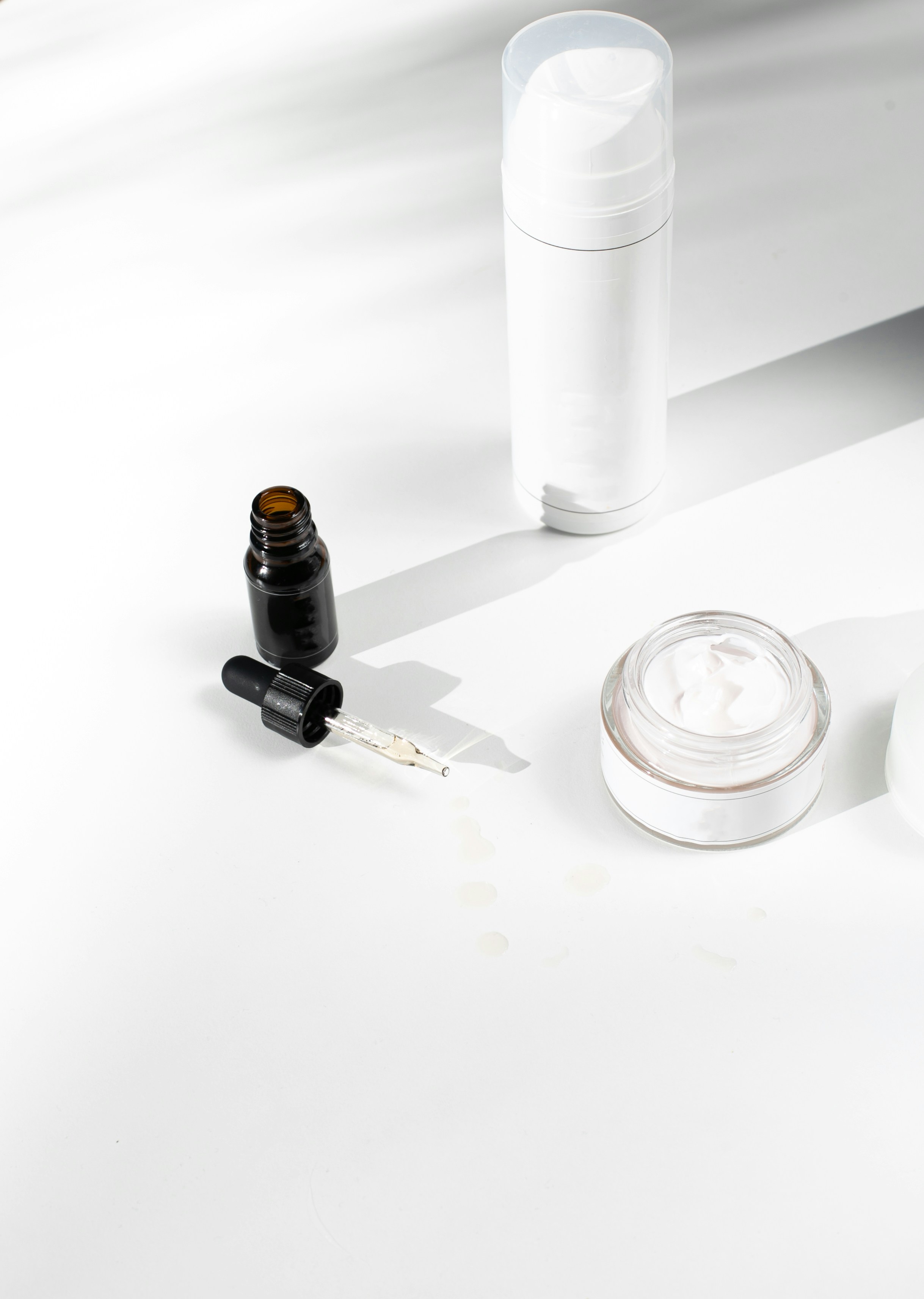
title: "Ceramide Rich Japanese Emulsion for Winter: Deep Hydration" description: "Discover how ceramide rich Japanese emulsions prevent winter dryness. Learn intercellular lipid barrier science, human-type ceramides, and layering techniques." category: "hydration" slug: "ceramide-rich-japanese-emulsion-for-winter" hero_image: "/images/stock/skincare-minimal-bottles-dropper-set.jpg" hero_image_alt: "Ceramide rich Japanese emulsion bottles arranged on a winter skincare vanity" published_at: "2026-11-20" last_modified_at: "2026-11-20"
Ceramide Rich Japanese Emulsion for Winter: Deep Hydration
Winter brings severe drops in both ambient temperature and indoor relative humidity. During cold months, the skin surface faces harsh dry air from indoor heating systems, accelerating moisture evaporation and disrupting epidermal equilibrium. In Japanese skincare philosophy, sealing hydration does not require suffocating skin with heavy, waxy ointments. Instead, Japanese emulsions—known as nyueki—offer a lightweight yet barrier-fortifying solution powered by physiological lipids, most notably ceramides.
Understanding how ceramide-rich emulsions replenish the intercellular matrix allows you to maintain supple, resilient skin through the driest winter conditions without clogging pores.
A ceramide-rich Japanese emulsion balances water, humectants, and functional lipids that mirror the natural lipid ratio of human skin. Applied after a hydrating watery lotion, it replenishes intercellular ceramides in the stratum corneum, locking in aqueous moisture and shielding delicate winter skin without greasy heaviness.
The Science of Winter Dryness and Skin Barrier Protection
The stratum corneum functions as the primary shield protecting your body from environmental irritants, chemical hazards, and dehydration. Research in PLOS ONE affirms: 'The stratum corneum (SC) provides a permeability barrier that limits the inflow and outflow of water.'[1]
This barrier relies heavily on the "brick and mortar" architecture of the skin:
- Corneocytes ("Bricks"): Dead cells packed with keratin filaments and Natural Moisturizing Factors (NMF).
- Intercellular Lipids ("Mortar"): Organized lamellar sheets composed of ceramides (approx. 50%), cholesterol (approx. 25%), and free fatty acids (approx. 15%).
[Skin Barrier Architecture: Stratum Corneum]

+-------------------------------------------------+
|  Corneocyte (Keratin & Natural Moisturizing)   |  <- "Bricks"
+-------------------------------------------------+
|  Intercellular Lipid Bilayers                   |
|  (Ceramides 50%, Cholesterol 25%, Fatty Acids)  |  <- "Mortar"
+-------------------------------------------------+
|  Corneocyte (Keratin & Natural Moisturizing)   |
+-------------------------------------------------+
When winter air drops below 30% relative humidity, moisture evaporates rapidly from the skin surface. Concurrently, cold temperatures reduce the activity of key epidermal enzymes responsible for synthesizing endogenous ceramides. Dermatological guidelines emphasize that applying a moisturizer immediately while skin remains slightly damp seals in maximum water content.
Understanding Ceramide Classifications in Japanese Skincare
Japanese cosmetic laboratories formulate various types of ceramides, each providing distinct stability and moisture-binding profiles:
1. Human-Type Ceramides (Bio-Identical)
Synthesized via yeast fermentation, human-type ceramides possess molecular configurations identical to endogenous skin lipids. On Japanese ingredient lists, they are recognized by international designations:
- Ceramide NP (Ceramide 3): Reinforces water retention within upper stratum corneum layers.
- Ceramide AP (Ceramide 6 II): Supports natural desquamation and smooths rough flaking areas.
- Ceramide EOP (Ceramide 1): Features an extended fatty acid chain that binds neighboring lipid lamellae securely.
2. Pseudo-Ceramides (Synthetic Analogs)
Developed by Japanese dermatological chemists, synthetic analogs such as Cetyl-PG Hydroxyethyl Palmitamide replicate the structural matrix of natural ceramides. They offer exceptional formulation stability at competitive price points, providing deep hydration for fragile skin barriers.
3. Botanical Sphingolipids
Derived from rice bran or yuzu fruit extracts, botanical glucosylceramides condition skin surface texture and complement synthetic lipids.
Emulsion vs. Heavy Cream: Why Japanese Nyueki Excels for Layering
Many people instinctively reach for thick cold creams when facing winter dryness. However, applying dense occlusives without adequate hydration can trap rough patches and leave a greasy residue.
Scroll horizontally to see full details
| Feature | Japanese Emulsion (Nyueki) | Western Heavy Cold Cream |
|---|---|---|
| Water-to-Oil Ratio | Approximately 70% water, 30% emollient lipids | Approximately 30-40% water, 60-70% heavy waxes/oils |
| Texture & Feel | Lightweight milk, smooth glide without friction | Dense, viscous, requires warming between palms |
| Absorption Profile | Quickly conditions upper stratum corneum | Leaves a noticeable occlusive film on the surface |
| Daytime Usability | Smooth layer under sunscreen and makeup | May cause makeup pilling or excess shine |
| Primary Mechanism | Replenishing physiological lipid balance | Passive mechanical moisture occlusion |