title: "Japanese Lotion Pack 3 Minute Method: Hydration Guide" description: "Master the Japanese 3-minute lotion pack method (roshon-pakku). Learn cotton peeling techniques, humectant saturation science, and why 3 minutes is optimal." category: "hydration" slug: "japanese-lotion-pack-3-minute-method" hero_image: "/images/stock/toner-pour-hand-application-texture.webp" hero_image_alt: "Japanese watery lotion poured onto peeling cotton pads for the 3 minute lotion pack" published_at: "2026-11-20" last_modified_at: "2026-11-20"
Japanese Lotion Pack 3 Minute Method: Hydration Guide
When skin feels parched, dull, or overheated from sun exposure, simply patting on toner with dry hands often evaporates before surface cells can fully drink it in. In Japan, beauty pioneer Chizu Saeki revolutionized everyday skincare by popularizing the 3-minute lotion pack (roshon-pakku).
Using ordinary multi-layered cotton pads saturated with watery hydrating lotion, this DIY mask delivers intensive moisture comparable to expensive sheet masks. Here is the dermatological science behind why three minutes is the precise window for maximum hydration.
The Japanese 3-minute lotion pack saturates the stratum corneum through temporary occlusion. Wet a multi-layer peelable cotton pad with purified water or watery lotion, peel it into 4 to 5 paper-thin sheets, stretch them across cheeks, forehead, and chin, and remove strictly at the 3-minute mark before the cotton begins drying to prevent reverse osmosis moisture loss.
Occlusion Science: Why 3 Minutes Is the Golden Ratio
The efficacy of the lotion pack rests on moisture gradients and surface adhesion:
- Capillary Action and Occlusion: Pressing wet cellulose cotton directly against the epidermis prevents ambient evaporation. Trapped water vapor softens compacted keratin, allowing humectants like hyaluronic acid and glycerin to saturate intercellular spaces.
- The 3-Minute Evaporation Threshold: A thin cotton sheet holds approximately 2ml to 3ml of liquid. In ambient room humidity, cotton begins losing moisture around the 3 to 4-minute mark.
- Avoiding Reverse Osmosis (Gaku-Shintouatsu): If a cotton pad is left on the skin until it dries, the dried cellulose fibers reverse direction, drawing moisture back out of the hydrated stratum corneum into the drying pad.
Research in PLOS ONE affirms: 'The stratum corneum (SC) provides a permeability barrier that limits the inflow and outflow of water.'[1] A strict 3-minute application hydrates this exact barrier without triggering evaporation strain.
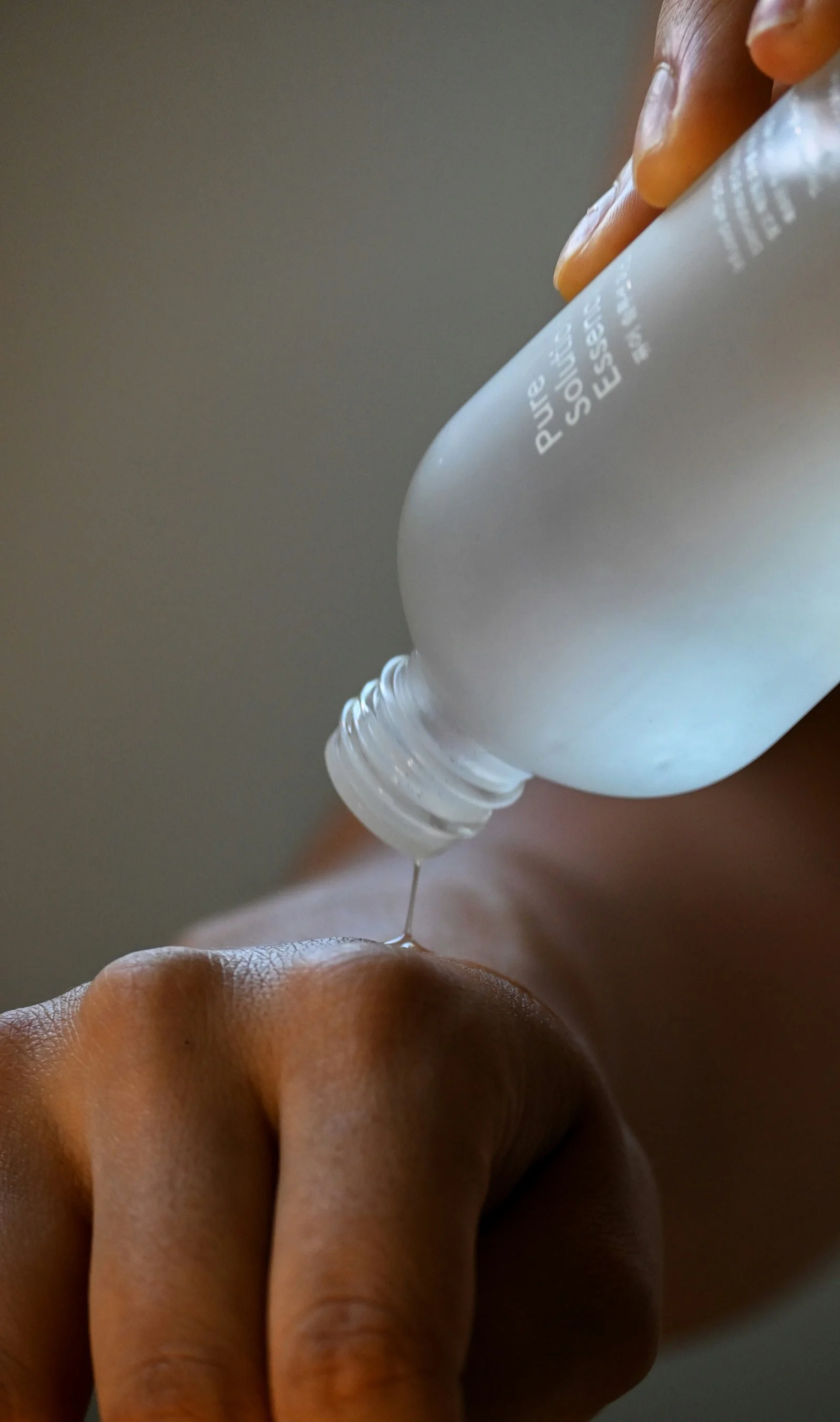
Overview Comparison
| Hydration Method | Wear Time | Occlusion Level | Cost Per Use | Ideal Skin Scenario |
|---|---|---|---|---|
| 3-Minute Lotion Pack | Strictly 3 minutes | Moderate (breathable cotton) | Very low (daily staple) | Morning skin prep, redness cooling |
| Commercial Sheet Mask | 10 to 15 minutes | High (thick non-woven fabric) | Moderate to high | Weekly intensive boost |
| Standard Palm Press | 30 seconds | None (open-air evaporation) | Lowest | Quick daily maintenance |
How to Prepare and Apply the 3-Minute Pack
Follow this step-by-step master technique:
- Pre-Moisten with Water: Run a large, multi-layer unbleached cotton pad under clean tap or purified water, then press between palms to squeeze out excess water until just damp.
- Saturate with Lotion: Pour a generous splash of alcohol-free watery lotion (keshosui) over the damp cotton pad.
- Peel into 4 to 5 Layers: Carefully separate the saturated pad into 4 or 5 whisper-thin, translucent sheets.
- Stretch and Adhere: Gently stretch each sheet horizontally without tearing and smooth them over cheeks, forehead, nose bridge, and chin.
- Remove at 3 Minutes: Peel off the sheets while they are still visibly damp.
- Seal Immediately: Press remaining surface moisture into the skin with open palms, then lock in hydration with a milky emulsion (nyueki) or ceramide cream.
Signs to Stop and When to See a Doctor
While watery lotion packs are exceptionally gentle, discontinue the technique immediately if you experience:
- Increased facial stinging, redness, or burning during cotton contact.
- Contact dermatitis or itchy papules triggered by fragrances in your chosen lotion.
- Maceration or irritation around active acne pustules.
Consult a board-certified dermatologist if chronic facial eczema or inflammatory rosacea fails to improve with gentle hydration.
FAQ
Q1. What kind of lotion works best for a 3-minute lotion pack?
A. Choose alcohol-free, fragrance-free watery lotions rich in hyaluronic acid or ceramides.(Details)
Opt for alcohol-free, fragrance-free watery lotions with simple humectant formulas (like Hada Labo Gokujyun or Naturie Hatomugi Skin Conditioner). Avoid thick viscous serums or exfoliating acid toners.
Q2. Can I leave the lotion pack on for 10 minutes like a sheet mask?
A. No, thin cotton dries much faster than sheet masks and will extract moisture back from your skin.(Details)
No, because thin peeled cotton holds significantly less liquid than thick commercial sheet masks, leaving it on past 3 minutes causes it to dry out and pull hydration away from skin cells.
Q3. Which cotton pads peel most easily?
A. Look for Japanese peelable cotton pads like Muji Cut Cotton or Silcot Peelable Puffs.(Details)
Japanese peelable cotton pads (such as Muji Unbleached Cut Cotton or Silcot Uruuru Peelable Puffs) are engineered with layered weaves that split effortlessly into 4 or 5 clean sheets without linting.
Q4. Can I do a lotion pack every morning?
A. Yes, daily morning lotion packs provide an ideal plump canvas for smooth makeup application.(Details)
Yes, practicing a 3-minute lotion pack daily every morning cools skin temperature, calms morning redness, and creates an exceptionally smooth base for makeup.
Q5. Why should I dampen the cotton with water first?
A. Pre-dampening prevents the dry cotton core from soaking up excessive amounts of expensive lotion.(Details)
Pre-moistening with plain water fills the inner cotton fibers, allowing your cosmetic lotion to remain concentrated on the outer surface that touches your skin, saving up to 50% of product.
Summary
- Follow the 3-Minute Rule: Remove cotton sheets while still damp to prevent reverse moisture extraction.
- Peel Multi-Layer Cotton: Separate pre-moistened cotton pads into thin sheets to cover all facial contours.
- Lock In with Emulsion: Seal freshly saturated stratum corneum layers with a barrier cream immediately after removal.
Disclaimer: This article is for general information and education about Japanese cosmetics and their labels. It is not a substitute for professional medical advice, diagnosis, or treatment. Skincare results vary from person to person. Product formulas, availability, prices, and regulations change, and products sold in Japan can differ from versions sold elsewhere, so always check the current label. Do a patch test before introducing a new product, and consult a doctor or dermatologist if you have a skin condition or specific concerns.
References
- PLOS ONE (2015). Homogeneous transport in a heterogeneous membrane: water diffusion across human stratum corneum in vivo. DOI: 10.1371/journal.pone.0117292. Available from: https://journals.plos.org/plosone/article?id=10.1371/journal.pone.0117292
- American Academy of Dermatology (AAD). Dermatologists' tips to relieve dry skin. Available from: https://www.aad.org/public/everyday-care/skin-care-basics/dry/dermatologists-tips-relieve-dry-skin
- American Academy of Dermatology (AAD). How to apply skin care products. Available from: https://www.aad.org/public/everyday-care/skin-care-basics/care/apply-skin-care-products