title: Fucoidan in Japanese Skincare: Seaweed Hydration & Science description: Discover fucoidan seaweed extract in Japanese skincare. Learn the science of brown algae hydration, Okinawa mozuku purity, and barrier-coating benefits. meta_description: Discover fucoidan seaweed extract in Japanese skincare. Learn the science of brown algae hydration, Okinawa mozuku purity, and barrier-coating benefits. published_at: "2026-11-17" updated_at: "2026-11-17" fact_checked_at: "2026-11-17" author: "Miho Tanaka" category: "ingredients" slug: "fucoidan-seaweed-extract-japanese-skincare" thumbnail: "/images/stock/crystal-clear-water-splash-crown-macro.webp" thumbnail_alt: "Crystal clear water splash representing deep marine hydration and seaweed extract" affiliate: false ja_equivalent: null publish: true
Fucoidan in Japanese Skincare: Seaweed Hydration & Science
Marine bio-resources have long anchored Japanese nutrition and wellness traditions. In cosmetic science, few botanical discoveries have garnered as much clinical interest as fucoidan—a natural, complex polysaccharide derived from the cell walls of brown seaweeds.
Primarily harvested from pristine coastal beds such as Okinawa mozuku (Cladosiphon okamuranus) and Hokkaido gagome kelp, fucoidan is prized in Japanese formulations for its exceptional moisture-binding capacity and lightweight, film-forming protective behavior.
Understanding the marine biology behind fucoidan reveals why Japanese chemists utilize this coastal extract to soothe dry complexions, support moisture barrier integrity, and create elegant, non-sticky textures.
Fucoidan is a sulfated polysaccharide extracted from brown algae that forms a breathable, moisture-retaining lattice over the skin's surface. It binds water molecules to the stratum corneum, curbs transepidermal water loss (TEWL), and conditions dehydrated or irritated skin. Sourced predominantly from Okinawa mozuku and northern kelp, it provides sustained humectant hydration comparable to high-grade hyaluronic acid while delivering a silky, non-tacky finish.
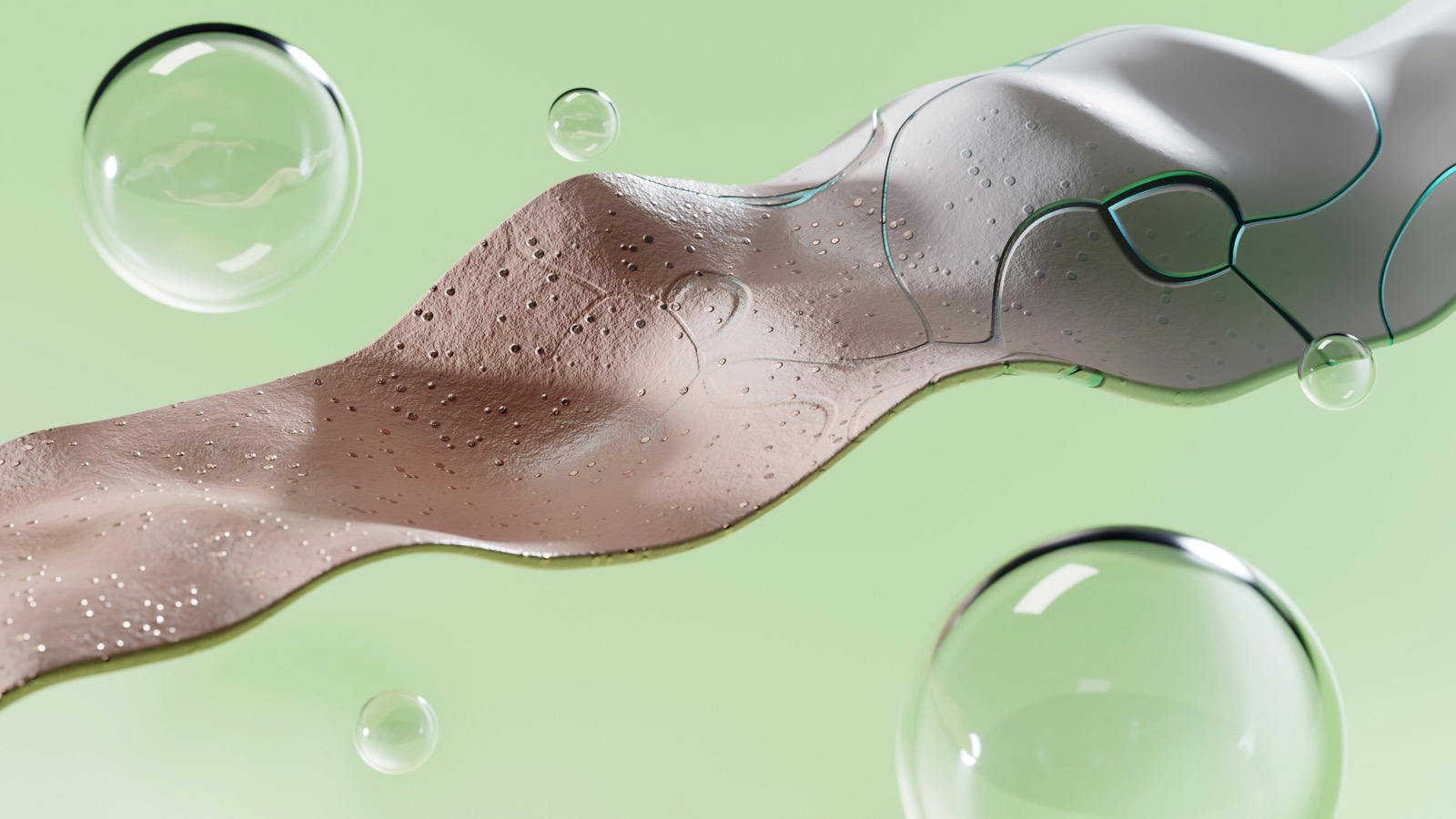
Marine polysaccharide chemistry harnesses coastal seaweed defenses to deliver high-capacity surface hydration.
What Is Fucoidan? The Chemistry of Brown Algae
Fucoidan is not a single isolated molecule, but a family of high-molecular-weight, fucose-rich sulfated polysaccharides found predominantly in brown seaweeds (Phaeophyceae)[1].
1. The Seaweed's Natural Defense Mechanism
In their marine habitat, intertidal seaweeds endure severe environmental stress. During low tide, ocean waves recede, exposing delicate fronds to scorching sunlight, ultraviolet radiation, shifting salinity, and drying winds.
To survive these conditions without desiccation, brown algae synthesize fucoidan inside their extracellular mucilage. This viscous gel performs two vital defensive functions:
- Moisture Cushion: It holds immense volumes of sea water around the plant fibers, preventing tissue dehydration until high tide returns.
- Physical Barrier Shield: It forms a protective barrier over micro-tears in the plant fronds, shielding the plant against sand abrasion and marine bacterial colonization.
2. Molecular Architecture in Skincare
Cosmetic grade fucoidan consists primarily of L-fucose sugar chains attached to sulfate ester groups, along with minor proportions of galactose, mannose, and glucuronic acid. The abundance of negatively charged sulfate groups gives fucoidan a high affinity for ambient water molecules, allowing it to function as a powerful, surface-coating humectant when applied topically.
Water-binding sulfate groups in fucoidan trap moisture, conditioning the outermost layers of the epidermis.
How Fucoidan Conditions and Protects the Skin
Topical application of refined fucoidan provides distinctive benefits that complement standard humectants:
1. Forms a Breathable Protective Film
Unlike low-molecular-weight humectants that disperse quickly, high-molecular fucoidan spreads across the skin to form an invisible, flexible film. This surface lattice helps reduce transepidermal water loss (TEWL)[2], buffering the epidermis against arid dry climates, heated indoor office air, and abrasive friction.
2. Sustained Hydration Without Stickiness
Many heavy humectants leave a gummy or tacky residue when formulated at functional percentages. Fucoidan delivers a distinctive slippery, velvety glide upon initial application that rapidly settles into a soft, weightless finish. It cushions dry skin patches and plumps the appearance of fine dehydration surface lines.
3. Gentle Barrier Soothing
Because marine algae are subject to constant oxidative and solar stress, their polysaccharide matrices contain trace polyphenolic compounds. In cosmetic preparations, fucoidan extract helps calm the look of surface redness and relieves tightness following exposure to sun, cold wind, or cleansing surfactants.
Fucoidan vs. Common Skincare Hydrators
To understand how fucoidan fits alongside other classic Japanese moisturizing ingredients, compare their characteristics below:
Scroll horizontally to see more
| Ingredient | Natural Origin | Molecular Behavior | Skin Feel & Texture | Primary Role in Routine |
|---|---|---|---|---|
| Fucoidan | Brown algae (Mozuku, Kelp) | High-molecular sulfated polysaccharide | Silky, fluid glide with zero tacky residue | Moisture barrier coating and surface cushioning |
| Hyaluronic Acid | Bio-fermentation | Linear glycosaminoglycan polymer | Viscous, bouncy, slightly tacky at high levels | Intensive water-binding within the outer stratum corneum |
| Glycerin | Vegetable oils / plant lipids | Small trihydroxy sugar alcohol | Lightweight, warm, fast-absorbing humectant | Fundamental baseline hydration for all skin types |
| Rice Ferment (Sake Lees) | Fermented rice / yeast | Peptides, amino acids, and minerals | Watery, refreshing liquid texture | Clarifying hydration and skin texture smoothing |