Japanese Arbutin Serum Guide for Melanin Control and Glow
IngredientsBy Seibun Lab Editorial Team
title: Japanese Arbutin Serum Guide for Melanin Control and Glow
slug: japanese-arbutin-brightening-serum-melanin-control
category: ingredients
category_label: Ingredients
published_at: '2026-11-24'
updated_at: '2026-11-24'
meta_description: Explore Japanese arbutin serums for melanin control. Learn how this quasi-drug active suppresses tyrosinase to prevent sun-induced spots and dullness.
description: Explore Japanese arbutin serums for melanin control. Learn how this quasi-drug active suppresses tyrosinase to prevent sun-induced spots and dullness.
lead_image: /images/stock/brightening-skincare-ingredients-diagram.webp
lead_image_alt: Scientific diagram of Japanese quasi-drug brightening active ingredients including arbutin
thumbnail: /images/stock/brightening-skincare-ingredients-diagram.webp
thumbnail_alt: Scientific diagram of Japanese quasi-drug brightening active ingredients including arbutin
author: Editorial Team
publish: true
Japanese Arbutin Serum Guide for Melanin Control and Glow
In the global skincare dialogue, brightening products often rely on aggressive peeling acids or high-dose actives that can compromise the cutaneous barrier. In Japan, however, the concept of bihaku (literally "beautiful white" or translucent clarity) focuses on preventive care, cellular safety, and long-term consistency rather than drastic chemical alterations.
Among the pantheon of Japanese Ministry of Health, Labour and Welfare (MHLW) approved quasi-drug brightening agents, arbutin holds an enduring legacy. First introduced to the Japanese market in the late 1980s by Shiseido and subsequently refined into high-purity forms, arbutin remains one of the most trusted and gentle actives for maintaining an even, radiant complexion. Here is the scientific guide to how Japanese arbutin serums regulate melanin and how to integrate them into your routine.
The Biochemical Mechanism: Tyrosinase Competitive Inhibition
Melanin is the natural photoprotective pigment produced by specialized cells called melanocytes located in the basal layer of the epidermis. When ultraviolet radiation strikes the skin, keratinocytes signal melanocytes to synthesize melanin via a multi-step enzymatic cascade:
1. Structure Mimicry
Arbutin is a hydroquinone glucoside—a molecule consisting of a hydroquinone core bound to a D-glucose sugar unit. Because its molecular structure resembles tyrosine (the amino acid precursor to melanin), arbutin docks directly into the active catalytic site of the tyrosinase enzyme.
2. Competitive Reversible Inhibition
By occupying tyrosinase binding sites without destroying melanocyte viability, arbutin blocks the oxidation of L-DOPA into dopaquinone. The superficial melanocyte regulation network experiences progressive natural functional deceleration over time[1], meaning that gentle enzymatic modulation prevents hyperpigmentation without cytotoxic cell death or uneven halo depigmentation.
3. Alpha vs Beta Arbutin in Japanese Formulas
Japanese formulations typically utilize two forms of this glycoside:
Beta-Arbutin (Natural Arbutin): Extracted from the leaves of the bearberry shrub (Arctostaphylos uva-ursi) or lingonberry. It is the classic quasi-drug approved ingredient found in gentle, barrier-friendly daily lotions.
Alpha-Arbutin: Synthesized through enzymatic glycosylation. Studies show alpha-arbutin exhibits significantly higher inhibitory potency against tyrosinase compared to the beta form while maintaining exceptional dermal tolerance.
Regulatory Classification: Approved Quasi-Drug Efficacy in Japan
Under the Japanese Pharmaceutical and Medical Devices Act (PMD Act), brightening cosmetics fall under strict legal definitions that separate general cosmetics from quasi-drugs:
Scroll horizontally to view more
Parameter
Japanese Quasi-Drug (*Medicated / Bihaku*)
General Cosmetic Brightening Serum
Regulatory Approval
Pre-approved active ingredient by Japanese MHLW
General cosmetic notification without claim review
Approved Label Claim
"Suppresses melanin generation, prevents spots and freckles"
"Moisturizes skin and supports translucent radiance"
Primary Function
Preventive cellular inhibition of tyrosinase enzyme
Surface hydration and gentle exfoliation support
Safety Testing
Extensive stability, sensitization, and toxicology data
Standard cosmetic safety compliance
Depigmenting Alteration
Strictly prohibited: does not modify baseline genetic tone
Not permitted under Japanese cosmetic regulations
How to Layer Arbutin in a Japanese Skincare Routine
To optimize the bio-availability of arbutin without destabilizing other topical actives, follow this structured application method:
Step 1: Gentle Cleansing
Wash your face with a pH-balanced, amino-acid foaming cleanser. Avoid harsh alkaline bars that disrupt skin lipids before active serum application.
Step 2: Hydrating Conditioning Lotion (Kesho-sui)
Pat two generous layers of a hydrating Japanese lotion containing hyaluronic acid or fermented rice filtrate across the face. Well-hydrated epidermal tissue significantly improves the absorption kinetics of water-soluble arbutin.
Step 3: Targeted Arbutin Serum Application
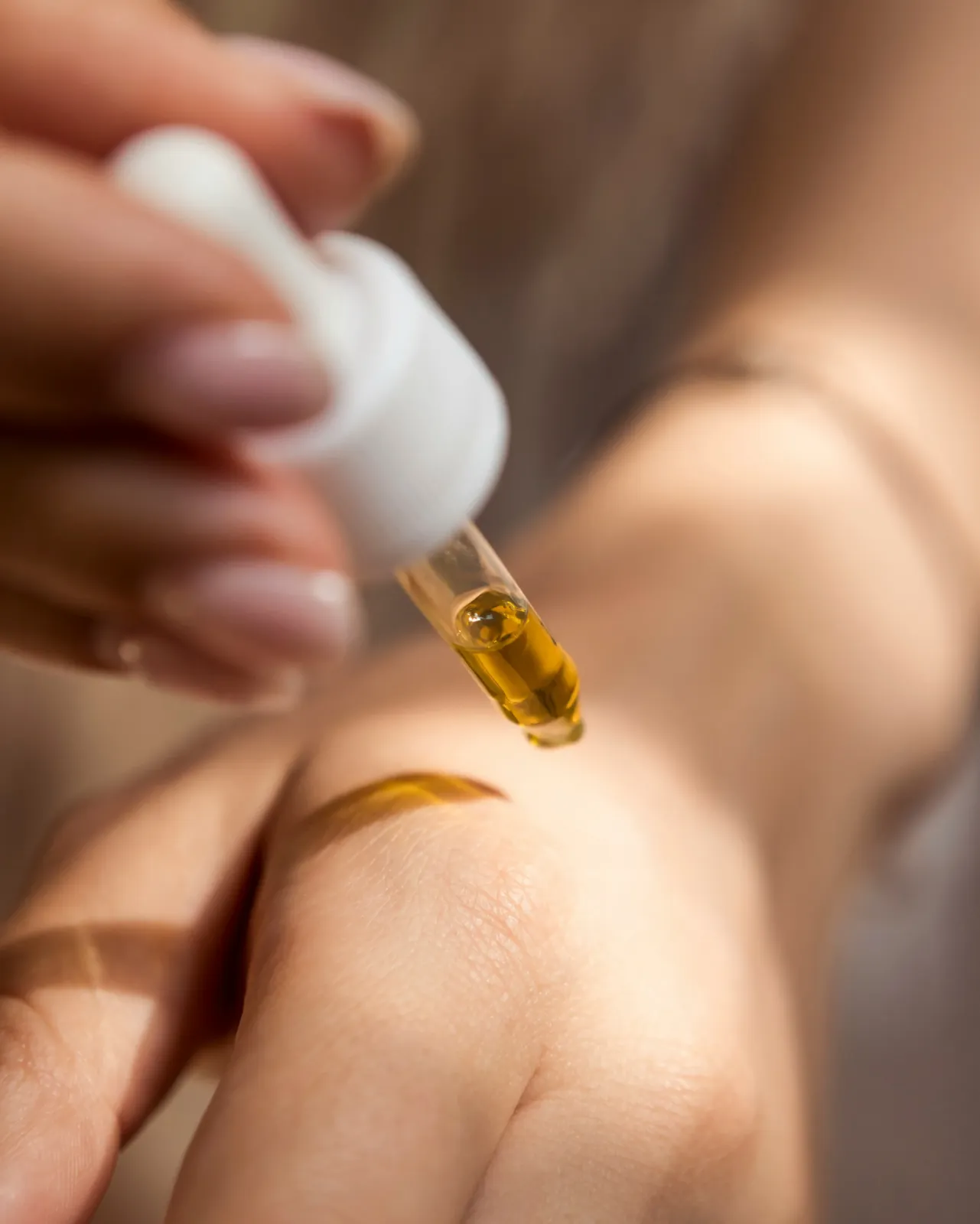
Dispense three to four drops of arbutin serum onto your palm. Smooth gently over areas prone to solar exposure, such as the cheekbones, temples, and forehead. Tap lightly with fingertips to facilitate absorption without tugging.
Step 4: Emulsion or Cream Lock
Seal the active ingredients with a ceramide-rich emulsion (nyueki) or nourishing cream. This lipid barrier reduces transepidermal water loss and preserves product stability. Pairing arbutin serums with daily morning broad-spectrum UV protection shields vulnerable skin from photoaging stress[2].
Synergistic Ingredient Combinations in Japanese Serums
Japanese formulation chemists rarely isolate arbutin alone; they combine it with complementary actives to target melanin synthesis at multiple biological stages:
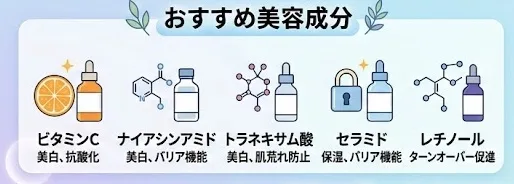
Arbutin + Vitamin C Derivatives (Ascorbyl Glucoside): While arbutin prevents tyrosinase from initiating melanin synthesis, vitamin C provides antioxidant reduction to keep existing pigments pale and luminous.
Arbutin + Tranexamic Acid: Tranexamic acid quiets underlying inflammatory prostaglandins and plasmin activity, while arbutin arrests melanin enzyme synthesis in melanocytes.
Arbutin + Dipotassium Glycyrrhizate: Licorice extract calms superficial UV erythema, mitigating the initial inflammatory triggers that provoke tyrosinase activation.
Signs to Stop and When to Consult a Specialist
Although arbutin is recognized worldwide for its favorable safety profile compared to unbonded hydroquinone, individual sensitivities can still occur:
Signs of Sensitivity: If you experience persistent itching, stinging sensations, localized contact redness, or unexpected micro-papules, pause usage immediately.
Formulation Precautions: High active ingredient concentrations or unvetted cosmetic formulations can trigger acute contact irritation[3]. Always perform a patch test on your inner arm prior to full facial application.
Clinical Evaluation: If redness, dry flaking, or rash-like patches persist beyond 48 hours after discontinuation, consult a board-certified dermatologist for clinical diagnosis and guidance.
FAQ
Q1. Can Japanese arbutin serums lighten my natural baseline skin color?
A. No, arbutin prevents excess pigmentation but does not modify natural tone.(Details)
In accordance with Japanese quasi-drug standards, arbutin is approved strictly to suppress melanin production and prevent sun spots and freckles. It does not chemically strip melanin or alter your genetically determined natural skin complexion.
Q2. Can I safely use an arbutin serum during daytime sun exposure?
A. Yes, arbutin is non-phototoxic and suitable for daytime wear beneath sunscreen.(Details)
Unlike pure hydroquinone or certain retinoids, arbutin is stable and does not cause photosensitivity. Applying it in the morning under broad-spectrum SPF provides an extra layer of antioxidant defense against UV-induced pigment generation.
Q3. How long does it take to see visible results from a Japanese arbutin serum?
A. Consistent use across one full epidermal turnover cycle (4 to 8 weeks) is recommended.(Details)
Because arbutin works preventively by slowing down new melanin creation, visible changes rely on the skin's natural desquamation process. As pigmented surface cells slough off naturally over 28 to 56 days, clearer and more uniform skin emerges.
Q4. Is arbutin safe for sensitive and acne-prone skin types?
A. Yes, arbutin is among the most well-tolerated brightening actives available.(Details)
Because the hydroquinone molecule is chemically bound to a glucose sugar, it releases very slowly without irritating the skin surface. Japanese formulations frequently pair arbutin with soothing humectants, making it gentle on sensitive and reactive skin.
Q5. Can arbutin and niacinamide be layered together safely?
A. Yes, combining arbutin and niacinamide provides dual-action pigment defense.(Details)
Arbutin and niacinamide target hyperpigmentation through distinct mechanisms: arbutin inhibits melanin synthesis inside melanocytes, while niacinamide blocks the transfer of melanosomes to keratinocytes. They operate in complete harmony.
Summary and Key Takeaways
Japanese arbutin serums provide dependable, gentle pigment management grounded in preventive dermatology:
Focus on Prevention: Arbutin suppresses the tyrosinase enzyme to prevent new dark spots before they reach the skin surface.
Respect the Quasi-Drug Standard: Look for medicated (yakuyo) labels that verify active concentrations and strict safety compliance.
Combine with Sun Protection: Always pair morning brightening serums with broad-spectrum SPF 50+ to stop UV signals at the source.
Practice Consistency: Give the product at least 4 to 8 weeks of daily application to observe natural skin clarity and luminosity.
References
The Japanese Dermatological Association. Sunburn Q&A on Photoaging and Biological Alterations in Aging Skin (Q5). https://www.dermatol.or.jp/qa/qa2/q05.html (Accessed 2026-11-24)
The Japanese Dermatological Association. Dermatological Q&A on Sunscreen Application for Long-Term Prevention (Q25). https://www.dermatol.or.jp/qa/qa3/q25.html (Accessed 2026-11-24)
The Japanese Dermatological Association. Dermatological Q&A on Contact Irritation and Scalp Friction Mechanisms (Q1). https://www.dermatol.or.jp/qa/qa4/q01.html (Accessed 2026-11-24)
Disclaimer: This article is for general information and education about Japanese cosmetics and their labels. It is not a substitute for professional medical advice, diagnosis, or treatment. Skincare results vary from person to person. Product formulas, availability, prices, and regulations change, and products sold in Japan can differ from versions sold elsewhere, so always check the current label. Do a patch test before introducing a new product, and consult a doctor or dermatologist if you have a skin condition or specific concerns.