Japanese Peptide Eye Cream Guide for Firm Radiant Contours
IngredientsBy Seibun Lab Editorial Team
title: Japanese Peptide Eye Cream Guide for Firm Radiant Contours
slug: japanese-peptide-complex-firming-eye-cream
category: ingredients
category_label: Ingredients
published_at: '2026-11-24'
updated_at: '2026-11-24'
meta_description: Discover how Japanese peptide eye creams firm delicate contours. Learn signal peptide chemistry, gentle non-retinoid routines, and tapping techniques.
description: Discover how Japanese peptide eye creams firm delicate contours. Learn signal peptide chemistry, gentle non-retinoid routines, and tapping techniques.
lead_image: /images/stock/eye-corner-wrinkles-closeup.webp
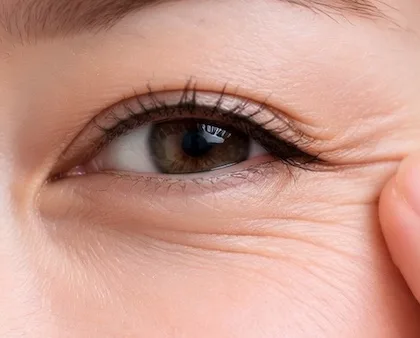
lead_image_alt: Closeup of fine eye contour lines demonstrating targeted Japanese peptide firming care
thumbnail: /images/stock/eye-corner-wrinkles-closeup.webp
thumbnail_alt: Closeup of fine eye contour lines demonstrating targeted Japanese peptide firming care
author: Editorial Team
publish: true
Japanese Peptide Eye Cream Guide for Firm Radiant Contours
The skin surrounding the human eye (the periorbital zone) is approximately 0.5 millimeters thick—roughly one-third the thickness of facial cheek skin. Devoid of subcutaneous fat pads and rich sebaceous glands, this delicate perimeter experiences over 10,000 involuntary blinks daily. Consequently, the orbital contour is the first facial region to exhibit fine dryness lines, loss of firmness, and fatigue shadows.
While Western cosmetic formulations often rely on concentrated retinoids or resurfacing acids to address eye wrinkles, these potent ingredients frequently provoke stinging, redness, and barrier breakdown on delicate Asian eye contours. In contrast, Japanese beauty laboratories (J-beauty) prioritize bio-compatible peptide complexes that reinforce cutaneous suppleness gently and consistently. Here is the comprehensive guide to understanding and applying Japanese peptide eye creams.
The Chemistry of Peptides: Cellular Messaging Chains
Peptides are short chains of amino acids (typically containing between two and twenty amino acid subunits) linked by peptide bonds. In Japanese firming cosmetics, peptides function as biochemical messengers that communicate with cell surface receptors:
1. Signal Peptides (Matrikines)
Signal peptides (such as Palmitoyl Tripeptide-1, Palmitoyl Tetrapeptide-7, and Oligopeptides) mimic natural fragments of broken collagen and elastin. When applied topically, skin receptors interpret these peptide chains as signals that extracellular matrix proteins require support, encouraging endogenous protein and glycosaminoglycan synthesis. The superficial orbital extracellular matrix experiences progressive natural functional deceleration over time[1], and topical signal chains help maintain structural bounce.
2. Expression-Softening Peptides
Peptides like Acetyl Hexapeptide-8 (widely researched in Japanese labs) mildly modulate the SNAP-25 protein complex involved in neuromuscular muscle contractions. By softening micro-tensions caused by repetitive squinting and blinking, these peptides help smooth the appearance of dynamic expression creases without invasive procedures.
3. Copper and Carrier Peptides
Carrier peptides bind trace minerals essential for wound-healing enzymatic cofactors. They support superoxide dismutase activity, neutralizing localized oxidative stress and calming persistent eyelid irritation.
Peptides vs Retinoids: The Japanese Eye Care Philosophy
Choosing between peptide creams and traditional retinoid formulas depends heavily on periorbital barrier tolerance:
Scroll horizontally to view more
Formulation Parameter
Japanese Multi-Peptide Eye Cream
Standard Retinoid Eye Cream
Skin Barrier Tolerance
Exceptionally high: gentle, zero peeling or erythema
Low-to-moderate: common retinization flaking and stinging
Daytime Wearability
Photostable: excellent under morning makeup and SPF
Degrades in sunlight; strictly restricted to nighttime
Eyelid Applicability
Safe for upper mobile eyelid and lower lash margins
Usually prohibited on mobile upper lids to prevent migration
Biological Mechanism
Biomimetic receptor messaging and hydration cushion
Nuclear retinoic acid receptor activation and rapid mitosis
Sensory Texture
Rich, cushioning emollient cream or micro-gel
Often formulated in drying emulsion vehicles
Japanese Testing Standard
Frequently certified for "Diminishing fine dryness lines"
Standard functional quasi-drug anti-wrinkle grading
The Japanese Efficacy Standard: Diminishing Fine Dryness Lines
In Japan, cosmetic eye creams that claim to soften fine lines must adhere to strict testing guidelines overseen by the Ministry of Health, Labour and Welfare (MHLW) and the Japan Cosmetic Industry Association (JCIA).
Efficacy Evaluation Tested (Kounou Hyouka Shiken-zumi): When you see this specific phrase on a Japanese eye cream, the product has completed clinical half-face photographic profiling and replica skin grading under dermatological supervision.
Proof of Hydration Plumping: Japanese testing proves that the formula statistically minimizes the depth and visibility of superficial stratum corneum fine lines caused by dehydration, offering verified performance rather than unsubstantiated marketing claims.
Gentle Application: The Ring-Finger Micro-Tapping Method
Because aggressive rubbing drags fragile orbital skin and breaks micro-capillaries, Japanese beauty therapists teach the "ring-finger micro-tapping" technique:
Step 1: Pre-Hydrate with Watery Lotion (Kesho-sui)
Never apply rich eye cream onto bone-dry skin. Press two layers of a hydrating hyaluronic or ceramide lotion around the orbital socket first to swell the stratum corneum with moisture.
Step 2: Rice-Grain Dispensing
Dispense a tiny amount—roughly the size of a single rice grain—onto the pad of your ring finger. Your fourth finger naturally exerts the lightest mechanical pressure, protecting thin capillary beds.
Step 3: Gentle Three-Point Dotting
Dot the cream along the lower orbital bone: one dot near the inner corner, one in the center hollow, and one at the outer crow's feet corner. Place a microscopic dot beneath the brow arch on the upper orbital bone.
Step 4: Featherlight Tapping
Gently tap the cream into the skin using rapid, featherlight pulses until absorbed. Avoid dragging or wiping outward. Pairing targeted peptide creams with daily morning broad-spectrum UV protection shields vulnerable eyelid skin from photoaging stress[2].
Signs to Stop and When to Consult a Specialist
The periorbital membrane is exceptionally sensitive to cosmetic formulations and preservatives:
Signs of Sensitivity: If you develop conjunctival ocular stinging, persistent eyelid swelling, flaking along the lash line, or itchy erythematous plaques, cease product usage immediately.
Prevent Friction: Aggressive mechanical friction or heavy fragrance around the thin orbital zone can trigger acute contact irritation[3]. Always choose fragrance-free formulations tested for ophthalmological safety.
Dermatological Care: If eyelid dermatitis, persistent burning, or blurred vision symptoms endure beyond 48 hours, seek clinical consultation from an ophthalmologist or board-certified dermatologist.
FAQ
Q1. Can peptide eye cream also be applied to smile lines around the mouth?
A. Yes, Japanese eye creams are formulated for both orbital and perioral smile lines.(Details)
In Japanese skincare routines, eye creams are commonly referred to as "eye and lip contour creams" (*mimoto-kuchimoto kuriimu*). The skin around the nasolabial folds and mouth shares a similar lack of sebaceous glands, making peptide creams ideal for softening smile lines.
Q2. How long does it take to see visible results from a peptide eye cream?
A. Surface hydration plumping is immediate, while structural firmness builds over 6 to 12 weeks.(Details)
Fine dryness lines plump up within minutes of application due to deep hydration. However, cumulative firmness from signal peptide messaging requires consistent morning and evening usage across several epidermal turnover cycles (roughly 8 to 12 weeks).
Q3. Can I use peptide eye cream together with a vitamin C serum?
A. Yes, peptides and vitamin C complement each other harmoniously.(Details)
While low-pH L-ascorbic acid can occasionally hydrolyze certain fragile peptide bonds if mixed simultaneously in the same bottle, applying a stable vitamin C derivative lotion first, allowing it to absorb, and following with a peptide eye cream creates a safe, synergistic routine.
Q4. Does peptide eye cream help with dark under-eye circles?
A. It improves circles caused by thin, translucent skin, but not hyperpigmentation alone.(Details)
If your dark circles stem from blue vascular pooling visible through paper-thin skin, peptide plumping adds density that disguises underlying veins. For brown melanin pigmentation, pair your peptide cream with quasi-drug brightening actives like tranexamic acid.
Q5. Should I apply eye cream before or after facial moisturizer?
A. Apply before heavy face creams if the eye formula is a gel, or after if it is a rich occlusive cream.(Details)
The general Japanese rule follows viscosity: lighter watery serums first, followed by emulsions, specialized eye treatments, and finally overall face creams. If your eye cream is rich and dense, apply it as the final protective step over orbital contours.
Summary and Practical Tips
Japanese peptide eye creams deliver refined, gentle contour firmness for sensitive eyes:
Leverage Non-Irritating Science: Enjoy firming receptor messaging without the peeling and redness of harsh retinoids.
Look for Efficacy Testing: Choose Japanese products bearing the Kounou Hyouka Shiken-zumi mark for proven dryness line plumping.
Master Ring-Finger Tapping: Avoid tugging or friction by patting micro-dots gently along orbital bone ridges.
Protect Daily: Apply daytime broad-spectrum mineral sunscreen over the orbital area to guard delicate skin against photoaging.
References
The Japanese Dermatological Association. Sunburn Q&A on Photoaging and Biological Alterations in Aging Skin (Q5). https://www.dermatol.or.jp/qa/qa2/q05.html (Accessed 2026-11-24)
The Japanese Dermatological Association. Dermatological Q&A on Sunscreen Application for Long-Term Prevention (Q25). https://www.dermatol.or.jp/qa/qa3/q25.html (Accessed 2026-11-24)
The Japanese Dermatological Association. Dermatological Q&A on Contact Irritation and Scalp Friction Mechanisms (Q1). https://www.dermatol.or.jp/qa/qa4/q01.html (Accessed 2026-11-24)
Disclaimer: This article is for general information and education about Japanese cosmetics and their labels. It is not a substitute for professional medical advice, diagnosis, or treatment. Skincare results vary from person to person. Product formulas, availability, prices, and regulations change, and products sold in Japan can differ from versions sold elsewhere, so always check the current label. Do a patch test before introducing a new product, and consult a doctor or dermatologist if you have a skin condition or specific concerns.