Japanese PHA Gluconolactone Guide for Gentle Exfoliation
IngredientsBy Seibun Lab Editorial Team
title: Japanese PHA Gluconolactone Guide for Gentle Exfoliation
slug: japanese-pha-gluconolactone-gentle-exfoliation
category: ingredients
category_label: Ingredients
published_at: '2026-11-24'
updated_at: '2026-11-24'
meta_description: Discover Japanese PHA (gluconolactone) skincare. Learn how next-generation polyhydroxy acids exfoliate sensitive skin while locking in deep moisture.
description: Discover Japanese PHA (gluconolactone) skincare. Learn how next-generation polyhydroxy acids exfoliate sensitive skin while locking in deep moisture.
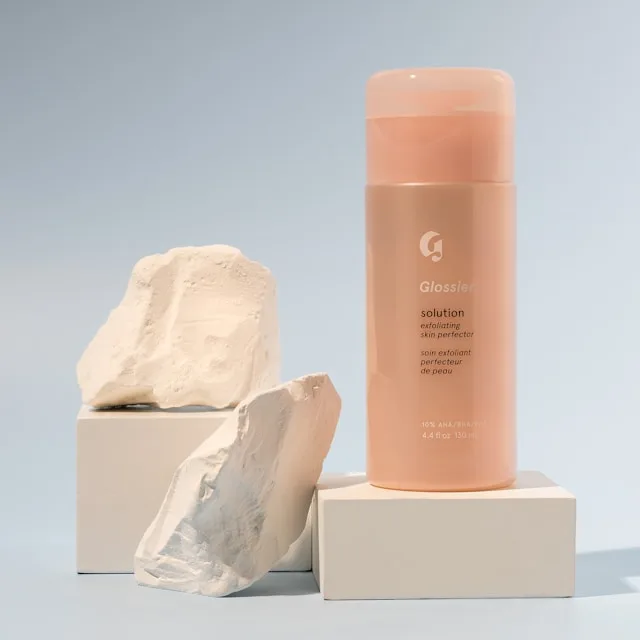
lead_image: /images/stock/exfoliating-toner-bottle-on-white-rock.webp
lead_image_alt: Gentle Japanese PHA exfoliating conditioning toner bottle resting on natural white stone
thumbnail: /images/stock/exfoliating-toner-bottle-on-white-rock.webp
thumbnail_alt: Gentle Japanese PHA exfoliating conditioning toner bottle resting on natural white stone
author: Editorial Team
publish: true
Japanese PHA Gluconolactone Guide for Gentle Exfoliation
Chemical exfoliation has long presented a paradox in skincare: while clearing dead surface keratin improves radiance and unclogs pores, traditional alpha-hydroxy acids (AHAs like glycolic acid) frequently cause stinging, erythema, and barrier compromise—especially on delicate East Asian skin profiles.
To resolve this conflict, Japanese cosmetic chemists (J-beauty) embraced Polyhydroxy Acids (PHAs), with gluconolactone as the preeminent active. Known for its dual nature as both a mild desquamation agent and a powerful water-binding humectant, gluconolactone has become a cornerstone of Japanese daily clarifying lotions (fukitori kesho-sui) and sensitive-skin peeling serums. Here is the scientific guide to understanding how Japanese PHA formulations refine skin texture while safeguarding barrier health.
The Molecular Advantage: Why Gluconolactone Is So Gentle
Gluconolactone is a naturally occurring cyclic ester of gluconic acid, produced via bio-fermentation of glucose. Its unique tolerability stems from distinct physical chemistry:
1. Large Molecular Footprint
Glycolic acid has a molecular weight of approximately 76 Daltons, allowing it to flash rapidly through the stratum corneum and irritate lower sensory nerve endings. In contrast, gluconolactone has a molecular weight of roughly 178 Daltons—over double the size. This bulkier geometry ensures that gluconolactone remains confined to the outermost surface scales, loosening intercellular bonds without triggering inflammatory heat or stinging.
2. Abundant Hydroxyl Groups (Multi-Action Hydration)
Traditional AHAs possess only one or two hydroxyl groups (-OH). Gluconolactone contains multiple hydroxyl groups that attract and hold ambient water molecules. Rather than drying out the skin like classic peeling acids, it acts simultaneously as an intensive humectant, leaving the stratum corneum plumper and more hydrated after application.
3. Intrinsic Antioxidant and Metal-Chelating Defense
Gluconolactone functions as a natural metal chelator, binding trace copper and iron ions that can catalyze oxidative free-radical cascades. The superficial desquamation and cellular turnover cycle experiences progressive natural functional deceleration over time[1], and supplemental PHA defense prevents environmental pollutants from compromising barrier lipids.
PHA vs AHA vs BHA: Chemical Exfoliants Compared
Understanding how PHAs differ from classic hydroxy acids highlights why Japanese formulators favor them for sensitive, everyday routines:
Scroll horizontally to view more
Parameter
PHA (Gluconolactone)
AHA (Glycolic / Lactic Acid)
BHA (Salicylic Acid)
Molecular Size
Large (~178 Daltons); bulky structure
Small (~76–90 Daltons); rapid diffusion
Moderate (~138 Daltons); lipid-soluble
Sensory Irritation
Virtually none: suitable for sensitive skin
Common tingling, stinging, and redness
Mild-to-moderate; can dry out barrier
Hydration Impact
Humectant: significantly increases water hold
Mildly hydrating (lactic) or drying (glycolic)
Oil-dissolving; does not bind water
Photosensitivity
Non-photosensitizing; suitable for daytime
Significantly increases UV sensitivity
Mild UV sensitivity increase
Japanese Format
Daily wiping lotions (*fukitori*), essences
Weekly rinse-off peeling masks
Targeted acne spot washes and lotions
Japanese Formulation Philosophy: Friction-Free Fukitori
In Japan, exfoliation is rarely conducted through abrasive physical scrubs. Instead, Japanese beauty rituals rely on fukitori kesho-sui (clarifying wiping lotions):
Buffered Acid Matrices: Rather than formulating at harsh, stinging pH levels below 3.5, Japanese PHA lotions are typically buffered near skin-compatible pH 4.5–5.5. Gluconolactone performs efficient, gradual desquamation even within this milder range.
Botanical Calming Synergies: Japanese chemists combine gluconolactone with dipotassium glycyrrhizate, mugwort extract (yomogi), and dokudami (Houttuynia cordata) to soothe the skin while gently lifting dead corneum debris.
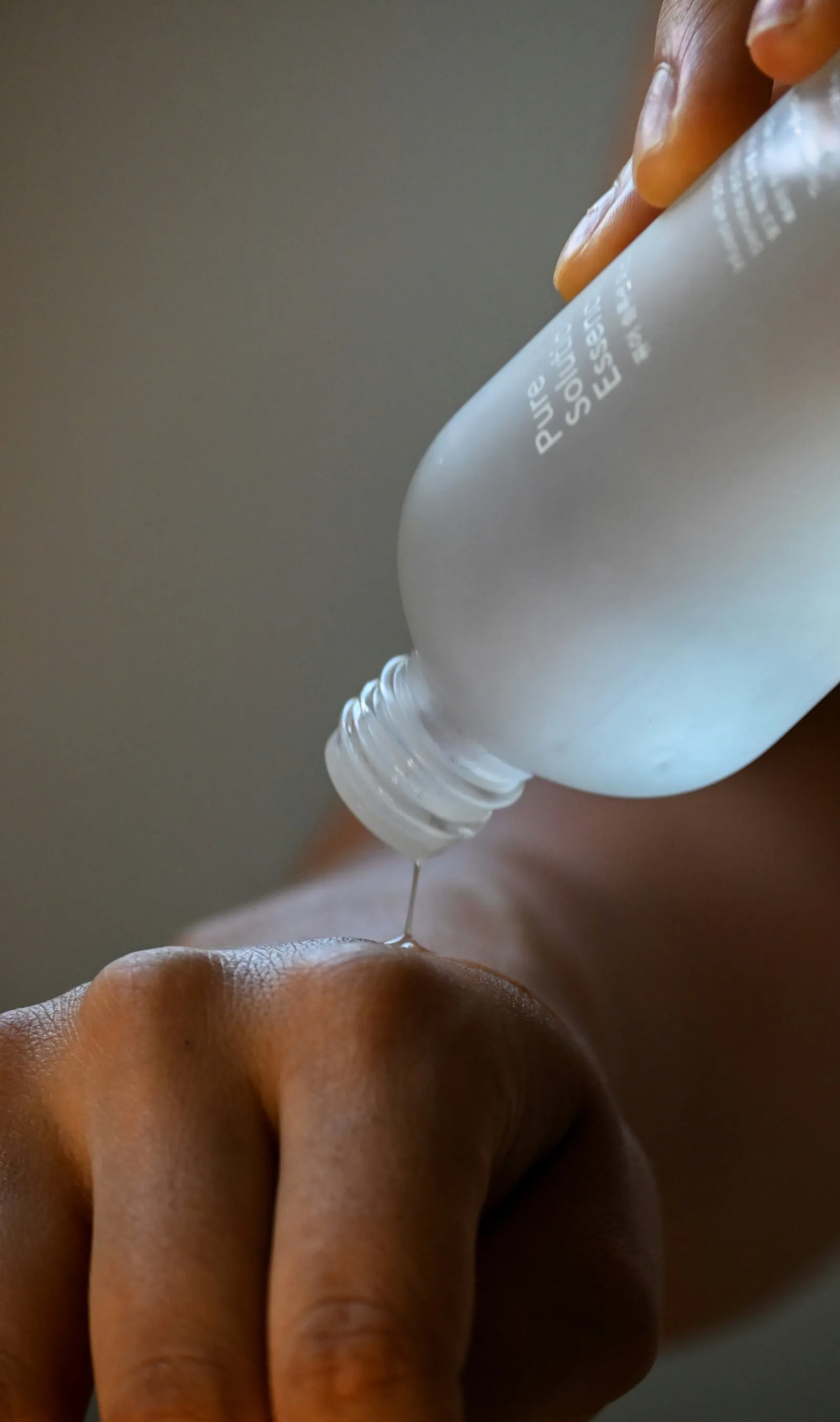
Cushioning Cotton Glide: Formulations incorporate silky glycols and fermented filtrates to create a viscous slip. When poured onto a plush cotton pad, the liquid acts as a frictionless fluid cushion, preventing abrasive physical dragging across the face.
How to Incorporate PHA into Your Daily Regimen
To maximize texture-refining benefits without disturbing lipid barrier equilibrium, follow this gentle sequence:
Step 1: Low-Residue Morning Cleansing
Wash your face with a mild amino-acid foam to remove overnight sebum and sleep mask residue.
Step 2: Gentle PHA Wiping Lotion Application
Saturate a thick, unbleached Japanese cotton pad until soaked through. Lightly sweep the pad across the T-zone, nose wings, and chin in one continuous gliding motion. Do not press hard or scrub back and forth.
Step 3: Hydrating Essence and Barrier Milk
Immediately follow with a hydrating lotion rich in amino acids or ceramides. Because PHA has cleared loose surface flakes, subsequent hydrating molecules absorb with exceptional uniformity.
Step 4: Daylight UV Protection
Conclude your morning routine with broad-spectrum SPF. Pairing gentle polyhydroxy acid exfoliants with daily morning broad-spectrum UV protection shields vulnerable skin from photoaging stress[2].
Signs to Stop and When to Consult a Specialist
Although gluconolactone is among the gentlest exfoliants known to cosmetic science, individual barriers require mindful care:
Signs of Sensitivity: If you experience persistent prickling sensations, dry tightness, or localized contact erythema after application, reduce frequency or pause usage.
Avoid Over-Exfoliation: Excessive chemical exfoliation or harsh friction over sensitive skin barriers can trigger acute contact irritation[3]. Never combine PHA toners with physical scrub beads or strong daily retinoids.
Dermatological Care: If skin flaking, intense burning, or rash-like patches endure beyond 48 hours, seek clinical consultation from a board-certified dermatologist.
FAQ
Q1. Can I use a Japanese PHA lotion every single day?
A. Yes, buffered Japanese PHA wiping lotions are formulated for safe daily morning use.(Details)
Unlike aggressive AHA peeling solutions that require weekly limits, Japanese PHA lotions feature balanced pH levels and low concentrations (typically 1% to 3%) designed for daily dead-cell clearance without compromising moisture barrier lipids.
Q2. Is gluconolactone safe for rosacea and easily flushed skin?
A. Yes, gluconolactone is widely recommended for rosacea-prone skin due to its non-stinging nature.(Details)
Because its large molecular size prevents it from irritating deep dermal capillaries, gluconolactone does not provoke the thermal flushing typical of glycolic acid. Its natural antioxidant properties also help calm environmental skin redness.
Q3. Does gluconolactone help with blackheads and clogged pores?
A. Yes, by softening surface dead keratin plugs, it helps prevent sebum entrapment.(Details)
While lipid-soluble salicylic acid dissolves oil inside the pore, water-soluble gluconolactone clears the rigid keratin cap on the skin surface. Using both or combining PHA with gentle cleansing oils keeps follicular openings clear of dark oxidations.
Q4. Can I use PHA during the daytime before sun exposure?
A. Yes, gluconolactone does not induce photosensitivity and provides antioxidant defense.(Details)
Unlike glycolic acid which strips protective UV defense, gluconolactone leaves the barrier intact and offers metal-chelating antioxidant protection under daylight. Always finish with sunscreen for comprehensive photoprotection.
Q5. Can gluconolactone be paired with niacinamide and vitamin C?
A. Yes, PHA coordinates smoothly with niacinamide and vitamin C derivatives.(Details)
Because buffered PHA formulations do not drastically lower skin pH, they do not destabilize niacinamide into flushing nicotinic acid. Clearing surface dead cells with PHA also allows vitamin C to absorb more evenly.
Summary and Practical Tips
Japanese PHA gluconolactone skincare delivers gentle, barrier-friendly resurfacing for delicate complexions:
Rely on Large Molecular Size: Enjoy smooth skin texture without the burning, tingling, or peeling of classic AHAs.
Benefit from Humectant Plumping: Hydrate corneocytes with multi-hydroxyl moisture binding while clearing dead surface scales.
Practice Frictionless Wiping: Always saturate plush cotton pads fully to glide smoothly across the face without dragging.
Shield Every Morning: Maintain clear, luminous skin by following daily exfoliation with broad-spectrum UV protection.
References
The Japanese Dermatological Association. Sunburn Q&A on Photoaging and Biological Alterations in Aging Skin (Q5). https://www.dermatol.or.jp/qa/qa2/q05.html (Accessed 2026-11-24)
The Japanese Dermatological Association. Dermatological Q&A on Sunscreen Application for Long-Term Prevention (Q25). https://www.dermatol.or.jp/qa/qa3/q25.html (Accessed 2026-11-24)
The Japanese Dermatological Association. Dermatological Q&A on Contact Irritation and Scalp Friction Mechanisms (Q1). https://www.dermatol.or.jp/qa/qa4/q01.html (Accessed 2026-11-24)
Disclaimer: This article is for general information and education about Japanese cosmetics and their labels. It is not a substitute for professional medical advice, diagnosis, or treatment. Skincare results vary from person to person. Product formulas, availability, prices, and regulations change, and products sold in Japan can differ from versions sold elsewhere, so always check the current label. Do a patch test before introducing a new product, and consult a doctor or dermatologist if you have a skin condition or specific concerns.