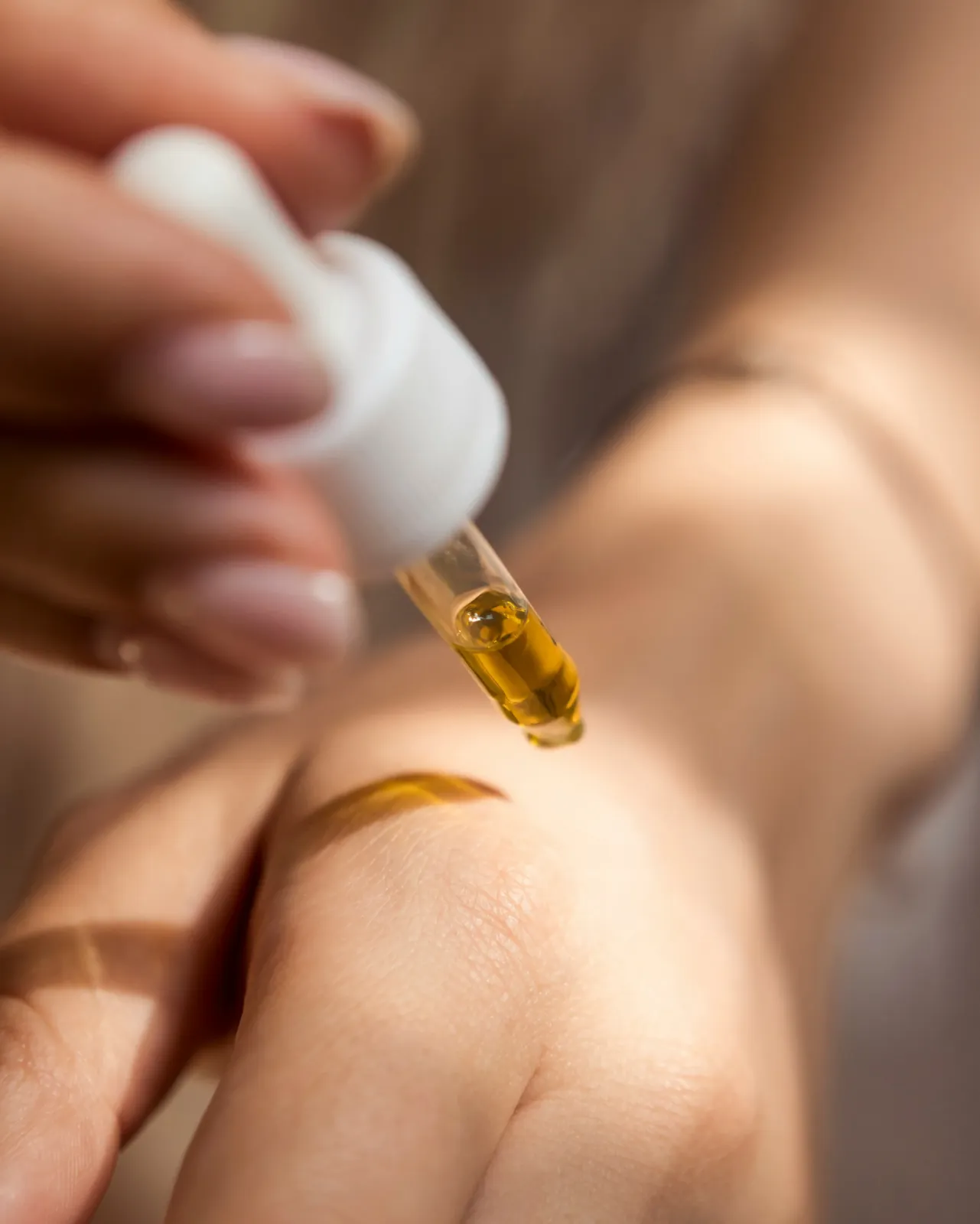
title: Japanese Proteoglycan Guide Salmon Nasal Cartilage Science slug: japanese-proteoglycan-salmon-nasal-cartilage category: ingredients category_label: Ingredients published_at: '2026-11-24' updated_at: '2026-11-24' meta_description: Explore Japanese proteoglycan from salmon cartilage. Discover how this lightweight biomolecule matches hyaluronic acid in plumping and firming hydration. description: Explore Japanese proteoglycan from salmon cartilage. Discover how this lightweight biomolecule matches hyaluronic acid in plumping and firming hydration. lead_image: /images/stock/dropper-applying-serum-to-palm-closeup.webp lead_image_alt: Dispensing concentrated Japanese proteoglycan serum from dropper into open palm thumbnail: /images/stock/dropper-applying-serum-to-palm-closeup.webp thumbnail_alt: Dispensing concentrated Japanese proteoglycan serum from dropper into open palm author: Editorial Team publish: true
Japanese Proteoglycan Guide Salmon Nasal Cartilage Science
For decades, cosmetic chemistry regarded hyaluronic acid and collagen as the definitive foundations of skin plumpness. Yet in human biological tissue, a third vital macromolecule exists within the extracellular matrix (ECM): proteoglycan.
Historically, extracting pure proteoglycan without denaturing its delicate protein-sugar core was notoriously difficult and cost-prohibitive—once priced at an astronomical 30 million yen (roughly 200,000 USD) per single gram. The breakthrough that made proteoglycan accessible to modern Japanese skincare occurred in northern Japan at Hirosaki University in Aomori Prefecture.
By repurposing discarded salmon heads from the local fishing industry, Japanese bio-scientists developed a patented, food-grade acetic acid extraction technique. Today, Aomori proteoglycan (Aomori PG) is recognized globally as an award-winning sustainable active that redefines facial hydration. Here is the definitive guide to the science, history, and application of Japanese proteoglycan skincare.
Molecular Architecture: A Macromolecular Water Sponge
To understand how proteoglycan hydrates differently than traditional polysaccharides, one must examine its complex structure:
1. The Core Protein and Glycosaminoglycan "Bottle Brush"
Unlike linear, single-chain hyaluronic acid, a proteoglycan molecule resembles a microscopic "bottle brush." It consists of a central core protein bristling with hundreds of radiating glycosaminoglycan (GAG) side chains, primarily chondroitin sulfate.
These dense carbohydrate bristles carry an intense negative electrostatic charge that repels neighboring chains while coordinating vast clusters of polar water molecules. This three-dimensional architecture holds approximately 130 percent of the water volume captured by equivalent masses of high-molecular hyaluronic acid.
2. EGF-Like Biological Signaling
Beyond passive moisture retention, proteoglycan features structural domains that chemically mimic Epidermal Growth Factor (EGF). These domains interact with cell surface receptors on keratinocytes and fibroblasts, gently signaling the skin to maintain healthy turnover and endogenous collagen synthesis. The superficial dermal extracellular ground substance experiences progressive natural functional deceleration over time[1], and topical proteoglycan helps replenish these dwindling structural signals.
Proteoglycan vs Hyaluronic Acid: Sensory and Functional Comparison
Comparing proteoglycan directly with classic sodium hyaluronate clarifies why Tokyo beauty consumers increasingly switch to salmon cartilage essences:
Scroll horizontally to view more
| Property | Japanese Salmon Proteoglycan (*Aomori PG*) | Traditional Sodium Hyaluronate |
|---|---|---|
| Water-Holding Ratio | Approximately 130% relative to hyaluronic acid | Holds up to 1,000 times its weight in water |
| Sensory Texture | Water-thin, fast-absorbing, zero tackiness or film | Viscous, slippery when wet; can feel sticky as it dries |
| Biological Structure | Core protein with chondroitin sulfate bristles | Linear unbranched glycosaminoglycan polymer |
| Cellular Action | EGF-like signaling: encourages natural collagen support | Purely physical surface moisture binding |
| Raw Material Source | Upcycled wild chum salmon nasal cartilage (Aomori) | Bacterial bio-fermentation (Streptococcus zooepidemicus) |
| Layering Flexibility | Layers weightlessly beneath makeup without pilling | Can roll or pill when rubbed under foundation |