How to Layer Lightweight Products Without Pilling - Guide
RoutinesBy Miho Tanaka
title: How to Layer Lightweight Products Without Pilling - Guide
slug: how-to-layer-lightweight-products-without-pilling
category: routines
publish: true
meta_description: Learn how to layer lightweight Japanese skincare products without pilling, mastering viscosity sequencing, polymer drying times, and gentle palm pressing.
image: /images/stock/deep-stratum-corneum-humectant-layering.jpg
alt: Smooth mindful skincare layering process showing water and essence absorbing into healthy skin
date: 2026-03-30
tags:
skincare layering
pilling prevention
j-beauty routine
texture compatibility
routines
How to Layer Lightweight Products Without Pilling - Guide
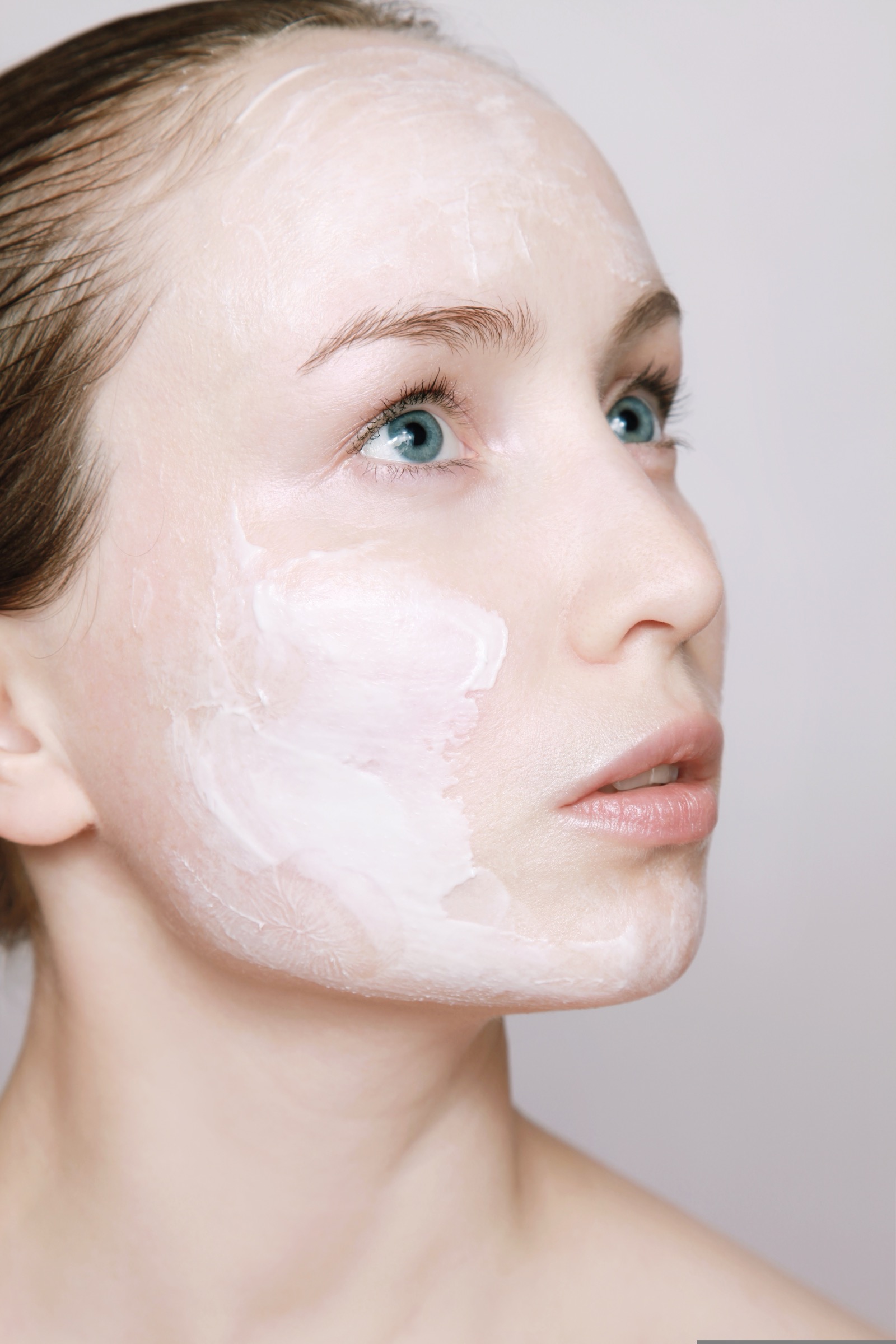
Few morning skincare experiences are more exasperating than methodically applying your hydrating toner, serum, and daily moisturizer, only to have your sunscreen or foundation ball up into tiny gray flakes under your fingertips. This phenomenon—known in English as "pilling" and in Japanese cosmetic terminology as moromoro—frequently discourages beauty enthusiasts from embracing multi-step regimens.
Interestingly, traditional Japanese skincare routines celebrate multi-layered hydration (often applying four to six distinct steps every morning and evening) without experiencing pilling. Understanding the rheological science of polymer interactions, drying intervals, and hand-application techniques supports a smooth, pill-free canvas every day.
Quick answer: How Do You Stop Skincare Products from Pilling?
Pilling occurs when film-forming polymers (such as carbomer, xanthan gum, or silicone cross-polymers) roll up due to physical rubbing friction, incompatible oil-water bases, or premature layering before previous coats have dried. To prevent pilling, sequence from thinnest watery viscosity to thickest lipid, wait 60 seconds between steps, and pat or press products into the skin rather than rubbing aggressively.
1. The Physics and Chemistry Behind "Moromoro" (Pilling)
To minimize pilling, one must first recognize its root physical causes. In cosmetic manufacturing, water-based gels, serums, and lightweight lotions utilize thickening and suspending agents called high-molecular-weight polymers (such as acrylates/C10-30 alkyl acrylate crosspolymer, carbomer, xanthan gum, and dimethicone).
When multiple products clash on the skin surface, three primary mechanisms cause them to coagulate into visible crumbs:
Mechanical Shear Overload: Aggressive, circular rubbing breaks the temporary polymeric network before water can evaporate naturally, forcing polymer chains to tangle into visible debris.
Incompatible Base Chemistry: Layering a heavy water-free silicone primer immediately over an unabsorbed high-water hyaluronic acid gel causes phase separation, much like oil repelling water in a beaker.
Evaporative Insolubilization: Applying a second product containing drying alcohol over an un-dried gel strips water too quickly, causing the underlying polymers to precipitate instantly out of solution into sticky balls.
The cornerstone of the Japanese multi-step routine is strict viscosity hierarchy (mizu kara abura e—from water to oil). The stratum corneum (SC) provides a permeability barrier that limits the inflow and outflow of water.[1] Because this outer barrier is naturally lipophilic, applying a dense occlusive cream or facial oil first creates an impenetrable hydrophobic shield that repels subsequent water-based lotions, forcing them to sit on top and peel away.
Adhere to this tested Japanese layering sequence:
Scroll horizontally to view layering hierarchy
Step Order
Product Type
Physical Texture
Ideal Wait Interval
Step 1
Hydrating Lotion (*Kesho-sui*)
Aqueous, watery liquid
30 to 45 seconds (until tacky)
Step 2
Active Essence (*Biyocki*)
Light slip gel or watery fluid
60 seconds (until surface absorbs)
Step 3
Milky Emulsion (*Nyueki*)
Light oil-in-water fluid
60 to 90 seconds (until soft)
Step 4
Sealing Cream or Balm
Water-in-oil occlusive lipid
2 full minutes before sunscreen
Step 5
Daily Sunscreen
Film-forming UV veil
3 minutes before makeup
3. The "Hand-Press" Application Technique (Te no Hira Atsu)
In Western skincare tutorials, products are frequently smoothed and buffed across the face with fast, vigorous circular friction. In Japanese beauty schools, aesthetic practitioners explicitly teach te no hira atsu (palm pressing).
Adopting the palm-press technique prevents mechanical pilling entirely:
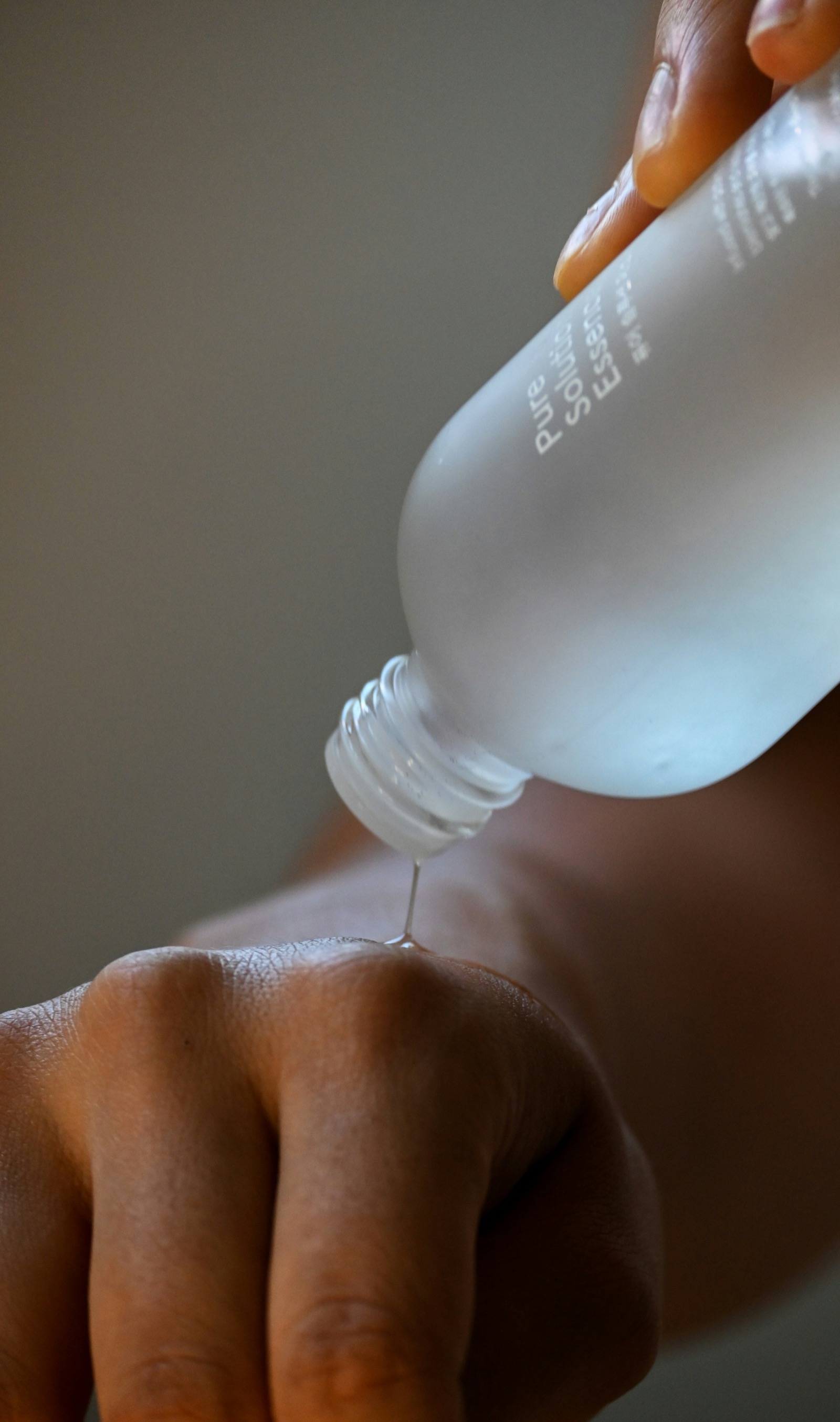
Warm Between Clean Palms: Dispense the formula into the center of your palms and spread it across both hands without vigorous rubbing.
Press Firmly, Do Not Rub: Press your open palms against your cheeks, forehead, chin, and neck for three to five seconds per zone. The natural warmth of your hands reduces product viscosity, helping humectants settle between surface corneocytes.
Featherlight Patting for Contours: Use the soft pads of your ring and middle fingers to gently pat around the nose, eye contours, and jawline, avoiding drag.
4. Troubleshooting Silicone vs. Water-Base Conflicts
Many modern morning routines involve sunscreens and makeup primers formulated with silicones (such as cyclopentasiloxane, dimethicone, or cyclohexasiloxane) for a silky, blurred finish.
To ensure peaceful coexistence between water-rich Japanese lotions and silicone sunscreens:
Check the Top Five Ingredients: If your sunscreen lists dimethicone in its top three ingredients, ensure your preceding moisturizer is fully absorbed and non-greasy before sunscreen placement.
Respect the Evaporation Window: Give your moisturizing emulsion at least two full minutes to form its protective lipid network before applying your sunscreen.
Smooth in One Direction: When applying silicone sunscreens or foundations, sweep the product in a single outward stroke rather than working it back and forth across facial planes.
Signs to Stop and When to Seek Medical Advice
While pilling itself is an aesthetic inconvenience rather than a medical concern, repeatedly rubbing pilling debris off your skin causes unwanted mechanical friction that can compromise fragile skin barriers. Furthermore, if you mistake allergic peeling or dermatitis flakes for cosmetic pilling, continuing product use can exacerbate underlying irritation.
Discontinue use and rinse thoroughly with lukewarm water if you experience localized burning, stinging, spreading redness, or persistent itchiness. If you observe flaking accompanied by skin tenderness, hives, or swelling around the eyes, consult a board-certified dermatologist or healthcare professional promptly.
FAQ
Q1. Why does my sunscreen pill only when I apply foundation over it?
A. The foundation sponge or brush is disrupting the setting UV polymer film.(Details)
Japanese sunscreens form a cross-linked polymer veil across the skin to block UV rays. If you buff foundation with a stiff brush or drag a sponge before the sunscreen has set for 3 to 5 minutes, you mechanically shred that film, causing it to ball up into flakes.
Q2. Can using too much product cause pilling?
A. Yes, excess unabsorbed humectants form a gummy residue on the surface.(Details)
The stratum corneum has a finite capacity for immediate water and lipid absorption. When excess serums or lotions sit unabsorbed, the residual polymers dry into a thick film that easily shreds and pills under subsequent application steps.
Q3. Does hyaluronic acid cause other skincare products to pill?
A. High-molecular-weight hyaluronic acid forms a surface film that can pill if rubbed.(Details)
High-molecular-weight hyaluronic acid does not absorb deeply; it forms a hydrating film on top of the skin. If allowed to dry without an emollient seal or if rubbed vigorously, that film can peel into rubbery crumbs. Always seal hyaluronic acid while skin is damp.
Q4. How long should I wait between skincare steps in a Japanese routine?
A. Typically 30 to 60 seconds between watery steps, and 2 to 3 minutes before sunscreen.(Details)
Between watery lotions and essences, a brief 30 to 45 second pause allows the tackiness to subside. However, before applying your final daily sunscreen and makeup, waiting a full 2 to 3 minutes ensures underlying creams have fully settled.
Q5. What should I do if my skincare pills right before I leave the house?
A. Dust away loose flakes with a clean fluffy powder brush, or mist and press with a damp sponge.(Details)
Do not rub your face with your hands, as this creates more crumbs. Lightly sweep a large, clean, dry powder brush over your face to dislodge loose flakes. Alternatively, mist your face with a fine hydrating spray and gently press with a damp beauty sponge to rehydrate the film.
Summary
Pilling (moromoro) is not an inevitable side effect of a thorough skincare routine—it is a solvable physical equation. By respecting viscosity hierarchy (water to oil), allowing appropriate setting intervals between polymer-dense formulas, and swapping aggressive rubbing for gentle Japanese palm pressing, you can enjoy a beautifully layered, deeply nourished skin barrier that wears makeup and sunscreen effortlessly all day long.
Disclaimer: This article is for general information and education about Japanese cosmetics and their labels. It is not a substitute for professional medical advice, diagnosis, or treatment. Skincare results vary from person to person. Product formulas, availability, prices, and regulations change, and products sold in Japan can differ from versions sold elsewhere, so always check the current label. Do a patch test before introducing a new product, and consult a doctor or dermatologist if you have a skin condition or specific concerns.