title: Japanese Cushion Foundation vs Liquid Compact: Guide slug: japanese-cushion-foundation-vs-liquid-compact category: routines category_label: Routines & Guides published_at: '2026-11-23' updated_at: '2026-11-23' meta_description: Compare Japanese cushion foundation vs liquid compact formulas. Learn differences in adhesion, mesh filter technology, skin finish, and application tips. description: Compare Japanese cushion foundation vs liquid compact formulas. Learn differences in adhesion, mesh filter technology, skin finish, and application tips. hero_image: /images/stock/uv-compact-powder-touchup-flatlay.webp hero_image_alt: Portable compact foundation and soft application puff on minimal beauty vanity thumbnail: /images/stock/uv-compact-powder-touchup-flatlay.webp thumbnail_alt: Portable compact foundation and soft application puff on minimal beauty vanity reading_time: 6 author: Editorial Team publish: true
Japanese Cushion Foundation vs Liquid Compact: Guide
Quick answer
While traditional Japanese cushion foundations dispense lightweight fluid from a saturated polyurethane sponge for a sheer, dewy glow, modern liquid compacts (often called mesh compacts or emulsion pacts) utilize fine micro-mesh netting or solid balm emulsions. Liquid mesh compacts deliver superior adhesion (mitchaku-ryoku), even pigment distribution, and humidity-resistant pore coverage, making them the preferred choice for long workdays in humid climates.
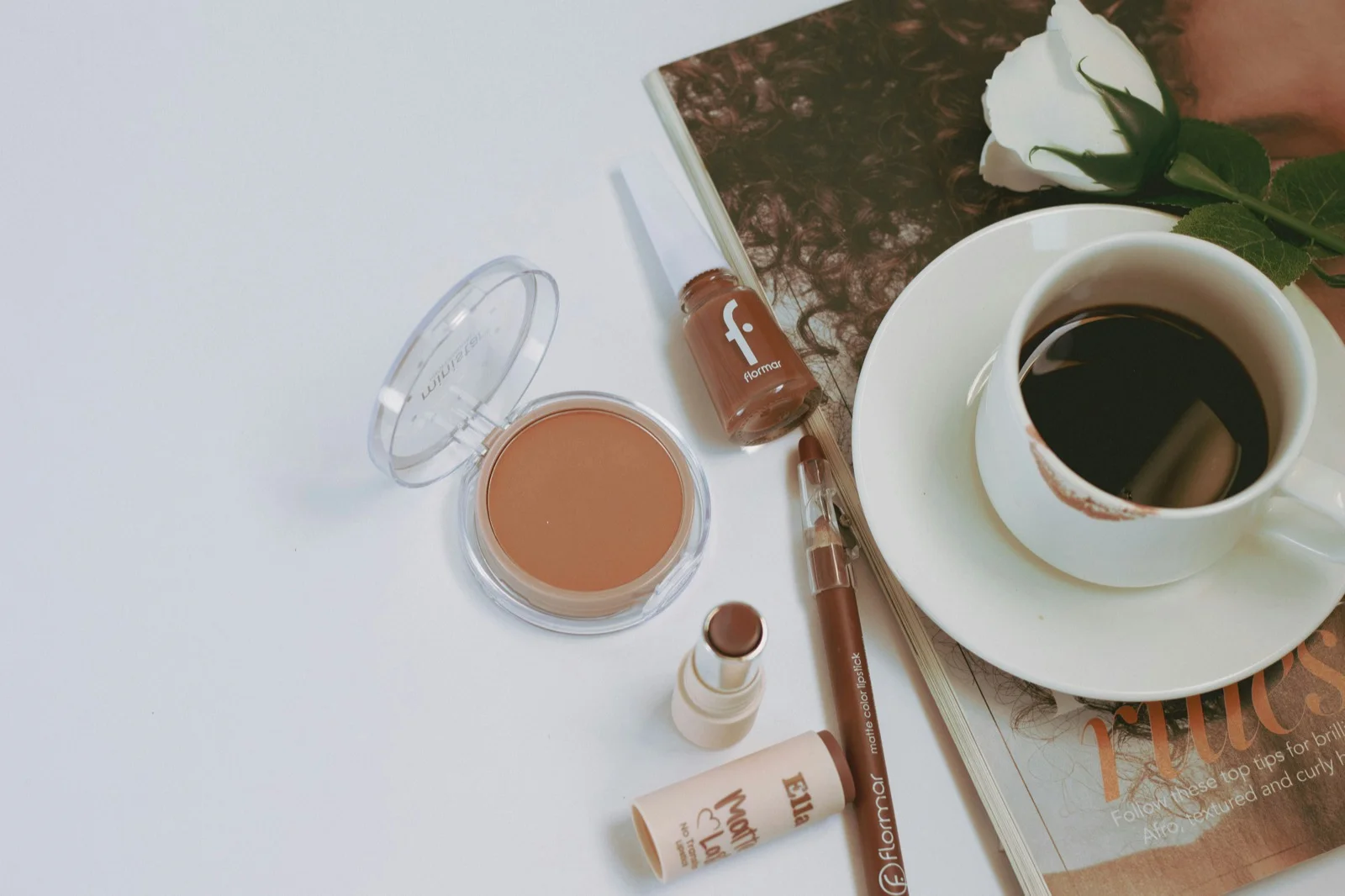
Portable base makeup has undergone a quiet technological revolution in Japan. For years, cushion compacts dominated the daily beauty routine, offering a quick and mess-free way to achieve a fresh, hydrated complexion without dirtying your fingertips. However, Japanese cosmetic chemists have recently developed next-generation liquid compacts—often formulated as micro-mesh cushions, cream-to-serum emulsions, or tension pacts.
Both formats promise portable liquid coverage, but their delivery mechanisms, film-forming polymers, and wear times differ significantly. Here is an in-depth guide to understanding how Japanese cushion foundations compare with modern liquid compacts, how micro-mesh filtration elevates pigment adhesion, and how to select the right formula for your skin type.
What Is a Traditional Cushion Foundation?
A conventional cushion foundation consists of a porous, polyurethane sponge soaked in low-viscosity liquid foundation housed within an airtight clamshell compact:
- Dispensing Mechanism: When you press a non-porous rubycell puff into the sponge core, liquid foundation rises to the surface.
- Skin Feel: Because the liquid is formulated with high water and volatile silicone content, it feels instantly cooling and refreshing upon initial contact.
- Finish & Coverage: Standard cushions excel at producing a translucent, glassy radiance (mizumizushii tsuya). They offer sheer-to-medium coverage designed to let natural skin texture show through.
Medical authorities recommend daily sunscreen application as an essential preventive measure to shield cellular DNA against cumulative photoaging and long-term damage.[2] Most Japanese cushions incorporate broad-spectrum SPF 30 to SPF 50+ PA++++ filters, providing convenient daytime top-ups over morning skincare.
What Is a Modern Japanese Liquid Compact?
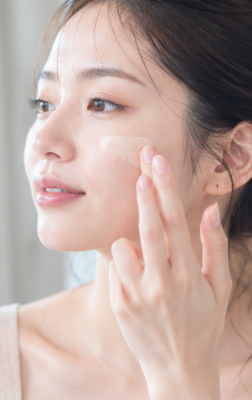
The Japanese liquid compact (often labeled as a mesh compact, gel emulsion compact, or balm pact) replaces the open-cell sponge reservoir with an advanced filtration or solid-liquid suspension system:
1. The Micro-Mesh Sieve System
Instead of a porous sponge, the liquid foundation rests beneath a flexible, ultra-fine woven mesh screen. When the puff gently presses down, the mesh acts like a fine culinary sieve (uragoshi), filtering the liquid foundation into microscopic, uniform droplets. This prevents over-saturation on the puff and ensures an ultra-thin veil of pigment deposits onto the skin.
2. High-Adhesion Emulsion Tech (Mitchaku-ryoku)
Japanese consumers demand base makeup that withstands summer train commutes, humidity, and friction from protective masks. Liquid mesh compacts incorporate high-adhesion film-forming polymers and volatile oils that evaporate rapidly upon application, leaving behind a flexible pigment veil that locks firmly onto facial contours.
Detailed Comparison: Cushion vs. Liquid Mesh Compact
The table below contrasts the mechanical and cosmetic characteristics of both portable formats:
Scroll horizontally to view full table
| Feature | Standard Cushion Foundation | Japanese Liquid Mesh Compact |
|---|---|---|
| Internal Reservoir | Porous polyurethane sponge soaked in liquid | Tension micro-mesh screen over pure liquid/gel |
| Puff Dispensing | Can dispense uneven liquid if pressed too firmly | Evenly sifted, micro-metered pigment distribution |
| Adhesion & Film Lock | Flexible, light hydration veil; can transfer | Superior adhesion (*mitchaku*); friction-resistant |
| Coverage Level | Sheer to light-medium buildable | Medium to high buildable with zero cakey weight |
| Pore-Smoothing Ability | Optical glow deflects shadows | Fills micro-crevices and blurs irregular pores |
| Longevity in Humidity | 3 to 5 hours before touch-up is needed | 7 to 10 hours with minimal shine breakthrough |
| Finish Variety | Primarily dewy, radiant, glassy | Semi-matte, velvet satin, or natural soft glow |