Japanese Heated vs Manual Lash Curler: Healthy Lift Guide
RoutinesBy Seibun Lab Editorial Team
title: Japanese Heated vs Manual Lash Curler: Healthy Lift Guide
slug: japanese-heated-eyelash-curler-vs-manual-curler
category: routines
category_label: Routines
published_at: '2026-11-23'
updated_at: '2026-11-23'
meta_description: Compare Japanese heated and manual eyelash curlers. Learn keratin heat-styling science, mechanical root-lift rules, lash protection, and smart routines.
description: Compare Japanese heated and manual eyelash curlers. Learn keratin heat-styling science, mechanical root-lift rules, lash protection, and smart routines.
lead_image: /images/stock/makeup-eye-mascara-step.webp
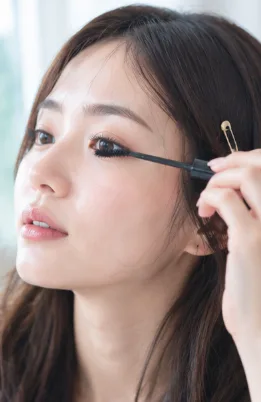
lead_image_alt: Woman lifting and separating eyelashes with precision cosmetic tools in studio lighting
thumbnail: /images/stock/makeup-eye-mascara-step.webp
thumbnail_alt: Woman lifting and separating eyelashes with precision cosmetic tools in studio lighting
author: Editorial Team
publish: true
Japanese Heated vs Manual Lash Curler: Healthy Lift Guide
Achieving wide-eyed, naturally lifted eyelashes is a defining hallmark of Japanese eye makeup. However, anyone who has struggled with straight, downward-pointing Asian lashes knows that traditional curlers can sometimes fall short: either the curl collapses after an hour in humid weather, or aggressive clamping accidentally crimps hairs into an unnatural right angle.
To overcome these challenges, Japanese beauty brands engineered heated eyelash curlers (hotto biyuraa) alongside world-renowned mechanical curlers. Rather than viewing heated and manual curlers as opposing rivals, Tokyo makeup artists view them as complementary tools. Understanding the biomechanics of mechanical leverage versus thermal keratin resetting allows you to sculpt a panoramic lash fan that holds all day while safeguarding natural lash fibers.
The J-Beauty Lash Landscape: Mechanical Force vs. Thermal Styling
To choose the right tool for your lash goals, one must examine the distinct physical mechanisms that govern hair curling:
Manual Mechanical Curlers (Tsujou Biyuraa): Utilize mechanical leverage and high-resilience silicone pads to press hairs upward. They excel at gripping the root base to create an immediate, wide-angle vertical lift on clean, bare lashes.
Heated Eyelash Curlers (Hotto Biyuraa): Utilize a gently warmed comb wand (typically calibrated between 60°C and 70°C). Heat temporarily relaxes the hydrogen bonds within lash keratin, allowing the comb to sweep hairs into a smooth, curved arc that sets firmly as it cools.
The Synergy of Hybrid Styling: Manual curlers provide the foundational structural root lift, while heated combs separate clumped mascara, refine curl direction, and lock the shape against high humidity.
Detailed Comparison: Heated Curler vs. Manual Mechanical Curler
Both tools offer unique performance advantages depending on your natural lash density and daily makeup routine:
1. Manual Mechanical Curler
Fast and Battery-Free: Ready in seconds, requiring no charging cables or preheating time.
Root Leverage: Reaches right against the lash margin to tilt downward-growing hairs upward.
Limitation: Cannot be used after applying mascara without risking catastrophic lash pull-out.
2. Heated Eyelash Curler
Post-Mascara Styling: Designed specifically to be used after applying mascara; gentle heat melts and smooths waxy mascara formulas, smoothing away unsightly clumps.
Zero Pinching Danger: Because heated curlers use an open comb design rather than a clamping vise, there is zero risk of pinching eyelid skin.
Humidity Resistance: Heat-set keratin resists moisture droop far longer during hot summer days or rainy commutes.
The delicate lipid matrix of the epidermal stratum corneum experiences progressive natural functional deceleration over time[1], making gentle, low-pressure eye grooming essential for preserving delicate eyelid skin as we age.
Scroll horizontally to view more
Factor
Manual Japanese Curler
Japanese Heated Curler Wand
Primary Mechanism
Physical pressure between frame and silicone pad
Mild thermal resetting (60°C–70°C) of keratin bonds
Application Timing
Strictly *before* mascara on clean, dry lashes
Strictly *after* mascara application has dried
Pinching Risk
Moderate; requires careful mirror placement
Zero; open comb wand does not clamp eyelid skin
Curl Longevity in Rain
Moderate; humidity can soften unheated keratin
High; heat sets mascara polymers against moisture
Maintenance
Replace silicone pads every 2–3 months
Clean comb with brush; recharge or replace battery
The Professional Hybrid Technique: Safe Root Lift and Tip Separation
To achieve maximum curl longevity without damaging delicate hair fibers, follow this studio-tested three-step protocol:
Step 1: Foundational Lift with a Manual Curler
Always start with completely clean, dry lashes. Position your manual Japanese curler at the base of your lashes while looking down into a mirror. Apply gentle pressure for 3 seconds, pulse once in the middle, and release. Do not yank or pull outward while clamping.
Step 2: Apply a Thin Coat of Lightweight Mascara
Apply a light, even coat of your preferred Japanese mascara or curl-locking primer (mascara shitaji). Let the formula dry for approximately 30 to 45 seconds until it transitions from wet to tacky.
Step 3: Set and Separate with the Heated Comb
Turn on your heated curler and wait for the heat indicator to signal that it has reached operating temperature (the silicone sensor often changes from red to clear). Place the heated comb at the base of your mascara-coated lashes and gently push upward for 3 seconds. Slowly comb upward through to the tips in a sweeping arc. The warmth softens mascara clumps and freezes the curl into place as it cools.
Pairing daily daytime eye styling with diligent morning broad-spectrum UV protection safeguards fragile eyelid margins from environmental photoaging stress[2], maintaining skin firmness around delicate ocular contours.
Protecting Natural Eyelashes from Heat and Mechanical Trauma
Because eyelashes are fine, delicate hairs with a short growth cycle, disciplined protection habits are vital:
1. The 3-Second Rule for Heated Wands
Never hold a heated curler stationary against one section of your lashes for longer than 3 seconds. Prolonged static heat exposure can dehydrate the hair cortex, causing split ends (trichorrhexis nodosa) and brittle snap-offs. Keep the wand moving in slow, fluid sweeps.
2. Never Use a Manual Curler on Mascara-Coated Lashes
Clamping mascara-coated lashes with a manual curler is the number one cause of sudden, traumatic lash loss. Dried mascara polymers adhere strongly to silicone pads; pulling away rips hairs out from the follicle root.
3. Nightly Nourishment with Lash Serums
Counterbalance daytime heat and styling by applying a peptide-rich or ceramide-infused Japanese eyelash serum (matsuge biyouseki) along the lash line each evening before bed to reinforce cuticular resilience.
Signs to Stop and When to Consult a Specialist
While Japanese eye styling tools are crafted with strict safety tolerances, respect these medical boundaries:
Eyelid Thermal Stinging or Redness: Excessive thermal heat exposure, aggressive root clamping, and abrasive tool edges can trigger acute thermal burns, lash breakage, and contact irritation[3]. If the heated comb accidentally touches your bare lid margin, immediately rinse with cool water.
Noticeable Gaps or Snapped Hairs: If you notice thinning along your lash line or short, jagged broken shafts, discontinue all curling tools for at least 4 weeks to allow hair follicles to enter their natural anagen growth cycle.
Eyelid Swelling or Blepharitis: If lash roots become red, itchy, or swollen with crusty discharge, stop using all eye tools and sanitize applicators thoroughly.
If eyelid pain, redness, or lash fallout does not resolve within 7 days, schedule a clinical consultation with an ophthalmologist or board-certified dermatologist.
FAQ
Q1. Can heated eyelash curlers burn my eyelids?
A. Japanese heated curlers feature protective ridges that keep the heated wire off bare skin.(Details)
Modern Japanese models insulate the heating element behind grooved plastic or silicone teeth. As long as you look downward into a mirror and avoid pressing directly into the eyeball, burns are exceptionally rare.
Q2. Is it safe to use a heated eyelash curler every day?
A. Yes, provided you keep the wand moving and apply a nightly lash conditioner.(Details)
The controlled temperature (around 65°C) is much lower than hair styling irons (which reach 180°C). As long as you do not hold the wand in one spot for more than 3 seconds, daily use is safe for healthy lashes.
Q3. Can I use a heated eyelash curler on lash extensions or lash lifts?
A. Heated curlers are excellent for realigning extensions without mechanical pinching.(Details)
Manual clamp curlers will shatter the adhesive bond on lash extensions. A gentle heated comb smoothly realigns crossed extensions without pulling on the natural root bond.
Q4. How do I clean mascara residue off a heated curler comb?
A. Turn on the device briefly to soften residue, turn it off, and wipe with a tissue.(Details)
Allowing the comb to warm slightly melts old mascara waxy buildup. Once warmed, turn off the battery and wipe the comb clean with a dry cotton swab or tissue. Never submerge electrical curlers in water.
Q5. Why won't my eyelashes hold a curl with a manual curler alone?
A. High environmental humidity and rigid hair keratin cause mechanically clamped curls to fall.(Details)
Straight hair fibers have circular cross-sections that naturally want to return to their baseline shape. Adding gentle heat and a waterproof mascara lock creates a moisture-resistant structural shell that keeps lashes lifted.
Conclusion: Achieving Panoramic Lift While Honoring Lash Health
The debate between heated and manual eyelash curlers is not about picking a single winner—it is about understanding how to use each tool's unique physical strengths in harmony. By relying on your manual curler for initial mechanical root lift and deploying a heated comb to sculpt, de-clump, and set mascara, you achieve an enviable, wide-eyed gaze that withstands humidity and long days. Care for your lashes with patience, honor the 3-second heat rule, and let thoughtful J-beauty technique enhance your natural beauty.
References
The Japanese Dermatological Association. Sunburn Q&A on Photoaging and Biological Alterations in Aging Skin (Q5). https://www.dermatol.or.jp/qa/qa2/q05.html (Accessed 2026-11-23)
The Japanese Dermatological Association. Dermatological Q&A on Sunscreen Application for Long-Term Prevention (Q25). https://www.dermatol.or.jp/qa/qa3/q25.html (Accessed 2026-11-23)
The Japanese Dermatological Association. Dermatological Q&A on Contact Irritation and Scalp Friction Mechanisms (Q1). https://www.dermatol.or.jp/qa/qa4/q01.html (Accessed 2026-11-23)
Disclaimer: This article is for general information and education about Japanese cosmetics and their labels. It is not a substitute for professional medical advice, diagnosis, or treatment. Skincare results vary from person to person. Product formulas, availability, prices, and regulations change, and products sold in Japan can differ from versions sold elsewhere, so always check the current label. Do a patch test before introducing a new product, and consult a doctor or dermatologist if you have a skin condition or specific concerns.