title: Japanese Konjac Sponge: Gentle Daily Exfoliation Guide slug: japanese-konjac-sponge-gentle-daily-exfoliation category: routines published_at: '2026-11-23' updated_at: '2026-11-23' meta_description: Discover how a 100% natural Japanese konjac sponge gently exfoliates dead surface cells without micro-tears, protecting your delicate skin barrier daily. keywords:
- japanese konjac sponge
- gentle daily exfoliation
- konnyaku cleansing sponge
- sensitive skin physical exfoliation
- j-beauty cleansing tools lead_image: /images/stock/woman-washing-face-sensitive-concern.webp lead_image_alt: Woman gently caring for sensitive facial skin during mindful cleansing routine author: Editorial Team publish: true
Japanese Konjac Sponge: Gentle Daily Exfoliation Guide
Exfoliation is one of the most misunderstood steps in personal skincare. In Western beauty, exfoliating frequently conjures images of abrasive walnut shells, stiff synthetic cleansing brushes, or high-percentage chemical peel acids that leave skin raw and stinging. Yet in Japanese beauty culture, surface renewal is approached through a philosophy of extreme gentleness, embodied by the traditional Japanese konjac sponge (konnyaku suponji).
Crafted from 100% botanical root fibers of the konjac potato (Amorphophallus konjac), this sponge has been used in Japan for centuries—originally by caregivers to bathe the fragile skin of newborn infants. When fully hydrated in warm water, its porous vegetable fibers swell into a bouncy, jelly-like cushion that lifts dull surface keratin and sebum without scratching delicate epidermal cells.
Quick answer: A Japanese konjac sponge is an all-natural cleansing tool made from glucomannan plant root fibers. When fully soaked in water, it forms a protective, water-rich jelly cushion that gently sweeps away dead skin cells and excess oil through light physical contact, offering a friction-free exfoliation method suitable even for sensitive complexions.
The science of konjac: why plant fibers protect the barrier
Unlike synthetic polyurethane sponges or abrasive loofahs, a genuine Japanese konjac sponge possesses unique biochemical characteristics:
- Glucomannan Hydrocolloid Matrix: Konjac is composed primarily of glucomannan, a water-soluble dietary fiber with extraordinary water-retention capacity. As it absorbs water, the fibers soften completely, creating an exterior barrier film of pure water. When you glide the sponge across your cheeks, your skin makes contact with this fluid layer rather than rough dry fibers.
- Naturally Mild Alkaline pH: Konjac possesses a subtle natural alkalinity. Because oxidized sebum and dead surface keratin are slightly acidic, the sponge neutralizes and loosens surface impurities gently, lifting them away even when used with water alone.
- Biodegradable Purity: Authentic Japanese konjac sponges contain no artificial colorants, plastic microbeads, or synthetic foaming agents. They are 100% compostable and gentle on both your skin and the environment.

Avoiding micro-tears: why physical scrubs damage sensitive skin
Dermatologists continually emphasize the dangers of harsh physical scrubbing. The American Academy of Dermatology (AAD) warns: "Resist the temptation to scrub your skin because scrubbing irritates the skin"[2].
Gritty exfoliating scrubs contain jagged particle fragments that cause microscopic epidermal tears, compromising the stratum corneum and inviting inflammation. In contrast, when using a soft botanical tool, dermatologists advise: "If you use a brush or sponge, use short light strokes"[1]. A soaked konjac sponge conforms smoothly to facial bone structures, polishing skin texture without abrasions.
Step-by-step: how to exfoliate with a konjac sponge properly
To enjoy glowing, silky skin while preserving your delicate moisture barrier, follow this traditional five-step Japanese cleansing method:
Step 1: Fully rehydrate the sponge in warm water
Never use a konjac sponge while it is dry, hard, or brittle. Submerge the sponge in a bowl of warm water for 3 to 5 minutes until it expands into a soft, squishy pillow. Gently press the sponge between flat palms to expel excess water; avoid wringing or twisting, which tears the delicate fibers.
Step 2: Pair with or without cleanser
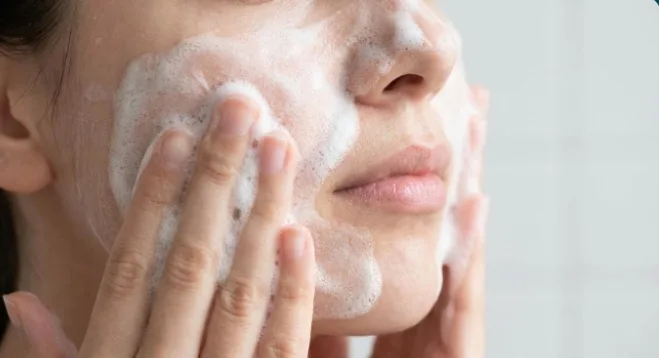
You can use a hydrated konjac sponge with warm water alone for a gentle morning refresh, or apply a drop of mild foaming wash to create a dense, luxurious lather for evening cleansing.
Step 3: Glide in light, circular motions
Gently glide the curved surface across your face using subtle circular motions. Keep your touch featherlight; let the water-cushioned plant fibers do the work. Focus softly on areas prone to dullness or congestion, such as the nose wings, chin crease, and forehead center.
Step 4: Rinse and pat dry
Rinse your complexion thoroughly with lukewarm water. The AAD instructs: "Rinse with lukewarm water and pat dry with a soft towel"[2].
Step 5: Moisturize immediately
Exfoliation exposes fresh surface cells that require immediate barrier protection. The AAD advises: "Apply moisturizer immediately after exfoliating to keep your skin healthy and hydrated"[1]. Follow with your hydrating lotion and milky emulsion.
Comparing exfoliation methods: konjac vs. scrubs vs. chemical acids
Scroll horizontally to view full table
| Exfoliation Type | Mechanism of Action | Barrier Friction Risk | Frequency Suitability |
|---|---|---|---|
| Japanese Konjac Sponge | Soft water-cushioned plant fibers | Minimal (zero abrasive edges) | Daily or 3–4 times weekly |
| Physical Walnut/Sugar Scrub | Jagged granules scrape surface | High (micro-tears & redness) | Once weekly maximum (avoid on acne) |
| Chemical Acid (AHA / BHA) | Dissolves intercellular desmosomes | None mechanically, but chemical sting | 1–3 times weekly depending on potency |
| Synthetic Cleansing Brush | Rotating nylon bristles | Moderate to high (over-stripping) | 1–2 times weekly |