Japanese Makeup Mirror Guide: Magnification and Lighting
RoutinesBy Seibun Lab Editorial Team
title: Japanese Makeup Mirror Guide: Magnification and Lighting
slug: japanese-mirror-magnified-lighting-makeup-japan
category: routines
category_label: Skincare Routines
published_at: '2026-11-24'
updated_at: '2026-11-24'
meta_description: Master the art of Japanese makeup mirrors. Learn optical glass clarity, balanced LED color temperatures, dual-sided magnification, and daylight matching.
description: Master the art of Japanese makeup mirrors. Learn optical glass clarity, balanced LED color temperatures, dual-sided magnification, and daylight matching.
lead_image: /images/stock/woman-checking-cheek-acne-mark-hand-mirror.webp
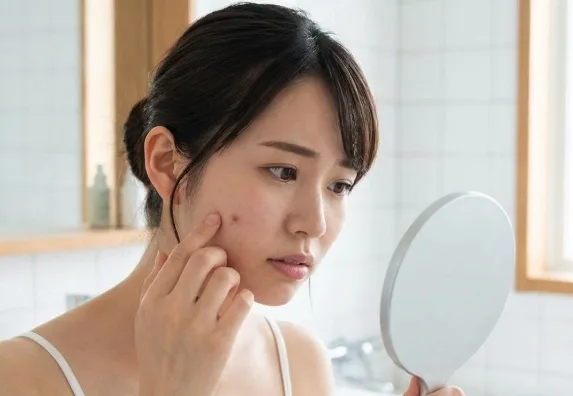
lead_image_alt: Woman inspecting complexion clarity using an optical vanity mirror
thumbnail: /images/stock/woman-checking-cheek-acne-mark-hand-mirror.webp
thumbnail_alt: Woman inspecting complexion clarity using an optical vanity mirror
author: Editorial Team
publish: true
Japanese Makeup Mirror Guide: Magnification and Lighting
Few things are more frustrating than completing what appears to be a flawless makeup application in your bedroom, only to step outdoors and discover unblended jawline lines, overly intense blush, or chalky foundation. In almost every case, the culprit is not your cosmetic formula or your application skill—it is improper mirror reflection and inaccurate lighting.
In Japan, where subtle, natural-looking skin (suppin-fu) is prized, beauty tool artisans place immense value on mirror glass purity and true-to-life illumination. Here is how Japanese optical vanity mirrors work, how to harness calibrated magnification, and how to configure your vanity lighting for flawless cosmetic precision.
Why Japanese Makeup Mirrors Emphasize Optical Clarity and True Color
Standard commercial mirrors are manufactured using float glass containing iron impurities, which imparts a subtle greenish cast to your reflection. While imperceptible when glancing casually, this tint alters how your eyes perceive delicate pink, peach, and yellow undertones, prompting you to over-apply color or select mismatched foundation shades.
The delicate lipid matrix of the epidermal stratum corneum experiences progressive natural functional deceleration over time[1], making faithful, unskewed visual feedback essential for monitoring delicate barrier conditions.
Japanese optical glassmakers (such as Horiuchi Mirror, creators of patented high-transparency glass) use purified low-iron glass and specialized silver vacuum-coating techniques. This technology reflects true-to-life skin pigment with astonishing color rendering, ensuring what you see at your vanity matches what the world sees under outdoor daylight.
Scroll horizontally to view more
Mirror Feature
Japanese High-Clarity Glass
Standard Commercial Mirror
Acrylic / Compact Travel Mirror
Color Accuracy
True-to-life (zero green tint)
Slight green/grey distortion
Moderate yellowing or haze
Optical Distortion
Zero wave curvature
Minor edge warping
Significant perimeter distortion
Light Reflectance
Over 95% true spectrum
Roughly 80% to 85%
Variable, degrades over time
Ideal Usage
Daily base and color matching
General bathroom grooming
Quick handbag touch-ups only
Balanced LED Color Temperatures: Replicating Natural Sunlight Indoors
Lighting temperature dictates color perception. Applying makeup under warm yellow incandescent bulbs (2700K) causes you to wash out your complexion with excessive powder or blush, while cold fluorescent office tubes (6000K+) create harsh shadows that prompt over-concealing.
Pairing morning precision makeup routines with diligent broad-spectrum UV protection shields vulnerable skin from photoaging stress[2], preparing a balanced canvas for daytime light exposure.
Japanese lighted vanity mirrors resolve this through calibrated light metrics:
Daylight Neutral Spectrum (4000K to 5000K): Japanese vanity mirrors mimic crisp morning sunlight, creating a neutral environment where color cosmetics appear identical indoors and outdoors.
High Color Rendering Index (CRI Ra90+): Natural daylight has a CRI of 100. Japanese vanity LEDs with Ra90+ ratings reproduce subtle blush gradients, skin micro-textures, and lip tints faithfully without color drop-off.
Diffused Perimeter Rings: Rather than harsh pinpoint bulbs, modern Japanese mirrors use frosted frosted ring diffusers that disperse light evenly across facial planes without casting dark hollows beneath eyes or nose bridges.
Dual-Sided Magnification Strategy: When to Use 1x vs 3x or 5x
A high-magnification mirror is a double-edged sword. Used strategically, it elevates detail work; used improperly, it ruins overall balance.
The 1x Mirror: Macro Facial Harmony
Always begin and end your routine looking into a standard 1x flat mirror. This perspective allows you to judge eyebrow symmetry, blend foundation down the neck, and check blush placement relative to cheekbone geometry.
The 3x to 5x Magnifier: Precision Detailing
Switch to calibrated magnification (3x to 5x) strictly for micro-tasks:
Tightlining eye pencil along the inner lash roots without poking the waterline.
Checking mascara for clumps or stray carbon smudges along eyelid folds.
Plucking or trimming rogue stray hairs outside mapped eyebrow boundaries.
Defining sharp lip borders with a precision lip brush.
The Alternating Loop Method
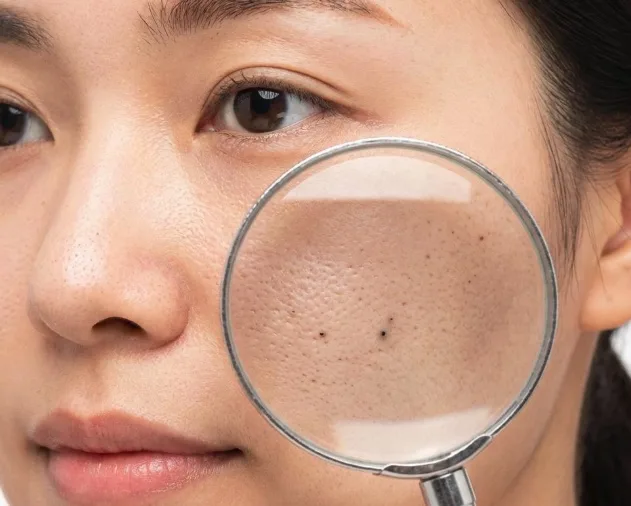
Never apply overall base foundation or bronzer while staring exclusively into a 5x or 10x mirror. Doing so makes individual pores appear unnaturally prominent, leading to excessive layer stacking. Periodically step back and confirm your overall finish in the 1x mirror.
Positioning, Height Ergonomics, and Anti-Glare Techniques
How you position your mirror dramatically affects how shadows fall across your features:
Eye-Level Alignment: Position the center of the mirror directly level with your eyes or angled slightly upward. Looking downward into a desk mirror casts artificial shadows under your eye sockets and jawline, exaggerating puffiness and prompting heavy concealer buildup.
Frontal Light Dispersion: Position LED light sources directly in front of your face rather than overhead. Downward ceiling lights create false under-eye dark circles that disappear when standing upright.
Maintain Comfortable Distance: When utilizing concave magnifying surfaces, position your face within the calibrated focal distance (usually 10 to 15 centimeters) to avoid dizzying spherical aberration.
Signs to Stop and When to Consult a Specialist
While precision mirrors enhance cosmetic refinement, extreme magnification can foster psychological and mechanical distress. Excessive magnification anxiety, aggressive manual pore picking, and harsh tactile pressure can trigger acute contact irritation[3] and post-inflammatory erythema.
Magnification-Induced Pore Picking: Staring closely into 10x or 20x mirrors often reveals normal sebaceous filaments. Attempting to squeeze, scratch, or extract these microscopic pores with fingernails or metal tools causes broken capillaries and localized bacterial folliculitis.
Optical Glare Strain: Staring into unshielded high-lumen LED arrays in a pitch-black bedroom strains ocular muscles. Always use illuminated mirrors in a moderately lit ambient room.
Obsessive Scrutiny: If examining skin under high magnification causes distress or obsessive picking habits, immediately step back to a standard 1x mirror positioned an arm's length away.
If manual picking or aggressive tool friction leads to swelling, open scabs, or persistent skin irritation, consult a certified dermatologist for professional guidance.
FAQ
Q1. What makes Japanese high-clarity makeup mirrors different?
A. Low-iron optical glass prevents the greenish color cast of standard mirrors.(Details)
Japanese optical glass removes impurities that distort true reflection. By reflecting real skin undertones faithfully, you avoid mismatched foundation lines and over-applied cheek pigments.
Q2. What LED color temperature is ideal for applying makeup?
A. A daylight neutral temperature between 4000K and 5000K works reliably.(Details)
Daylight neutral illumination reproduces outdoor light conditions accurately. This prevents the yellow distortion of warm incandescent bulbs and the unflattering blue glare of cold office lighting.
Q3. Can using a 5x or 10x magnifying mirror harm my skin routine?
A. Only if it triggers aggressive pore squeezing or over-powdering.(Details)
Magnified mirrors make natural skin texture and tiny sebaceous filaments appear magnified. Restrict magnification to eye and lip detailing, and avoid using it to obsessively critique skin pores.
Q4. Should the mirror light be brighter than the surrounding room?
A. No, balance mirror brightness with gentle ambient background lighting.(Details)
Operating a high-intensity illuminated mirror in a dark room creates severe optical contrast that strains eyes. Keep room lights on to establish a balanced visual field.
Q5. How do I prevent shadows under my eyes when applying makeup?
A. Position light sources directly in front at eye level rather than overhead.(Details)
Overhead ceiling lights project downward shadows into the eye sockets, creating false dark circles. Frontal illuminated perimeter lights illuminate features evenly without artificial hollows.
Summary & Actionable Checklist
Select Optical Glass: Choose low-iron, high-transparency glass to reflect true skin tones without green distortion.
Match Daylight Specs: Use 4000K to 5000K neutral LEDs with high CRI ratings (Ra90+) for color accuracy.
Keep Eye-Level Alignment: Angle mirrors straight at eye level to banish misleading overhead shadows.
Reserve Magnification for Details: Limit 3x–5x mirrors to eyeliner and brow styling, always checking balance at 1x.
Resist Pore Picking: Recognize that normal skin texture looks exaggerated under magnification; avoid mechanical scratching.
References
The Japanese Dermatological Association. Sunburn Q&A on Photoaging and Biological Alterations in Aging Skin (Q5). https://www.dermatol.or.jp/qa/qa2/q05.html (Accessed 2026-11-24)
The Japanese Dermatological Association. Dermatological Q&A on Sunscreen Application for Long-Term Prevention (Q25). https://www.dermatol.or.jp/qa/qa3/q25.html (Accessed 2026-11-24)
The Japanese Dermatological Association. Dermatological Q&A on Contact Irritation and Scalp Friction Mechanisms (Q1). https://www.dermatol.or.jp/qa/qa4/q01.html (Accessed 2026-11-24)
Disclaimer: This article is for general information and education about Japanese cosmetics and their labels. It is not a substitute for professional medical advice, diagnosis, or treatment. Skincare results vary from person to person. Product formulas, availability, prices, and regulations change, and products sold in Japan can differ from versions sold elsewhere, so always check the current label. Do a patch test before introducing a new product, and consult a doctor or dermatologist if you have a skin condition or specific concerns.