title: "Blue Light Protection in Japanese Sunscreen Formulas" h1: "Blue Light Protection in Japanese Sunscreen Formulas" meta_description: "Learn how Japanese sunscreens defend against blue light using iron oxides, lutein, and broad-spectrum filters to prevent photoaging and hyperpigmentation." category: "sun-care" date: "2026-11-19" author: "Seibun Lab Editorial Team" layout: "article" hero_image: "/images/stock/black-dropper-serum-bottle-minimal-desk.jpg" images: hero: "/images/stock/black-dropper-serum-bottle-minimal-desk.jpg" image_1: "/images/stock/blue-sky-with-sun-and-clouds.jpg" image_2: "/images/stock/five-point-facial-sunscreen-placement.jpg" image_3: "/images/stock/cream-tube-and-smooth-texture.jpg"
Modern lifestyle habits have transformed our daily light exposure. While previous generations considered ultraviolet radiation from outdoor sunshine their primary photoaging threat, contemporary urban routines involve hours spent directly in front of digital monitors, smartphones, and indoor LED luminaires. This pervasive illumination brings high concentrations of blue light—also known as High-Energy Visible (HEV) light—directly against delicate facial skin.
In Japanese cosmetic science, preventative skincare (yobou biyou) places significant emphasis on neutralizing non-UV environmental stressors before they trigger pigment irregularities or dermal matrix degradation. Because standard clear sunscreens offer little to no attenuation against visible light waves, Japanese formulators developed innovative daily bases, tinted sunscreens, and mineral tone-up emulsions specifically engineered to shield against HEV radiation. This guide examines the photobiology of blue light, how Japanese formulas filter visible wavelengths, and which products provide reliable daily defense.
Standard clear sunscreens only block ultraviolet rays (up to 400 nm) and allow visible blue light (400 to 500 nm) to pass through to deeper skin layers. Japanese blue light defense sunscreens solve this by incorporating tinted iron oxides that physically absorb visible light, advanced broad-spectrum organic filters, and natural carotenoids like lutein. Pairing these mineral shields with botanical antioxidants protects against oxidative stress, uneven tone, and premature collagen fatigue caused by digital screens and solar HEV radiation.
What Is Blue Light (HEV Light) and How Does It Affect Skin?
To understand why conventional UV filters leave skin vulnerable, it is essential to consider the physics of solar and digital radiation.
The Electromagnetic Spectrum Beyond Ultraviolet
Solar radiation spans multiple energy bands. In optics, the visible spectrum represents the portion of the electromagnetic spectrum that is visible to the human eye[1], situated between invisible ultraviolet rays (below 400 nm) and infrared heat rays (above 700 nm).
High-energy visible light refers specifically to wavelengths from 400 to 450 nm in the visible spectrum[2]. While the sun remains the most potent environmental source of HEV radiation, everyday digital screens and energy-efficient office LEDs emit continuous, localized blue light at close distances, contributing to cumulative cutaneous exposure.

Cutaneous Consequences: Hyperpigmentation and Free Radicals
Unlike UVB rays, which primarily affect superficial epidermal cells, blue light travels deeper into the reticular dermis:
- Oxidative Stress Generation: Blue light activates intracellular photosensitizers, generating a surge of reactive oxygen species (ROS). These free radicals induce lipid peroxidation and trigger enzymes that degrade collagen and elastin fibers.
- Persistent Hyperpigmentation: Dermatological research demonstrates that blue light stimulates opsin-3 photoreceptors on melanocytes. In human physiology, melanin is a group of natural pigments found in most organisms[5] produced to defend cell nuclei. In response to blue light, melanocytes produce excess pigment, leading to hyperpigmentation—characterized by the darkening of an area of skin or nails due to increased melanin[4]. This discoloration is often more stubborn and long-lasting than UV-induced redness, particularly in deeper skin tones.
Why Clear Sunscreens Fall Short Against HEV Light
A common misconception is that applying a standard, clear SPF 50+ PA++++ sunscreen protects against all forms of environmental radiation.
Standard sunscreens are regulated to shield against:
- UVB Rays (290 to 320 nm): Responsible for surface sunburn.
- UVA Rays (320 to 400 nm): Responsible for deep tanning and photoaging.
However, conventional organic filters and transparent, micronized mineral filters (such as clear zinc oxide and titanium dioxide) are engineered specifically to be transparent to visible light so they leave zero white cast. Because they do not absorb or reflect wavelengths above 400 nm, blue light passes through them unobstructed. True visible light protection requires ingredients that interact physically with visible wavelengths.
How Japanese Sunscreen Chemistry Blocks Blue Light
Japanese beauty formulators utilize three complementary strategies to establish comprehensive visible light defense without creating heavy or greasy textures.
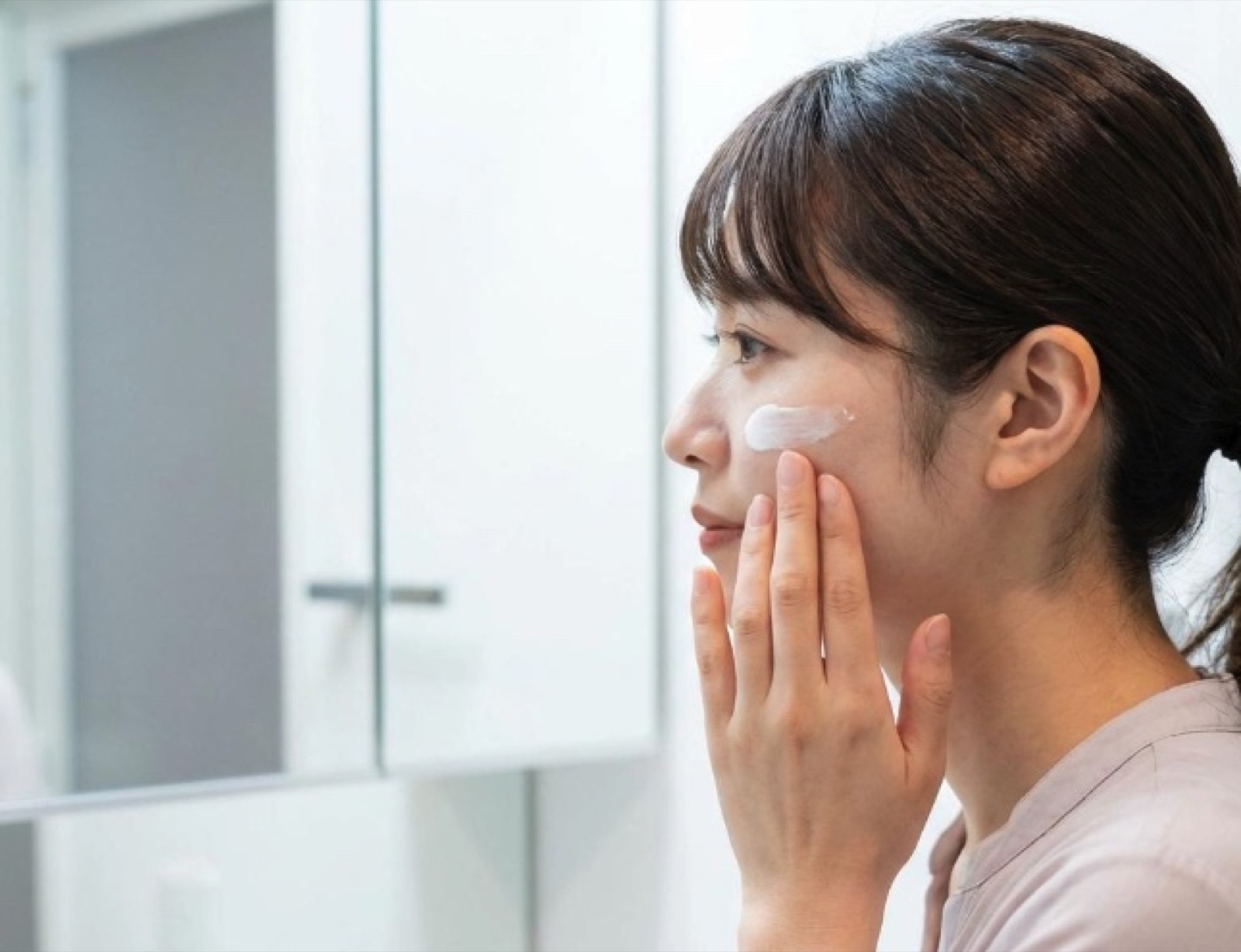
1. Iron Oxides: The Gold Standard Mineral Attenuation
The most effective, clinically validated ingredients for visible light defense are iron oxides. Chemically, iron oxides are chemical compounds composed of iron and oxygen[3] that provide the natural beige, yellow, and red pigments found in tinted sunscreens, BB creams, and CC primers.
Because iron oxides possess inherent optical color, they absorb and scatter visible light waves across the 400 to 500 nm range. Incorporating even small percentages of iron oxides into daily sunscreen formulas creates a physical barrier that drastically curtails blue-light transmission into the dermis.
2. Lutein and Natural Carotenoid Pigments
High-end Japanese botanical and organic brands (such as Naturaglace) pioneered the use of lutein in daytime skincare. Extracted from marigold flowers, lutein is a natural yellow carotenoid pigment that acts as an optical filter.
When formulated into daytime primers and sunscreens, lutein absorbs blue-light wavelengths before they reach live skin cells, functioning as an invisible internal screen protector while providing potent antioxidant support.
3. Extended-Spectrum Organic Filters and Botanical Antioxidants
Japanese laboratories also integrate new-generation hybrid filters (such as Bisoctrizole) whose absorption profile extends past 380 nm into the violet-blue border. Furthermore, botanical extracts like bilberry leaf extract, ferulic acid, green tea catechins, and dipotassium glycyrrhizate are blended into the base to neutralize any residual reactive oxygen species formed beneath the surface film.
Comparison: Clear Sunscreen vs Japanese Blue Light Formulations
The table below contrasts standard clear sunscreens with specialized Japanese blue-light defensive formulas:
Scroll horizontally to view full table
| Protective Factor | Standard Clear Sunscreen | Japanese Blue Light Sunscreen |
|---|---|---|
| UV Protection (UVB/UVA) | Full coverage (SPF 30 to 50+, PA++++) | Full coverage (SPF 30 to 50+, PA+++ or ++++) |
| Visible Blue Light (400–500 nm) | Minimal to zero protection (passes through) | High physical attenuation (blocks up to 90%+) |
| Key Active Technologies | Clear chemical filters, micronized zinc oxide | Tinted iron oxides, lutein, hybrid filters |
| Finish on Skin | Completely transparent or invisible dew | Subtle tone-up, light beige tint, or luminous veil |
| Target Concerns | Sunburn and outdoor UV damage | Digital screen fatigue, uneven tone, dark spots |