When spending extended hours outdoors in summer heat or humid coastal air, re-applying body sunscreen can become an inconvenient chore. Sticky lotions and messy creams often leave hands greasy, attract sand, or feel suffocating on sweaty limbs. To solve these friction points, Japanese skincare laboratories have pioneered two highly portable, mess-free formats: ultra-fine aerosol sunscreen sprays and friction-resistant solid sunscreen sticks.
Quick answer:
Should you choose a Japanese sunscreen spray or a sunscreen stick for body application?
Choose an **aerosol sunscreen spray** for rapid, hands-free coverage across broad or hard-to-reach areas like the back, shoulders, arms, legs, and scalp parting. Choose a **solid sunscreen stick** for targeted, rub-resistant protection on high-friction zones such as collarbones, back of the neck, ears, and tops of feet. While both formats offer superior portability for outdoor touch-ups, pairing a morning base layer of traditional UV gel with on-the-go spray or stick reapplication yields the most reliable full-body defense.

Japanese Sunscreen Sprays: Formulation Strengths and Proper Application
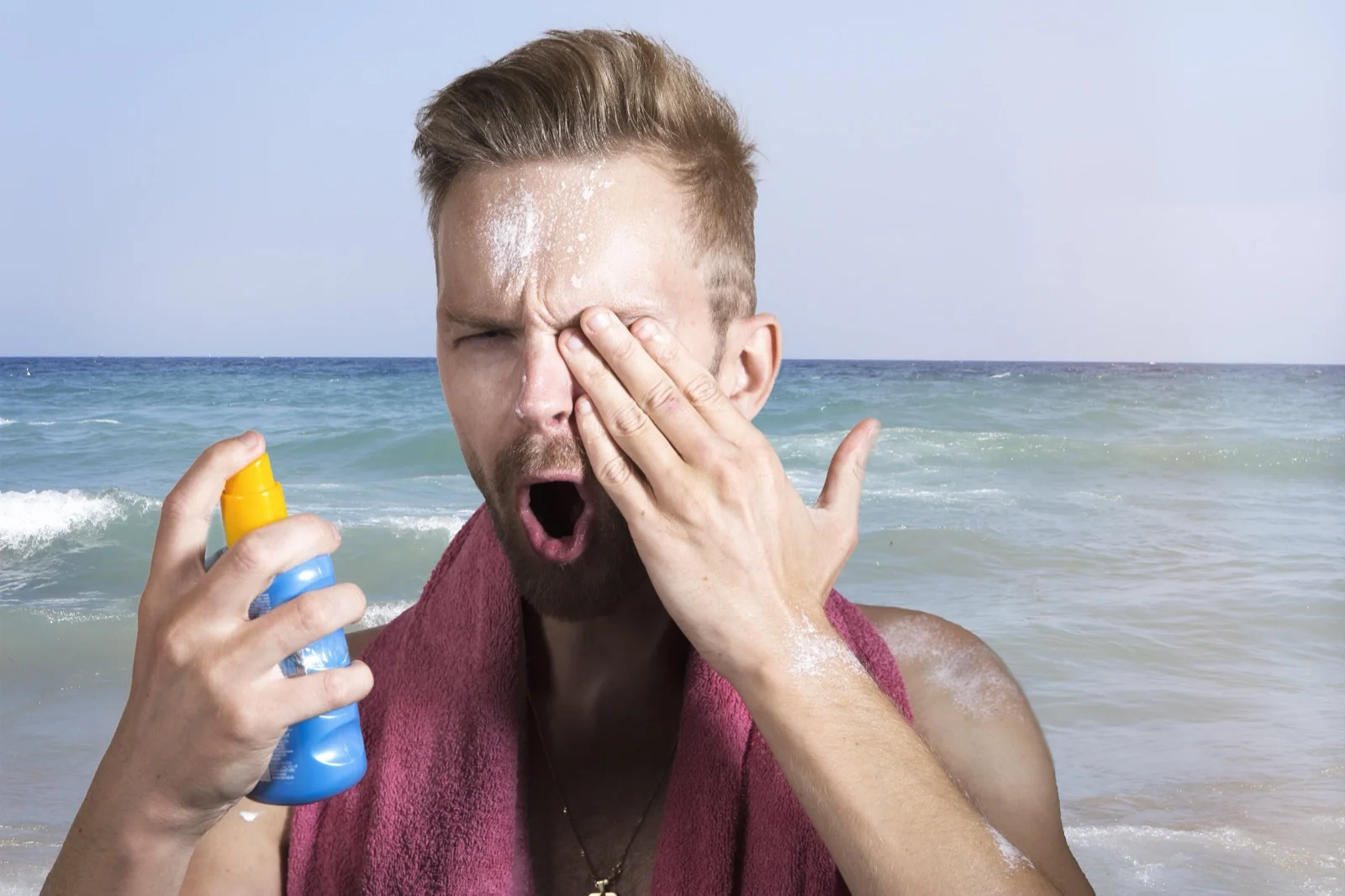
Japanese aerosol sunscreen sprays are engineered to deliver a weightless, invisible mist that dries almost immediately upon contact. Unlike pump sprays that eject coarse droplets, Japanese aerosol cans utilize specialized pressurized propellants to disperse a micro-fine cloud of liquid UV absorbers.
Key performance advantages of Japanese sunscreen sprays include:
- Broad Reach with Zero Hand Mess: Sprays allow individuals to mist their own upper backs, shoulder blades, and the backs of their calves without contorting awkwardly or transferring greasy residue onto their palms.
- Hair and Scalp Protection: Standard sunscreen creams leave hair greasy and limp. Fine mist sprays can be misted along exposed hair partings and hairlines to guard delicate scalp skin from solar burning without weighing down styling.
- Instant Cooling Sensation: The rapid evaporation of volatile carriers creates an immediate cooling thermal drop across flushed, overheated skin.
However, improper spray application frequently leads to missed spots and sun damage. When outdoors, wind drift can carry half the aerosol particles away before they touch the skin. Furthermore, holding the can too far away produces an ultra-thin dusting that falls short of the labeled SPF protection.
Board-certified dermatologists advise consumers: choose a sunscreen that has an SPF of 30 or higher, is water resistant, and provides broad-spectrum (UVA and UVB rays) coverage.[1] To maximize defense, hold the spray nozzle 10 to 15 centimeters from the skin, spray until the surface glistens visibly, and briefly smooth the mist across the surface. Whether applying lotions, sprays, or sticks, dermatologists emphasize: rub the sunscreen thoroughly into your skin.[1]
Japanese Sunscreen Sticks: Convenience, Grip, and Targeted Defense
Solid sunscreen sticks represent another major innovation in Japanese sun care. Formulated as anhydrous wax bars containing synthetic waxes, squalane, and organic UV filters, these compact twist-up sticks glide directly across the skin without spilling inside gym bags or carry-on luggage.
The standout functional benefits of Japanese sunscreen sticks include:
- Friction-Resistant Technology (Kosure ni Tsuyoi): Japanese brands formulate sticks with adhesive wax networks designed to withstand mechanical rubbing from backpack straps, purse handles, athletic gear, and clothing collars.
- Precise Application: The firm, curved tip contours easily around small anatomical curves, including the tops of the ears, collarbones, temples, and back of the neck.
- Zero Spill Risk: Because the formula contains no free water, sticks prevent the hazard of messy bottle leaks during air travel or daily commuting.
The primary limitation of sunscreen sticks is coverage speed. Applying a small stick across entire thighs, arms, and torso takes considerable time, making full-body initial coverage tedious compared to pump lotions or sprays.
Head-to-Head Comparison: Spray vs Stick for Full-Body Protection

Understanding how each format performs across practical real-world metrics helps you select the right tool for your lifestyle:
Scroll horizontally to view the full comparison.
| Metric | Aerosol Sunscreen Spray | Solid Sunscreen Stick | Traditional Pump UV Gel |
|---|---|---|---|
| Application Speed | Fastest (under 30 seconds) | Moderate (requires repeated passes) | Moderate (requires manual spreading) |
| Coverage Precision | Broad, diffuse mist | High precision, targeted glide | Full uniform coverage |
| Friction Resistance | Moderate | Highest (wax-polymer shield) | Moderate to High |
| Portability & TSA | Moderate (pressurized aerosol rules) | Ideal (solid, zero liquid limits) | Moderate (bulky pump bottles) |
| Hard-to-Reach Areas | Superior (back, calves, scalp) | Challenging on mid-back | Requires flexible reach or help |
| Recommended Role | Midday body & hair reapplication | High-friction touch-ups (hands, neck) | Morning primary base application |