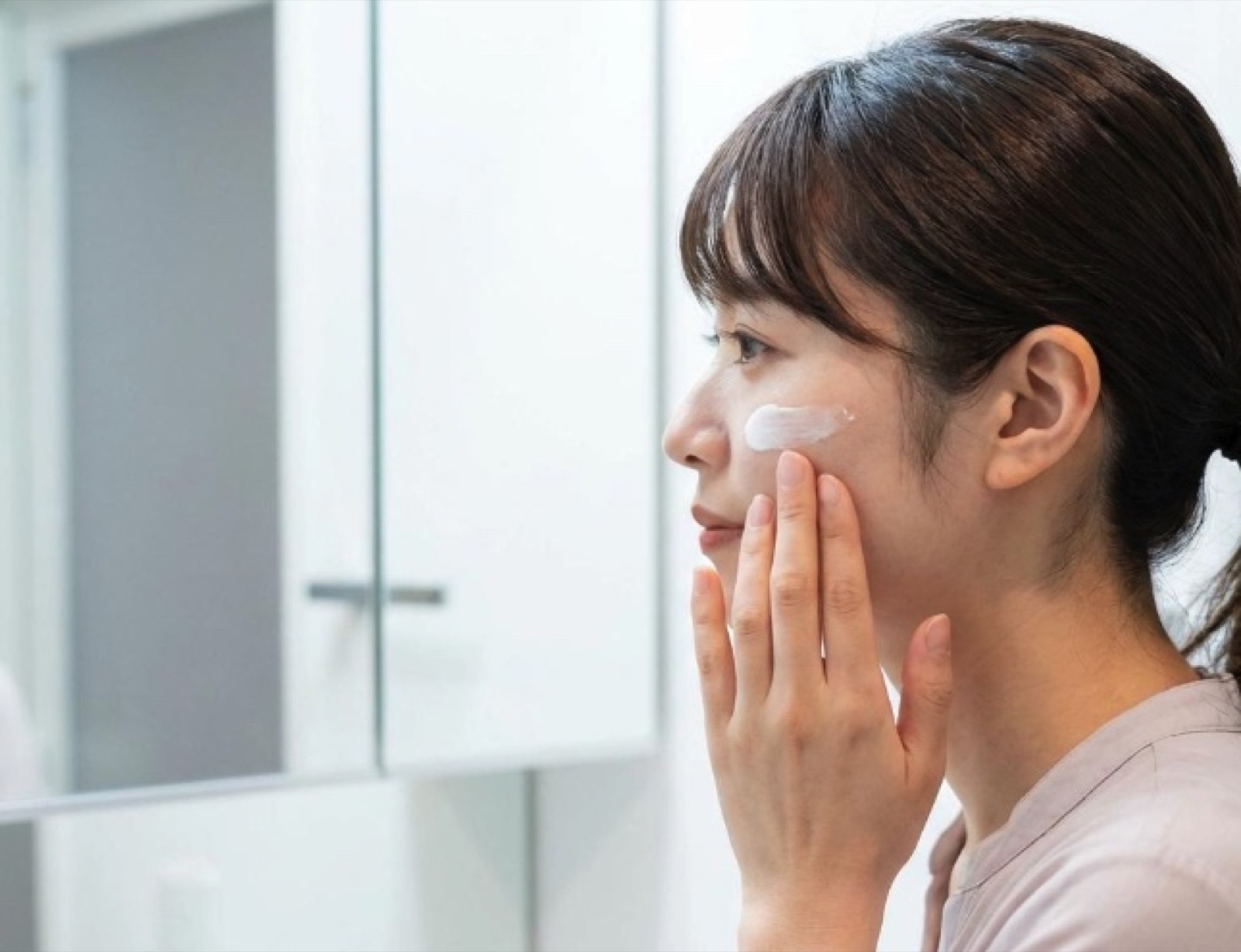
title: Non-Sticky Sunscreens: Why Japanese Formulas Excel slug: non-sticky-sunscreens-why-japanese-formulas-win category: sun-care meta_description: Explore why Japanese sunscreens feel non-sticky and weightless. Discover micro-capsule UV filters, water-gel formulation science, and daily wearing comfort. date: 2026-11-19 author: Editorial Team hero_image: /images/stock/sunscreen-application-uv-protection.jpg hero_alt: Woman gently applying lightweight protective sunscreen fluid to her face
Non-Sticky Sunscreens: Why Japanese Formulas Excel
Japanese sunscreens feel remarkably weightless and non-sticky due to specialized formulation chemistry designed for humid summers. By encapsulating organic UV filters inside micro-droplet water gels and pairing them with fast-evaporating volatile silicones, Japanese chemists disperse UV blockers without relying on thick, greasy petrolatum bases. When smoothed onto the skin, the emulsion "breaks" into a refreshing water-like splash that sets into an invisible, breathable film, avoiding white cast and heavy residue under daily makeup.
For decades, many global consumers regarded sunscreen as a necessary inconvenience: thick, pasty, greasy, and prone to staining dark clothing. A modern sunscreen is defined as a photoprotective topical product for the skin designed to prevent solar damage[1], but when daily application feels uncomfortable, people often apply far too little or skip protection altogether.
Japanese cosmetic manufacturers recognized early on that protection is only as effective as user compliance. Faced with intense summer humidity and a skincare culture that prioritizes flawless daily wear under cosmetics, Japanese formulation chemists pioneered water-light sunscreen textures that transformed sun protection from a chore into a refreshing morning pleasure.
1. The Climate Challenge: Formulating for Japanese Summers
Japan experiences hot, subtropical summers with humidity levels regularly exceeding 80 percent. In such muggy conditions, standard oil-heavy creams trap perspiration, create suffocating shine, and slide off the face within hours.
Solar ultraviolet energy is an invisible electromagnetic radiation of wavelengths between 100 and 400 nanometers[2] that passes through clouds and causes cumulative photoaging. To encourage people to wear broad-spectrum protection 365 days a year, Japanese brands developed sunscreen gels (Aqua Gel), milk emulsions (Milks), and essences (Watery Essences) that feel virtually undetectable once dry.
2. The Formulation Chemistry: How the "Watery Break" Works
The signature "watery break" sensation of Japanese sunscreens relies on several sophisticated chemical mechanisms:
Water-in-Silicone (W/S) and Polymeric Emulsions
Japanese fluid sunscreens utilize volatile silicone polymers where a silicone is a polymer composed of repeating units of siloxane[3]. Volatile silicones like cyclopentasiloxane and dimethicone provide immense spreadability. As you smooth the formula over your skin, these light silicones evaporate quickly, leaving behind an ultra-thin, dry-touch shield without pore-suffocating grease.
Micro-Encapsulated Chemical Filters
Organic UV filters (such as Tinosorb S, Uvinul A Plus, and Octinoxate) are naturally oily compounds that can feel sticky at high concentrations. Japanese laboratories encapsulate these oily filters inside microscopic water-soluble polymer shells. Suspended in a water-rich gel matrix, the filters do not directly touch the skin until the water evaporates, providing a cooling splash upon first contact.
Micro-Milled Mineral Dispersions
Traditional mineral UV blockers utilize zinc oxide, a fine white powder which is insoluble in water[4], along with titanium dioxide. When poorly dispersed, mineral powders clump together, reflecting white light visibly and feeling chalky. Japanese brands employ advanced wet-milling and silicone-coating technologies that space mineral particles evenly across nanoscale dimensions, minimizing both chalky friction and chalky white casts.
Daily UV protective films cover the epidermis is the outermost of the three major layers that constitute the skin[5], creating a smooth canvas that resists perspiration while letting the skin breathe.
3. Comparing Japanese Sunscreens with Western and Mineral Formulas
To understand why Japanese formulas have earned an international cult following, compare their formulation characteristics against standard sunscreen categories:
Scroll horizontally to view full table
| Performance Metric | Japanese Watery Sunscreen (Gel / Essence) | Traditional Western Chemical Sunscreen | Standard 100% Mineral Sunscreen |
|---|---|---|---|
| Initial Texture | Watery gel, cooling liquid splash | Thick lotion or occlusive cream | Dense paste or chalky suspension |
| Drying Time & Finish | Quick dry down (matte, natural, or soft dewy) | Slow dry down, noticeably tacky or shiny | Matte to powdery, can cling to dry patches |
| White Cast Level | Virtually zero (transparent on all skin tones) | Low white cast, but potential yellow tint | Moderate to heavy white ghosting |
| Under-Makeup Wear | Acts as a smoothing makeup primer | Can pill, cause makeup slippage or shine | Can accentuate dryness and foundation texture |
| Perspiration Feel | Weightless, does not feel suffocating in heat | Can feel heavy, greasy, or trap heat | Water-resistant but heavy on skin pores |
| Ease of Removal | Rinses cleanly with everyday facial wash | Often requires strong cleansing oil | Requires double cleansing to remove |