Japanese Binchotan Charcoal Cleansers: Pore Care Guide
CleansingBy Editorial Team
title: Japanese Binchotan Charcoal Cleansers: Pore Care Guide
slug: japanese-charcoal-binchotan-pore-detox-cleanser
category: cleansing
published_at: '2026-11-23'
updated_at: '2026-11-23'
meta_description: Discover Japanese Kishu Binchotan charcoal cleansers for pore care. Learn micro-porosity science, clay pairings, and gentle daily cleansing tips.
keywords:
japanese binchotan charcoal cleanser
kishu binchotan pore care
deitanseki charcoal soap
activated charcoal face wash
j-beauty sebum adsorption
lead_image: /images/stock/clay-charcoal-mineral-ingredients.webp
lead_image_alt: Fine black activated binchotan charcoal powder and mineral clay skincare ingredients
thumbnail: /images/stock/clay-charcoal-mineral-ingredients.webp
thumbnail_alt: Fine black activated binchotan charcoal powder and mineral clay skincare ingredients
author: Editorial Team
publish: true
Japanese Binchotan Charcoal Cleansers: Pore Care Guide
In the forested hills of Wakayama Prefecture (historically known as Kishu), artisanal charcoal-makers have crafted Kishu Binchotan (Kishu Binchō-tan) since the Edo period. Fired from dense Japanese Holm oak (ubamegashi) in specialized kilns reaching temperatures above 1,000 degrees Celsius, Binchotan is renowned globally as the highest grade of white charcoal. It rings with a clear metallic resonance when struck, possessed of immense physical density and microscopic porosity.
While long prized for grilling, air purification, and water filtration, Binchotan charcoal (sumi) holds an equally storied position in Japanese personal care. In modern J-Beauty cleansing formulas, micro-milled Binchotan powder acts as a physical sponge. Without abrasive mechanical scratching or harsh chemical detergents, it draws out oxidized sebum, keratin plugs, and urban pollutants to refresh congested complexions.
Quick answer: Japanese Binchotan charcoal cleansers utilize micronized white charcoal (*ubamegashi*) prized for its extensive microscopic surface area and negative ionic surface charge. Topically, charcoal acts as an adsorbent: its microscopic cavity network physically traps lipid droplets, oxidized sebum plugs (*kakusen*), and environmental micro-particles. When formulated alongside hydrating botanical humectants and natural clays, Binchotan purifies congested pores without stripping essential stratum corneum moisture.
Scroll horizontally to view full table
Feature
Kishu Binchotan Charcoal
Standard Activated Charcoal (Coconut/Bamboo)
Botanical Origin
Slow-growing Japanese Holm oak (*ubamegashi*)
Fast-growing bamboo stems or coconut shells
Kiln Temperature
Exceeds 1,000°C; rapid white-ash smothering
Typically 600°C to 800°C; steam activation
Structural Hardness
Extremely dense; does not crumble into coarse grit
Friable, lighter, and softer carbon lattice
Pore Size Distribution
Micro-cavities matched to lipid and sebum molecules
Broad macro- and meso-pore distribution
Skin Sensory Feel
Smooth, velvety lather with creamy cushion
Can feel powdery or gritty if insufficiently milled
Adsorption vs. Absorption: How Binchotan Purifies Pores
A frequent point of confusion in skincare is the distinction between absorption and adsorption.
Absorption occurs when a substance is drawn into the internal volume of another material, like water soaking into a sponge.
Adsorption refers to surface adhesion, where gas molecules, dissolved substances, or lipid droplets adhere to the external and internal pore surfaces of a solid.
Binchotan charcoal is an exceptional adsorbent. During high-heat kiln refining, volatile compounds burn away, leaving millions of interconnected micro-pores per gram. When lathered across facial skin, these microscopic crevices attract non-polar lipid compounds—such as excess squalene, free fatty acids, and cosmetic residues. The charcoal particles bind these impurities, allowing them to rinse away completely with water rather than redepositing inside follicular openings.
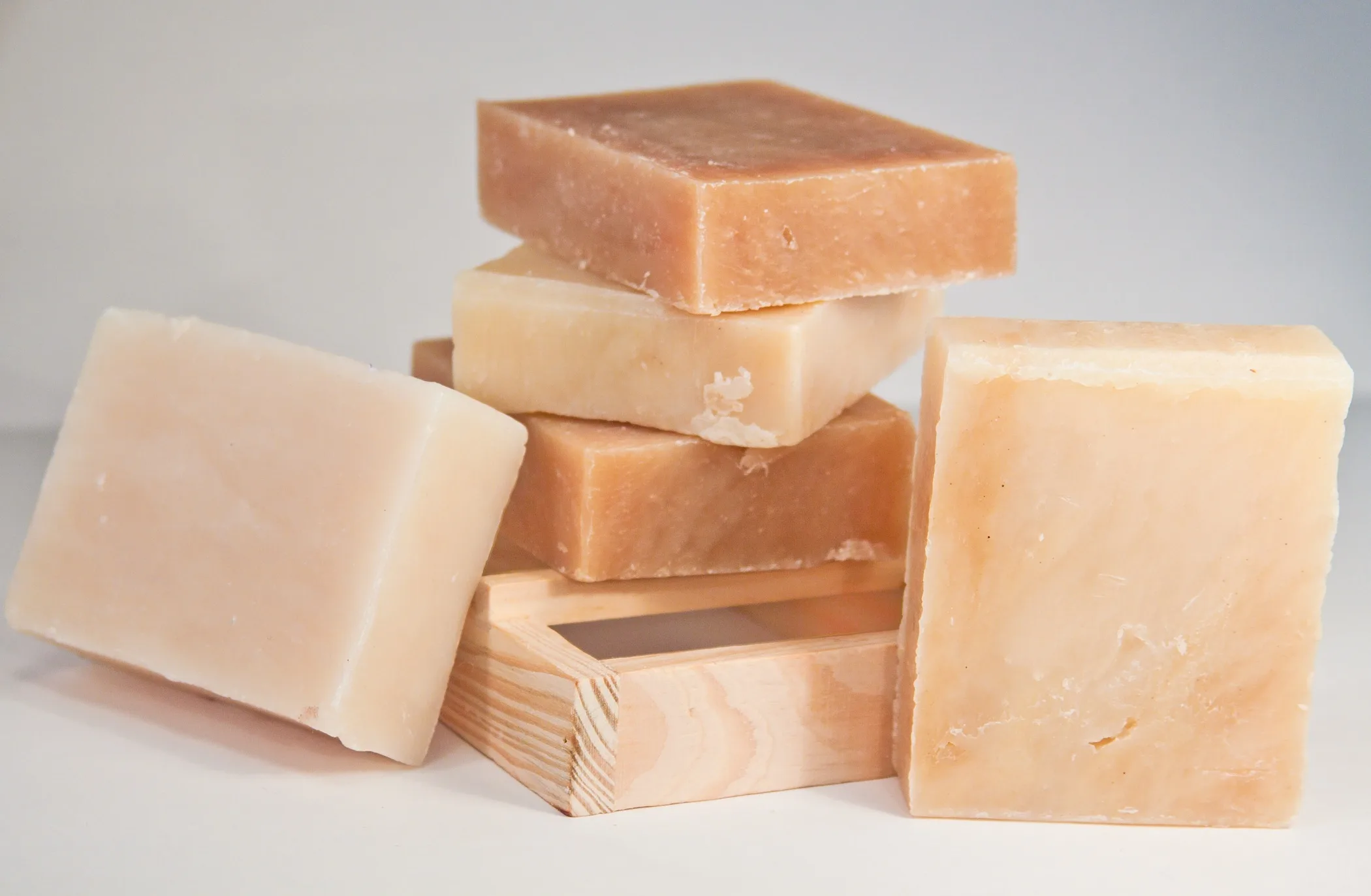
Decades ago, pioneering Japanese soap houses like Pelican Soap defied traditional aesthetics by formulating with genuine charcoal. Their pitch-black soap kneaded with raw charcoal and clay powders challenged conventional norms that facial soap had to be stark white[2]. Through balanced formulation, they focused on adsorbing pore impurities while imparting moisture to achieve a refreshed finish without tightness[2].
The Charcoal and Clay Pairing: A Japanese Cleansing Staple
In Japanese drugstore aisles, you will rarely find Binchotan acting entirely alone. Formulators routinely pair micro-charcoal with fine mineral clays such as bentonite, sea silt (kucha from Okinawa), or kaolin:
Dual Cleansing Synergy: Charcoal excels at binding lipid-soluble sebum, while mineral clays swell with water to lift water-soluble perspiration salts and dead skin cells.
Lather Cushion: Pure charcoal powder alone does not produce lather. Mineral clays stabilize rich micro-foam (mitsu-awa), creating a thick, cushiony barrier between fingers and skin to minimize abrasive friction.
Moisture-Retaining Buffers: Japanese formulas enrich black cleansers with hydrating botanical extracts—such as persimmon tannin, camellia oil, or trehalose—preventing the tight, squeaky feeling (tsuppari-kan) common in Western charcoal products.
Step-by-Step Cleansing: How to Avoid Friction
A common pitfall with clarifying cleansers is aggressive rubbing. Scrubbing charcoal against skin does not clean deeper; instead, it disrupts the protective lipid bilayer.
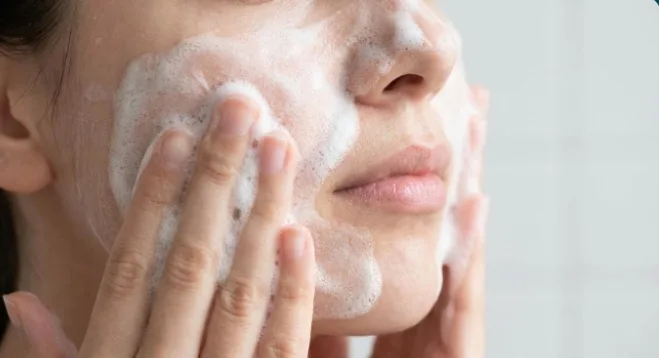
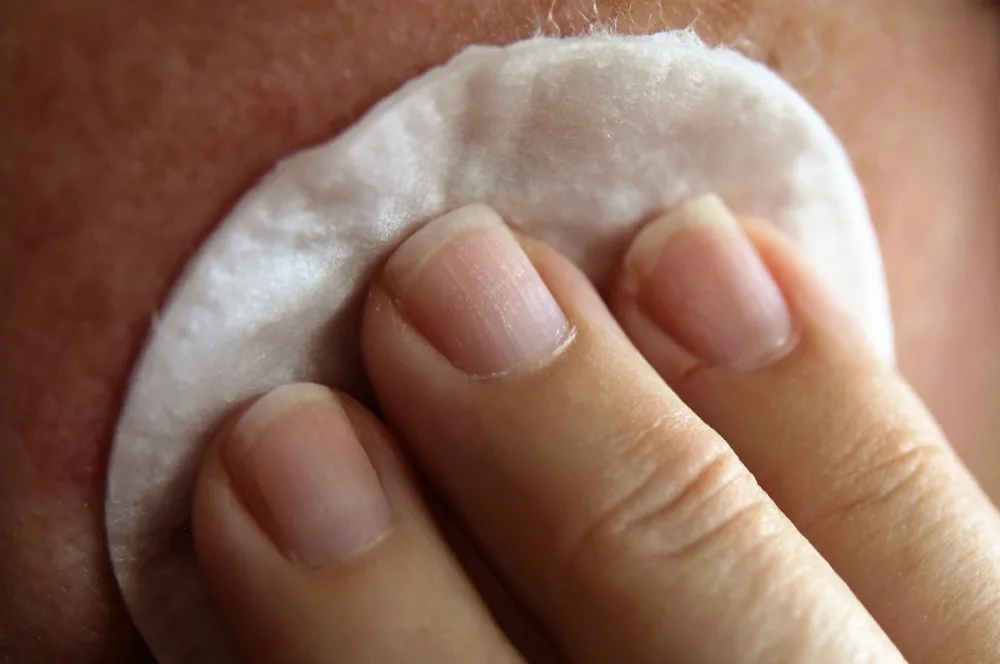
The American Academy of Dermatology (AAD) stresses: "Wet your face with lukewarm water and use your fingertips to apply cleanser"[1]. They caution: "Resist the temptation to scrub your skin because scrubbing irritates the skin"[1]. Let the micro-foam and charcoal adsorption do the work while your fingertips glide lightly over the surface.
Follow these four steps for balanced results:
Whip a Dense Lather: Use a foaming net (awa-date net) to whip charcoal soap or paste into a dense, marshmallow-like foam mound.
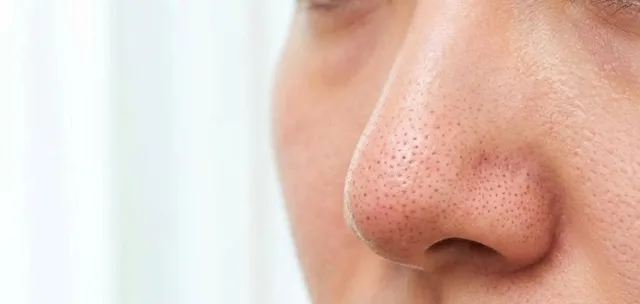
Apply Foam to the T-Zone First: Place the lather onto your forehead, nose, and chin where sebaceous glands are densest. Avoid direct contact with delicate eye contours.
Roll the Foam, Not Your Hands: Gently roll the foam cushion in circular motions for 20 to 30 seconds. Your fingertips should barely touch facial skin.
Rinse with Lukewarm Water: Splash 10 to 15 times with lukewarm water (around 32°C) to ensure every particle of charcoal and dissolved sebum is rinsed away, then pat gently with a soft cotton towel.
Signs to stop and when to see a doctor
While micronized Binchotan cleansers are gentle when properly formulated, individuals with very dry or reactive skin barriers must listen to cutaneous warning signals.
Discontinue use of charcoal cleansers and seek clinical advice if you observe any of the following signs:
Tightness or Fine Peeling: Persistent dryness, micro-flaking, or a tight parchment-like sensation that lingers hours after washing.
Erythematous Irritation: Red flushing or burning across the cheeks, signaling that daily oil stripping has compromised the stratum corneum.
Follicular Micro-Papules: Small sensitive red bumps that appear after switching cleansers, potentially indicating irritation folliculitis.
If symptoms persist, consult a board-certified dermatologist. Bring your cleanser container along to your consultation so your doctor can inspect the formulation.
FAQ
Q1. Can charcoal cleansers physically scratch or micro-tear the skin surface?
A. Authentic Japanese cleansers utilize micro-milled particles that do not abrade skin.(Details)
Unlike DIY ground charcoal or coarse body scrubs, certified Japanese cosmetics utilize micro-pulverized charcoal powders with particle sizes measured in microns. When suspended in a dense soapy lather, these particles glide smoothly over the epidermis without causing physical scratches or abrasive micro-tears.
Q2. Can I use a Binchotan charcoal cleanser every day?
A. Oily skin can use it daily, while normal to dry skin prefers two to three times weekly.(Details)
If you have oily or congestion-prone skin in humid summer conditions, gentle charcoal cleansers are suitable for once-daily evening use. If you have dry or sensitive skin, reserve charcoal face washes for two to three times weekly as a targeted clarifying step for the T-zone.
Q3. Does charcoal stain bathroom towels, sinks, or facial pores?
A. No, properly formulated charcoal washes away completely with water without residue.(Details)
While the lather may appear grey or dark charcoal during application, water-soluble surfactant systems ensure that the charcoal particles rinse cleanly down the drain without staining bathroom porcelain, towels, or settled pores.
Q4. Is a charcoal cleanser effective for removing stubborn blackheads?
A. It helps dissolve surface sebum oxidation, but deeper plugs require consistent routines.(Details)
Charcoal excels at adsorbing the dark, oxidized lipids at the top of open comedones (blackheads), making pores appear visibly cleaner immediately. However, resolving the deeper keratin plug requires patience, gentle enzymatic washing, and proper daily hydration rather than aggressive scrubbing.
Q5. Can people with sensitive skin use Binchotan soap?
A. Yes, provided the formula includes moisturizing agents and is used without harsh friction.(Details)
Many traditional Japanese charcoal soaps are formulated with gentle vegetable bases, glycerin, and moisturizing herbal extracts. Sensitive skin types should test the lather on the jawline first and keep contact time brief (under 30 seconds) to avoid over-cleansing.
Summary
Japanese Kishu Binchotan charcoal cleansers embody centuries of artisanal kiln craft adapted for modern pore care. By relying on microscopic surface adsorption rather than abrasive friction or harsh chemical detergents, these pitch-black formulas attract and rinse away congested lipids while respecting the epidermal barrier. Paired with dense micro-foam and gentle fingertip application, Binchotan offers a balanced, time-tested approach to clear, comfortable skin.
Disclaimer: This article is for general information and education about Japanese cosmetics and their labels. It is not a substitute for professional medical advice, diagnosis, or treatment. Skincare results vary from person to person. Product formulas, availability, prices, and regulations change, and products sold in Japan can differ from versions sold elsewhere, so always check the current label. Do a patch test before introducing a new product, and consult a doctor or dermatologist if you have a skin condition or specific concerns.