title: Japanese Chin Pore Care: Blackhead & Texture Routine slug: japanese-chin-pore-care-blackhead-routine category: cleansing published_at: '2026-11-23' updated_at: '2026-11-23' meta_description: Discover how the Japanese chin pore routine targets stubborn keratotic plugs using non-foaming cleansing gels, steam, and gentle circular massage. keywords:
- japanese chin pore care blackhead routine
- kakusen pore plugs chin j beauty
- biore ouchi de este massage gel
- rough chin texture pore cleansing
- non foaming facial wash gel japan lead_image: /images/stock/clogged-pores-closeup.webp lead_image_alt: Macro view of skin surface texture highlighting pore openings and keratin buildup thumbnail: /images/stock/clogged-pores-closeup.webp thumbnail_alt: Macro view of skin surface texture highlighting pore openings and keratin buildup author: Editorial Team publish: true
Japanese Chin Pore Care: Blackhead & Texture Routine
While the nasal "strawberry nose" captures the bulk of global pore discussions, the mentalis groove—the curved indentation directly beneath the lower lip and across the chin—harbors some of the most persistent texture concerns in skincare. Under bright light or tactile touch, this area frequently feels gritty, bumpy, and uneven. In Japan, where smooth "boiled egg skin" (tamago hada) represents an aesthetic ideal, dermatologists and cosmetic chemists have pioneered a distinct methodology designed specifically for chin pore dynamics.
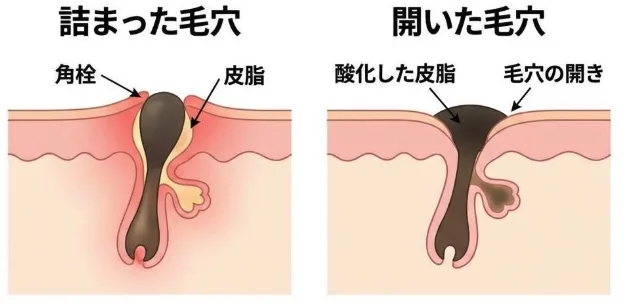
Quick answer: The Japanese chin pore routine focuses on softening and decomposing keratotic plugs (kakusen)—composed of 70% stubborn structural proteins and 30% sebum—rather than aggressively squeezing or stripping them. By utilizing non-foaming cleansing massage gels, bathroom steam, and light circular friction-free massage, this method dissolves chin roughness while preserving essential skin barrier moisture.
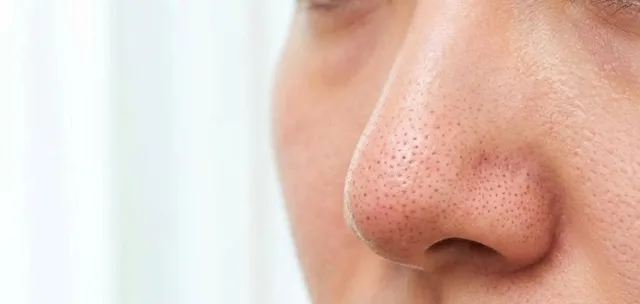
The Unique Biology of Chin Pores: Why Nose Strips Fail Here
Approaching the chin like the nose is one of the most common skincare errors. While both reside within the facial T-zone, their anatomical contours and histological behaviors differ fundamentally:
1. High Keratin Protein Ratio (Kakusen)
Common misconceptions classify all blackheads as pure oxidized sebum. In reality, Japanese dermatological research reveals that facial pore plugs (kakusen) consist of approximately 70 percent dead structural keratin proteins and only 30 percent lipid sebum. Because chin pores sit over active facial mimic muscles that compress skin folds during speech and eating, keratinocytes compact tightly into rigid conical plugs that standard oil cleansers struggle to dissolve on their own.
2. Concave Anatomy and Reduced Sebaceous Flow
The nasal bridge is convex and easy to reach with adhesive strips, whereas the chin curve is deeply concave. Applying physical pore strips here leads to uneven adhesion, often tearing fragile surface epidermis without dislodging rooted plugs.
3. Hormonal and Friction Vulnerability
The lower third of the face (the U-zone) possesses dense androgen receptors responsive to stress and hormonal fluctuations. Furthermore, frequent chin-resting, resting faces on hands, and friction from smartphone edges aggravate local inflammation, resulting in stubborn micro-comedones and rough patches.
The J-Beauty Philosophy: Chemical Decomposition Over Mechanical Trauma
Rather than forcefully yanking out plugs with pore vacuums or metal extractors—which triggers rebound sebum production and enlarged pore walls—Japanese skincare relies on gentle chemical softening and decomposition.
1. High-Adhesion Non-Foaming Cleansing Gels
A major trend spearheaded by Japanese researchers is the non-foaming massage gel. Unlike airy foam cleansers whose bubbles float on the skin surface, dense aqueous gels remain in intimate contact with the skin.
Japanese laboratories formulated targeted technologies where an engineered base breaks down and washes away stubborn plugs that trigger visible pores and darkened impurities while maintaining a smooth, unburdened skin surface[1]. Users maximize results by applying a generous layer of gel and blending thoroughly in circular motions over areas prone to rough pore buildup[1].
2. Moisture-Rich Pore Softening (Joju-Hogushi)
For complexions prone to both flaking dryness and gritty chin pores, Japanese chemists designed moisturizing gel textures. These specialized formulas work by gently loosening accumulated keratotic plugs and old dead surface cells while saturating the stratum corneum with moisture[2], proving that deep pore cleansing does not require stripping the skin barrier.
Comparison: Japanese Non-Foaming Gels vs. Western BHA and Nose Strips
Understanding formulation differences helps you choose the appropriate cleansing tool for sensitive chin contours.
Scroll horizontally to view full table
| Cleansing Method | Primary Mechanism | Chin Suitability | Moisture Preservation | Risk of Rebound Roughness |
|---|---|---|---|---|
| Japanese Non-Foaming Massage Gel | Protein-decomposing surfactants & thermal steam softening | Optimal (glides smoothly into chin concavity) | High (leaves stratum corneum hydrated) | Extremely Low |
| Western Leave-On 2% Salicylic Acid (BHA) | Lipophilic chemical keratolysis within pores | Good (requires gradual acclimation) | Moderate (can trigger peeling around mouth) | Low |
| Adhesive Peel-Off Pore Strips | Mechanical adhesive tension removal | Poor (cannot adhere flush to chin curve) | Zero (rips away protective surface lipids) | High (triggers reactive keratinization) |
| Physical Walnut / Apricot Scrubs | Abrasive physical friction granules | Poor (scratches delicate chin skin) | Low (damages moisture barrier) | Very High (causes redness & micro-tears) |