title: Japanese Bi-Phase Lip & Eye Makeup Remover Guide
slug: japanese-lip-and-eye-makeup-remover-two-layer
category: cleansing
category_label: Cleansing
published_at: '2026-11-23'
updated_at: '2026-11-23'
meta_description: Discover Japanese bi-phase lip and eye makeup removers. Learn how two-layer shaking dissolves waterproof mascara and lip tint with zero-friction rituals.
description: Discover Japanese bi-phase lip and eye makeup removers. Learn how two-layer shaking dissolves waterproof mascara and lip tint with zero-friction rituals.
hero_image: /images/stock/cotton-pad-applying-skincare-closeup.webp
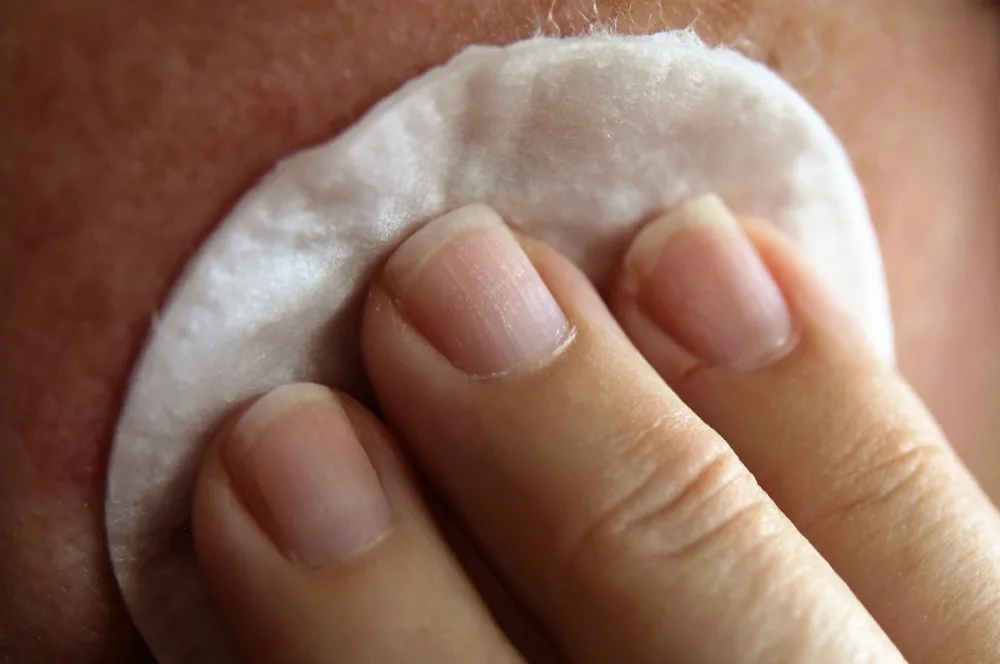
hero_image_alt: Japanese two-layer biphase lip and eye makeup remover soaked on soft cotton pad
thumbnail: /images/stock/cotton-pad-applying-skincare-closeup.webp
thumbnail_alt: Japanese two-layer biphase lip and eye makeup remover soaked on soft cotton pad
reading_time: 6
author: Editorial Team
publish: true
Japanese Bi-Phase Lip & Eye Makeup Remover Guide
Quick answer
Japanese two-layer (bi-phase) lip and eye makeup removers combine a lipophilic oil layer with a water-based lotion layer. Shaking the bottle temporarily emulsifies these distinct phases, allowing non-polar solvents to dissolve curl-locking waterproof polymers and resilient lip tints while the aqueous phase rinses away cleanly without stinging delicate ocular membranes or requiring harsh mechanical rubbing.
Japanese waterproof mascaras and tint lipsticks enjoy worldwide acclaim for their smudge-proof longevity and resistance to humidity. Formulated with resilient silicone polymers, trimethylsiloxysilicate films, and dye-staining agents, these cosmetics refuse to budge under rain, sweat, or sebum.
However, the very durability that makes Japanese eye makeup legendary presents a serious challenge at the end of the day: removing it without dragging delicate eyelid tissue. In Japanese dermatology, the skin around the orbital contour is roughly one-third the thickness of facial skin and highly prone to friction-induced darkening (masatsu kouso). To solve this dilemma, Japanese beauty brands engineered two-layer point makeup removers (nisou-shiki pointo meiku rimubaa). Here is a scientific guide to how bi-phase removers function and how to melt away resilient cosmetics with zero skin friction.
The Dual-Phase Chemistry: Why Two Layers Beat One
When examining an undisturbed bottle of Japanese point makeup remover, two sharply defined liquids rest atop one another:
The Upper Oil Phase (Lipophilic Solvents): Composed of volatile silicones (such as cyclopentasiloxane or isododecane) and lightweight synthetic esters. This non-polar lipid phase dissolves waterproof wax matrices, film-forming polymer coatings, and hydrophobic lash cements.
The Lower Water Phase (Aqueous Conditioning Base): Formulated with purified water, mild non-ionic surfactants, and conditioning humectants like dipropylene glycol (DPG), hyaluronic acid, or botanical waters. This phase buffers osmotic pressure to prevent ocular stinging and washes away hydrophilic residues.
When the bottle is shaken vigorously, the two immiscible layers form a temporary, micro-droplet emulsion. Applied to a cotton pad, the oil droplets dissolve resilient pigments on contact while the surrounding water cushion minimizes friction between cotton fibers and fragile eyelid skin.
Comparison: Bi-Phase Remover vs General Cleansing Oil vs Micellar Water
Understanding why a dedicated point remover is indispensable requires comparing it to all-over facial cleansers:
Scroll horizontally to view full table
Remover Format
Dissolving Power (Waterproof Mascara)
Friction Protection
Eye Stinging / Blur Risk
Japanese Bi-Phase Remover
Exceptional (rapidly melts silicone and film resins)
High (generous liquid cushion on soaked cotton)
Minimal (osmotic balance formulated for ocular safety)
All-Over Cleansing Oil
High (requires thorough massage over lashes)
Moderate (fingertip dragging can pull lash roots)
Moderate (emulsified oil droplets cause temporary cloudiness)
Standard Micellar Water
Low to Moderate (struggles with waterproof waxes)
Low (requires repeated swiping that abrades skin)
Low (water-based, but friction triggers erythema)
The Zero-Friction Ritual: How to Use Two-Layer Removers Correctly
The efficacy of a bi-phase remover depends almost entirely on patience rather than manual force. Follow this Japanese salon-approved methodology:
1. Shake into an Opaque Pastel Emulsion
Shake the bottle vertically 5 to 6 times until the boundary between oil and water disappears completely, yielding a cloudy, uniform liquid.
2. Fully Saturate a Pure Cotton Pad
Pour a generous puddle (about the diameter of a 500-yen coin) onto a soft, multi-layered Japanese cotton pad. If the cotton is only partially damp, dry fibers will scrape against delicate eyelids.
3. The 10 to 15-Second "Press and Soak" Rule
Close your eye gently. Place the soaked cotton pad directly over closed eyelashes and eyelids. Press softly with the flat pads of your fingers—do not rub or scrub. Hold the pad stationary for 10 to 15 seconds. This pause allows volatile solvents to dissolve the hard polymer film surrounding each eyelash.
4. Glide Downward in a Single Motion
Slide the pad smoothly downward toward the cheek following the natural curve of the eyelashes. The melted mascara will transfer cleanly onto the cotton.
5. Detail Cleanup with a Folded Edge or Cotton Bud
Fold the pad into a sharp triangle or saturate a cotton bud with the shaken remover to gently sweep along the waterline and lower lash roots.
6. The Lip Stain Protocol
For long-wearing tint lipsticks, press a freshly saturated pad against relaxed lips for 10 seconds. Wipe gently from the outer lip corners inward toward the center, following lip grain to avoid micro-fissuring.
Why Point Makeup Removers Protect Long-Term Eye Youthfulness
Skin surrounding the eyes contains minimal subcutaneous fat and almost no oil-secreting sebaceous glands. Rubbing eyes daily to wash off mascara creates cumulative damage:
Post-Inflammatory Hyperpigmentation (PIH): Repetitive physical pulling stimulates melanocytes in thin eyelid skin, manifesting as dark, muddy circles beneath and around the eyes.
Loss of Eyelash Density: Forcing cleansers across lashes snaps brittle hair shafts and pulls hairs from follicles prematurely.
Eyelid Laxity and Wrinkling: The repeated dragging of facial skin breaks down elastic fibers within the outermost layer of the skin (stratum corneum), promoting fine creases.
By allowing solvent chemistry to dissolve cosmetics in place, bi-phase removers minimize mechanical tugging significantly.
Signs to stop and when to see a doctor
While Japanese bi-phase removers are ophthalmologically and dermatologically tested for delicate periocular safety, individual allergies to specific solvent esters, preservatives, or botanical additives can happen. If you experience burning, persistent conjunctival redness, eyelid swelling, or intense itching, discontinue use immediately. According to the Japanese Dermatological Association (JDA), "Contact dermatitis is a common condition encountered in dermatological practice, and if the specific triggering substance is identified and contact is discontinued, it is considered a condition that can be fully resolved." [1]
Furthermore, gentle point makeup cleansing must be accompanied by consistent daytime defense against ultraviolet rays. Official guidance affirms: "Regarding sunscreens, their consistent daily use is strongly recommended from the medical standpoint of future skin damage and skin cancer prevention." [2] While zero-friction cleansing prevents premature mechanical eyelid sagging, it cannot undo deeper solar damage, as dermatologists confirm: "Normal biological aging involves the natural decline of physiological functions over time, whereas photoaging represents chronic, cumulative ultraviolet injury sustained by the skin tissue." [3] If periocular redness or irritation does not subside after stopping use, consult a licensed dermatologist or ophthalmologist.
FAQ
Q1. Why do two-layer removers separate again so quickly?
A. Rapid separation prevents the need for heavy chemical emulsifiers.(Details)
Formulators intentionally exclude dense chemical emulsifiers so the product separates naturally into clean oil and water. This design ensures that high-concentration emulsifying agents do not enter the sensitive tear film, reducing ocular irritation and stinging.
Q2. Can I use a bi-phase remover with eyelash extensions?
A. Generally no; the oil phase dissolves extension adhesive bonds.(Details)
The lipophilic solvents in two-layer removers weaken cyanoacrylate glues used in lash extension application. If you have extensions, choose oil-free micellar cleansing waters or specialized extension-safe Japanese gel cleansers.
Q3. Do I need to rinse my eyes after using a two-layer makeup remover?
A. Yes, following with your regular facial wash or water splash is ideal.(Details)
While the water phase leaves skin feeling conditioned, dissolved makeup pigments and solvent residues linger on the eyelid surface. In traditional Japanese double cleansing, point makeup removal is followed by all-over face washing with lukewarm water.
Q4. Can I use a bi-phase remover to remove waterproof sunscreen from my face?
A. It is effective for stubborn patches, but all-over cleansing oil is more economical.(Details)
Two-layer point removers dissolve waterproof sunscreen easily, but bottles are compact (typically 120 to 150 ml). For all-over facial sunscreen removal, a full-sized Japanese cleansing oil or balm applied to dry hands is much more practical.
Q5. What should I do if the remover accidentally gets into my eye?
A. Rinse gently with clean lukewarm water or artificial tears.(Details)
Because the formula contains lightweight oils, entering the eye may cause temporary hazy vision without chemical burn. Flush the eye with sterile saline, artificial tears, or clean tap water, and vision will clear as the tear film resets.
Summary
Japanese two-layer lip and eye makeup removers are essential tools for maintaining radiant, youthful eyes:
Dual-Phase Power: Shaking temporarily binds volatile silicone oils with hydrating water lotions.
Instant Polymer Dissolution: Melts stubborn waterproof film coatings and lip tints without pulling.
Zero-Friction Protection: Saturating cotton and pressing for 10–15 seconds prevents periocular friction and eyelash loss.
Eye-Friendly Design: Formulated without dense chemical emulsifiers to respect sensitive ocular membranes.
References
The Japanese Dermatological Association. Dermatological Q&A on Contact Dermatitis: Pathophysiology and Identifying Causative Contact Triggers (Q1). https://www.dermatol.or.jp/qa/qa4/q01.html (Accessed 2026-11-23)
The Japanese Dermatological Association. Dermatological Q&A on Sunscreen Application for Long-Term Prevention (Q25). https://www.dermatol.or.jp/qa/qa3/q25.html (Accessed 2026-11-23)
The Japanese Dermatological Association. Sunburn Q&A on Photoaging and Biological Alterations in Aging Skin (Q5). https://www.dermatol.or.jp/qa/qa2/q05.html (Accessed 2026-11-23)
Disclaimer: This article is for general information and education about Japanese cosmetics and their labels. It is not a substitute for professional medical advice, diagnosis, or treatment. Skincare results vary from person to person. Product formulas, availability, prices, and regulations change, and products sold in Japan can differ from versions sold elsewhere, so always check the current label. Do a patch test before introducing a new product, and consult a doctor or dermatologist if you have a skin condition or specific concerns.