Japanese Skincare for Forehead Closed Comedones Guide
ConcernsBy Seibun Lab Editorial Team
title: Japanese Skincare for Forehead Closed Comedones Guide
slug: japanese-skincare-for-forehead-closed-comedones
category: concerns
category_label: Concerns
published_at: '2026-11-24'
updated_at: '2026-11-24'
meta_description: Prevent tiny forehead bumps and closed comedones with Japanese skincare. Learn gentle cleansing, noncomedogenic testing standards, and barrier balance.
description: Prevent tiny forehead bumps and closed comedones with Japanese skincare. Learn gentle cleansing, noncomedogenic testing standards, and barrier balance.
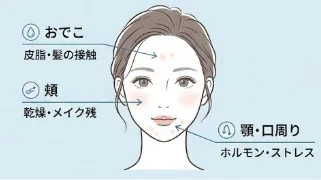
lead_image: /images/stock/acne-causes-and-locations-comparison.webp
lead_image_alt: Comparison diagram of facial blemish types illustrating closed comedone congestion on the forehead
thumbnail: /images/stock/acne-causes-and-locations-comparison.webp
thumbnail_alt: Comparison diagram of facial blemish types illustrating closed comedone congestion on the forehead
author: Editorial Team
publish: true
Japanese Skincare for Forehead Closed Comedones Guide
Few skin textures are as deceptively stubborn as tiny, flesh-colored bumps clustered across the forehead. Often referred to colloquially as "sub-surface bumps" or closed comedones, these formations feel like fine sandpaper under the fingertips and become glaringly visible under angled daylight or bathroom lighting.
In Western skincare routines, the knee-jerk reaction is frequently aggressive chemical peeling—stacking high-percentage salicylic acid, benzoyl peroxide, and coarse physical scrubs. However, in Japanese cosmetic dermatology, harsh peeling often disrupts the epidermal lipid mantle, prompting rebound hyperkeratinization that locks bumps tighter into the follicle. Here is your comprehensive guide to understanding forehead comedones through Japan's balanced, noncomedogenic skincare philosophy.
The Biological Mechanism of Closed Comedones
Understanding how closed comedones develop helps prevent their recurrence without compromising barrier integrity:
1. Retention Hyperkeratosis Beneath an Intact Surface
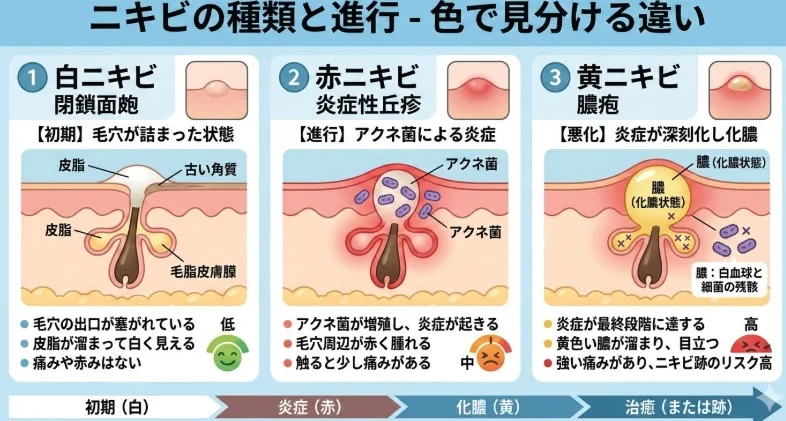
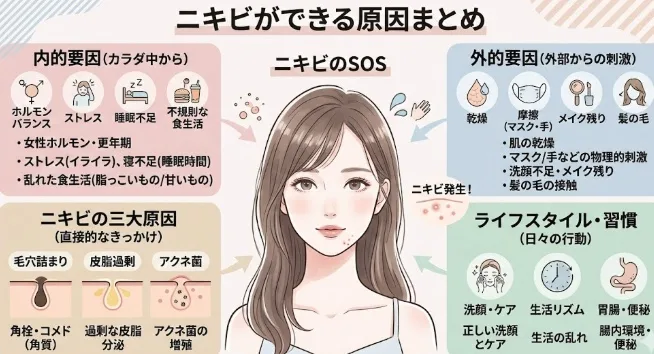
Unlike open comedones (blackheads) where trapped sebum oxidizes in contact with ambient air, closed comedones (shiro-nikibi) remain sealed beneath a microscopic layer of stratum corneum cells. When desquamation slows down, shed corneocytes clump together with sebum, forming a firm keratin plug that distends the follicular canal without visible redness.
2. Forehead-Specific Aggravators
The frontal bone possesses a high density of active sebaceous glands. When sebum flows over the forehead, several localized factors accelerate micro-plugging:
Hair Product Runoff: Waxes, heavy hair oils, and conditioning silicones from bangs (maegami) transfer to the forehead, trapping sebum.
Sweat and Friction: Perspiration combined with hat bands or headbands creates a warm microclimate where follicular margins swell.
Cutaneous Aging and Turnover Shifts: While epidermal cell turnover dynamics and follicular lipid composition change with cutaneous chronological aging over time[1], surface dehydration leaves the pore canal rigid and prone to blockages.
What Noncomedogenic-Tested Means in Japanese Skincare
When navigating Japanese cosmetics for comedone-prone skin, consumers frequently encounter the Japanese label claim non-komedo tesuto-zumi (noncomedogenic tested). Understanding this verification standard ensures realistic expectations:
Scroll horizontally to view more
Label Claim
Testing Protocol in Japan
Cosmetic Implication
Important Caveat
Noncomedogenic Tested (*Non-Komedo Tesuto-Zumi*)
Repeated patch testing on human subjects over 4 weeks to visually and microscopically monitor micro-comedone formation
Formulation demonstrates statistically low potential to clog pores or induce initial comedones
Does not promise that zero individuals will ever experience clogged pores
Acne-Prone Formulation (*Akune Kea*)
Formulated without comedogenic waxes, mineral oils, or heavy esters; incorporates soothing quasi-drug actives
Maintains light, breathable moisture while calming low-grade follicular irritation
Focuses on preventive cosmetic support, not medical acne therapy
Oil-Free (*Oiru-Furi*)
Formulated entirely with aqueous humectants and water-soluble polymers
Minimizes excess surface lipids that could nourish follicular microflora
Requires sufficient water humectants to prevent compensatory dryness
The Gentle J-Beauty Protocol for Forehead Clarity
Clearing stubborn forehead texture requires dissolving keratin plugs while keeping the surrounding skin soft and elastic:
Step 1: Residue-Free First Cleansing
If you wear makeup or waterproof sunscreen, use a lightweight, emulsifying cleansing oil or gentle cleansing gel. Rinse thoroughly with lukewarm water (around 32°C) to ensure no oily film lingers near the hairline.
Step 2: Mild Proteolytic Enzyme Wash (2 to 3 Times Weekly)
Traditional scrubs tear follicular openings. Instead, incorporate a Japanese enzyme cleansing powder (kouso sen-gan) two or three evenings per week. Papain and protease enzymes gently digest rigid surface protein bonds without scratching the stratum corneum.
Step 3: Hydrating Conditioning Lotion (Kesho-sui)
Generously pat an alcohol-free hydrating lotion formulated with dipotassium glycyrrhizate, houttuynia cordata (dokudami), or Job's tears (hatomugi). Deep aqueous hydration softens the pore rim, allowing sebum to flow naturally rather than solidifying into hard plugs.
Never skip moisturizer entirely. Dehydrated skin produces thicker, more viscous sebum. Apply a dime-sized amount of a light, noncomedogenic ceramide milk to lock in moisture without clogging pores.
Throughout daytime activities, defending vulnerable forehead skin with daily morning broad-spectrum sunscreen prevents UV-induced lipid peroxidation[2] that hardens surface plugs.
Common Habits That Worsen Forehead Bumps
Rebalancing forehead texture requires avoiding everyday mechanical and chemical pitfalls:
1. Manual Squeezing and Scratching
Attempting to pop or squeeze closed comedones with fingernails pushes the plug deeper, rupturing the follicular wall beneath the surface. Note that squeezing closed micro-bumps with sharp tools or fingernails can provoke severe contact irritation[3] and transform minor bumps into red inflammatory lesions.
2. Over-Washing with Astringent Alcohol Toners
Drying out the forehead with harsh alcohol astringents creates surface flaking over an already clogged follicle. This traps the plug beneath tighter, drier keratin sheets.
3. Hair Styling Product Contact
Keep leave-in hair oils and styling pomades at least one inch away from the hairline. Pin bangs back while relaxing at home to minimize friction and thermal build-up across the forehead.
Signs to Stop and When to See a Doctor
While closed comedones respond well to disciplined cosmetic hygiene, persistent blemish patterns require medical diagnosis:
1. Cosmetic Bumps vs Medical Conditions
Closed Comedones: Small, painless, non-itchy bumps that remain relatively stable in size.
Pityrosporum (Malassezia) Folliculitis: Clusters of uniform, intensely itchy pinpoint papules along the hairline that flare with humidity and sweat.
Inflammatory Acne: Tender, warm, red nodules or pustules that require prescription topical or oral therapies.
2. When to Seek Professional Dermatological Care
Schedule a consultation with a board-certified dermatologist if you experience:
Forehead bumps that become painful, swollen, or cystic.
Intractable itching that does not respond to standard noncomedogenic skincare.
No visible softening of texture after 6 to 8 weeks of consistent, gentle care.
Signs of post-inflammatory scarring from past picking habits.
FAQ
Q1. How long does it take for Japanese skincare to soften forehead closed comedones?
A. Gradual textural improvement typically appears across 4 to 6 weeks.(Details)
Because closed comedones sit beneath an intact layer of stratum corneum, they do not disappear overnight. Supporting regular cellular turnover with enzyme powders and light hydrating lotions allows plugs to slowly loosen and shed over one to two complete epidermal renewal cycles (28 to 56 days).
Q2. Can I use Japanese cleansing oil if I have forehead comedones?
A. Yes, provided it emulsifies completely and rinses cleanly without residue.(Details)
High-quality Japanese cleansing oils use lightweight botanical bases (such as squalane or rice bran oil) combined with effective emulsifiers. As long as you thoroughly emulsify the oil with lukewarm water until it turns milky before rinsing, it dissolves oxidized plugs without leaving pore-blocking residue.
Q3. Does noncomedogenic testing ensure I will never get forehead bumps?
A. No, it indicates low potential for clogging, but individual responses vary.(Details)
The Japanese noncomedogenic test confirms that a product did not trigger comedones in clinical human patch panels. However, personal skin biochemistry, hair product transfer, climate, and cleansing habits also influence whether a specific formulation suits your individual skin.
Q4. Why do bangs cause forehead closed comedones?
A. Hair transfers natural oils, styling waxes, and traps heat against the skin.(Details)
Bangs create a microclimate of elevated warmth and humidity over the forehead while continually depositing hair lipids and styling ingredients. Sweeping bangs aside when indoors allows the skin surface to breathe and reduces friction-induced pore clogging.
Q5. Are Japanese quasi-drug acne lotions helpful for closed comedones?
A. Yes, they combine soothing botanicals with gentle sebum-regulating actives.(Details)
Japanese quasi-drug (*iyaku-bugaihin*) medicated lotions often feature dipotassium glycyrrhizate and o-cymen-5-ol. These ingredients maintain surface cleanliness and soothe follicular stress without the aggressive peeling or stinging associated with high-strength acid washes.
Summary and Key Takeaways
Smoothing forehead closed comedones requires gentle persistence rather than aggressive stripping:
Understand the Plug: Closed comedones are non-inflamed collections of keratin and sebum trapped beneath intact skin.
Choose Verified Formulas: Look for noncomedogenic-tested (non-komedo tesuto-zumi) lotions and emulsions.
Ditch Coarse Scrubs: Use proteolytic enzyme powders two to three times weekly to dissolve protein plugs gently.
Never Squeeze or Pick: Avoid mechanical extraction that pushes bacteria deeper and triggers severe contact reactions.
Shield with SPF: Defend against lipid oxidation and dark post-blemish discoloration with daily sunscreen.
With patient, barrier-first care, your forehead can regain its smooth, clear, and radiant appearance.
References
The Japanese Dermatological Association. Sunburn Q&A on Photoaging and Biological Alterations in Aging Skin (Q5). https://www.dermatol.or.jp/qa/qa2/q05.html (Accessed 2026-11-24)
The Japanese Dermatological Association. Dermatological Q&A on Sunscreen Application for Long-Term Prevention (Q25). https://www.dermatol.or.jp/qa/qa3/q25.html (Accessed 2026-11-24)
The Japanese Dermatological Association. Dermatological Q&A on Contact Irritation and Scalp Friction Mechanisms (Q1). https://www.dermatol.or.jp/qa/qa4/q01.html (Accessed 2026-11-24)
Disclaimer: This article is for general information and education about Japanese cosmetics and their labels. It is not a substitute for professional medical advice, diagnosis, or treatment. Skincare results vary from person to person. Product formulas, availability, prices, and regulations change, and products sold in Japan can differ from versions sold elsewhere, so always check the current label. Do a patch test before introducing a new product, and consult a doctor or dermatologist if you have a skin condition or specific concerns.