Japanese Skincare for Hormonal Chin Breakouts Guide
ConcernsBy Seibun Lab Editorial Team
title: Japanese Skincare for Hormonal Chin Breakouts Guide
slug: japanese-skincare-for-hormonal-chin-breakouts
category: concerns
category_label: Concerns
published_at: '2026-11-24'
updated_at: '2026-11-24'
meta_description: Manage cyclical chin blemishes with Japanese skincare. Discover gentle quasi-drug soothing botanicals, barrier hydration, and zero-friction daily habits.
description: Manage cyclical chin blemishes with Japanese skincare. Discover gentle quasi-drug soothing botanicals, barrier hydration, and zero-friction daily habits.
lead_image: /images/stock/acne-causes-by-facial-area.webp
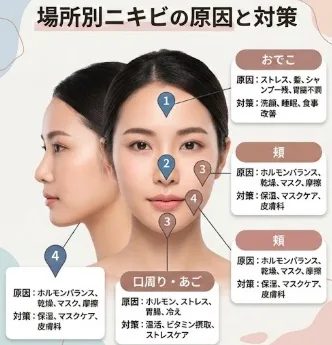
lead_image_alt: Illustrated diagram showing facial blemish zones highlighting chin and jawline hormonal vulnerability
thumbnail: /images/stock/acne-causes-by-facial-area.webp
thumbnail_alt: Illustrated diagram showing facial blemish zones highlighting chin and jawline hormonal vulnerability
author: Editorial Team
publish: true
Japanese Skincare for Hormonal Chin Breakouts Guide
Monthly recurring blemishes along the lower jawline and chin represent one of the most persistent frustrations in adult skincare. Often flaring in the week preceding menstruation, these tender, deep-seated bumps behave very differently from adolescent T-zone oiliness. In Japan, this phenomenon is widely recognized as otona-nikibi (adult blemishes) occurring during the yuragi (cyclical instability) phase.
While Western cosmetic routines often reach for intense drying agents, benzoyl peroxide spot gels, and stripping astringents, Japanese skincare (J-beauty) adopts a completely different philosophy. Japanese dermatological researchers recognize that chin skin is structurally prone to dryness and slow cellular turnover. Stripping the area strips essential barrier lipids, making the follicle rigid and trapping sebum deeper inside. Here is how Japanese gentle, barrier-first skincare restores balance to a troubled chin and jawline.
The Biology of Adult Chin Breakouts (Otona-Nikibi)
Understanding the physiological drivers behind jawline blemishes explains why harsh acne washes often fail:
1. Luteal Phase Sebum Alterations
During the late luteal phase (the 7 to 10 days before menstruation), progesterone and free androgen levels peak relative to estrogen. This hormonal fluctuation prompts sebaceous glands to produce denser, stickier sebum with higher squalene concentrations. Concurrently, skin temperature rises slightly, while cutaneous barrier function experiences a transient dip in moisture retention.
2. The U-Zone Dryness Paradox
Unlike the naturally oily T-zone (forehead and nose), the lower U-zone (chin and jawline) possesses significantly fewer sebaceous glands and thinner epidermal layers. When stressed adult skin experiences dehydration, the follicular funnel undergoes abnormal hyperkeratinization—dead corneocytes fail to detach smoothly. While barrier resilience and cellular desquamation rates undergo physiological shifts over time[1], surface dryness locks thick sebum within the follicle, forming stubborn sub-surface bumps.
The Japanese Care Matrix for Cyclical Chin Care
Managing cyclical sensitivity requires shifting from aggressive stripping to barrier-nurturing cosmetic support:
Scroll horizontally to view more
Routine Phase
Product Format
Primary Mechanism
Approved Japanese Quasi-Drug Actives
1. Low-Friction Cleanse
Amino acid foaming cleanser
Lifts oxidized surface sebum without stripping intercellular ceramides
Sodium cocoyl glutamate, potassium glycinate
2. Anti-Roughness Conditioning
Medicated hydrating lotion (*Kesho-sui*)
Saturates the stratum corneum with water humectants and soothes irritation
Rebalancing the lower face requires mindful techniques that minimize friction and preserve skin calm:
Step 1: The "Zero-Drag" Foam Cushion Cleanse
Never scrub your jawline with rough washcloths or silicone brushes. Whip your cleanser into a thick, meringue-like foam using a Japanese foaming net (awa-tate netto). Rest the cushion of bubbles over the chin for 20 seconds, letting surfactant micelles lift dirt without your fingers physically dragging across tender bumps. Rinse thoroughly with lukewarm water (around 32°C).
Step 2: The Two-Phase Hydration Press
Splash an alcohol-free medicated conditioning lotion into clean palms. Press the lotion gently into the chin and jawline using flat palms rather than rubbing. Repeat a second time to ensure parched keratin layers are thoroughly softened. Hydrated pore rims remain supple, allowing sebum to exit naturally.
Step 3: Targeted Soothing with a Pure Cotton Compress
On evenings when chin bumps feel particularly warm or tight, soak an unbleached peelable cotton pad in a soothing botanical lotion formulated with Job's tears (hatomugi) or artemisia (yomogi). Rest the moist compress over the chin for 3 minutes to cool surface heat and deliver humectants.
Step 4: Breathable Emulsion Veil
A major mistake is skipping moisturizer on breakout-prone chins. Apply a dime-sized amount of lightweight, noncomedogenic milky emulsion over the entire jawline. Sealing the skin with ceramides prevents rebound moisture evaporation that prompts glands to overproduce sebum.
Throughout daylight hours, protecting fragile reactive chin skin with daily morning broad-spectrum sunscreen prevents UV-induced post-inflammatory pigmentation[2] that lingers long after blemishes subside.
Everyday Habits That Trigger Chin Blemishes
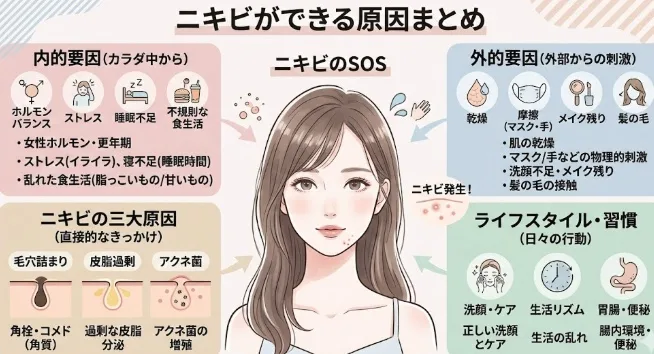
External physical friction frequently combines with hormonal shifts to trigger localized jawline distress:
1. Unconscious Chin Resting (Hozue)
Resting your chin in your palm while working at a desk transfers ambient hand bacteria, oils, and continuous mechanical pressure to the jawline. This physical occlusion traps heat and dead cells in the follicles.
2. Abrasive Scrubbing and Extraction
Attempting to pop or scratch deep chin bumps forces inflamed follicular walls to rupture beneath the surface. Note that scrubbing inflamed chin bumps with coarse abrasive cloths can provoke acute contact irritation[3] and lead to persistent discoloration or scarring.
3. Hair and Mask Friction
Tight mask edges or long hair ends constantly brushing against the jawline create repetitive mechanical friction. Pin hair back during cyclical flare-ups and ensure reusable masks are laundered with mild, fragrance-free detergents.
Signs to Stop and When to See a Doctor
Cosmetic skincare focuses on gentle barrier hygiene and surface comfort. Severe or deep inflammatory conditions require medical intervention:
1. Cosmetic Instability vs Medical Acne
Manageable Cyclical Blemishes: Superficial small papules or occasional clogged bumps that appear before menstruation and soften within 7 to 10 days of gentle care.
Cystic Acne: Deep, painful, throbbing nodules under the skin that do not come to a head and persist across multiple cycles.
2. When to Seek Dermatological or Gynecological Care
Promptly schedule a clinical appointment with a medical specialist if:
Jawline nodules are severe, highly painful, or leave deep pitted scars.
Blemishes are accompanied by irregular menstrual cycles, sudden excess facial hair, or significant hair thinning (potential signs of polycystic ovary syndrome, or PCOS).
Over-the-counter soothing skincare provides no relief after 8 weeks of consistent use.
Prescription topical retinoids, antimicrobial washes, or systemic hormonal therapies must be evaluated by licensed healthcare physicians.
FAQ
Q1. Why do chin breakouts always appear in the same spot before my period?
A. Hormonal receptors in lower-face sebaceous glands respond to cyclical shifts.(Details)
Sebaceous glands on the chin and jawline possess higher densities of androgen receptors. During the late luteal phase when progesterone rises, these glands produce thicker sebum. If past blemishes damaged local follicular linings, those specific pores are more prone to re-clogging each cycle.
Q2. Should I stop moisturizing my chin if I have active blemishes?
A. No, skipping moisturizer causes compensatory dehydration and worsens clogging.(Details)
When the chin is deprived of moisture, surface keratin becomes dry, rigid, and flaky. This rigid layer traps sebum inside the pore canal. Using a lightweight, noncomedogenic ceramide emulsion keeps follicular walls elastic, enabling smooth sebum flow.
Q3. Which Japanese quasi-drug ingredients help soothe chin redness?
A. Dipotassium glycyrrhizate, tranexamic acid, and allantoin are premier soothing actives.(Details)
Approved Japanese quasi-drug actives like dipotassium glycyrrhizate (licorice root derivative) and allantoin calm localized skin roughness and redness without stinging. Tranexamic acid also helps moderate post-inflammatory red and brown marks (*PIH/PIE*).
Q4. Does switching to an amino acid cleanser make a difference for jawline bumps?
Traditional high-pH alkaline soaps strip the thin epidermal barrier of the jawline, leading to post-wash tightness and impaired natural exfoliation. Mild amino acid cleansers wash away daily dirt while leaving protective intercellular lipids intact.
Q5. How can I prevent dark marks from lingering after chin breakouts?
A. Avoid picking, use gentle brightening lotions, and wear daily sunscreen.(Details)
Never squeeze or scratch blemishes, which drives pigment into deeper dermal layers. Incorporate gentle brighteners like licorice root extract or arbutin, and apply broad-spectrum sunscreen every morning to prevent ultraviolet rays from darkening recovering skin cells.
Summary and Key Takeaways
Managing cyclical adult chin breakouts requires gentle consistency rather than harsh aggression:
Understand the Root Mechanism: Luteal phase sebum thickening paired with U-zone surface dryness creates stubborn congestion.
Never Strip the Barrier: Replace harsh alcohol astringents with calming, medicated Japanese conditioning lotions.
Embrace Zero Friction: Cleanse with dense foam cushions and never rest your chin in your hands during the day.
Hydrate with Ceramides: Keep follicular openings elastic by sealing moisture with lightweight milky emulsions.
Consult a Doctor for Deep Cysts: Seek medical dermatological evaluation for painful, scarring hormonal nodules.
By honoring your skin's monthly rhythms with mindful, barrier-first care, you can maintain a clear, comfortable, and resilient jawline.
References
The Japanese Dermatological Association. Sunburn Q&A on Photoaging and Biological Alterations in Aging Skin (Q5). https://www.dermatol.or.jp/qa/qa2/q05.html (Accessed 2026-11-24)
The Japanese Dermatological Association. Dermatological Q&A on Sunscreen Application for Long-Term Prevention (Q25). https://www.dermatol.or.jp/qa/qa3/q25.html (Accessed 2026-11-24)
The Japanese Dermatological Association. Dermatological Q&A on Contact Irritation and Scalp Friction Mechanisms (Q1). https://www.dermatol.or.jp/qa/qa4/q01.html (Accessed 2026-11-24)
Disclaimer: This article is for general information and education about Japanese cosmetics and their labels. It is not a substitute for professional medical advice, diagnosis, or treatment. Skincare results vary from person to person. Product formulas, availability, prices, and regulations change, and products sold in Japan can differ from versions sold elsewhere, so always check the current label. Do a patch test before introducing a new product, and consult a doctor or dermatologist if you have a skin condition or specific concerns.